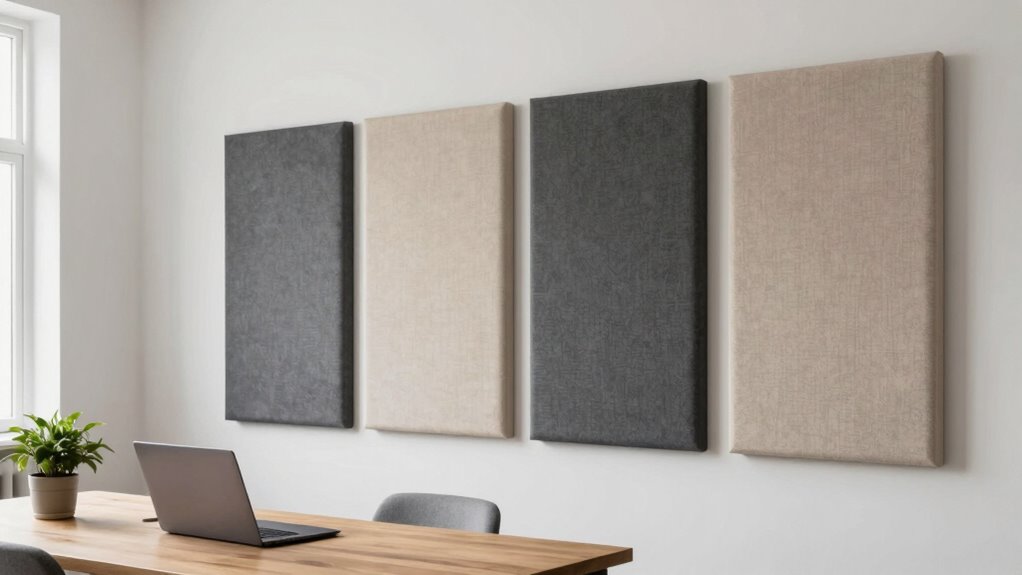

To compare acoustic panels for better focus, assess their NRC ratings to see how well they absorb sound at your preferred frequencies. Consider the materials—dense foam, mineral wool, or fiberglass—as they impact absorption and durability. Think about installation ease—adhesive, brackets, or permanent mounts—that suits your space. Environment and flexibility matter too—temporary or permanent options. Want smarter tips on choosing the right panels? Keep exploring to find what works best for your space.
Listen free for 30 days with Audible
Thousands of audiobooks and originals — cancel anytime.
As an affiliate, we earn on qualifying purchases.
Key Takeaways
- Prioritize NRC ratings to ensure effective sound absorption tailored to your noise environment.
- Consider material types (foam, mineral wool, fiberglass) for durability and specific sound frequency dampening.
- Match installation methods (adhesive, brackets) to your space’s permanence and flexibility needs.
- Assess environment-specific needs, balancing aesthetics, practicality, and acoustic performance.
- Compare cost, ease of installation, and reusability to select panels that suit your focus and setup.
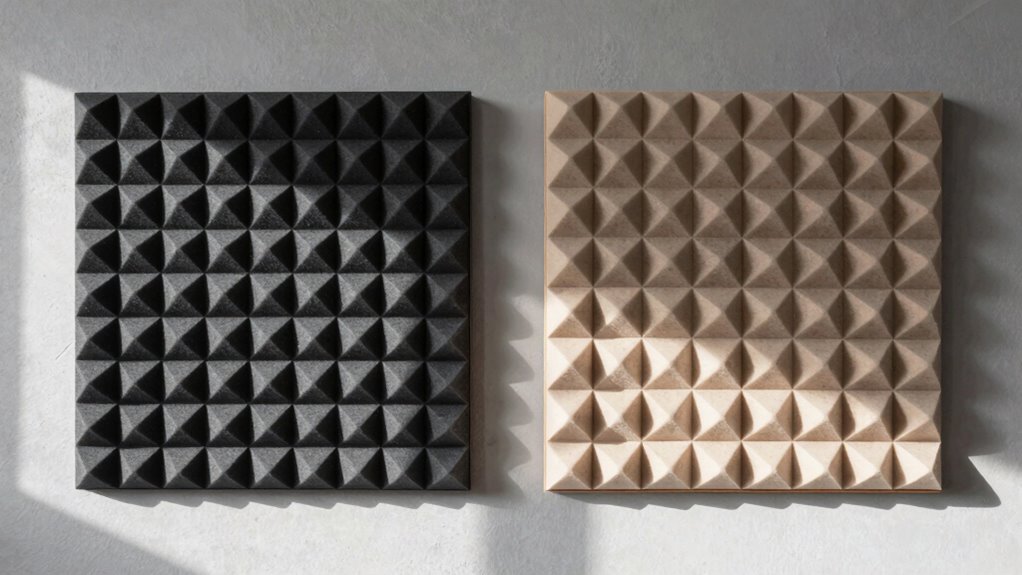
Have you ever struggled to concentrate in a noisy environment? If so, you’re not alone. Distractions from outside noise or even chatter within your space can make focusing feel impossible. That’s where acoustic panels come into play. They’re designed to improve sound absorption, helping you create a quieter, more productive environment. But not all panels are created equal, and understanding the differences can be overwhelming. The key lies in comparing sound absorption qualities and the installation methods that best suit your needs.
Sound absorption refers to how well a panel can dampen noise and reduce echoes. When you’re shopping for acoustic panels, you want to pay attention to their NRC (Noise Reduction Coefficient) ratings. Higher NRC scores mean better sound absorption, which translates into less distracting noise bouncing around your room. Some panels are made from dense foam, mineral wool, or fiberglass, each offering varying degrees of sound absorption. Knowing the materials and their NRC ratings helps you select panels that will genuinely improve your focus. Additionally, understanding how the sound absorption process works can help you choose panels that effectively dampen specific frequencies or noise levels. Recognizing the materials used in acoustic panels can also impact their effectiveness and longevity. Being aware of sound absorption qualities enables you to make more informed decisions tailored to your environment. An understanding of acoustic panel materials can also guide you in selecting options that are environmentally friendly or have improved durability. Moreover, considering acoustic treatment techniques can help optimize your soundproofing setup.
Installation methods are another essential factor. You might prefer panels that are easy to mount, especially if you’re working within a tight space or want a temporary setup. Some panels come with adhesive backing, making them simple to stick directly onto walls without the need for tools or hardware. Others might require brackets or frames, which can provide a more secure fit and allow for repositioning or removal later. Consider your space and how permanent or flexible you want your setup to be. If you’re renting or frequently rearranging your environment, lightweight panels with adhesive or hook-and-loop fasteners could be ideal. Conversely, if you’re setting up a dedicated workspace, more permanent installation methods might be worth the effort for a cleaner look and greater durability.
Comparing acoustic panels isn’t just about price or aesthetics; it’s about matching the right sound absorption qualities with installation methods that fit your lifestyle. You want panels that effectively dampen noise, but they also need to be easy to install, remove, or reposition. Think about your environment—whether it’s a home office, studio, or shared workspace—and choose panels that strike the right balance between performance and practicality. By focusing on sound absorption ratings and installation methods, you can make smarter choices that genuinely enhance your focus and productivity.
acoustic panels with high NRC ratings
As an affiliate, we earn on qualifying purchases.
As an affiliate, we earn on qualifying purchases.
Frequently Asked Questions
How Do Acoustic Panels Affect Overall Room Aesthetics?
Acoustic panels can enhance your room’s aesthetics through various color options and design flexibility. You can choose panels that match your decor or add a pop of color to create visual interest. Their customizable shapes and sizes allow you to craft a unique look that complements your space. By selecting stylish, color-coordinated panels, you improve sound quality without sacrificing the room’s overall design, making your environment both functional and visually appealing.
Are There Eco-Friendly Acoustic Panel Options Available?
Yes, eco-friendly acoustic panels are available. You can find options made from recyclable materials, which reduce waste and environmental impact. Some panels also feature biodegradable options that break down naturally over time, minimizing landfill contributions. When shopping, look for labels indicating these sustainable features. Choosing such panels helps you improve your space’s acoustics while supporting environmentally responsible practices, making your workspace both functional and eco-conscious.
Can Acoustic Panels Be Customized for Specific Sound Frequencies?
Yes, acoustic panels can be customized for specific sound frequencies. You can tailor sound absorption to target particular frequencies, improving your space’s acoustics. This process, called frequency customization, allows you to fine-tune how sound waves behave. While standard panels absorb broadly, sound target tailoring offers precision, helping you create a more focused environment. This customization makes your acoustic setup smarter, balancing sound clarity with noise reduction effectively.
How Long Do Acoustic Panels Typically Last?
Acoustic panels typically last between 5 to 10 years, depending on their durability lifespan and material longevity. If you choose high-quality materials like dense foam or mineral wool, you’ll enjoy a longer-lasting product. Proper maintenance, such as regular cleaning and avoiding excessive moisture, also extends their lifespan. Keep in mind that environmental factors and usage frequency can influence how long your acoustic panels stay effective and look good.
What Maintenance Is Required for Acoustic Panels?
You should regularly inspect your acoustic panels and follow cleaning routines suitable for their material. For fabric-covered panels, vacuum gently to remove dust, while hard surfaces can be wiped with a damp cloth. Material durability varies, so avoid harsh chemicals that could damage the surface. Proper maintenance keeps your panels looking good and functioning effectively, prolonging their lifespan and ensuring ideal sound absorption in your space.
soundproof foam panels for office
As an affiliate, we earn on qualifying purchases.
As an affiliate, we earn on qualifying purchases.
Conclusion
Imagine trying to focus in a noisy café, feeling overwhelmed by clattering dishes and chattering voices. That’s how your workspace can feel without the right acoustic panels. Choosing the right panels is like tuning a musical instrument—you create harmony and clarity. With smarter comparisons, you’ll find the perfect fit to drown out distractions and boost your focus. Invest in the right panels, and watch your productivity hit a high note every day.
mineral wool acoustic wall panels
As an affiliate, we earn on qualifying purchases.
As an affiliate, we earn on qualifying purchases.
adhesive acoustic panels for walls
As an affiliate, we earn on qualifying purchases.
As an affiliate, we earn on qualifying purchases.
Flea & tick season Picks
flea and tick prevention
As an affiliate, we earn on qualifying purchases.