
TL;DR

Get art and craft supplies delivered free with Prime
- Fast, free delivery on millions of items
- Prime Video, Amazon Music and more included
- Member-only deals all year
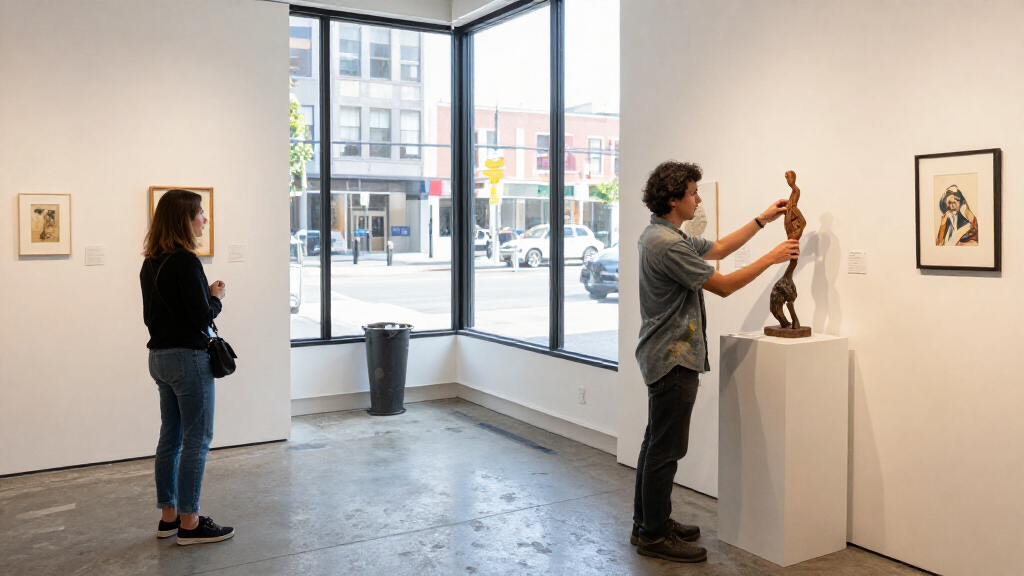
San Francisco art spaces are trying different ways to remain open amid rising living costs, gallery and arts-organization closures, and a reported loss of artists and galleries from the city. Cushion Works in the Mission District became a nonprofit last year and launched a membership program; its founder says the space is focused on local histories and community rather than a conventional gallery business model.
Cushion Works, an arts space in San Francisco’s Mission District, became a nonprofit and launched a membership program last year, part of a broader effort by local galleries to find ways to continue operating amid rising living costs and closures across the city’s arts scene. The change offers one example of how spaces are looking beyond conventional gallery sales to sustain their work and build community.
According to Hyperallergic’s report, the city’s art landscape has faced pressure from a cost-of-living crisis, a collector base described as seemingly absent, and the closure of local art schools and arts organizations. The report says these conditions have contributed to artists and galleries leaving San Francisco. It does not quantify how many have departed or how much each factor has contributed.
Jordan Stein opened Cushion Works in 2018. The nonprofit conversion and membership program, introduced last year, are intended to help support the space. The report describes these steps alongside other alternative models, including nonprofit status and retail businesses, but does not identify or detail specific retail ventures.
Cushion Works presents artists with varied connections to the Bay Area art scene. Its program has included R. Crumb and Dewey Crumpler, as well as artists the report describes as outsiders, including Betty Bailey and BJ Newton. It has also shown Whitney-exhibiting artists Grace Rosario Perkins and Dionne Lee.
How Membership Supports Local Art
The move shows how a local arts space can seek support through a model other than relying solely on gallery sales. Nonprofit status and membership may give Cushion Works additional ways to fund its activities, while its exhibition program brings together artists with different relationships to the region. The source does not provide financial figures, membership numbers, or evidence of whether the approach has made the space financially secure.
The issue extends beyond one venue because the report describes an environment in which artists and galleries are leaving while arts organizations and schools have closed. If spaces cannot maintain a local presence, residents may have fewer places to encounter and support artists. Alternative models are a response to that pressure, but the report does not establish that they can reverse the broader departures or closures.
Popular right now

Dreame L50 Ultra Robot Vacuum and Mop

Ninja Foodi 10-Quart DualZone 6-in-1 Air Fryer, Black, DZ302

Dyson Cyclone V10 Origin Cordless Vacuum
As an affiliate, we earn on qualifying purchases.
Cushion Works Since 2018
Stein founded Cushion Works in 2018. The space’s current approach reflects an interest in local histories and artistic production, rather than a conventional gallery identity. Its program includes established figures, artists described as outsiders, and artists who have exhibited at the Whitney.
The nonprofit change came in 2025, when Cushion Works also began a membership program. Hyperallergic frames those steps within a citywide search for ways to sustain arts spaces. The supplied report identifies other possible models, including retail businesses, but focuses its specific account on Cushion Works.
““I don’t think of it like a gallery, and I’ve never had a business model.””
— Jordan Stein, founder of Cushion Works, speaking to Hyperallergic
The Model’s Financial Results
The available report does not say how many people joined Cushion Works’ membership program, how much revenue it generates, or whether nonprofit status has improved the space’s long-term finances. It also does not provide details about the costs or administration of the change.
The wider picture remains difficult to measure from the supplied material: it gives no count of gallery closures, departing artists, or affected arts organizations, and no breakdown of how much pressure comes from living costs versus the collector market or other factors. The long-term effect of the alternative models is not yet established.
Membership and Programming Ahead
Cushion Works’ membership program and exhibitions are the immediate parts of the approach described in the report. The source does not announce a future membership target, fundraising deadline, or planned change to the program. Its continued operation will show how the nonprofit structure and member support work in practice, but no timeline or financial measure for judging that outcome is provided.
For other San Francisco art spaces, the report points to a search for different ways to sustain operations, including nonprofit and retail models. It does not name a coordinated citywide plan or specify further organizations’ next steps. Whether these approaches can keep more galleries in the city remains an open question.
Key Questions
What change did Cushion Works make?
Cushion Works became a nonprofit and launched a membership program in 2025 to help support the Mission District arts space.
Who founded Cushion Works?
Jordan Stein opened the space in 2018. He told Hyperallergic that he does not think of it as a conventional gallery and has never had a business model.
Why are San Francisco art spaces seeking other models?
The report cites a cost-of-living crisis, a collector base it describes as seemingly absent, and closures among local arts organizations and art schools. It says artists and galleries have also been leaving, without giving figures or assigning precise weight to each cause.
Is Cushion Works’ membership program financially successful?
The report does not provide financial results, membership totals, or revenue figures, so it is not possible to determine from the available information whether the program has made the space financially secure.
Source: hyperallergic.com