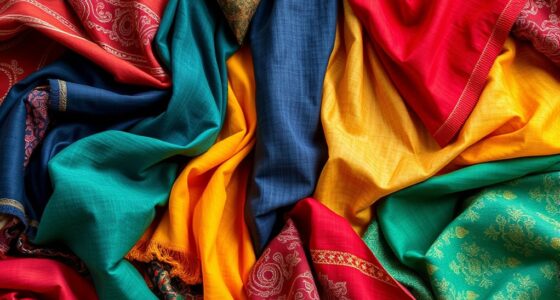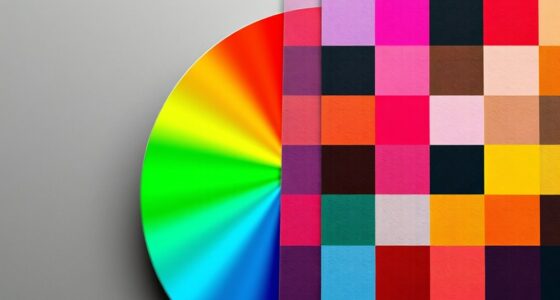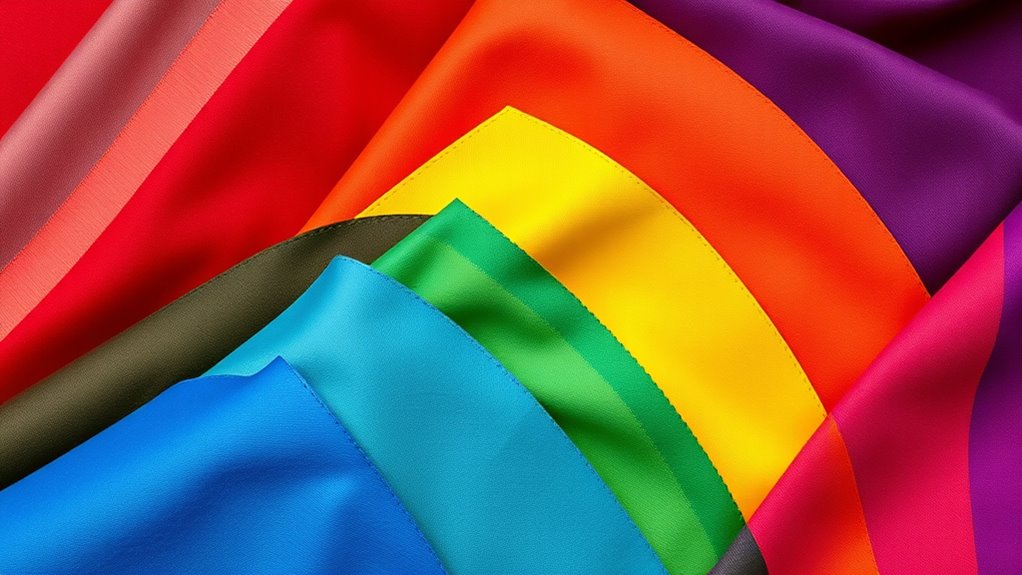

Colors impact your emotions and perceptions in powerful ways. Bright red can boost energy and passion, while blue often signals trust and calmness. Cultural meanings also shape how you interpret colors—what’s positive in one culture might be negative in another. Understanding these psychological and cultural cues helps you make better choices, whether in branding, design, or daily life. To discover more about how color influences feelings and cultural significance, keep exploring these fascinating insights.
Key Takeaways
- Colors evoke subconscious emotional responses, influencing perceptions and decision-making across different contexts.
- Cultural differences significantly impact color symbolism, affecting emotional interpretations and communication strategies.
- Marketers select colors aligned with brand message and target audience to enhance emotional connection and brand loyalty.
- Bright red stimulates energy and passion, while blue promotes trust and reliability, reflecting their psychological effects.
- Cultural awareness prevents miscommunication, ensuring color choices resonate positively across diverse cultural backgrounds.
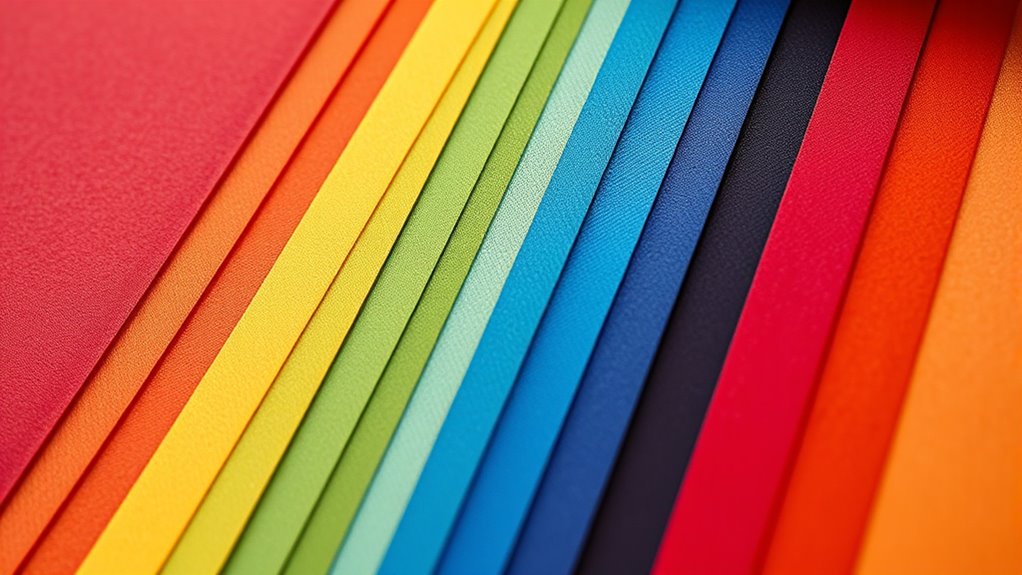
Colors have a powerful impact on our emotions and perceptions, often influencing how we feel and behave without us even realizing it. This is especially evident in marketing, where color perception in marketing plays an essential role in shaping consumer responses. When you see a bright red logo, you might feel energized or excited, which is why many brands use red to grab attention and evoke passion. Similarly, blue often communicates trust and reliability, making it a popular choice for financial institutions. Marketers carefully select colors to align with their brand message and influence purchasing decisions, understanding that different hues can trigger specific emotional responses. But it’s not just about individual colors; cultural differences in color symbolism add another layer of complexity. What signifies celebration in one culture might symbolize mourning in another. For example, white is associated with purity and weddings in Western societies, but it’s often linked to mourning and funerals in some Asian cultures. Red, which can evoke love and energy in many places, is also considered auspicious and lucky in China, making it a powerful color during festivals and celebrations. Conversely, in some cultures, it might carry warnings or signify danger, affecting how people interpret its use in branding or everyday life. Additionally, understanding color psychology can help marketers craft more effective campaigns tailored to diverse audiences.
Understanding these cultural differences is essential if you’re working in international markets. A color that resonates positively in one country might offend or confuse in another. A color that resonates positively in one country might offend or confuse in another. For instance, green is generally associated with nature and health, but in some Middle Eastern cultures, it has religious significance and can carry political connotations. When designing a product or campaign, you need to consider these nuances to avoid miscommunication or unintended offense. It’s also worth noting that people’s personal experiences and cultural backgrounds shape their individual perceptions, so your audience might interpret colors uniquely based on their context. This means that effective use of color in marketing requires more than just choosing trendy hues; it demands cultural awareness and sensitivity.
Frequently Asked Questions
How Do Color Preferences Change Across Different Age Groups?
As you age, your color preferences tend to shift due to developmental color associations. Younger children often favor bright, bold colors like red and yellow, which evoke excitement. In adolescence and adulthood, preferences may lean toward more subdued or sophisticated hues like blue or gray. Older adults might prefer calming, muted shades that promote relaxation. These age-related color preferences reflect evolving emotional needs and cultural influences, shaping how you respond to different colors over time.
Can Color Therapy Influence Emotional Well-Being Long-Term?
Like the steady hand of a master painter, color therapy can influence your emotional well-being over time. By harnessing color psychology, you may experience a lasting emotional impact that promotes relaxation, positivity, or focus. While it’s not a cure-all, consistent exposure to specific colors can reinforce emotional shifts, helping you build resilience and maintain a balanced mood long-term.
How Do Cultural Differences Affect Color Symbolism in Marketing?
Cultural differences profoundly influence how you interpret color symbolism in marketing. When you engage in cross-cultural branding, you must consider regional color associations, which vary widely. For example, red symbolizes luck in China but danger in Western countries. By understanding these nuances, you can tailor your marketing strategies to resonate emotionally with diverse audiences, ensuring your message aligns with their cultural perceptions and enhances your brand’s global appeal.
What Role Does Color Play in Non-Verbal Communication?
You might think words are the only way to communicate, but color plays a bigger role in non-verbal cues than you realize. Through color psychology, you send messages instantly—red for urgency, blue for calm, yellow for happiness—affecting how others perceive you. Our visual perception interprets these colors subconsciously, making color a powerful, silent language that influences emotions and interactions without uttering a single word.
Are There Individual Differences in Color Perception and Emotional Response?
Yes, individual differences in color perception and emotional responses exist. Your personal color preferences influence how you react emotionally to specific hues, while sensory processing differences can heighten or dull your sensitivity to certain colors. These factors mean that your emotional experience with colors isn’t the same as others’, making your color perception unique. Recognizing these differences helps you understand why you might feel differently about colors than someone else.
Conclusion
So, next time you choose a color, remember how it can subtly influence feelings and perceptions—sometimes in ways you might not even realize. It’s a coincidence how certain hues can evoke specific emotions across cultures, isn’t it? Your choice of color isn’t just about looks; it’s a powerful tool shaping how others see you and how you feel. Keep this in mind—you might just find your favorite shade holds more meaning than you thought.