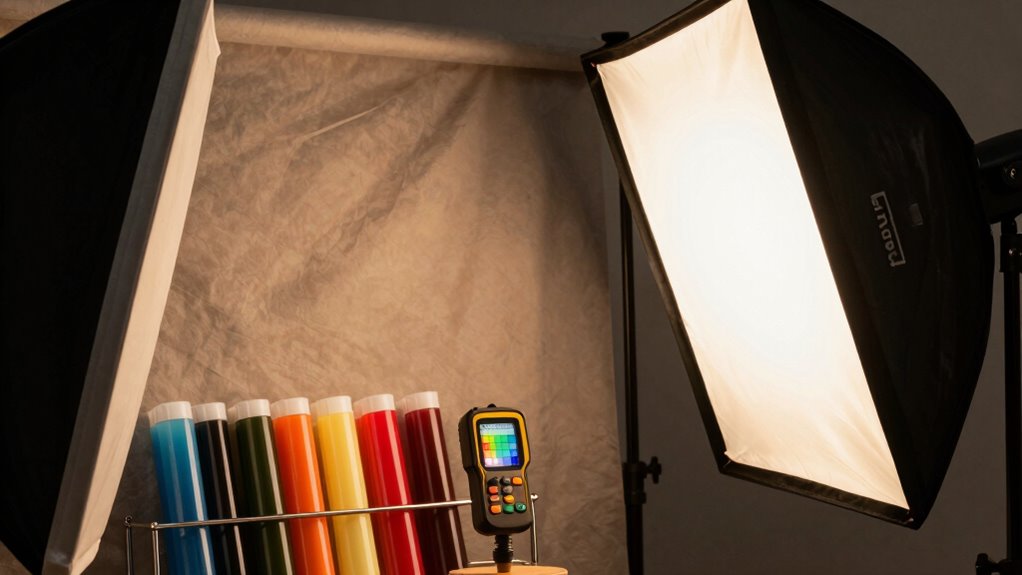

Before upgrading your studio lighting for color, consider the types of bulbs that match your fixtures, ensuring compatibility for safety and performance. Choose bulbs with the right color temperature, like daylight-balanced (~5500K) for natural light or warmer tones for a cozy feel. Focus on high CRI bulbs for accurate color rendering, and think about adjustable lighting options or filters for creative flexibility. Keep these points in mind to create a professional setup that enhances your images; there’s more to discover for perfect results.
Key Takeaways
- Verify fixture compatibility and socket types to ensure safe and reliable bulb installation.
- Choose bulbs with high CRI (above 90) for accurate color rendering and professional results.
- Select appropriate color temperatures (e.g., daylight, warm, cool) to set the desired mood and tone.
- Consider adjustable bulbs or color filters for creative flexibility and dynamic lighting effects.
- Assess the overall quality and features of bulbs to enhance image fidelity and long-term performance.
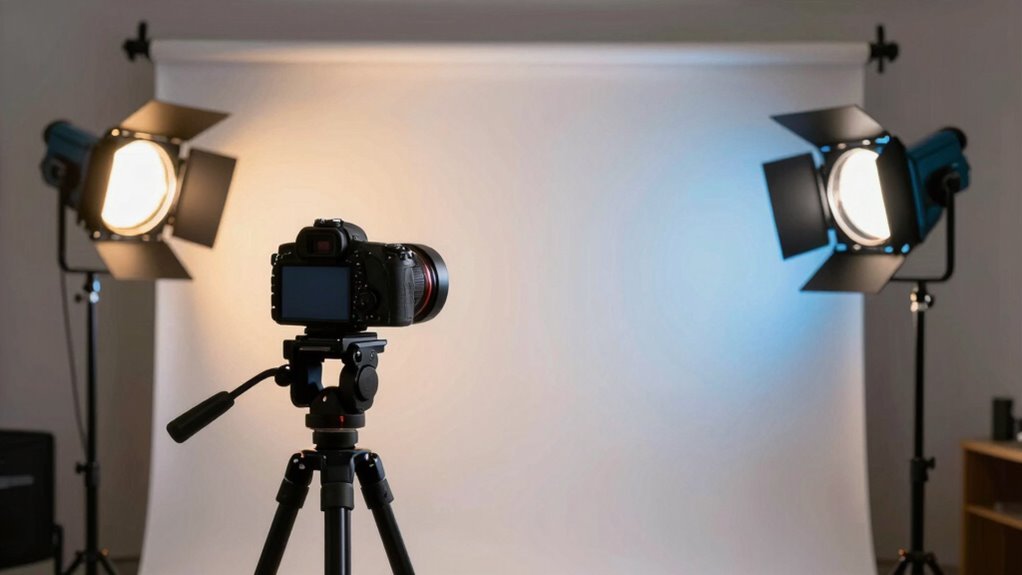
Upgrading your studio lighting can considerably improve the quality of your photos, but knowing where to start can be overwhelming. When focusing on color, the first thing to contemplate is the lighting color itself. Different light sources emit various hues, which can dramatically affect the mood and realism of your images. You want to choose lighting that enhances your subject without introducing unwanted color casts. For example, daylight-balanced bulbs (around 5500K) produce a neutral light that closely mimics natural sunlight, making them ideal for most studio setups. On the other hand, warmer lights (around 3200K) can add a cozy, inviting feel, while cooler shades can create a more clinical or modern vibe. Deciding on the right lighting color depends on the style and tone you aim to achieve in your photography.
Choosing the right lighting color sets the mood and enhances your subject without unwanted color casts.
Another critical aspect is bulb compatibility. Not all bulbs work with every fixture, and mismatched bulbs can lead to flickering, inconsistent color output, or even damage to your equipment. Before upgrading, you need to verify the compatibility of your existing fixtures with the new bulbs you’re considering. Check the socket type—such as E26, E27, or GU10—and ensure that the wattage and voltage ratings match what’s specified for your equipment. Using incompatible bulbs can cause overheating or electrical issues, which might compromise your lighting setup or pose safety hazards. If you’re investing in new fixtures, choose ones that support a range of bulb types and wattages to give you flexibility in future upgrades. Additionally, paying attention to lighting quality and the bulb’s features can help you make more informed choices. Selecting bulbs with high CRI values ensures accurate color reproduction and professional results.
When selecting lighting color, also think about the color rendering index (CRI). A high CRI (above 90) guarantees that your lights render colors accurately, which is essential for professional-looking photos. Lower CRI bulbs might save you money but can distort colors, affecting skin tones, fabric colors, and overall image fidelity. Make sure the bulbs you select not only match your fixture’s compatibility but also meet your quality expectations.
Finally, consider the versatility of your lighting. Using adjustable bulbs or fixtures with color filters can expand your creative options without constantly swapping out hardware. By paying attention to lighting color and bulb compatibility, you set a solid foundation for a professional, customizable studio environment. This ensures your lighting upgrades enhance your work rather than hinder it, giving you confidence in every shot you take.

85W Photography Light Bulb 5500K CFL Daylight Softbox Lighting Kit Bulb
- Color Rendering Index: CRI 85-90 for accurate colors
- Brightness: 6000 lumens for bright lighting
- Color Temperature: 5500K daylight white
As an affiliate, we earn on qualifying purchases.
As an affiliate, we earn on qualifying purchases.
Frequently Asked Questions
How Do I Choose the Right Color Temperature for My Studio Lights?
You should choose a color temperature that matches your intended look and workflow, typically around 5600K for daylight or 3200K for tungsten. Focus on maintaining proper spectral balance for accurate color reproduction, and perform color calibration regularly to guarantee consistency. Picking the right temperature helps achieve natural skin tones and vibrant colors, making your images look professional. Adjust your lights as needed to maintain a balanced, true-to-life color output.
What Are the Best Budget-Friendly Options for Color-Accurate Lighting?
You don’t need to break the bank for color-accurate lighting. Opt for budget-friendly LED panels with good color calibration ratings; many now offer reliable color rendering at affordable prices. Look for options with LED longevity, ensuring your lights stay consistent over time. These choices give you accurate color without sacrificing your budget, making them perfect for hobbyists or professionals seeking quality without overspending.
How Does Light Diffusion Affect Color Accuracy in Studio Setups?
Light diffusion plays a vital role in maintaining color fidelity in your studio setup. It evenly spreads light, reducing harsh shadows and minimizing color shifts caused by direct beams. By softening the light, diffusion helps your colors appear more accurate and consistent, ensuring your subject’s true hues are captured. When choosing diffusers, opt for high-quality materials to preserve color accuracy, making your lighting setup more reliable for professional, color-precise photography.
Can I Mix Different Brands of Studio Lights for Consistent Color?
Yes, you can mix different brands of studio lights for consistent color, but it requires careful attention to brand compatibility and color matching techniques. You should check if the lights have similar color temperatures and use calibration tools or gels to match their output closely. Consistent testing and adjustments are vital to guarantee that the mixed lights produce uniform, accurate colors across your setup.
What Maintenance Is Required to Keep Studio Lighting Colors Consistent?
Like tuning a fine instrument, maintaining your studio lighting requires regular lamp calibration and monitoring bulb longevity. You should periodically calibrate your lamps to guarantee consistent color output, avoiding shifts that can affect your work. Replacing bulbs before they reach the end of their lifespan prevents color drift. Keep fixtures clean and handle bulbs carefully, so your lighting remains reliable, vibrant, and true to color, just like a well-tuned orchestra.

NiceVeedi 2-Pack Photography Lighting Kit, 36W Bi-Color Studio Lights 2700-6500K CRI 95+, Dimmable LED Video Light Kit with Remote Control & 72” Tripod Stand, Lighting for Video Recording/Photography
- High Output Bi-Color Lighting: 36W with adjustable 2700K-6500K temp
- Precise Brightness Control: 1% to 25% gear adjustment
- Built-in Barndoor Design: Adjustable from 90° to 150° for light control
As an affiliate, we earn on qualifying purchases.
As an affiliate, we earn on qualifying purchases.
Conclusion
Upgrading your studio lights is like planting new seeds—each choice shapes the vibrant colors that will bloom in your images. Think of your lights as the sun, guiding the colors to flourish or fade. When you choose wisely, you’ll cultivate a space where every hue sings with clarity and life. Embrace this upgrade as your chance to nurture your artistry and watch your creations blossom in stunning, true-to-life color.

Dimmable E26 Warm LED Light Bulb, 6W RGBW Color 500LM with 16 Color Changing Modes for Christmas, Party etc with Remote Control 2 Pack
- Remote-controlled RGB LED bulb: Dimmable with remote control for versatile use
- Dimmable and flicker-free: Adjust brightness easily for perfect ambiance
- Multiple lighting modes and colors: Includes 4 modes and 16 colors for customization
As an affiliate, we earn on qualifying purchases.
As an affiliate, we earn on qualifying purchases.

20 Pack Gel Light Filter Sheets, A4 Size Transparency Colored Plastic Sheets,Light Gel Filters for Photography Studio Lighting, Stage LED Light,Headlight Film,DIY Tinted Window Film&Light Diffuser
- Package Includes: 20 colorful gel sheets in 10 shades
- High-Quality Material: Durable, flexible, lightweight plastic
- Versatile Use: Lighting, window tinting, decor, diffusers
As an affiliate, we earn on qualifying purchases.
As an affiliate, we earn on qualifying purchases.