

To make landing pages work in real projects, focus on designing targeted, goal-driven pages that guide visitors toward key actions like signing up or buying. Use data-driven A/B testing to refine headlines, visuals, and layout for better conversions. Simplify forms and craft compelling CTAs that speak directly to your audience. Continuously track performance and adjust your approach to align with your overall marketing goals. Keep exploring these strategies to turn your landing pages into powerful assets.

Get art and craft supplies delivered free — and shop member deals
- Fast, free delivery on millions of items
- Access to Prime Big Deal Days deals on October 6–7
- Prime Video, Amazon Music and more included
Key Takeaways
- Define clear, specific goals for each landing page to guide design and content focus.
- Use A/B testing to compare variations and identify the most effective elements.
- Optimize user experience by simplifying forms and making CTAs compelling and prominent.
- Continuously track data and experiment with small changes to improve performance over time.
- Align landing page messaging and design with overall marketing strategy for cohesive branding.
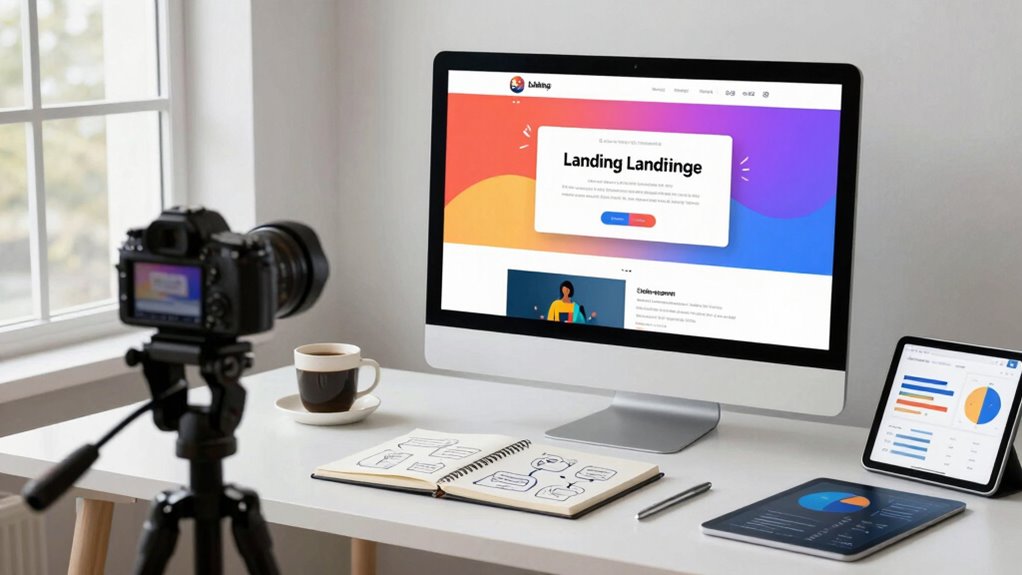
Have you ever wondered how effective landing pages can significantly boost your project’s success? It’s all about crafting a focused experience that guides visitors toward a specific goal, whether that’s signing up, making a purchase, or downloading content. To make this happen, you need to understand the significance of continuous improvement through A/B testing and conversion optimization. A/B testing allows you to compare different versions of your landing page, revealing which elements resonate best with your audience. For example, you might test two headlines, button colors, or layouts to see which one drives more conversions. This data-driven approach helps you eliminate guesswork, refine your messaging, and craft a page that truly appeals to your visitors’ preferences.
Effective landing pages boost success through continuous A/B testing and focused optimization.
Conversion optimization plays an essential role in transforming visitors into active participants. It’s about removing any obstacles that could prevent someone from taking the desired action. This might involve streamlining your sign-up form, reducing clutter, or making your call-to-action (CTA) more compelling. When you focus on user experience, you guide visitors smoothly through the process, increasing the likelihood they’ll convert. Use clear, concise language and persuasive visuals to reinforce your message. Keep in mind that every element on your landing page should serve a purpose and contribute to your overall goal. Additionally, understanding the importance of content relevance can greatly enhance your page’s effectiveness. Incorporating user-centered design principles ensures your landing page addresses the specific needs and expectations of your target audience, further improving its performance. Recognizing content quality as a key factor also helps in creating engaging and trustworthy pages. Moreover, applying conversion rate optimization techniques can help maximize your results by systematically identifying and implementing improvements. Staying informed about AI-powered personalization can further tailor your content to individual visitors, increasing engagement and conversions.
To make your landing pages work in real projects, you need to be adaptable and willing to experiment. Start with a solid hypothesis based on your target audience’s needs and preferences. Then, create variations and run A/B tests to see which performs best. Remember, small changes can have significant impacts, so don’t hesitate to test different headlines, images, or button placements. Track your results meticulously, and use insights from your tests to inform future iterations. Over time, this process of continuous testing and optimization will help you build landing pages that consistently convert visitors into customers or leads.
Finally, guarantee your landing page is aligned with your overall marketing strategy. Your message, branding, and offers should be cohesive across all touchpoints. When you combine compelling design, targeted messaging, and ongoing testing, your landing pages become powerful tools that drive real results. With dedication to A/B testing and conversion optimization, you’ll turn your landing pages into reliable assets that support your project’s growth and success.
As an affiliate, we earn on qualifying purchases.
Frequently Asked Questions
How Do I Optimize Landing Pages for Mobile Devices?
To optimize your landing pages for mobile devices, focus on responsive design, guaranteeing layouts adjust seamlessly across screens. Use mobile testing tools to identify issues like slow loading times or small click targets. Simplify content, prioritize key messages, and minimize images for faster load speeds. Clear call-to-action buttons and easy navigation are essential. Regularly test your pages on different devices to ensure a smooth, user-friendly experience that boosts conversions.
What Are Common Mistakes to Avoid in Landing Page Design?
You should avoid cluttered layouts, inconsistent color schemes, and weak calls to action that don’t stand out. Make sure your color schemes align with your brand and guide users’ attention naturally. Your call to action needs to be clear, compelling, and easy to find. Steer clear of too much text or confusing navigation, which can distract visitors from taking the desired action. Keep it simple, focused, and visually appealing.
How Can I Improve Landing Page Load Speed?
To improve your landing page load speed, focus on optimizing image compression to reduce file sizes without sacrificing quality. Additionally, guarantee your server response times are swift by choosing reliable hosting and minimizing server processing delays. Combining these strategies creates a seamless user experience, where attractive visuals load quickly and visitors stay engaged. Speeding up load times directly boosts conversions, making your landing page more effective and less likely to lose visitors due to delays.
What Metrics Should I Track to Measure Success?
You should track metrics like conversion rate, bounce rate, and time on page to gauge success. A/B testing helps you compare different versions of your landing page, revealing what resonates most with users. Additionally, monitor user engagement signals like click-through rates and scroll depth. These metrics give you insights into visitor behavior, enabling you to optimize your landing page continually for better performance and higher conversions.
How Often Should I Update or Test Landing Pages?
You should update and test your landing pages regularly, ideally every few weeks or after significant campaign changes. Perform A/B testing consistently to compare different headlines, images, or calls-to-action, and revitalize your content to keep it relevant and engaging. By continuously testing, updating, and revitalizing, you guarantee your landing pages stay optimized, attract more users, and convert visitors into customers effectively.
conversion rate optimization software
As an affiliate, we earn on qualifying purchases.
As an affiliate, we earn on qualifying purchases.
Conclusion
Now you’re armed with the secrets to making landing pages truly work in your projects. Implement these strategies, test relentlessly, and watch your conversions skyrocket like a rocket to the moon. Remember, a well-crafted landing page isn’t just a tool—it’s your secret weapon for turning visitors into loyal customers. So go ahead, create with confidence, and prepare to witness results so incredible they’ll leave everyone in awe. Your success story is just a click away!
As an affiliate, we earn on qualifying purchases.
As an affiliate, we earn on qualifying purchases.
Fall Picks
fall essentials
As an affiliate, we earn on qualifying purchases.