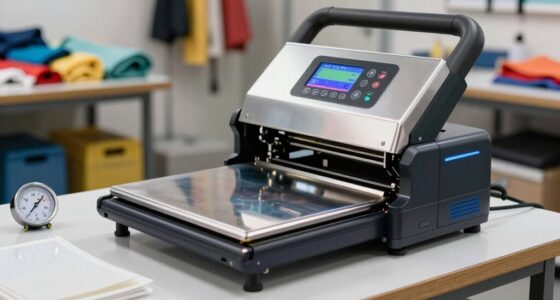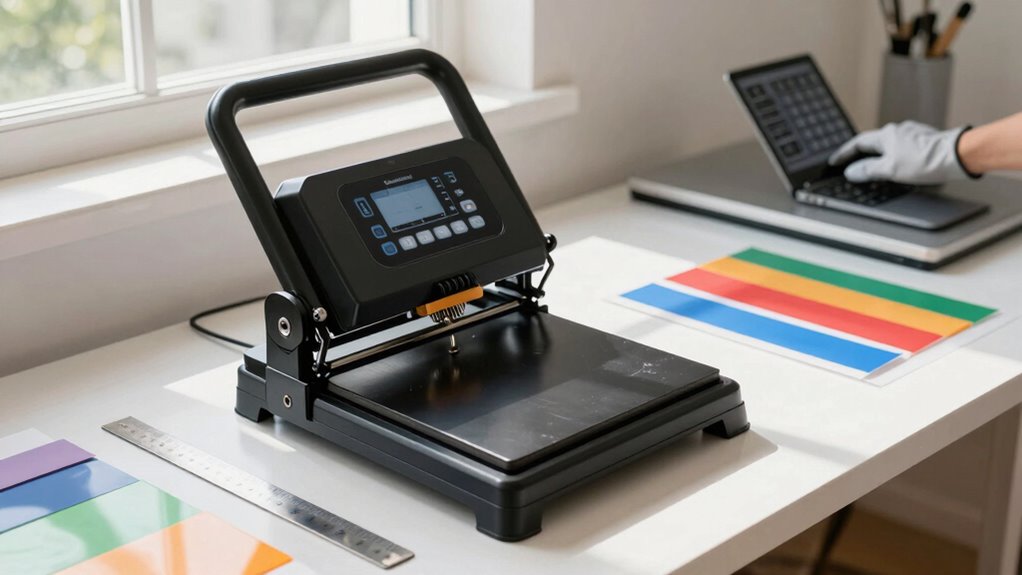

To choose the right heat press workflow, start by considering your materials and design complexity to pick suitable transfer techniques like HTV, sublimation, or screen printing. Maintain and calibrate your equipment regularly to guarantee consistent quality. Organize your workspace for efficiency and document your ideal settings. Balancing technique choice with diligent maintenance helps produce high-quality results and reduces waste. Keep these steps in mind, and you’ll discover more ways to maximize your process for professional finishes.

Get art and craft supplies delivered free with Prime
- Fast, free delivery on millions of items
- Prime Video, Amazon Music and more included
- Member-only deals all year
Key Takeaways
- Assess material types and design complexity to select the most suitable heat transfer technique.
- Establish a routine for equipment maintenance and calibration to ensure consistent results.
- Standardize procedures and document optimal settings for different transfer methods.
- Incorporate quality control checks and troubleshooting to maintain high product standards.
- Organize your workspace and train staff to streamline workflow and minimize errors.
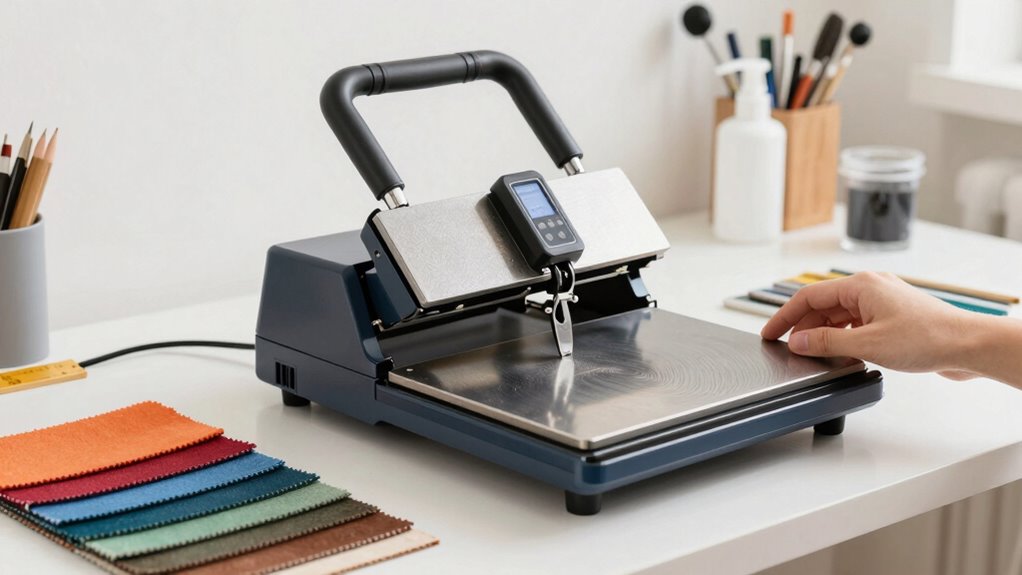
Choosing the heat transfer techniques that best suit your projects is also crucial to ensure consistent results. Your workflow determines how smoothly your operation runs, how efficiently you produce items, and how well your final products meet expectations. To establish an effective process, you need to understand various heat transfer techniques and how to maintain your equipment properly. These elements work together to create a seamless workflow that minimizes errors and maximizes output quality.
When choosing your heat transfer techniques, consider the types of materials you plan to print on and the complexity of your designs. For simple graphics, a straightforward approach such as heat transfer vinyl (HTV) might be sufficient. For more detailed or multi-colored images, you might opt for sublimation or screen printing. Each technique has its specific requirements for temperature, pressure, and time, so understanding these parameters is crucial to achieving consistent results. Once you’ve selected the appropriate heat transfer method, you can develop a step-by-step process that optimizes each stage, from design preparation to final pressing.
Equipment maintenance plays a vital role in maintaining your workflow’s efficiency and ensuring high-quality outcomes. Regularly cleaning your heat press, checking for worn-out parts, and calibrating the temperature and pressure settings can prevent many common issues like uneven prints or equipment failure. When your equipment is well-maintained, you reduce downtime, avoid costly mistakes, and extend the lifespan of your tools. Establish a routine maintenance schedule and stick to it, so your heat press remains reliable and performs at its best. Additionally, understanding the importance of equipment calibration helps in maintaining accurate settings for each project. Incorporating proper troubleshooting techniques can further help in quickly resolving issues that may arise during production. Regularly monitoring your equipment’s performance ensures that your workflow stays consistent and efficient over time. Consistent quality control is also key to maintaining high standards throughout your production. Paying attention to proper technique application ensures that each transfer is executed correctly for optimal results.
Furthermore, integrating a systematic approach to your workflow involves organizing your workspace, standardizing procedures, and documenting settings for different projects. This consistency allows you to replicate successful results and quickly troubleshoot any issues that arise. For example, maintaining a record of optimal temperature and pressure settings for each transfer technique helps you fine-tune your process over time. Training yourself or your team on proper equipment handling and emphasizing the importance of equipment maintenance can further streamline operations. A well-structured workflow also includes efficient material handling to prevent delays and mix-ups during production.
Ultimately, your goal is to create a workflow that balances effective heat transfer techniques with diligent equipment maintenance. This balance ensures you produce high-quality prints consistently while minimizing waste and downtime. As you refine your process, stay attentive to the details, adapt to new techniques or equipment, and keep maintenance routines a priority. By doing so, you’ll develop a reliable, efficient workflow that elevates your printing projects and helps you achieve professional results every time.
As an affiliate, we earn on qualifying purchases.
Frequently Asked Questions
How Do I Determine the Ideal Heat Press Pressure?
To determine the ideal heat press pressure, start by testing with your desired materials and observe the results. Use temperature calibration to guarantee consistent heat, then adjust the pressure accordingly. If the transfer isn’t sticking or is uneven, tweak the pressure adjustment until you get a smooth, durable finish. Remember, proper pressure varies by material thickness, so always perform small tests to find the perfect setting.
What Safety Precautions Should I Follow During Operation?
You should wear safety gear like heat-resistant gloves and eye protection to prevent burns and injuries. Always familiarize yourself with emergency procedures, such as how to quickly disconnect power or handle hot surfaces. Keep your workspace clear of clutter, and never leave the heat press unattended while in operation. Following these safety precautions guarantees you minimize risks and stay safe during heat press activities.
How Does Ambient Temperature Affect Heat Press Results?
Ever wondered how ambient temperature influences your heat press results? Temperature fluctuations can cause inconsistent transfers, making calibration crucial. When the environment is too hot or cold, your equipment might not perform ideally, leading to poor adhesion or color shifts. To guarantee perfect results, monitor ambient conditions and regularly calibrate your heat press. This way, you maintain consistent quality, no matter the temperature outside your workspace.
Can I Use a Heat Press for Multiple Fabric Types?
You can use a heat press for multiple fabric types, but you need to take fabric compatibility into account and perform material testing first. Different fabrics, like cotton, polyester, or blends, require specific temperature and pressure settings. Always test on scrap material to prevent damage. Adjust your heat press settings accordingly and use appropriate transfer papers to ensure the best results across various fabrics.
What Maintenance Is Required for Consistent Performance?
To guarantee consistent performance, you should follow regular maintenance routines like cleaning the heat platen and checking for any wear or damage. Performance tuning involves calibrating temperature and pressure settings regularly to avoid uneven transfers. Keep the machine free of dust and debris, and lubricate moving parts as recommended. This proactive approach helps maintain peak operation, prolongs your heat press’s lifespan, and guarantees quality results every time you use it.
heat transfer vinyl (HTV) sheets
As an affiliate, we earn on qualifying purchases.
As an affiliate, we earn on qualifying purchases.
Conclusion
Choosing the right heat press workflow is like tuning a musical instrument—you need each step in harmony to produce a perfect melody. When you customize your process to fit your unique needs, you’ll find your productivity and quality soar together, creating a symphony of success. Trust in your choices, stay adaptable, and remember that each adjustment brings you closer to the flawless performance you’re aiming for. Keep fine-tuning until your workflow sings just right.
As an affiliate, we earn on qualifying purchases.
As an affiliate, we earn on qualifying purchases.
Halloween Picks
halloween
As an affiliate, we earn on qualifying purchases.