TL;DR

Get art and craft supplies delivered free with Prime
- Fast, free delivery on millions of items
- Prime Video, Amazon Music and more included
- Member-only deals all year
In an interview with Hyperallergic, Colombian artist Doris Salcedo described public anger after objects and artworks were removed from Bogotá’s National Museum on Oct. 15. A court order returned the items within two weeks, and Salcedo said the censorship prompted protests and creative responses outside the museum. She also warned that art can outlast the governments that seek to suppress it.
Colombian artist Doris Salcedo has spoken out after dozens of objects and artworks were removed from Bogotá’s National Museum on Oct. 15, including material related to LGBTQ+ and feminist movements and the 2016 peace agreement with the FARC. In an interview with Hyperallergic, Salcedo described the removal as censorship and said the public response had been forceful; a court order returned the items within two weeks.
The removal was ordered by President Abelardo De la Espriella, according to Hyperallergic. The affected material also included references to left-wing political leaders Carlos Pizarro and Bernardo Jaramillo Ossa, both assassinated in the 1990s. The report says De la Espriella has called the two men “terrorists.”
The episode prompted protests outside the museum, with hundreds of people taking to the streets, according to the report. Salcedo said people had gathered there every day from Oct. 15 and described university professors bringing classes to teach on the museum steps. Some people reproduced objects removed from the displays and showed the copies outside the building.
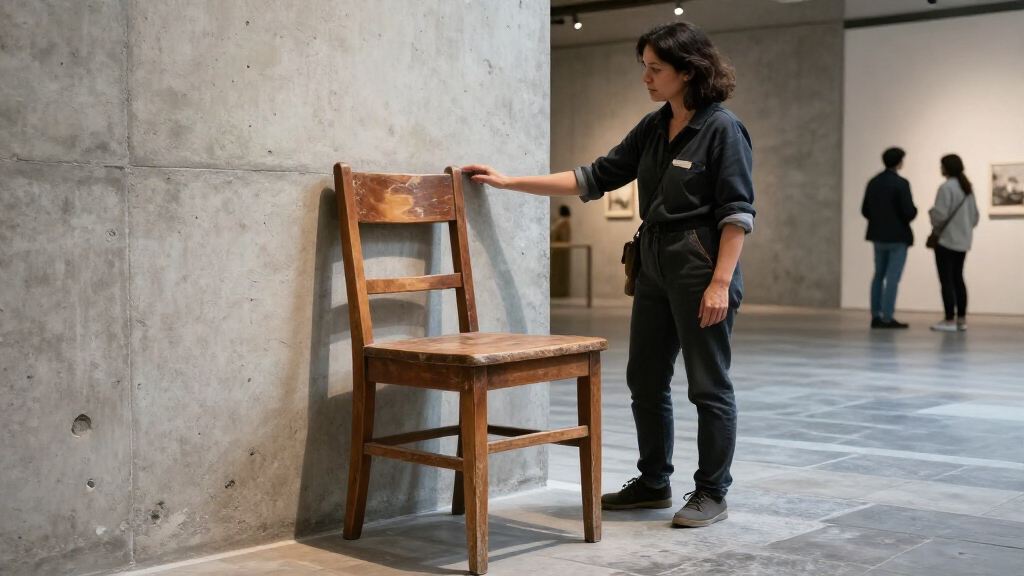
Salcedo told Hyperallergic that the empty spaces left by the removed works became a visible part of the protest. She said the “ghostly rectangles” where paintings had hung made absence feel like a presence. The objects were returned under a court order within two weeks, though the interview does not give the order’s date or further legal details.
Museum Censorship Spurs Public Action
The dispute put a national cultural institution at the center of a wider argument over political memory and public representation. The removed material concerned issues and events that remain contested in Colombia, including gender rights, political violence and the agreement that ended the FARC’s armed conflict with the government.
Salcedo’s account also describes how censorship can redirect attention toward the very objects officials remove. Her comments are an artist’s interpretation of the events, not a measure of public opinion across Colombia. Still, the protests and reproductions documented in the report show that the decision prompted visible public action and turned the museum’s entrance into a site for debate.
For readers beyond Colombia, the incident offers a specific example of how decisions about museum displays can become political disputes. Salcedo connected the case to broader concerns about government pressure on cultural institutions, while emphasizing Colombia’s own history of repression and political violence.
Popular right now

Apple AirPods Max 2 Wireless Over-Ear Headphones – Midnight

KitchenAid 5.5-Qt Bowl-Lift Stand Mixer, Porcelain White (KSM55SXXX)

De'Longhi Dinamica Plus Fully Automatic Espresso Machine
As an affiliate, we earn on qualifying purchases.
Salcedo’s Practice of Public Memory
Salcedo has built an artistic practice around historical trauma, mourning and political violence. One of her major public projects is Fragmentos, a Bogotá installation opened in 2018. Its floor was made from melted-down FARC weapons and shaped by women who had experienced sexual assault during the conflict. Salcedo has described the work as an “anti-monument” marking the end of the guerrilla war.
The Hyperallergic report says Fragmentos was previously affected during the presidency of Iván Duque. Salcedo’s 2026 comments therefore followed an earlier dispute over a work tied to the peace process, though the report presents the National Museum removal as a separate episode. She was speaking ahead of a planned trip to New York, where she was due to present new work at White Cube on Nov. 13.
Her comments came amid a turbulent political period. Salcedo characterized the government as authoritarian and compared the pace of its actions with that of U.S. President Donald Trump. Those are her assessments; the interview does not independently document or evaluate the full range of the Colombian government’s actions.
““Works of art last much longer than their governments.””
— Doris Salcedo, speaking to Hyperallergic
The Dispute’s Legal and Political Aftermath
The report says a court order led to the works’ return within two weeks, but does not identify the court, explain its reasoning or specify whether the order was temporary or final. It also does not establish whether the museum has changed its display policies or whether officials intend to remove or alter any material again.
The report documents protests and describes Salcedo’s view of the public response, but does not provide polling or a broader assessment of Colombian public opinion. The full list of removed objects, the government’s detailed explanation for taking them down and the precise legal status of each item are not included in the supplied account.
Salcedo’s New York Presentation
Salcedo was preparing to present new works at White Cube in New York on Nov. 13, according to Hyperallergic. The interview does not give further details about the exhibition or say whether the National Museum dispute will be addressed in the work.
In Colombia, the immediate reported development is that the removed objects were reinstated under court order. Any further legal action, changes to museum displays or renewed government instructions were not specified in the interview. Those details would clarify whether the dispute has concluded or could return.
Key Questions
What was removed from Colombia’s National Museum?
Dozens of objects and artworks were taken off display, including material related to LGBTQ+ and feminist movements, the 2016 FARC peace agreement and political leaders Carlos Pizarro and Bernardo Jaramillo Ossa, according to Hyperallergic.
Who is Doris Salcedo?
Salcedo is a Colombian artist whose work addresses political violence, mourning and historical memory. Her Bogotá installation Fragmentos was made using melted-down FARC weapons and opened in 2018.
Were the removed works returned?
Yes. The report says a court order led to the objects being reinstated within two weeks of their removal. It does not provide the court’s reasoning or the order’s exact date.
How did people respond to the removal?
The report describes protests outside the museum and says people gathered there daily after Oct. 15. Salcedo also recounted that university professors held classes on the museum steps and that reproductions of removed objects were displayed outside.
What happens next?
Salcedo was due to present new work at White Cube in New York on Nov. 13. The interview does not establish what further legal or museum developments may follow in Colombia.
Source: hyperallergic.com