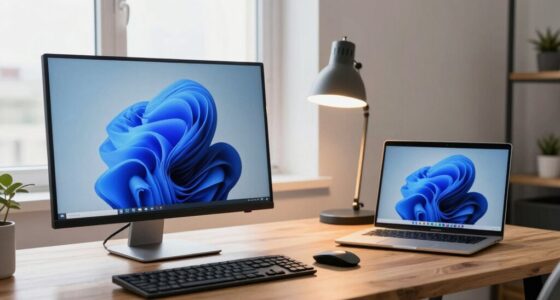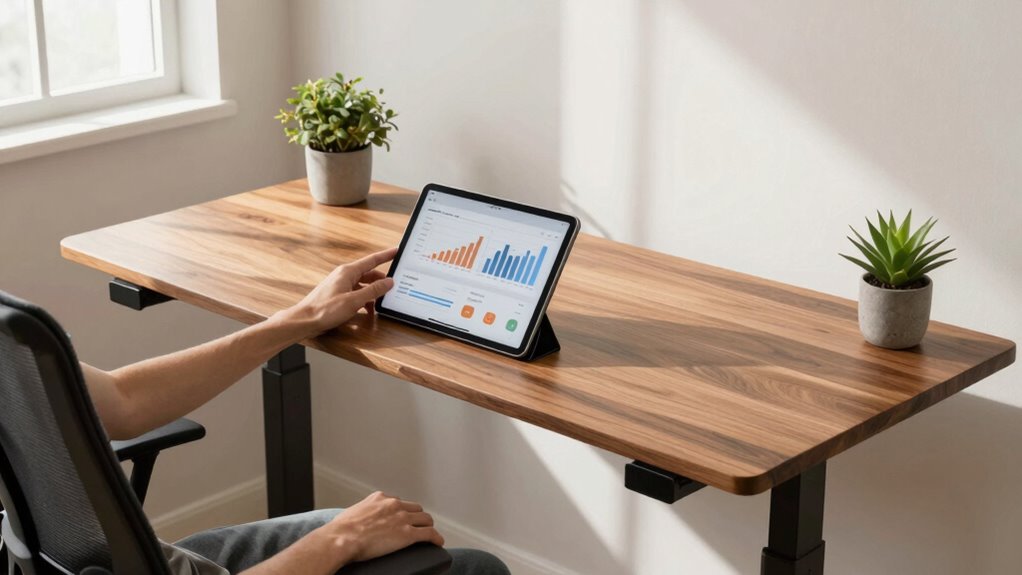

To compare your standing desk habits smartly, focus on evaluating your ergonomics, break routines, and posture adjustments regularly. Use timers or reminder apps to track how often you switch between sitting and standing, ensuring you don’t overdo it. Pay attention to discomfort or fatigue signals, and invest in ergonomic accessories like monitor arms or anti-fatigue mats for better support. Keep refining your habits for long-term comfort and health—stay with it, and you’ll discover even more ways to optimize your setup.

Get art and craft supplies delivered free with Prime
- Fast, free delivery on millions of items
- Prime Video, Amazon Music and more included
- Member-only deals all year
Key Takeaways
- Use wearable sensors or apps to objectively monitor posture, duration, and frequency of standing and sitting intervals.
- Regularly record comfort levels and discomfort symptoms to identify effective habits and areas needing adjustment.
- Compare ergonomic setups and accessories to determine which promote better posture and reduce fatigue over time.
- Implement self-assessment checklists to systematically evaluate posture correctness during standing and sitting.
- Analyze long-term health data and productivity metrics to refine habits for optimal well-being and efficiency.
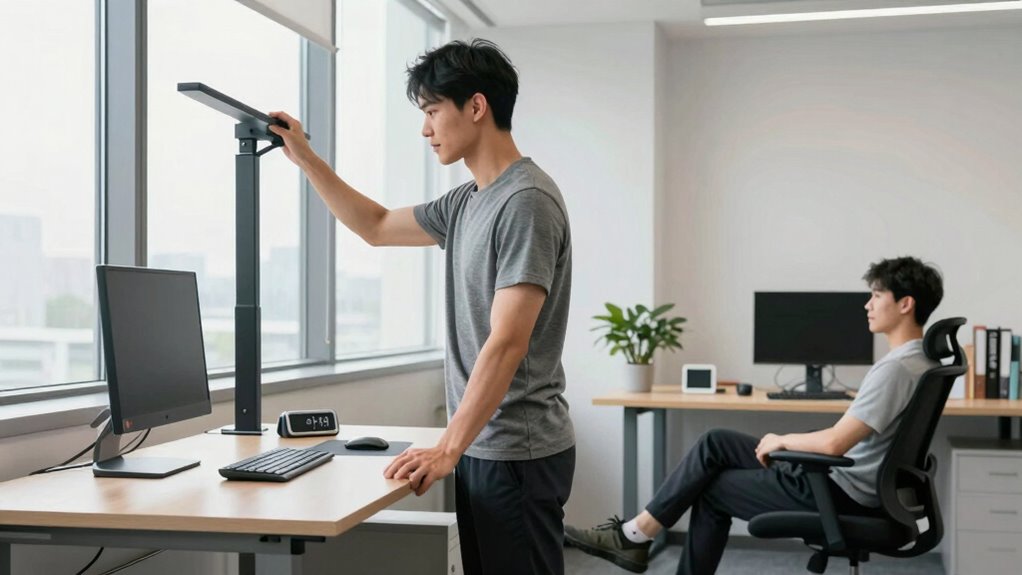
Switching to a standing desk can boost your energy and reduce the health risks associated with prolonged sitting, but developing good habits is essential to make the most of this change. One of the smartest ways to do that is by focusing on how you compare and refine your standing desk habits regularly. It’s not just about standing; it’s about standing smartly. Incorporating ergonomic accessories can dramatically improve your comfort and help you maintain good posture throughout the day. Items like anti-fatigue mats, monitor arms, and adjustable keyboard trays ensure your workspace aligns with your body’s needs, reducing strain and fatigue. When you use these accessories, you’re less likely to develop discomfort or bad habits that could negate the health benefits of standing.
Using ergonomic accessories helps maintain comfort and proper posture, maximizing the health benefits of your standing desk.
Posture adjustments are equally important. As you switch between sitting and standing, pay close attention to how you hold your body. Keep your feet shoulder-width apart, distribute your weight evenly, and avoid locking your knees. Position your monitor at eye level to prevent neck strain, and keep your elbows close to your sides at about a 90-degree angle for typing. These adjustments help you stay aligned and avoid slouching or leaning forward, which can cause long-term issues. Regularly checking in on your posture acts as a quick self-assessment, ensuring you’re not slipping into habits that could lead to discomfort or injury. Recognizing the importance of ergonomic setup can make a significant difference in maintaining comfort and health. Additionally, understanding ergonomic principles can help you make more informed adjustments to your workspace. Being mindful of proper ergonomic alignment can further enhance your comfort and prevent strain over time. Developing an awareness of postural habits can also promote better long-term health and prevent repetitive strain injuries. Incorporating ergonomic awareness into your routine can help you identify and correct poor habits before they lead to discomfort.
To compare your standing desk habits effectively, you need to be mindful of your routines. Take note of how long you stand at a stretch and how often you shift positions. A good rule of thumb is to alternate between sitting and standing every 30 to 60 minutes. Use a timer or a reminder app to cue you when it’s time to change. Track your comfort levels and any discomfort you experience, adjusting your habits accordingly. If you notice persistent aches or fatigue, it might be time to tweak your ergonomic setup or take more frequent breaks. Remember, the goal isn’t just to stand but to stand correctly and comfortably.
Making these comparisons isn’t about perfection; it’s about continuous improvement. Over time, you’ll learn what works best for your body and your workflow. Regularly reviewing your habits, investing in ergonomic accessories, and practicing proper posture adjustments will help you maximize the benefits of your standing desk. By staying attentive and proactive, you create a sustainable routine that promotes better health, increased productivity, and greater comfort throughout your workday.
Popular right now

KitchenAid Artisan Series 5-Quart Tilt-Head Stand Mixer, Dried Rose (KSM150PS)

KitchenAid Classic Series 4.5 Quart Tilt-Head Stand Mixer K45SS, Onyx Black

Apple AirPods Pro 3 Wireless Earbuds with Active Noise Cancellation
As an affiliate, we earn on qualifying purchases.
Frequently Asked Questions
How Long Should I Stand at My Desk Each Day?
You should aim to stand at your desk for about 2 to 4 hours daily, breaking it into intervals to avoid fatigue. Use ergonomic footwear to stay comfortable and prevent strain. Make sure your desk height adjustments keep your elbows at a 90-degree angle and your monitor at eye level. Alternating between sitting and standing helps reduce discomfort, so listen to your body and take regular breaks to stay productive and healthy.
Can Standing All Day Improve My Posture?
Standing all day is like planting a sturdy tree; it can strengthen your posture, but only if you support it properly. To truly see posture correction, focus on ergonomic footwear, which cushions and aligns your feet, influencing your entire alignment. Without balance, prolonged standing might cause more harm than good. Incorporate movement and ergonomic support, and you’ll nurture a healthier, upright stance that endures through your busy day.
What Accessories Can Enhance Standing Desk Ergonomics?
To enhance standing desk ergonomics, you can add keyboard accessories like cushioned wrist rests to reduce strain. Monitor risers are also essential, as they bring your screen to eye level, preventing neck strain. Consider adjustable footrests and anti-fatigue mats for added comfort during long standing periods. These accessories help maintain proper posture, reduce fatigue, and make your standing desk setup more ergonomic and comfortable.
Is There an Ideal Height for a Standing Desk?
The ideal height for your standing desk is when your elbows are at a 90-degree angle, allowing your wrists to remain straight. Use an adjustable height desk to find this position easily. Standing on an ergonomic mat helps reduce fatigue and discomfort. Adjust the desk so your monitor is at eye level, and verify your wrists are straight when typing. Regularly shifting positions keeps you comfortable and maintains good posture.
How Do I Prevent Fatigue When Standing for Long Periods?
Imagine your legs are like a car engine; without proper care, they overheat. To prevent fatigue when standing, choose supportive footwear and avoid flat, unsupportive shoes. Incorporate regular movement breaks—every 30 minutes, stretch or walk around—to keep blood flowing and muscles engaged. This approach helps you stay energized and comfortable, making long periods of standing feel less like a chore and more like a productive routine.
Conclusion
Remember, your standing desk is like a garden—tend to it with mindful habits, and it’ll flourish. Small adjustments, like shifting your stance or taking breaks, are seeds that grow into healthier routines. When you nurture these habits, you’re planting a future of vitality and balance. So, keep tending your workspace with care, and watch your energy bloom—because a smarter approach turns your desk into a thriving garden of well-being.