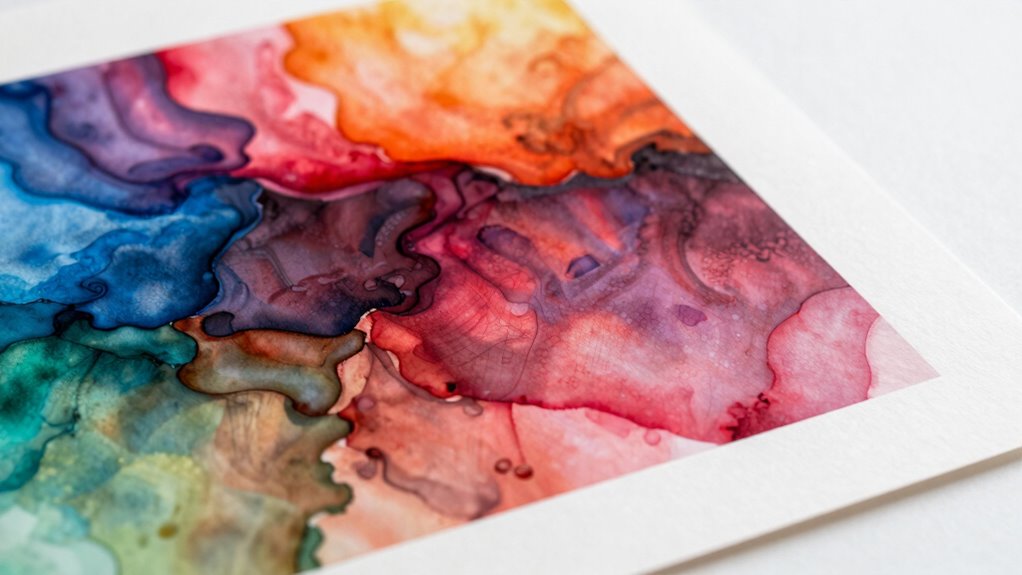

To compare art print ink types, consider how dye inks offer bright colors but fade faster, making them ideal for temporary displays. Pigment inks provide long-lasting durability and better color accuracy, perfect for fine art or limited editions. Think about your project’s purpose—if you want vibrant images, dye might work; for longevity, pigment is better. Keep exploring to discover how these differences impact your print quality and durability over time.
Listen free for 30 days with Audible
Thousands of audiobooks and originals — cancel anytime.
As an affiliate, we earn on qualifying purchases.
Key Takeaways
- Assess ink longevity and resistance to fading for long-term display versus temporary use.
- Compare color vibrancy of dye inks with the superior color accuracy of pigment inks.
- Consider printer compatibility and optimization for maximizing ink performance and durability.
- Match ink type to the purpose: vibrant dye inks for short-term, durable pigment inks for archival prints.
- Understand how ink composition affects stability, color fidelity, and suitability for specific art projects.
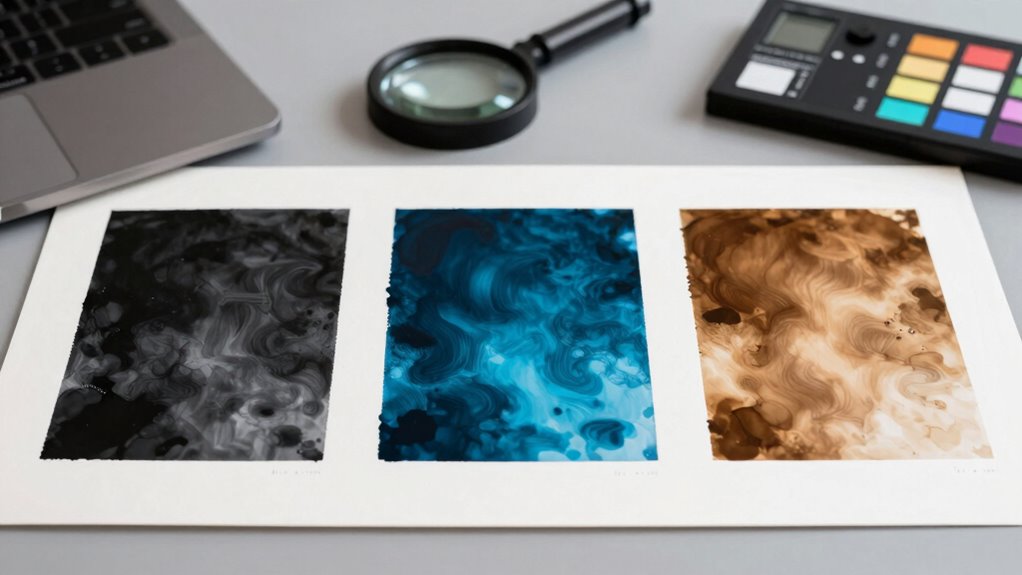
When choosing the right ink for art prints, understanding the different types available can make a significant difference in the final quality and longevity of your work. Ink longevity is essential if you want your prints to withstand the test of time, resisting fading and discoloration. Similarly, color accuracy plays a vital role in ensuring your artwork appears as vibrant and true to your vision as possible. Knowing how various ink types perform in these areas helps you make smarter choices tailored to your project’s needs.
For instance, dye-based inks are popular because they produce bright, vivid colors with excellent color accuracy. They tend to be more affordable and are well-suited for printing on glossy or semi-glossy papers. However, dye inks generally have lower ink longevity, meaning they’re more prone to fading when exposed to light over time. If your priority is creating vibrant, eye-catching pieces for display in protected environments, dye inks are a good option, but if longevity is a concern, they might not be the best choice.
Pigment-based inks, on the other hand, are known for their superior durability and resistance to fading. They contain tiny particles suspended in the ink that bond with paper fibers, resulting in longer ink longevity. This makes them ideal for fine art prints or pieces you want to last decades without losing color vibrancy. While pigment inks often have slightly less intense color brightness compared to dye inks, advancements in technology have improved their color accuracy, ensuring your prints still look stunning and true to your original artwork. Understanding ink composition can help you better grasp how these particles influence color stability and overall print quality. Additionally, chemical stability of pigment inks plays a crucial role in their resistance to environmental factors.
Another factor to weigh is the type of printer you’re using. Inkjet printers often support both dye and pigment inks, but some high-end models are specifically optimized for pigment inks, maximizing both durability and color fidelity. Understanding ink composition and its impact can help you make more informed decisions when selecting your printing materials. Laser printers typically use toner rather than ink, which isn’t as suitable for fine art prints.
Ultimately, your choice should align with your primary goals. If you’re producing limited-edition prints for sale or display, investing in pigment-based inks makes sense, as they preserve your artwork’s integrity over time. If you’re creating temporary pieces, promotional materials, or test prints, dye inks may suffice. Recognizing the trade-offs between ink longevity and color accuracy allows you to select the most appropriate ink type, ensuring your art looks vibrant and remains intact for years to come.
As an affiliate, we earn on qualifying purchases.
Frequently Asked Questions
How Do Ink Types Affect the Longevity of Art Prints?
The ink type directly impacts the longevity of your art prints by influencing ink fade and color stability over time. You’ll find that some inks resist fading better and maintain vibrant colors longer, especially when exposed to light or environmental factors. By choosing high-quality, fade-resistant inks, you guarantee your artwork retains its original brilliance and detail, making it a lasting piece that stands the test of time.
Are Certain Inks More Environmentally Friendly Than Others?
They say, “You are what you use,” and eco-friendly inks certainly reflect that. Some inks are more environmentally friendly than others because they use sustainable printing practices and contain fewer harmful chemicals. Look for inks labeled as eco-friendly or biodegradable, which reduce your carbon footprint. Choosing sustainable printing options not only benefits the planet but also enhances your art’s value, showing your commitment to environmental responsibility.
Can Ink Type Influence the Color Accuracy of Prints?
Yes, ink type definitely influences the color accuracy of your prints. Different inks vary in color saturation and how well they match your original artwork, making some more suitable for precise color reproduction. Additionally, ink compatibility with your printer and paper affects the overall result. Selecting the right ink guarantees vibrant, true-to-life colors and sharp details, helping your prints look as accurate and stunning as possible.
What Are the Cost Differences Between Ink Types?
Have you noticed how ink formulation impacts pricing variations? Generally, dye-based inks tend to be cheaper than pigment-based inks because their production costs are lower. Specialty inks like metallic or eco-friendly options usually cost more due to complex formulations. You’ll find that higher-quality, durable inks often come with a higher price tag, but they provide better longevity and color richness. Are you willing to invest more for premium results?
How Do Ink Types Impact the Drying Time of Prints?
Different ink types substantially impact drying speed due to variations in ink absorption. For example, oil-based inks tend to dry slower because they absorb less quickly into the paper, requiring more time to set. Water-based inks usually dry faster thanks to their higher absorption rate. When choosing ink, consider your desired drying speed to guarantee your prints are ready in time, especially for high-volume or quick-turnaround projects.
As an affiliate, we earn on qualifying purchases.
Conclusion
Now that you’ve seen how different ink types impact your art prints, choosing the right one becomes easier. Don’t worry about getting overwhelmed—think of it like selecting the perfect paintbrush for your masterpiece. For example, dye-based inks are vibrant but less durable, while pigment inks might cost more but last longer. Visualize it as choosing between a quick sketch and a detailed painting—each has its purpose, but knowing the difference helps you create exactly what you envision.
As an affiliate, we earn on qualifying purchases.
As an affiliate, we earn on qualifying purchases.
Flea & tick season Picks
flea and tick prevention
As an affiliate, we earn on qualifying purchases.