To make packaging storytelling work in real projects, start by aligning your design, materials, and messaging with your brand’s core values. Use visual elements like colors and imagery that evoke your brand personality and create emotional connections. Incorporate authentic stories or fun facts to engage consumers and encourage interaction, such as QR codes. Consistency across all touchpoints builds trust. Keep testing and refining these elements to strengthen your brand story and boost recognition. If you keep exploring, you’ll uncover even more effective strategies.

Get art and craft supplies delivered free with Prime
- Fast, free delivery on millions of items
- Prime Video, Amazon Music and more included
- Member-only deals all year
Key Takeaways
- Align packaging materials and design elements with core brand values to ensure authenticity and consistency.
- Use visual language like color, typography, and imagery to convey the brand story before unboxing.
- Incorporate storytelling elements such as brand narratives, interesting facts, or QR codes for interactive engagement.
- Gather consumer feedback to refine storytelling techniques and improve emotional connection.
- Maintain cohesive messaging across all touchpoints to reinforce brand identity and build trust.
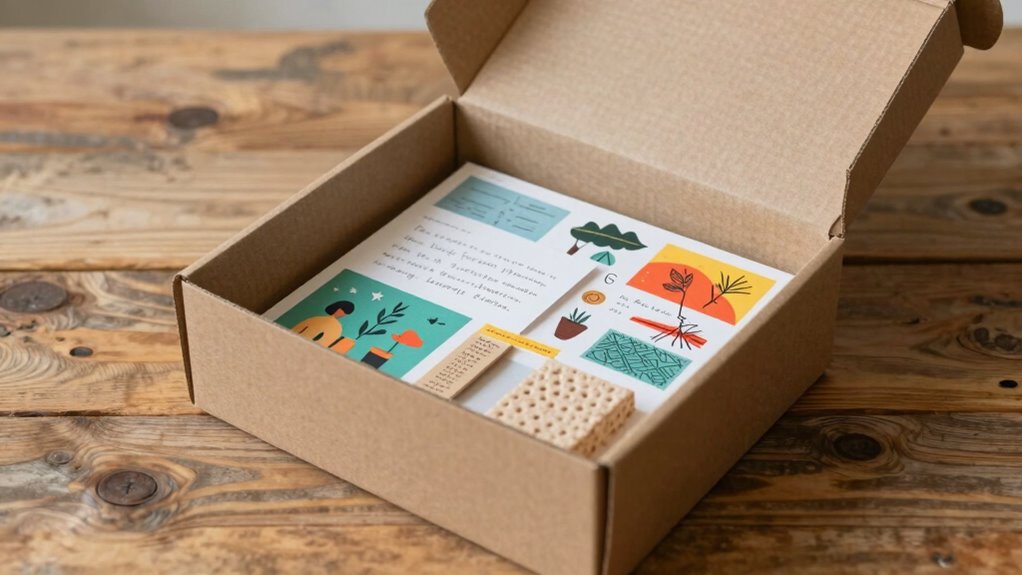
In today’s competitive market, packaging isn’t just about protection or aesthetics—it’s a powerful storytelling tool that can engage customers and communicate your brand’s values. To make storytelling work effectively in real projects, you need to start by understanding your brand identity. What do you stand for? What emotions do you want to evoke? Your packaging should reflect these core elements clearly and consistently. For example, if your brand is eco-friendly, use sustainable materials and design elements that highlight this commitment. When your packaging aligns with your brand identity, it creates a cohesive narrative that resonates with consumers and builds trust.
Effective packaging tells your brand story, building trust through authentic, consistent design aligned with your core values.
Next, focus on creating a visual language that captures attention and hints at your story. Think about color schemes, typography, and imagery that tell a story even before the customer opens the package. These visual cues should evoke feelings and associations linked to your brand’s personality. For instance, a luxury brand might opt for minimalist, elegant design, while a playful, youthful brand might choose vibrant colors and whimsical graphics. When consumers see these design choices, they immediately connect with your story, making your packaging an essential touchpoint for engagement.
Consumer engagement is another key aspect to contemplate. Packaging that invites interaction can turn a simple unboxing into an experience. Incorporate storytelling elements like brief brand stories, interesting facts, or calls to action that encourage customers to explore your product further. You can also use packaging as a platform for storytelling by including QR codes that lead to videos or behind-the-scenes content, deepening their connection with your brand. The goal is to make your packaging memorable, so it sticks with consumers beyond the initial purchase. Incorporating interactive elements can further enhance this connection and make the experience more immersive.
Authenticity plays a critical role in storytelling. Don’t just create a narrative that sounds good—make sure it’s genuine and reflects your brand’s true values. If your story is authentic, consumers will sense it and feel more inclined to engage with your brand on a deeper level. Keep your messaging clear and consistent across all touchpoints, from the packaging to your digital presence. This consistency reinforces your story, making it more powerful and recognizable. Understanding the importance of consistent branding can help ensure your storytelling remains authentic and effective. Incorporating literature-inspired designs can add a unique and memorable dimension to your packaging, helping it stand out and tell a richer story. Using storytelling techniques rooted in literature can create a more compelling narrative that resonates emotionally with consumers. Be mindful of how your packaging’s visual language influences perception and helps convey your story effectively. Finally, test and iterate. Pay attention to how your packaging performs in the real world. Gather feedback from customers and observe how they interact with your design. Use these insights to refine your storytelling approach continually. When your packaging effectively communicates your brand identity and fosters consumer engagement, it becomes an essential part of your overall marketing strategy—one that can turn ordinary packages into compelling stories that drive loyalty and increase brand recognition.
As an affiliate, we earn on qualifying purchases.
Frequently Asked Questions
How Do I Measure the Success of Packaging Storytelling?
You measure packaging storytelling success by tracking how well it maintains brand consistency and boosts consumer engagement. Look at increased sales, positive feedback, and social media interactions that reflect your story’s resonance. Conduct surveys or monitor reviews to gauge emotional connection. If your packaging consistently aligns with your brand identity and encourages consumers to share their experiences, you’re effectively creating a compelling storytelling impact.
What Are Common Mistakes to Avoid in Packaging Storytelling?
Imagine your packaging as a storybook—avoid cluttered visuals that confuse your message, and guarantee your visuals stay consistent across all elements. Don’t stray from your brand’s core identity, which can dilute your message. Neglecting visual consistency and brand alignment leads to confusion and weakens emotional connection. Keep your storytelling clear, cohesive, and true to your brand to truly engage and resonate with your audience.
How Can Storytelling Be Integrated Into Existing Packaging Designs?
To integrate storytelling into existing packaging designs, you should focus on enhancing the visual hierarchy to highlight key narrative elements, making them easily noticeable. Keep your brand consistent by using colors, fonts, and imagery that align with your story. You can add small storytelling details through taglines or icons without cluttering the design. This approach guarantees your narrative complements the packaging while maintaining a cohesive, visually appealing look.
What Budget Considerations Are Involved in Storytelling Packaging?
Picture your budget as a garden—carefully tended to yield vibrant growth. When it comes to storytelling packaging, focus on cost-effective strategies like minimalist designs and compelling visuals that don’t break the bank. Allocate your budget wisely, prioritizing key storytelling elements that resonate most. By balancing creative ideas with budget allocation, you can craft an engaging packaging story without overspending, ensuring your brand’s message blooms beautifully within your financial reach.
How Do Cultural Differences Impact Storytelling Strategies?
You need to take cultural nuances into account when adapting your storytelling strategies, as what resonates in one culture might not in another. By understanding local values, symbols, and language, you can craft a narrative that feels authentic and engaging. Narrative adaptation becomes essential to connect emotionally with diverse audiences. This approach ensures your packaging storytelling effectively communicates your message across different cultural contexts, increasing its impact and relevance.
As an affiliate, we earn on qualifying purchases.
Conclusion
Just like Odysseus steering treacherous waters, you can steer your packaging storytelling through real projects with confidence. When you craft a narrative that resonates, you transform simple packaging into a legendary experience—think of it as your Trojan horse, subtly inviting customers in. Keep your message authentic and your design purposeful. In the end, your storytelling becomes the hero’s journey, turning everyday packaging into a memorable tale they’ll want to tell again and again.
brand storytelling packaging design
As an affiliate, we earn on qualifying purchases.
As an affiliate, we earn on qualifying purchases.
As an affiliate, we earn on qualifying purchases.
Halloween Picks
halloween
As an affiliate, we earn on qualifying purchases.