This checklist is for artists and beginners gathering supplies for carving and making block prints. It covers the main tools and materials, including a few picks to help you get started. Begin with your printmaking method and the surfaces you plan to use.

Get art and craft supplies delivered free with Prime
- Fast, free delivery on millions of items
- Prime Video, Amazon Music and more included
- Member-only deals all year
The sections follow the steps of a basic block-printing setup: prepare a block, carve a design, apply ink, transfer the image, and choose paper. Some slots offer general buying guidance, while others name a specific product. Check what each pick includes before adding it to your supply list.
Use the look-for points to compare options and the fit notes to check compatibility with your project. If you already own a tool or material, skip that slot and focus on what will fill a gap. Start with the essentials, then add supplies as your practice develops.
Linoleum Carving Blocks
The block is the surface you carve, so its size and feel shape the work from the beginning. Choose a block that fits the image you want to make and leaves enough room to hold and guide your tools. If you are new to carving, a manageable format can make it easier to practice lines and shapes before committing to a larger design. Match the block to your artwork and working area.
A common mistake is buying a block without checking whether it suits the carving tools or printing process you intend to use. Consider the block material, thickness, and whether you expect to print by hand or with a press. Also think about how many impressions you want to make and whether the surface is intended for practice or finished work. Check tool compatibility and the product’s intended use rather than assuming every block behaves the same.
For sizing, compare the block dimensions with your paper and planned image. Leave a margin around the design if you want room to handle the block or create a border. Plan the paper and block together so your final print has the proportions you expect.
What to look for:
- Block dimensions suited to your planned image and paper
- Material compatible with your carving tools
- Thickness that is comfortable to hold and handle
- Surface intended for practice or finished prints
- Enough block area for the design and a margin
Printmaking Brayers
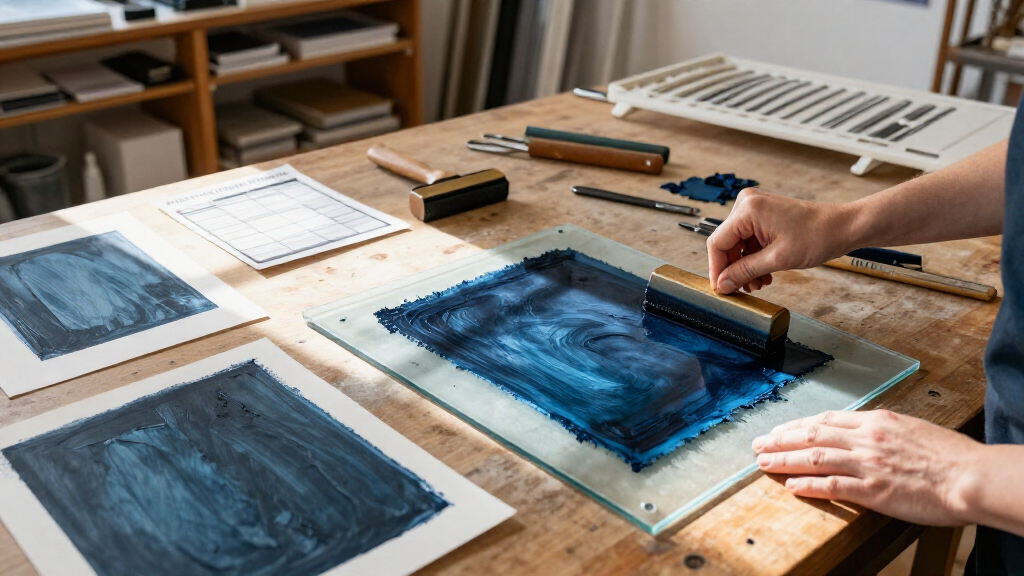
A brayer spreads ink across a block, helping create an even layer for printing. Its roller width should suit the working area: a narrow roller can be easier to control on small blocks, while a wider one covers more surface with fewer passes. Size the roller to your block and consider how much control you want while applying ink.
One frequent buying mistake is choosing by appearance or width alone without checking the roller material and handle. The roller needs to work with the kind of ink you plan to use, and the handle should feel stable during repeated passes. Check product guidance for compatible inks and care instructions. Confirm ink compatibility before pairing a brayer with a particular medium, and avoid assuming all rollers clean or perform alike.
Think about storage and cleaning, too. A brayer that is easy to handle and maintain is more likely to fit your regular routine. If you work with several block sizes, compare the roller width with the largest area you expect to ink, while keeping maneuverability in mind. Balance coverage with control for your typical print size.
What to look for:
- Roller width suited to your block dimensions
- Roller material compatible with your chosen ink
- Handle shape that feels stable in use
- Care guidance that matches your cleanup routine
- Size that balances broad coverage and maneuverability
Carving Tool Set
A carving tool set gives you the implements to cut lines and shapes into a block. The listed pick, Linocut Printing Kit with Tools, 4 Carving Blocks, and Black Print Ink, groups tools with blocks and ink, which can help someone assembling several basics at once. Before choosing a kit, review its contents and confirm that the included tools suit the kinds of marks you plan to make.
A common mistake is focusing on the number of pieces instead of the tool shapes and how they fit your work. Check whether the set includes the profiles you need for broad cuts and finer details, and whether the handles feel manageable for your hands. For beginners, a set with several block sizes may offer room to practice, but verify dimensions and material rather than assuming the blocks match your project. Inspect the included tool shapes and block details before buying.
Also check what ink is included and whether it is suitable for your planned paper and process. If you already have ink or blocks, compare the kit contents against your current supplies to avoid duplicating items. Choose for useful coverage, not simply a longer list of components.
What to look for:
- Tool shapes for both broad cuts and fine details
- Handles comfortable for controlled carving
- Block quantity, size, and material clearly listed
- Included ink identified with use and cleanup guidance
- Kit contents that complement supplies you already own
Linocut Printing Kit with Tools, 4 Carving Blocks, and Black Print Ink

This printmaking kit includes carving blocks, interchangeable blades, a brayer, a baren, ink, transfer paper, and an illustrated guide for relief printing projects. Its water-soluble ink cleans up with soap and water, and the set can be used to make stamps, cards, posters, journals, and other artwork.
Pros:
- Includes tools and materials for a range of printmaking projects
- Interchangeable blades support detailed carving
- Water-soluble ink washes off with soap and water
- Suitable for beginners, students, and hobbyists
Cons:
- The title mentions 4 blocks and black ink, while the description also refers to 5-color print ink; exact ink contents are unclear
Best for: Beginners looking for several carving basics together
Not ideal for: Artists who already have matching tools and blocks
Bottom line: Review the included tools, blocks, and ink to see whether the kit fits your setup.
Block Printing Ink
Ink affects how a carved design transfers to paper, so choose it with your printing method and cleanup routine in mind. The listed pick is Sax True Flow Water Soluble Block Printing Inks, Assorted Colors, Set. Its name identifies it as water-soluble block printing ink in assorted colors; check the package details for the specific colors and intended surfaces before deciding whether it suits your project.
A common mistake is treating all inks as interchangeable. Check whether the ink is made for the surface and process you plan to use, and read the maker’s directions for application and cleanup. Water-soluble ink may suit a different routine than other formulations, so consider where you will print and what cleanup materials you have available. Match the ink to your process and confirm that its directions fit your workspace.
For compatibility, compare the ink’s guidance with your block, brayer, and paper. If color accuracy matters, look at the listed assortment rather than relying on the word “assorted.” Consider whether the set provides the colors your designs require or whether you would prefer individual colors. Check the color details and use instructions before adding it to a kit.
What to look for:
- Ink labeled for block printing
- Formulation compatible with your cleanup routine
- Color assortment details that suit your designs
- Use guidance for your block and printing process
- Package information about suitable printing surfaces
Sax True Flow Water Soluble Block Printing Inks, Assorted Colors, Set of 6

This set of water-based inks is ideal for relief printing on various surfaces such as paper, linoleum, and vinyl. The thick, vibrant inks apply smoothly, dry evenly, and are easy to clean up with soap and water, making them suitable for both adults and children.
Pros:
- Vibrant, bright pigments that stand out on paper
- Mess-free, water-based formula that cleans easily
- Suitable for various surfaces and hand application
Cons:
- Thick paste-like consistency may require some effort to spread evenly
- Limited to relief printing and hand application
Best for: Printers seeking assorted water-soluble block printing inks
Not ideal for: Artists who need specific colors not listed in the set name
Bottom line: Check the color assortment and use directions against your block-printing setup.
Baren Printing Tool
A baren helps transfer a design by applying pressure while printing by hand. Whether you need one depends on your process: hand printing calls for a way to press paper evenly against an inked block, while another setup may use different equipment. Choose a pressure tool for your method rather than adding one automatically.
A common mistake is overlooking the size and contact surface. A tool that is too small for your print can make even pressure slower, while a larger tool may be awkward on a small design. Check the working area, grip, and care instructions, and consider whether the surface is intended to work with your paper and ink. Match the baren to the print area you usually make.
Before choosing, decide whether you prefer a handheld tool or another way to apply pressure. If you are learning, a comfortable grip and clear usage guidance can make practice easier. Compare the tool’s dimensions with your block and paper, and consider whether it can reach edges and corners without shifting the sheet. Prioritize steady, even contact and a size that fits your prints.
What to look for:
- Contact surface sized for your typical print
- Grip that feels comfortable during repeated pressure
- Use guidance suited to hand printing
- Compatibility information for paper and ink
- Dimensions that allow access to edges and corners
Printmaking Paper
Paper is the surface that receives the printed image, so its size and weight should fit both your block and your preferred handling. The listed pick, Printmaking Paper for Practice, 80lb / 120gsm, A4, 100 Sheets, names a practice paper in A4 format and specifies its weight and sheet count. Compare those details with your planned print size and the way you intend to apply pressure.
A common mistake is choosing paper by format alone without considering how it works with the ink and printing method. Check product guidance for suitability with block printing, and consider whether the paper’s weight matches hand printing or your press setup. The word “practice” may indicate the intended use, so look at the description before selecting it for finished work. Verify paper and ink compatibility instead of assuming every paper is suitable.
For sizing, compare the A4 sheet dimensions with your block and desired margins. If you plan to print multiple designs or test impressions, the listed quantity may be useful, but consider how much paper your practice will require. Check the format and intended use so the sheets support your project without surprising fit issues.
What to look for:
- Paper size suited to your block and image
- Weight appropriate for your printing method
- Product guidance confirming use for block printing
- Sheet quantity that fits your practice needs
- Format that leaves room for planned margins
Printmaking Paper for Practice, 80lb / 120gsm, A4, 100 Sheets

This printmaking paper is designed for practice and experimentation, offering a smooth surface and good ink transfer. Made from natural wood pulp, it provides durability and excellent absorption for gel plate printing, suitable for students and adults alike.
Pros:
- Ideal for daily practice and experimentation
- Smooth surface for consistent results
- Made from natural wood pulp for good ink pickup
- Economical for classroom and workshop use
Cons:
- Limited to gel plate printing, may not suit all printmaking techniques
Best for: Printers looking for A4 practice paper in a 100-sheet pack
Not ideal for: Artists who need another format or paper intended for finished work
Bottom line: Confirm the A4 size, weight, and intended use against your block and printing process.
Build your supply list in a practical order: first choose a block and carving tools, then select ink and a way to transfer it, and finally match paper to the block and process. If you are printing by hand, consider the brayer and baren guidance as you assemble the setup. Buy for compatibility first, then add extras that support your practice.
You do not need to gather every possible tool at once. Start with the materials that match the prints you want to make, check product details before purchasing, and expand your setup as you learn what works for you. A well-matched kit makes a useful start for exploring printmaking at your own pace.
Fall Picks
fall essentials
As an affiliate, we earn on qualifying purchases.