
TL;DR

Get art and craft supplies delivered free with Prime
- Fast, free delivery on millions of items
- Prime Video, Amazon Music and more included
- Member-only deals all year
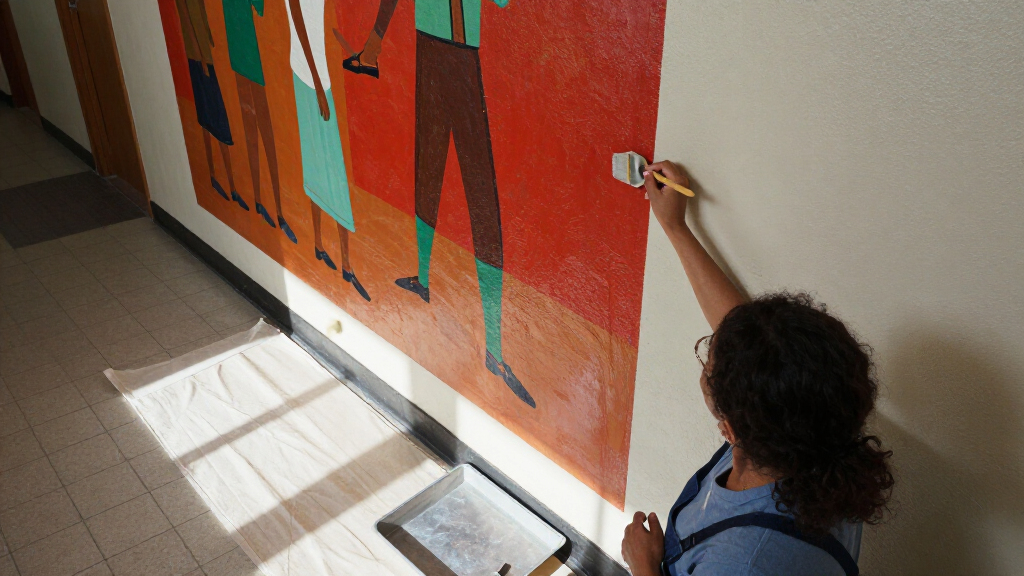
NYC Health + Hospitals completed conservation work on three New Deal-era murals and a John Rhoden sculpture at Harlem Hospital on October 14. The works include murals by Charles Alston and Vertis Hayes, created during a period when Black artists received public commissions through the WPA’s Federal Art Project.
NYC Health + Hospitals completed conservation work on three New Deal-era murals and a John Rhoden sculpture at Harlem Hospital on Wednesday, October 14. The works are associated with the Works Progress Administration’s Federal Art Project and the history of Black artists’ public commissions.
The works are located in the hospital’s indoor mural pavilion. The murals are Charles Alston’s companion paintings Magic in Medicine and Modern Medicine, both dated 1940, and Vertis Hayes’s eight-panel Pursuit of Happiness, dated 1937. The restoration project also included a sculpture by John Rhoden, though the source report does not identify its title or provide details about the conservation methods.
The work was carried out by the health system’s Arts in Medicine department. The source report describes the project as conservation, rather than specifying the individual repairs, materials used, cost, or length of the work. The restored pieces remain part of the hospital setting, where the murals were made for a public institution during the Depression era.
Larissa Trinder, head of the Arts in Medicine program, told Hyperallergic that administrators initially objected to designs submitted for the Hayes mural in 1936, saying there was “too much black subject matter.” Trinder said artists protested publicly and the hospital commissioner later reversed the decision. That account describes a dispute over the representation of Black subjects in public art.
Preserving Harlem’s Public Art
The conservation keeps four artworks in the hospital’s care and preserves a group of works tied to Harlem’s institutional history and the federal art programs of the Depression. They were commissioned for a hospital, placing art in a public setting used by patients, staff and visitors.
The murals also reflect changes in access to public commissions. The source report says Black artists gained unprecedented opportunities through the WPA Federal Art Project. Trinder’s account of the objection to “too much black subject matter,” followed by public protest and a reversal, describes one challenge related to that access. Conservation preserves the works and their history for people who use the hospital.
Popular right now

Samsung The Frame Pro LS03HW 65-inch Neo QLED TV with 27-Month Axiom Care

Ninja Mega Kitchen System Blender and Food Processor, 1500W, 72-oz Pitcher, 8-Cup Bowl, Black (BL770)

De'Longhi Rivelia Fully Automatic Espresso Machine with Milk Frother, White
As an affiliate, we earn on qualifying purchases.
A Dispute Behind the Murals
The murals were produced during the Great Depression, when the WPA’s Federal Art Project supported artists and public commissions. Alston’s two works were completed in 1940, while Hayes’s eight-panel mural dates to 1937. They are examples of work from a period when Black artists sought opportunities to represent Black life in public settings.
As Trinder recounted to Hyperallergic, designs for Pursuit of Happiness were submitted in 1936 and met resistance from administrators. Artists protested publicly, and the hospital commissioner reversed the decision. The report does not identify the protesting artists or provide further detail about the deliberations, but the episode documents how institutional decisions affected the subjects represented in public art.
“There was “too much black subject matter.””
— Larissa Trinder, head of NYC Health + Hospitals’ Arts in Medicine program, speaking to Hyperallergic
Conservation Details Still Unreported
The source report confirms that conservation work was completed, but does not state the year of October 14, the project’s budget, the conservation team’s methods, or the condition of the works before treatment. It also gives no title or further description for Rhoden’s sculpture. The report does not say whether the pieces are now displayed differently or whether the hospital has plans for additional conservation work.
The Works Remain at Harlem Hospital
The reported next step is continued care of the restored works at Harlem Hospital. The source does not announce an exhibition, public program, or further project milestone. Any details about future maintenance, visitor access, or additional restoration would need to come from NYC Health + Hospitals.
Key Questions
Which artworks were conserved?
The project covered Charles Alston’s Magic in Medicine and Modern Medicine, Vertis Hayes’s eight-panel Pursuit of Happiness, and a sculpture by John Rhoden.
Where are the artworks located?
The murals are in Harlem Hospital’s indoor mural pavilion. The source report says the Rhoden sculpture was also held at the hospital.
Who carried out the conservation work?
NYC Health + Hospitals’ Arts in Medicine department carried out the project. The report does not name individual conservators or describe the techniques used.
Why is the history of the murals significant?
The works were created during the WPA Federal Art Project era, when Black artists gained access to major public commissions. According to program head Larissa Trinder, administrators initially objected to the subject matter of Hayes’s designs before public protest led the hospital commissioner to reverse the decision.
When was the restoration completed?
The source report says the work was completed on Wednesday, October 14, but does not specify the year.
Source: rss