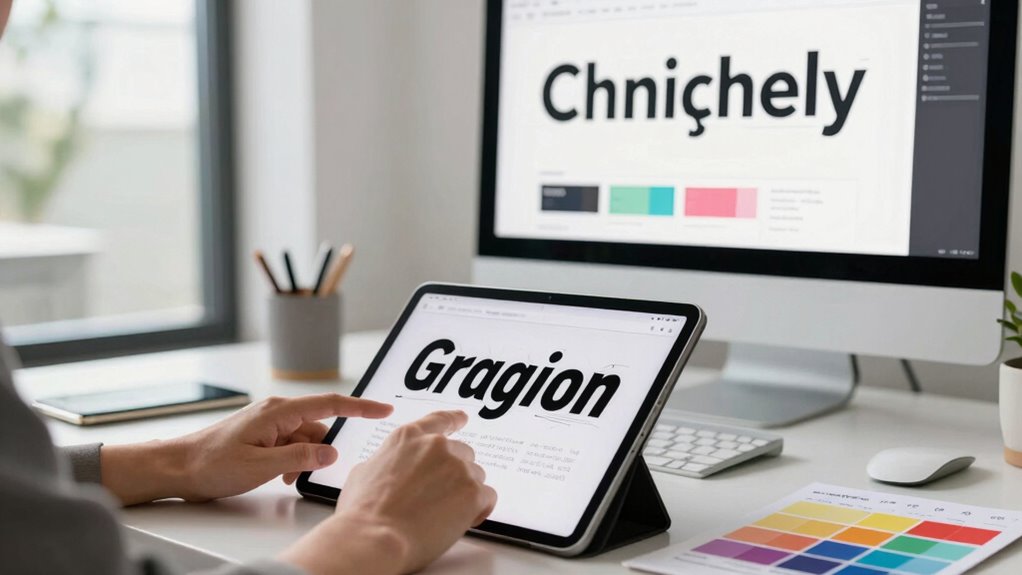

Your typographic choices play a key role in shaping stronger user experiences by conveying your brand’s personality and fostering trust. Clear, well-chosen fonts improve readability and guide users through content effortlessly, while the right style reinforces your message’s tone—whether playful, professional, or innovative. Consistent typography builds recognition, deepening emotional engagement. When you select fonts intentionally, you create a seamless connection between your brand and users. Keep exploring to uncover how you can leverage typography for even greater impact.

Get art and craft supplies delivered free with Prime
- Fast, free delivery on millions of items
- Prime Video, Amazon Music and more included
- Member-only deals all year
Key Takeaways
- Consistent typography reinforces brand identity, fostering familiarity and trust with users.
- Carefully chosen fonts improve readability, making content easier to understand across devices.
- Font psychology conveys brand personality, enhancing emotional connection and user engagement.
- Effective typography guides user attention and simplifies navigation, improving overall user experience.
- Strong typographic choices create memorable interactions, strengthening brand loyalty and recognition.
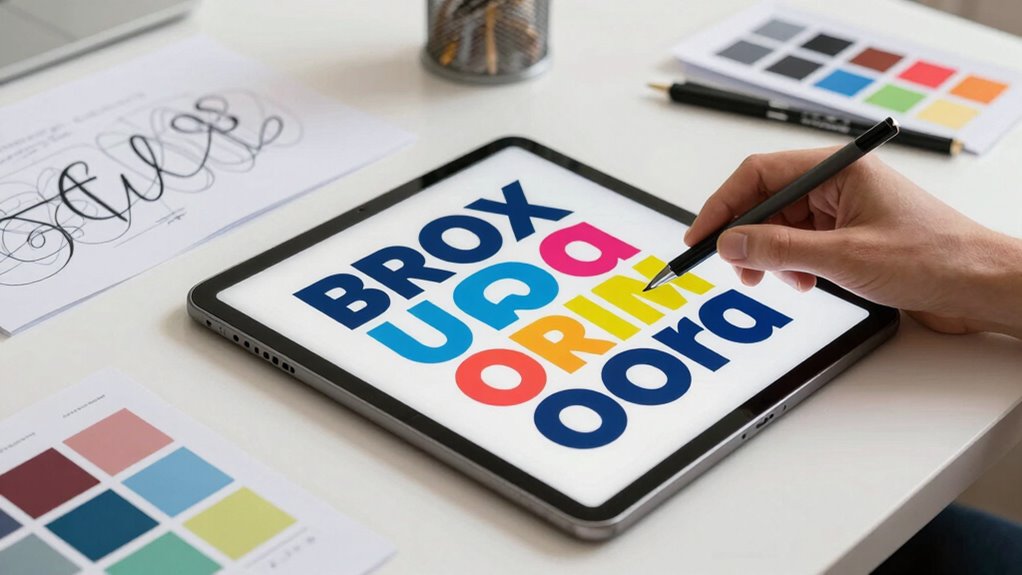
Have you ever wondered how the choice of fonts shapes your perception of a brand? It’s more than just picking a stylish typeface; it’s about harnessing font psychology to communicate your brand’s personality and values effectively. When you select a font, you’re making a subconscious statement about your brand’s identity, whether it’s trustworthy, innovative, playful, or professional. This is where understanding readability principles becomes essential. A font that’s visually appealing but hard to read can undermine your message, causing users to lose interest or misinterpret your intent. Striking the right balance between aesthetic appeal and clarity is vital for creating a strong, memorable user experience.
Choosing the right font communicates your brand’s personality and ensures your message is clear and impactful.
In practice, applying readability principles means choosing fonts that are easy to scan and comprehend across various devices and screen sizes. Clear, legible typefaces reduce cognitive load, helping users focus on your content without frustration. For example, sans-serif fonts are often favored for digital interfaces because their clean lines facilitate quick reading, aligning with the goal of enhancing user engagement. Conversely, serif fonts might evoke tradition and reliability, making them suitable for brands that want to project authority. When you thoughtfully combine font psychology with readability principles, you make certain your brand’s message is not only visually consistent but also accessible and user-friendly. Additionally, understanding the psychological impact of different fonts can help you choose typefaces that resonate more deeply with your target audience, as well as typography best practices that support your overall branding strategy. Recognizing the importance of content accessibility ensures that your message reaches a broader audience, including those with visual impairments or reading difficulties. Incorporating knowledge about visual hierarchy can further improve how users navigate and interpret your content effortlessly.
Furthermore, research supports that choosing appropriate fonts enhances the predictive validity of your branding efforts, making your message more memorable and effective. Your choice of typography influences how users interpret your brand’s tone. A playful, rounded font can make your brand appear friendly and approachable, while a sharp, angular typeface might suggest sophistication or cutting-edge innovation. When you align your font choices with your brand’s personality, you create a cohesive visual language that resonates with your audience. This consistency fosters trust and encourages users to interact more confidently with your content. Additionally, the right typography enhances user experience by guiding the eye smoothly through your website or app, making navigation intuitive and information easy to digest.
Ultimately, investing time into understanding font psychology and readability principles will pay off by strengthening your overall branding. It’s about more than aesthetics; it’s about creating a seamless connection between your brand and your users. When your typography is intentional and well-considered, it amplifies your message, improves comprehension, and builds emotional engagement. As a result, your users feel more connected, more understood, and more likely to become loyal advocates of your brand. This is how strong typography transforms user experience into a powerful, memorable tool for lasting brand impact.
professional sans-serif fonts for branding
As an affiliate, we earn on qualifying purchases.
As an affiliate, we earn on qualifying purchases.
Frequently Asked Questions
How Does Typography Influence Emotional Responses in Branding?
Typography influences your emotional responses in branding by creating emotional resonance and enhancing visual storytelling. When you choose the right typefaces, you evoke specific feelings—trust, excitement, elegance—that connect with your audience. Effective typography guides viewers through your message effortlessly, making your brand memorable. By carefully selecting fonts, you craft a visual language that communicates your brand’s personality and fosters genuine emotional connections with your audience.
What Are Common Mistakes in Typographic Branding?
Think of your typography as a symphony—mistakes disrupt harmony. Common errors include neglecting font pairing, which creates visual chaos, and lacking hierarchical clarity, confusing users. You might choose too many fonts or ignore consistency, diluting your message. Instead, focus on complementary font pairing and clear hierarchy, guiding your audience seamlessly. These simple steps prevent your branding from sounding off-key and guarantee a more cohesive, professional user experience.
How to Choose Fonts That Align With Brand Identity?
To choose fonts that align with your brand identity, focus on creating a clear hierarchical structure using font pairing. Select a primary font that reflects your brand’s personality and a complementary secondary font for contrast. Consider legibility and emotional tone, ensuring they work well together across various platforms. Test your font choices in different sizes and contexts to maintain consistency and reinforce your brand’s visual voice effectively.
Can Typography Improve Accessibility for All Users?
Yes, typography can improve accessibility for all users. You can enhance accessible design by choosing font readability, ensuring text is legible, and using sufficient contrast. You also promote clarity by avoiding overly decorative fonts, and support inclusivity through scalable text sizes. When you prioritize these elements, you create a user experience that’s easier to navigate, understand, and enjoy, regardless of individual abilities or device constraints.
What Role Does Color Play in Typographic Branding?
Color plays a crucial role in typographic branding by influencing perception and emotional response through color psychology. You choose colors that evoke the right feelings, reinforcing your brand’s message. Palette harmony ensures the colors complement each other, creating a cohesive look that enhances readability and visual appeal. When you align typography and color thoughtfully, your brand becomes more memorable and engaging, strengthening the overall user experience.
readable serif fonts for websites
As an affiliate, we earn on qualifying purchases.
As an affiliate, we earn on qualifying purchases.
Conclusion
Remember, words shape perceptions, and your typography is your voice. When you harness the power of thoughtful typography, you create a brand that’s not just seen but felt—building trust and loyalty along the way. As the saying goes, “The devil is in the details,” and in branding, those details make all the difference. By paying attention to typography, you’re not just designing; you’re crafting an experience that resonates long after the first glance.
As an affiliate, we earn on qualifying purchases.
As an affiliate, we earn on qualifying purchases.
Fall Picks
fall essentials
As an affiliate, we earn on qualifying purchases.