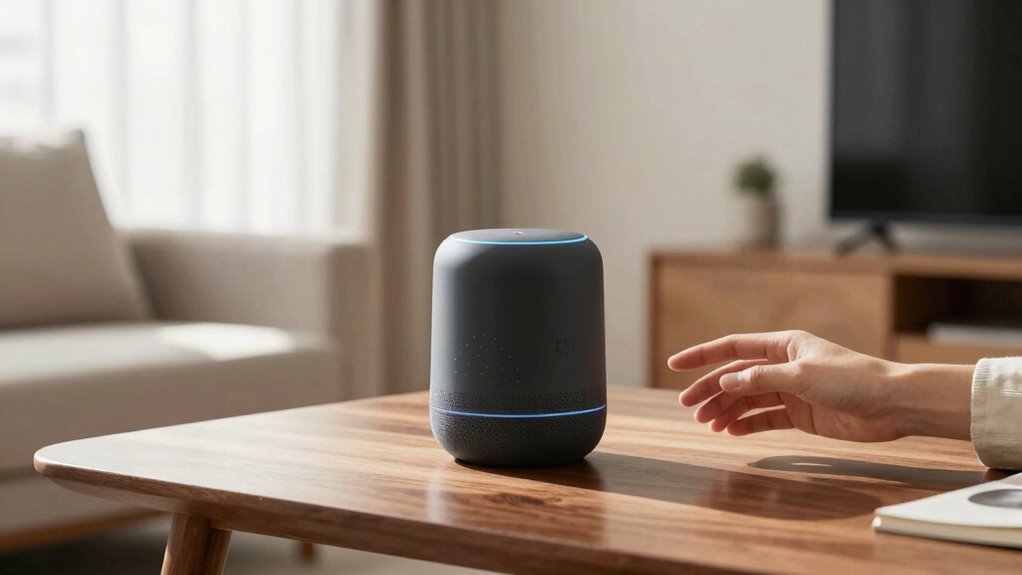

Voice metrics improve your experience by making interactions feel more natural, accurate, and responsive. They help voice systems understand your words better and respond empathetically by analyzing tone and emotions. This builds trust and encourages you to use voice tech more often. By continuously improving these metrics, systems become smarter and more aligned with your needs. Keep exploring to discover how these advancements shape more engaging and human-like conversations.

Get art and craft supplies delivered free — and shop member deals
- Fast, free delivery on millions of items
- Access to Prime Big Deal Days deals on October 6–7
- Prime Video, Amazon Music and more included
Key Takeaways
- Voice metrics enable more natural, intuitive interactions by accurately interpreting speech and emotional cues.
- Emotional analytics help systems respond empathetically, enhancing user engagement and satisfaction.
- Continuous voice data analysis drives system improvements, making interactions more responsive and personalized.
- Speech recognition accuracy builds trust, encouraging users to interact more frequently with voice systems.
- Integrating voice metrics supports context-aware responses, creating seamless and human-like user experiences.

In today’s digital landscape, understanding how users interact with voice technology is essential for creating seamless experiences. As a user, you want your interactions to feel natural, intuitive, and efficient. That’s where voice metrics come into play, especially through the lens of speech recognition and emotional analytics. Speech recognition enables devices to accurately interpret your spoken words, turning your voice into actionable commands or meaningful data. When this technology is finely tuned, it minimizes frustration and guarantees your requests are understood swiftly, creating a smoother, more responsive experience. You notice this when your smart speaker correctly identifies your question or your voice assistant executes your command without delay. This precision in speech recognition builds trust and encourages more frequent, natural interactions, which is the ultimate goal of any voice-enabled system. Additionally, understanding the different emotional cues in your voice can help systems adapt more effectively to your needs.
But beyond understanding what you say, voice technology now seeks to grasp how you say it. Emotional analytics dives deeper into your tone, pitch, and cadence to interpret your emotional state. You might not always realize it, but your voice can reveal if you’re frustrated, excited, or confused. When voice metrics incorporate emotional analytics, they allow systems to respond empathetically, tailoring interactions based on your mood. For example, if your voice shows signs of frustration, the system might offer additional help or simplify its responses. If you sound happy and engaged, it could enhance the experience by providing more personalized content or recommendations. This emotional intelligence makes your interactions feel more human and less mechanical, fostering stronger engagement and satisfaction. Recognizing how voice emotional cues influence user experience is key to developing more human-centric technologies. Moreover, integrating these insights with natural language processing helps create more context-aware and responsive systems, ultimately leading to more satisfying user interactions. In addition, incorporating comprehensive voice metrics allows developers to continually refine and improve these systems over time, ensuring they evolve with user needs.
As an affiliate, we earn on qualifying purchases.
Frequently Asked Questions
How Do Voice Metrics Differ Across Various Languages?
You’ll notice that voice metrics differ across languages due to factors like multilingual accuracy and accent recognition. For example, systems may struggle with certain accents or dialects, affecting recognition accuracy. When designing voice experiences, you need to account for these variations to guarantee seamless interactions. Improving multilingual accuracy and refining accent recognition help create more inclusive, natural user experiences, regardless of language or regional speech nuances.
What Are the Privacy Concerns With Voice Data Collection?
Imagine your voice data as a precious diary; you want it protected. Privacy concerns with voice data collection center around data security and user consent. Without proper safeguards, sensitive information could be exposed or misused. Many users worry because they haven’t given clear consent or aren’t aware of how their data is stored. Ensuring transparent data policies and robust security measures is essential to build trust and protect user privacy.
How Can Small Businesses Implement Voice Metrics Effectively?
To implement voice metrics effectively, focus on gathering customer feedback through voice interactions and analyzing user engagement patterns. Use simple tools to monitor how users interact with your voice-enabled features, identifying areas for improvement. Regularly review this data to refine your voice strategies, ensuring a seamless experience. By actively listening to customer feedback and tracking engagement, you can optimize your voice features and build stronger connections with your users.
What Role Does Machine Learning Play in Voice Analytics?
They say, “Knowledge is power,” and machine learning truly empowers voice analytics. It processes natural language and uses sentiment analysis to understand user emotions and intent. By recognizing patterns, it helps you improve user experiences and personalize interactions. Machine learning continuously learns from data, making your voice applications smarter over time. This technology transforms raw voice data into actionable insights, allowing you to connect better with your users and meet their needs effectively.
How Do Voice Metrics Influence Future Product Development?
Voice metrics influence your future product development by highlighting areas to improve user engagement and understanding sentiment analysis. You can identify which features resonate most with users and where frustrations lie, enabling targeted enhancements. This data helps you prioritize updates, refine voice interactions, and create more intuitive experiences. Ultimately, leveraging voice metrics guarantees your products better meet user needs, leading to increased satisfaction and loyalty over time.
emotional analytics voice assistant
As an affiliate, we earn on qualifying purchases.
As an affiliate, we earn on qualifying purchases.
Conclusion
By paying close attention to voice metrics, you can truly understand and improve user experiences. These insights help you tailor interactions, making them more natural and satisfying. Remember, “the devil is in the details”—small data points can lead to big improvements. Keep listening, learning, and refining your approach. When you understand your users’ needs, you’ll create voice interactions that feel seamless and personal, turning every conversation into an opportunity for connection and trust.
natural language processing device
As an affiliate, we earn on qualifying purchases.
As an affiliate, we earn on qualifying purchases.
As an affiliate, we earn on qualifying purchases.
Evergreen bestsellers Picks
bestsellers
As an affiliate, we earn on qualifying purchases.