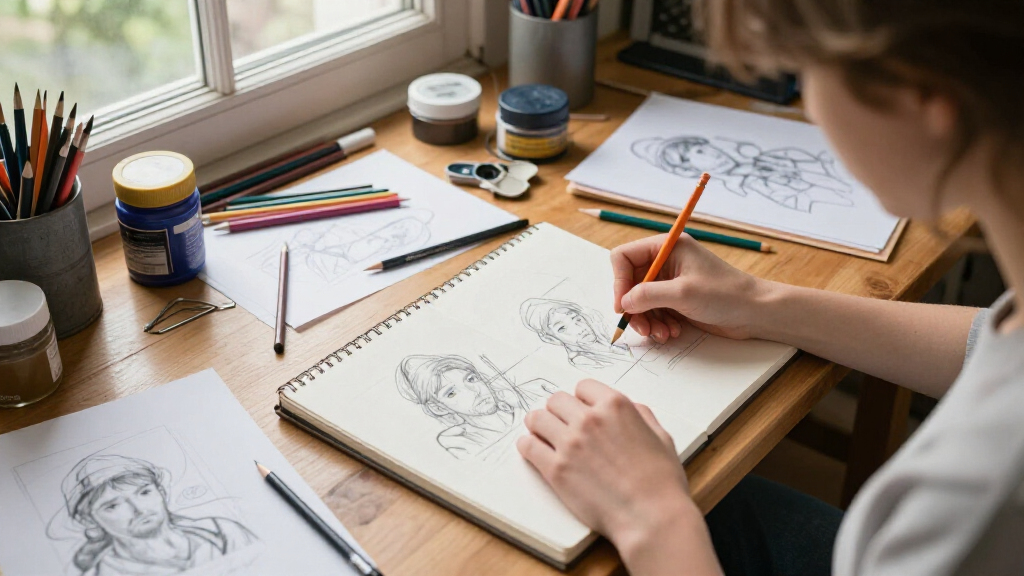

Shopping for artistic sketchbooks for students means balancing three things that rarely come together: paper that handles erasing and light washes, a binding that survives a backpack, and a price low enough for daily practice. My top pick is the Artist’s Sketchbook Hardcover with 200GSM paper, which offers the thickest sheets in this lineup and handles mixed media far better than the standard 68lb pads. Students on a tighter budget should look at the Fuxi 2-Pack Small Spiral Sketch Book, which doubles the sheet count for the price of one pad, while the Strathmore 400 Series is the strongest choice for serious drawing students who want reliable, consistent paper from a trusted brand. The main tradeoff throughout this category is sheet count versus paper weight — cheap 100-sheet pads almost always use thin 100gsm paper that buckles under wet media. Read on for the full breakdown of all 14 options.

Get art and craft supplies delivered free with Prime
- Fast, free delivery on millions of items
- Prime Video, Amazon Music and more included
- Member-only deals all year
Key Takeaways
- Most budget 100-sheet pads in this roundup (Cewei, Fuxi, SuFly, Ankkol) use nearly identical 68lb/100gsm paper, so price and binding quality — not paper — are what separate them.
- Only three options (Artist’s Sketchbook Hardcover, MOFUNY, and Canson Mixed Media) offer paper at 160gsm or heavier, making them the only realistic picks for ink washes, markers, or light watercolor.
- Hardcover options cost roughly twice as much per sheet as spiral pads but protect work in a backpack, a meaningful advantage for students carrying supplies between classes.
- Small-format pads (Strathmore 400 Series 5.5×8.5, Canson, Fuxi 2-Pack) are dramatically cheaper per sheet and better suited to daily sketching homework than the 9×12 sizes.
- Two generic unbranded entries (the 8.5 x 11 50-Sheet pad and the Hardbound 8.5×11) fall to the bottom of the ranking due to inconsistent paper specs and weak value per sheet.


| artistic sketchbooks for student | Size | Paper Weight | Binding | Sheets |
|---|---|---|---|---|
| Cewei 9 x 12 Inch Spiral Bound | 9 x 12 inches | 68lb / 100gsm | Spiral (side) | 100 |
| UCreate Poly Cover Sketch Book | 9" x 12" | — | Spiral, lies flat | — |
| Fuxi 9 x 12 Sketch Book | 9 x 12 inches | 68lb / 100gsm | Top spiral bound | 100 |
| SuFly Sketch Book 9×12 | — | 68lb/100gsm | Top spiral | — |
| Artist’s Sketchbook Hardcover | 8.25 x 11.4 inches | 200GSM | Spiral with hardcover | 40 |
| Strathmore 400 Series Sketch P | 5.5 x 8.5 inches | — | — | 100 |
| 8.5 × 11 Spiral Bound Sketch B | 8.5 x 11 inches | 68 lb / 100 g/m2 | Spiral | 50 |
| Soucolor Sketchbook 8.5×11 | 8.5 x 11 inches | 68 lb / 100 gsm | Spiral bound | 100 |
| Canson Artist Series Mixed Med | 5.5 x 8.5 inches | 138 lb / 224 g | — | 30 |
| Artlicious Hardcover Sketchboo | 5.5 x 8 inches | 75 lb / 120 GSM | Spiral bound | — |
| Ankkol 9×12 Spiral Bound Sketc | 9×12 inches | 100gsm, acid-free | Top spiral | 100 |
| Fuxi Small Spiral Sketch Book | 5.5 x 8.5 inches | 68lb / 100gsm | Spiral bound | — |
| MOFUNY Mixed Media Sketchbook | 9×12 inches | 98lb / 160gsm | Ring binding, 360-degree rotation | 60 |
| Hardbound Sketch Book | 8.5×11 inches | 90gsm | Spiral bound | 80 |
More Details on Our Top Picks
Cewei 9 x 12 Inch Spiral Bound Sketch Book, 100 Sheets, 68lb/100gsm
When I weigh versatility against price, the Cewei 9×12 sits at the top of this lineup. It matches the Fuxi Top Spiral sheet-for-sheet on paper weight, but its side spiral makes it friendlier for both right- and left-handed students, and the cover holds up better to backpack abuse than the thinner UCreate poly option. The 100-sheet count is the sweet spot here — twice the volume of the 40-sheet mixed media sketchbook at the end of this list, which matters a lot for a semester of daily practice. The tradeoff is honest: this is a dry-media book. Push watercolor or heavy ink washes onto 68lb paper and it will buckle, so students working wet should jump to a dedicated mixed media pad instead.
Pros:- 100 sheets outlasts most competitors at this size
- Acid-free paper keeps work from yellowing over a semester
- Spiral binding suits both right- and left-handed users
- Sturdy cover survives backpack carry
Cons:- Paper weight limits it to dry and light wet media
- No perforations, so tearing out pages cleanly is difficult
Best for: Students who sketch daily with graphite, pencil, and pen and want maximum sheets per dollar
Not ideal for: Watercolor or marker-heavy students — the 68lb paper buckles under wet media
- Size:9 x 12 inches
- Sheets:100
- Paper Weight:68lb / 100gsm
- Paper Type:Acid-free
- Binding:Spiral (side)
- Media Suitability:Dry media, light wet media
Our verdict“The most balanced pick for everyday student sketching — buy it unless wet media is part of your routine.”
UCreate Poly Cover Sketch Book, Heavyweight, 9″ x 12″, Black, 75 Sheets
The UCreate earns its spot as the one I would hand to a whole classroom without wincing at the cost. Compared with the Cewei, you give up 25 sheets, but you gain two things students actually notice: perforated pages that tear out cleanly for homework submission, and a wipe-clean poly cover that shrugs off spills that would warp a cardstock cover. The binding also lies flat, which the Cewei’s side spiral doesn’t do as reliably on a desk. Its limits are clear, though — this paper is strictly for pencil, colored pencil, and crayon. Anyone blending charcoal washes or reaching for markers should pay a little more for the SuFly or the mixed media option instead.
Pros:- Perforated sheets tear out cleanly for turning in assignments
- Water-resistant poly cover protects pages
- Lies flat for comfortable desk drawing
- Low cost per book for bulk buying
Cons:- Only 75 sheets, fewer than comparably priced 100-sheet pads
- Strictly dry-media paper
Best for: Teachers and parents buying in bulk for kids who need a dependable everyday drawing book
Not ideal for: Students experimenting with ink, markers, or any wet media — the paper won’t hold up
- Sheet Count:75 sheets
- Paper Type:Heavyweight, acid-free
- Size:9″ x 12″
- Cover Material:Poly
- Binding:Spiral, lies flat
- Pages:Perforated
Our verdict“The practical, low-risk choice for young students and classroom supply lists.”
Fuxi 9 x 12 Sketch Book – Top Spiral Bound Sketchbook with 100 Sheets, 68lb/100gsm
What makes the Fuxi stand out in a crowded field of near-identical 9×12 pads is its top spiral binding. Side spirals — like the one on the Cewei — dig into a left-handed student’s hand mid-drawing; a top spiral removes that obstacle entirely and lets the book work in both portrait and landscape. The diagonal-tooth texture also gives graphite and charcoal more grip than the smoother UCreate paper, which helps beginners get darker, more satisfying marks early on. The rigid covers double as a drawing board on a desk or lap, something softer-covered pads can’t manage. Be aware the perforated sheets can detach prematurely if the book gets shoved around in a crowded locker, and like most entries here, it’s dry-media only.
Pros:- Top spiral suits left-handed artists and landscape drawing
- Diagonal-tooth texture grips graphite and charcoal well
- Rigid covers act as a built-in drawing board
- Full 100-sheet count for extended practice
Cons:- Dry media only — no watercolor or heavy ink
- Perforations can let pages detach with rough handling
Best for: Left-handed students and beginners who need a lap-friendly surface and forgiving paper texture
Not ideal for: Watercolor students and rough handlers — wet media warps the paper and rough treatment loosens the perforations
- Size:9 x 12 inches
- Sheets:100
- Paper Weight:68lb / 100gsm
- Paper Texture:Diagonal-tooth, bright white
- Binding:Top spiral bound
- Cover:Hardcover
- Media Suitability:Dry media, light ink
Our verdict“The most beginner-friendly layout in this lineup, especially for lefties who fight side spirals.”
SuFly Sketch Book 9×12, 100-Sheet Drawing Paper Pad, 68lb/100gsm, Acid-Free
For students whose sketches end up on a wall or in a college application portfolio, the SuFly is the one I would point to first. Its micro-perforated pages tear out far more cleanly than the Fuxi’s standard perforations — no ragged edges ruining a finished piece. Like the Fuxi, it pairs a top spiral with a hardcover, so the comparison between the two comes down to intent: the Fuxi’s toothier paper favors charcoal practice, while the SuFly’s cleaner tear-out favors presentable finished work. You still get the full 100 sheets, so it holds its value against the Cewei despite costing a touch more. The hardcover does make it slightly bulkier to stuff into a slim bag, and marker artists will still need a heavier-paper option.
Pros:- Micro-perforations deliver clean, frame-ready tear-outs
- Top spiral lays flat and suits both orientations
- Full 100 sheets for a semester of work
- Hardcover protects finished pieces in transit
Cons:- Not suitable for markers or any wet media
- Rigid hardcover is bulkier than softcover pads
Best for: Art students who frame, display, or submit their finished sketches and need clean page removal
Not ideal for: Marker and watercolor users, plus anyone wanting a flexible softcover that folds back on itself
- Sheet Count:100 sheets
- Paper Weight:68lb/100gsm
- Paper Type:Acid-free
- Page Size:9 x 12 inches
- Binding:Top spiral
- Cover:Hardcover
- Pages:Micro-perforated
Our verdict“The best choice when sketches need to leave the book looking polished.”
Artist’s Sketchbook Hardcover, 200GSM Thick Paper, Large Spiral Sketch Book for Drawing and Mixed Media, 8.25 x 11.4, 40 Sheets
Every other sketchbook in this batch taps out at 68lb paper — the 200GSM stock here is the only one that genuinely handles watercolor, oil pastel, and layered charcoal without buckling or bleeding through. For a student whose class moves between dry and wet techniques, that difference is the whole decision: the Cewei or SuFly would force them to buy a second pad. The catch is capacity. At 40 sheets, this book holds less than half the pages of the 100-sheet pads, so heavy users will burn through it quickly, and the smaller 8.25 x 11.4 format gives up a little working area too. There are also no perforations, so removing a finished painting means cutting pages out yourself.
Pros:- 200GSM paper handles watercolor and wet media without warping
- Works in both portrait and landscape orientation
- Hardcover plus spiral gives a stable, flexible drawing surface
- Thick paper prevents bleed-through between pages
Cons:- Only 40 sheets — a fraction of the 100-sheet competitors
- No perforated pages for clean removal
- Slightly smaller format than standard 9×12 pads
Best for: Students experimenting across watercolor, pastel, and charcoal who need one book that does it all
Not ideal for: Daily sketchers on a budget — 40 sheets disappears fast at one drawing per day
- Paper Weight:200GSM
- Size:8.25 x 11.4 inches
- Sheets:40
- Pages:80
- Binding:Spiral with hardcover
- Media Suitability:Charcoal, colored pencil, oil pastel, watercolor
Our verdict“The only true mixed media pick here — worth the shorter page count if your art goes beyond dry media.”
Strathmore 400 Series Sketch Pad, 5.5×8.5 inch, 100 Sheets
The Strathmore 400 Series is the paper grade that most art classrooms and instructors name by default, and that reputation is the main reason it earns a spot here. At 100 sheets in a compact 5.5×8.5 format, it offers roughly double the sheet count of the Canson Artist Series Mixed Media pad at a lower per-sheet cost — though the Canson’s 138 lb paper is far heavier and handles wet media that this pad simply cannot. Micro-perforated pages tear out cleanly, which matters when assignments get submitted or pinned to a critique wall. Compared with budget pads like the Soucolor 100-sheet sketchbook, the Strathmore sheet feels more consistent under repeated erasing, an underrated factor for students who rework their drawings. The tradeoff is straightforward: this is a dry-medium pad at its core.
Pros:- Artist-recommended brand with consistent paper quality
- 100 sheets gives plenty of practice volume for the price
- Micro-perforated pages remove cleanly for submissions and display
- Handles heavy erasing and reworking without pilling
Cons:- Dry media only — no wet techniques
- Small 5.5×8.5 format limits larger compositions
Best for: Students whose teachers specifically request Strathmore paper or who want a trusted, classroom-safe pad for graphite and charcoal practice
Not ideal for: Anyone working in watercolor, ink washes, or markers — the lightweight sketch paper will buckle and bleed
- Size:5.5 x 8.5 inches
- Sheets:100
- Paper Type:Sketch paper
- Material Compatibility:Graphite, charcoal, pastel
- Brand Series:Strathmore 400 Series
- Removal:Micro-perforated
Our verdict“The safest default choice for a student who needs dependable, teacher-approved paper for graphite and charcoal without paying premium prices.”
8.5 × 11 Spiral Bound Sketch Book with 50 Sheets
This no-name spiral pad is the lowest-commitment entry point in the lineup, and that is precisely its value. Fifty sheets of acid-free, bleed-resistant 68 lb paper in a letter-size format covers a semester of sketching homework without any real financial risk if a student loses interest. The back hardcover doubles as a drawing surface, so it works on a bus seat or a cramped desk the way a floppy pad like the Strathmore 400 Series does not. That said, the sheet count is half of what the Soucolor sketchbook offers at the same size, and the paper grade is equal rather than better — so the savings come entirely from volume, not quality. Perforated tear lines make removing assignments easy.
Pros:- Affordable entry point for classroom supply lists
- Back hardcover provides a stable drawing surface anywhere
- Acid-free paper resists smudge and bleed
- Perforated pages for clean removal
Cons:- Only 50 sheets — the lowest volume in this batch
- Generic paper quality with no brand pedigree for archival work
Best for: First-year art students or parents buying for a class supply list who want functional paper at the lowest possible price
Not ideal for: Heavy sketchers who fill pages weekly — 50 sheets will run out mid-semester and cost more per sheet over time
- Size:8.5 x 11 inches
- Sheets:50
- Paper Weight:68 lb / 100 g/m2
- Material:Acid-free paper
- Binding:Spiral
- Cover:Matte cover with hard back
- Removal:Perforated tear line
Our verdict“A sensible throwaway-quality pad for trying out an art class, not for a committed student building a portfolio.”
Soucolor Sketchbook 8.5×11, 100 Sheets Thick Acid-Free Drawing Paper
If the goal is maximum usable pages per dollar at a classroom-friendly size, this Soucolor pad is the pick that makes the most sense. It matches the 100-sheet count of the Strathmore 400 Series but delivers it at a full letter-size format for larger classroom assignments, and its thick, bleed-proof 68 lb paper takes ink as well as pencil — something the Strathmore sketch-grade sheet handles less gracefully. The lay-flat spiral binding and hard cover mean it can sit open on a desk without fighting the spine, a small detail that adds up over long drawing sessions. The tradeoff versus the Canson mixed media pad is wet-media capability: light ink is fine, but true watercolor will warp these pages. For everyday volume, though, nothing else in this batch balances price, size, and sheet count as well.
Pros:- 100 sheets at letter size is the best page-to-price ratio in this batch
- Thick acid-free paper handles ink without bleed-through or ghosting
- Lay-flat spiral binding stays open during long sessions
- Hard cover protects finished work in a backpack
Cons:- Letter size only — no option for larger compositions
- Not rated for wet media like watercolor or gouache
Best for: High school or college art students who sketch daily and burn through pages fast at a standard letter size
Not ideal for: Students using watercolor or heavy marker washes — the 68 lb weight will buckle and ghost
- Size:8.5 x 11 inches
- Sheets:100
- Paper Weight:68 lb / 100 gsm
- Material:Acid-free, thick drawing paper
- Binding:Spiral bound
- Cover:Hard cover
- Media Support:Ink, pencil, pastel, dry media
Our verdict“The volume pick for students who draw constantly and need a dependable, affordable pad they won’t be afraid to fill.”
Canson Artist Series Mixed Media Paper Wirebound Pad 5.5×8.5 inches 30 Sheets
Every other pad in this lineup fails the same test: add water and the paper buckles. The Canson Artist Series is the one exception, with 138 lb French-made paper that takes watercolor, gouache, ink washes, and markers alongside graphite and charcoal. It even offers two textures per pad — a fine side and a medium side — so a student can pick tooth based on the medium, a flexibility nothing else here provides. The tradeoffs are real: at 30 sheets, it holds a third of the pages of the Soucolor or Strathmore 100-sheet pads, and its per-sheet cost is markedly higher. This pad makes the most sense for portfolio pieces and technique experiments rather than daily practice, which should stay on cheaper paper.
Pros:- Heavyweight 138 lb paper handles wet and dry media without buckling
- Two textures (fine and medium) per pad for medium-specific results
- Acid-free and smudge-resistant for long-lasting work
- Easy to erase and rework
Cons:- Only 30 sheets per pad — the fewest in this batch
- Higher cost per sheet than standard sketch pads
Best for: Art students exploring watercolor, gouache, or mixed-media techniques who need true wet-media paper for assignments and portfolio work
Not ideal for: Daily sketch practice — the low sheet count and premium price make it wasteful for rough drafts and warm-ups
- Size:5.5 x 8.5 inches
- Sheets:30
- Paper Weight:138 lb / 224 g
- Material:Mixed media paper
- Textures:Fine and medium, two-sided
- Media Support:Wet and dry: watercolor, gouache, ink, marker, graphite, pencil
- Made In:France
Our verdict“The specialist pick for wet-media coursework; pair it with a cheap bulk pad for practice and save this one for finished pieces.”
Artlicious Hardcover Sketchbook 5.5×8 Spiral Bound – Thick Paper
What sets the Artlicious two-pack apart is simple arithmetic: 220 total pages across two compact hardcover books, more than any single pad in this batch. Splitting that volume into two pocketable books changes how a student actually uses them — one for class, one for a backpack or personal sketching — in a way a single 100-sheet pad like the Soucolor cannot match. The 75 lb / 120 GSM paper is heavier than the 68 lb sheets in the Soucolor and generic budget pads, giving it a slightly smoother surface for pencil and light ink work. Like nearly everything here, it is a dry-medium book; the Canson mixed media pad remains the only wet-media option. The compact 5.5×8 size is a feature for portability but a limit for assignments that demand a full page.
Pros:- Two books with 220 total pages — the highest volume in this batch
- 75 lb paper is heavier and smoother than competing 68 lb pads
- Micro-perforated tear-out pages for sharing work
- Compact hardcover format travels well and protects pages
Cons:- Dry media and light ink only — no watercolor or heavy markers
- Small 5.5 x 8 size limits larger drawings and assignments
Best for: Students who sketch in multiple places — class, commute, home — and want a dedicated compact book for each setting
Not ideal for: Classroom assignments requiring letter-size or larger paper — the small format and tear-out pages won’t fit the brief
- Quantity:2 books
- Size:5.5 x 8 inches
- Sheets per Book:110
- Total Pages:220
- Paper Weight:75 lb / 120 GSM
- Cover:Hardcover
- Binding:Spiral bound
- Removal:Micro-perforated sheets
Our verdict“A smart double purchase for the student who wants a durable pocket sketchbook for everyday life and a spare for the classroom.”
Ankkol 9×12 Spiral Bound Sketch Book, 100 Sheets, Acid-Free 100gsm Paper
The Ankkol 9×12 earns the top spot because it balances sheet count, build quality, and thoughtful design better than anything else in this batch. The top spiral binding is the standout: unlike the side-spiral Hardbound Sketch Book 8.5×11, it lets both left- and right-handed students draw across a full landscape page without a coil in the way. The hardcover with elastic closure means this is the one book here that survives a backpack without bent corners — a real difference from the poly-cover UCreate pads. Compared with the SuFly 100-sheet pad at the same weight, Ankkol’s micro-perforated tear-out pages make handing in assignments or framing a piece far cleaner.
The tradeoff is media range. At 100gsm with a laid texture, it handles graphite, charcoal, and colored pencil beautifully but will buckle under heavy ink washes — students who paint should look at the MOFUNY mixed media pad instead.
Pros:- Top spiral binding works equally well for left- and right-handed artists
- Durable hardcover with elastic closure protects pages in a backpack
- 100 acid-free sheets at 100gsm offer strong value per page
- Micro-perforated tear-out pages leave clean edges for framing or submitting work
Cons:- Dry media only — heavy ink or wet washes will buckle the paper
- Spiral edge makes mounted or framed pages harder to present flat
- Laid texture may fight very fine detail linework
Best for: Middle and high school art students who need one durable, all-purpose graphite and charcoal sketchbook that survives daily transport
Not ideal for: Students working with watercolor, heavy ink, or acrylic washes — the 100gsm paper will warp and bleed
- Size:9×12 inches
- Sheets:100
- Paper Weight:100gsm, acid-free
- Page Type:Micro-perforated, tear-out
- Binding:Top spiral
- Cover:Hardcover
- Closure:Elastic band
- Media:Graphite, charcoal, colored pencil, light ink
Our verdict“If your student draws rather than paints and needs one book to carry every day, this is the safest all-around buy in the batch.”
Fuxi Small Spiral Sketch Book, 5.5 x 8.5 inches, 2-Pack, 200 Sheets
Two books, 200 sheets, one low price — the Fuxi 2-pack wins the value argument outright. Per sheet, it undercuts the Ankkol while giving students a second book to keep in a locker or lend a sibling, which is a genuinely useful perk at this price point. The 5.5×8.5 size is small enough for a jacket pocket or side pocket of a backpack, making it the natural choice for sketching on the bus or between classes — something the full-size 9×12 pads like the Cewei simply can’t do.
The compromises are obvious once you open it. At 68lb, the paper matches the SuFly rather than heavier options, so it’s strictly a dry-media book, and the small page size constrains gesture drawings and classroom assignments that demand a full page. Still, for daily practice volume over finished pieces, nothing here beats the price-per-sheet math.
Pros:- 200 total sheets across two books at a very low per-sheet cost
- Compact size fits in bags and pockets for on-the-go sketching
- Micro-perforated pages remove cleanly with tidy edges
- Sturdy covers protect work without a hard case
Cons:- 68lb paper is dry media only — no ink washes or wet techniques
- Small page size restricts detailed or large-scale work
- Lighter paper shows ghosting with heavy graphite layering
Best for: Budget-minded students and parents who want maximum practice paper for the money, plus a spare book for travel or sharing
Not ideal for: Students submitting formal class assignments or working large — the 5.5×8.5 page limits compositional space
- Size:5.5 x 8.5 inches
- Sheets per book:100
- Total sheets:200 (2-pack)
- Paper Weight:68lb / 100gsm
- Binding:Spiral bound
- Page Type:Micro-perforated
- Media:Pencil, charcoal, light pastels
Our verdict“The cheapest way to keep a student sketching daily, as long as the work stays small and dry.”
MOFUNY Mixed Media Sketchbook 9×12, Drawing Paper Pad 60 Sheets, 98lb/160gsm
Every other book in this batch is a dry-media sketchbook; the MOFUNY is the only one built to take wet media, and that alone justifies its slot. At 160gsm, the paper is roughly 60% heavier than the Ankkol or Fuxi pads, which means light watercolor, ink, and acrylic sit on the surface instead of warping through it. For a student whose class rotates between pencil one week and washes the next, carrying one book instead of two is the whole point. The 360-degree rotating ring binding also lets you fold the pad fully back for field work — handy compared with standard side-wire pads like the Cewei.
The cost of that versatility is sheet count: 60 pages versus 100 in the cheaper dry-media books, so heavy sketchers will burn through it faster and pay more per page. The rings themselves are lighter-duty than a stitched hardcover and can deform with rough handling.
Pros:- 160gsm paper accepts pencil, ink, watercolor, and acrylic in one pad
- Ring binding rotates a full 360 degrees for compact handheld use
- Recyclable paper appeals to eco-conscious classrooms
- Full 9×12 size suits class assignments and larger compositions
Cons:- Only 60 sheets, so higher cost per page than 100-sheet rivals
- Ring binding is less durable than stitched or hardbound construction
- Not stiff enough for repeated, saturated watercolor washes
Best for: Art students who mix pencil, ink, and light watercolor or acrylic and want one pad that handles all of it
Not ideal for: Volume sketchers on a budget — 60 sheets at this price runs out quickly for daily practice
- Size:9×12 inches
- Sheets:60
- Paper Weight:98lb / 160gsm
- Binding:Ring binding, 360-degree rotation
- Material:Recyclable mixed media paper
- Media:Pencil, ink, watercolor, acrylic
Our verdict“The pick for painting-inclined students who refuse to carry a separate watercolor pad — just expect to restock sooner.”
Hardbound Sketch Book, Spiral Bound, 8.5×11 inches
Positioned between the Fuxi mini books and the full-size 9×12 pads, this 8.5×11 hardbound splits the difference neatly — letter-sized pages feel substantial for beginners without overwhelming them. Its PU waterproof hardcover is the most protective exterior in the batch short of the Ankkol, and the wipe-clean surface is a quiet win for younger students whose supplies live at the bottom of a messy bag. Compared with the Soucolor 8.5×11 at the same size, the trade is simple: Soucolor gives you 100 sheets of similar-weight paper for less money, while this book gives you a tougher, more gift-ready presentation.
That’s why it works best as a gift or first sketchbook rather than a studio workhorse. At 90gsm and 80 sheets, the paper is the thinnest of the four reviewed here, so serious shading and ink work will test its limits faster than the Ankkol or MOFUNY.
Pros:- Waterproof PU hardcover wipes clean and protects pages in any bag
- 8.5×11 letter size balances workspace and portability
- Attractive gift-ready presentation for new artists
- Spiral binding allows easy page removal for sharing work
Cons:- 90gsm paper is the lightest here and struggles with heavy layering or ink
- Only 80 sheets, requiring more frequent replacement than 100-sheet rivals
- Rigid hardcover is bulkier to hold for long freehand sessions
Best for: Beginning students and gift-givers who want an attractive, protective hardcover book for a first foray into drawing
Not ideal for: Intermediate students building heavy layered drawings — the 90gsm paper is the lightest in this batch
- Size:8.5×11 inches
- Sheets:80
- Paper Weight:90gsm
- Binding:Spiral bound
- Cover:PU waterproof hardcover
- Media:Pencil, pastels, charcoal, gel pen
Our verdict“A polished, protective first sketchbook that makes a great gift — just upgrade to heavier paper once the drawing gets serious.”
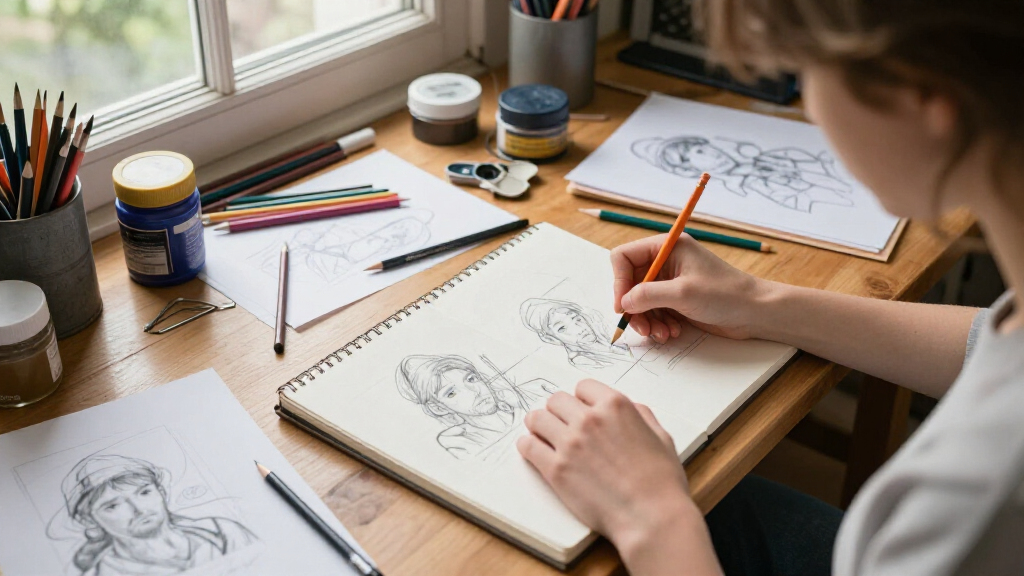
How We Picked
I evaluated each sketchbook against the criteria that matter most to students: paper weight and quality (heavier, acid-free paper erases cleanly and handles more media), value per sheet (a 100-sheet thin pad can be a worse deal than a 40-sheet thick one), binding durability (spiral bindings fail fast when stuffed in backpacks), and format practicality (small pads travel better; large pads suit classroom assignments). Because most student work involves graphite, erasing, and occasional ink or marker, I weighted erase-tolerance and bleed resistance more heavily than watercolor performance — with a bonus for the few pads thick enough for wet media.
The ranking follows a simple logic: pads that pair identical-spec paper at a better price outrank their twins, known brands with consistent quality control (Strathmore, Canson) rank above unbranded generic pads, and premium picks earn their position only when their thicker paper justifies the higher cost per sheet. Options that cost more while offering nothing beyond the budget field were ranked lower regardless of popularity.
| artistic sketchbooks for student | Cover |
|---|---|
| Cewei 9 x 12 Inch Spiral Bound | — |
| UCreate Poly Cover Sketch Book | — |
| Fuxi 9 x 12 Sketch Book | Hardcover |
| SuFly Sketch Book 9×12 | Hardcover |
| Artist’s Sketchbook Hardcover | — |
| Strathmore 400 Series Sketch P | — |
| 8.5 × 11 Spiral Bound Sketch B | Matte cover with hard back |
| Soucolor Sketchbook 8.5×11 | Hard cover |
| Canson Artist Series Mixed Med | — |
| Artlicious Hardcover Sketchboo | Hardcover |
| Ankkol 9×12 Spiral Bound Sketc | Hardcover |
| Fuxi Small Spiral Sketch Book | — |
| MOFUNY Mixed Media Sketchbook | — |
| Hardbound Sketch Book | PU waterproof hardcover |
Factors to Consider When Choosing Artistic Sketchbooks For Students
Before picking a specific pad, it helps to understand how paper specs, binding types, and format choices actually affect daily student work. These are the factors that drove my ranking — and the ones most buyers get wrong.Paper Weight: The Spec That Matters Most
Paper weight, listed as gsm or pounds, determines what a sketchbook can handle. At 68lb/100gsm — the most common student spec — graphite and colored pencil work fine, but markers bleed through and wet media buckles the page. At 160gsm and above, the same pad handles ink, light watercolor washes, and mixed media without warping. The mistake most buyers make is assuming more sheets means more value: a 100-sheet thin pad still fails the moment a student reaches for a marker. If the curriculum includes any wet media, paying more per sheet for heavier paper is cheaper than buying a second pad later.
Sheet Count Versus Cost Per Sheet
Manufacturers advertise sheet counts prominently because big numbers sell, but the honest comparison is price divided by sheets. A 40-sheet mixed media pad at a mid-range price can cost the same per sheet as a 100-sheet budget pad while delivering twice the paper quality. Multipacks flip this math the other way — the Fuxi 2-Pack works out cheaper per sheet than nearly everything else here precisely because you buy two pads at once. For students who sketch daily and burn through pages, cost per sheet matters more than any single pad’s features.
Binding: Spiral, Top-Spiral, and Hardcover
Side-spiral binding is the student default — cheap and page-tearable — but the wire catches on backpack contents and can deform over a semester. Top-spiral suits left-handed students and quick gesture sketching since the wire never crosses the drawing hand. Hardcover binding costs more but doubles as a drawing board, which is genuinely useful for students working without a desk. One common regret: buying hardcover for a young student who treats sketchbooks roughly anyway — the cover survives, but the higher price per sheet means fewer total pages for practice.
Acid-Free Paper and Longevity
Nearly every pad in this roundup claims acid-free paper, and for student work the claim matters more for archiving than for daily use. Acid-free paper prevents yellowing over years, which sounds trivial until a student builds a portfolio for art school applications — pieces on cheap paper can discolor before submission deadlines. If portfolio building is the goal, prioritize acid-free certification from an established brand like Strathmore or Canson, whose manufacturing consistency is verifiable. For practice pads destined to be filled and shelved, the acid-free label is a nice-to-have rather than a deciding factor.
Size: Matching the Format to the Assignment
A 9×12 pad fits most classroom assignments, still scans for digital portfolios, and gives room for composition studies — but it does not fit in most small bags and discourages casual daily sketching. A 5.5×8.5 pocket pad travels anywhere and builds the daily drawing habit faster, at the cost of cramped compositions. The strongest approach for serious students is pairing formats: a small pad for daily practice and a large pad for finished work. Buying only large pads often means students sketch less because the pad never leaves home.
When to Pay More for a Brand Name
Strathmore and Canson cost noticeably more per sheet than the generic pads here, and the difference is quality control, not raw materials. Brand-name pads deliver consistent surface texture across every page and every pad you buy, while generic pads occasionally vary between production runs. That consistency matters when a student is learning technique — inconsistent tooth and absorbency make it harder to tell whether the pencil or the paper is causing a problem. For beginner exploration, generic pads are fine; once a student commits to drawing seriously, the brand premium buys predictability worth paying for.
Frequently Asked Questions
Is 68lb/100gsm paper good enough for art students?
For graphite, charcoal, and colored pencil work, 68lb/100gsm is genuinely adequate — it erases reasonably well and holds dry media without trouble, which is why so many classroom pads use it. Where it falls short is anything wet or alcohol-based: markers bleed through, ink washes buckle the page, and heavy erasing can pill the surface. If the student’s class involves mixed media or marker rendering, stepping up to 160gsm or 200gsm paper saves frustration. If the coursework is drawing fundamentals, the thinner paper is a perfectly sensible economy, and spending more buys little.
Should a student get a hardcover or spiral sketchbook?
Spiral binding wins on price and page removal — students can tear out a finished piece cleanly, and the pad lies perfectly flat, which helps when working across a spread. Hardcovers win on protection and doubled function as a portable drawing surface, which matters for students who sketch outdoors or in transit. The honest deciding factor is habits: a student who carries the sketchbook daily in a crowded backpack benefits from the hardcover, while a student who mostly works at a desk gets more sheets for the money with spiral. Left-handed students should specifically look at top-spiral options like the Fuxi, since the wire never obstructs the drawing hand.
How many sheets does a student actually need per semester?
A student sketching daily will fill a 100-sheet pad roughly every six to eight weeks, so a semester of consistent practice can consume two to three pads. That volume is the strongest argument for cost-per-sheet math over per-pad price: buying two 100-sheet budget pads often costs less than one premium 40-sheet pad, and for practice work the paper difference barely matters. Finished assignments and portfolio pieces are the exception — those belong on the heavier, more consistent paper even at a higher per-sheet cost. Budget-conscious students get the best of both by keeping a cheap high-volume pad for warmups and a smaller quality pad for polished work.
Do multipacks like the Fuxi 2-Pack offer real value or just duplicate pads?
For practice-heavy students, multipacks are one of the few genuine bargains in this category, cutting the cost per sheet well below single-pad pricing. The tradeoff is commitment: both pads share the same paper spec and size, so if the student’s needs change mid-semester — say, a class shifts to marker work — the second pad becomes a mismatch. Multipacks also lock you into a small 5.5×8.5 format, which suits daily sketching but not larger assignments. If the student’s media and habits are settled, the 2-pack is hard to beat; if they’re still exploring techniques, one versatile pad is the safer buy.
Is it worth paying extra for Strathmore or Canson over generic pads?
The premium buys consistency rather than raw quality — Strathmore’s 400 Series and Canson’s pads deliver the same surface texture page after page and batch after batch, while generic pads can vary between production runs. That predictability genuinely helps students who are learning technique, because the paper stops being a variable when diagnosing what went wrong in a drawing. Canson’s mixed media pad adds real wet-media capability the budget pads lack, making its premium easier to justify than a brand-name dry-media pad. If the budget only stretches to one nice pad, use it for portfolio pieces and fill the cheaper generic pads with practice work.
Conclusion
For most students, the Artist’s Sketchbook Hardcover (200GSM, 8.25 x 11.4) is my best overall pick — its thick paper handles mixed media the budget pads cannot, and the hardcover protects a semester of work. The Fuxi 2-Pack Small Spiral Sketch Book takes best value, delivering 200 sheets at the lowest cost per page in the lineup for daily practice. Best premium goes to the Canson Artist Series Mixed Media Pad, whose brand-name consistency and wet-media performance suit portfolio-building students, with the Strathmore 400 Series as the close runner-up for drawing-focused coursework. Best for beginners is the SuFly or Ankkol 9×12 100-sheet pad — cheap, forgiving paper that makes high-volume practice affordable without the guilt of ruining nice pages. For specific needs: left-handed students should pick the top-spiral Fuxi 9×12, marker and ink students need the MOFUNY 160gsm pad, and commuters will appreciate any small-format pad that fits a bag. Whatever the choice, match the paper weight to the media before matching the price to the budget — that single decision prevents most sketchbook regrets.
Columbus Day / Indigenous Peoples' Day Picks
long weekend sales
As an affiliate, we earn on qualifying purchases.