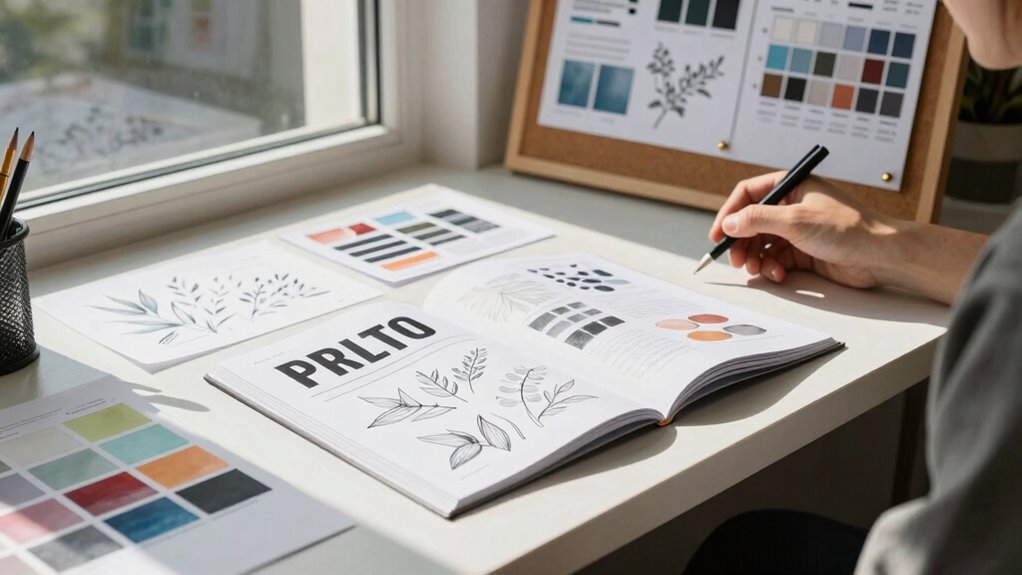

A well-crafted design brief is essential because it sets a clear foundation for your project, guiding your creativity and aligning client expectations. It acts as a roadmap, helping you prioritize tasks and maintain consistency from start to finish. By involving clients early, you gain insights that prevent costly revisions and boost confidence in your solutions. Focusing on these key aspects guarantees your work stays focused, strategic, and impactful—if you keep exploring, you’ll discover how to leverage this even further.

Get art and craft supplies delivered free with Prime
- Fast, free delivery on millions of items
- Prime Video, Amazon Music and more included
- Member-only deals all year
Key Takeaways
- A well-crafted design brief provides a clear roadmap, reducing misunderstandings and ensuring the project aligns with client expectations.
- It facilitates early client collaboration, uncovering core goals and preferences that shape effective creative solutions.
- The brief offers focused direction, helping prioritize tasks, streamline processes, and maintain consistency throughout the project.
- Serving as a reference, it guides decision-making, problem-solving, and keeps the project aligned with initial objectives.
- Incorporating environmental and client-specific details ensures the design is relevant, strategic, and more likely to succeed long-term.

A well-crafted design brief is the foundation of any successful project, yet many underestimate its importance. When you take the time to develop a clear and detailed brief, you set the stage for effective client collaboration and guarantee everyone is working toward the same goals. A strong design brief acts as a roadmap, guiding your creative process while minimizing misunderstandings. It’s your chance to translate the client’s vision into actionable insights, making sure their expectations are aligned with what’s realistically achievable. Additionally, a comprehensive brief can serve as a long-term structure, ensuring consistency and adaptability throughout the project lifecycle. Client collaboration is essential in this stage. When you involve your client early on, you gain invaluable insights into their needs, preferences, and business objectives. This dialogue helps you uncover the core purpose behind the project, which in turn fuels your creative clarity. The more you communicate and refine the brief, the more confident you become in your direction. It’s not just about collecting information; it’s about establishing a shared understanding that empowers both sides to make informed decisions. This collaborative effort prevents costly revisions later and fosters trust, as your client sees their input shaping the final outcome. Creative clarity is the backbone of your design work. Without a clear brief, you risk wandering aimlessly or producing work that misses the mark. A detailed brief provides you with a focused framework, highlighting key messages, target audiences, and specific deliverables. It helps you prioritize tasks and streamline your creative process. When you understand the project’s scope and objectives, you can make better choices about style, tone, and technical requirements. This clarity fuels your confidence and creativity, allowing you to develop solutions that are not only visually compelling but also strategically aligned with the client’s goals. Moreover, a thorough design brief acts as a reference point throughout the project. When challenges arise or decisions need to be made, you can return to the brief for guidance. It keeps the project on track, ensuring that your work remains consistent and relevant. Understanding the importance of clear communication also plays a vital role, as it aligns your team’s efforts with client expectations and technical considerations. Recognizing the role of effective communication in establishing a shared understanding can significantly enhance project success. Incorporating landscaping and outdoor elements into the planning process can also enhance the overall concept, making sure the design aligns with the natural environment. This ongoing alignment makes the entire process more efficient, reducing back-and-forth and ensuring you meet deadlines without sacrificing quality. Interestingly, some studies suggest that astrological signs may influence perceptions of attractiveness, which can be an unexpected factor in client preferences or branding strategies. In essence, a well-constructed design brief isn’t just a formality; it’s a crucial communication tool. It strengthens client collaboration, enhances creative clarity, and ultimately leads to a successful project. When you prioritize this step, you lay the groundwork for a smoother, more rewarding creative journey—one that delivers results everyone can be proud of.
As an affiliate, we earn on qualifying purchases.
Frequently Asked Questions
How Detailed Should a Design Brief Be for Optimal Results?
A design brief should be detailed enough to guarantee visual clarity and clearly define the project scope. You want to include essential information like goals, target audience, and deliverables, but avoid overwhelming detail that stifles creativity. Be specific about priorities, timelines, and constraints. This balanced approach helps you communicate effectively, guiding the project smoothly while allowing room for innovative solutions that meet your expectations.
When Is the Best Time to Create a Design Brief in a Project?
You should create a design brief at the start of your project, right after initial creative brainstorming. Doing so helps you clarify goals, prioritize tasks, and allocate resources effectively. By establishing your design brief early, you guarantee everyone’s on the same page, streamline decision-making, and set a solid foundation for the project’s success. It’s your roadmap that guides the entire process, saving time and avoiding costly missteps along the way.
Can a Design Brief Evolve During the Project?
Did you know 70% of successful projects involve evolving design briefs? Yes, a design brief can and should evolve during your project. This flexibility allows for creative adjustments and enhances project adaptability. As you gather new insights, updating your brief keeps your vision aligned with reality. Embracing this evolution fosters innovation, ensuring your design remains relevant and effective, ultimately leading to a more successful outcome.
Who Should Be Involved in Developing the Design Brief?
You should involve key stakeholders, such as clients, project managers, and designers, in developing the design brief. This stakeholder collaboration guarantees everyone’s perspectives are considered, fostering creative clarity early on. By engaging these parties, you create a shared understanding of goals, constraints, and expectations, which helps prevent misunderstandings later. Ultimately, inclusive development of the brief streamlines the project and boosts the chances of delivering a successful, well-aligned design solution.
How Do Design Briefs Impact Client-Designer Communication?
Design briefs substantially impact client-designer communication by providing clear guidance on visual storytelling and branding consistency. With a detailed brief, you can effectively share your vision, ensuring the designer understands your goals. This clarity reduces misunderstandings, streamlines revisions, and fosters collaboration. Ultimately, a well-crafted brief helps both parties stay aligned, resulting in designs that accurately reflect your brand identity and resonate with your target audience.
client collaboration tools for designers
As an affiliate, we earn on qualifying purchases.
As an affiliate, we earn on qualifying purchases.
Conclusion
Don’t underestimate the power of a well-crafted design brief. It’s often said that clarity leads to efficiency, and research confirms this—projects with clear briefs tend to stay on track and meet goals faster. When you invest time upfront, you reduce misunderstandings and rework later. Think of the brief as your map; without it, you’re more likely to get lost. So, prioritize your brief, and watch your projects become smoother and more successful.
project management software for designers
As an affiliate, we earn on qualifying purchases.
As an affiliate, we earn on qualifying purchases.
As an affiliate, we earn on qualifying purchases.
Fall Picks
fall essentials
As an affiliate, we earn on qualifying purchases.