
Interactive print uses QR codes and augmented reality to connect physical materials with digital content seamlessly. You can scan QR codes with your smartphone to access videos, models, or online info, making printed materials more engaging. AR overlays digital details onto real-world objects, creating immersive experiences. When combined, these technologies turn static pages into interactive experiences that capture attention and enhance understanding. Keep exploring to discover how these tools transform traditional print into dynamic, digital-first interactions.
Key Takeaways
- QR codes quickly connect printed materials to digital content, enhancing user engagement and access to online information.
- Augmented reality overlays digital visuals onto real-world print, creating immersive and interactive experiences.
- Combining QR codes with AR enables seamless integration of physical and digital worlds for marketing and educational purposes.
- Digital content linked through print boosts memorability, provides detailed information, and extends the lifespan of printed materials.
- Interactive print transforms traditional media into dynamic platforms, fostering deeper user interaction and richer brand storytelling.
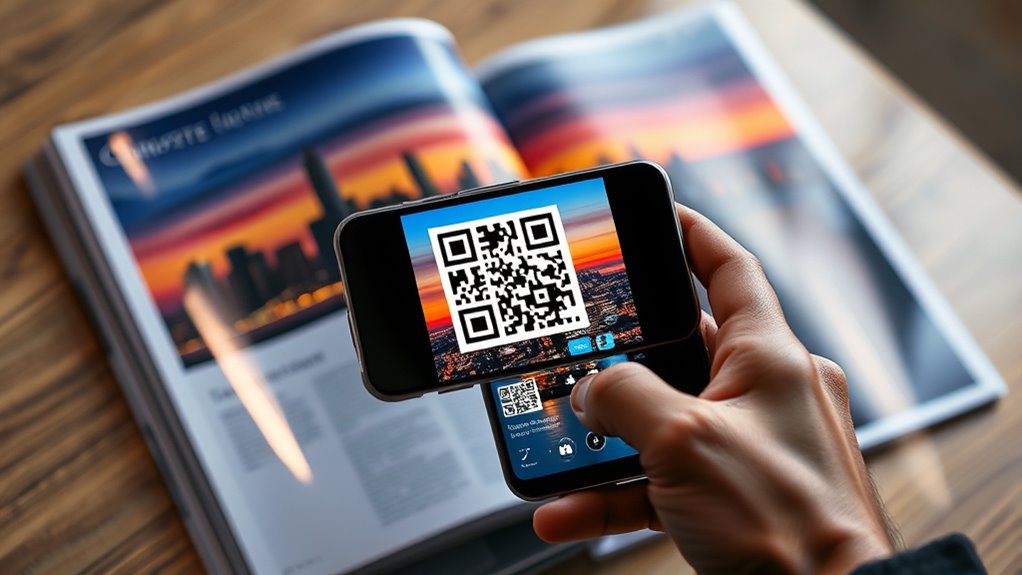
In today’s digital age, printed materials are evolving beyond static pages to become interactive experiences. You no longer have to settle for just reading or looking at images on paper. Thanks to advancements like Augmented Reality (AR) and QR Code Integration, print is now a gateway to digital content that engages and captivates your audience. When you scan a QR code embedded in a magazine, poster, or product packaging, you’re instantly transported to videos, 3D models, or exclusive online content. This seamless connection between physical and digital worlds enhances engagement, making information more memorable and accessible.
Augmented Reality takes this a step further by overlaying digital information directly onto the real world through your smartphone or AR glasses. Imagine flipping through a product catalog and pointing your device at an item to see it in 3D, explore different colors, or watch a demonstration. By integrating AR with printed materials, you transform a simple brochure into an interactive showcase that users can manipulate and explore. You might see a virtual model come to life or access detailed specifications without flipping through multiple pages. This immersive experience captures attention more effectively than traditional print alone and encourages deeper exploration.
QR Code Integration plays a fundamental role in connecting physical print to digital content quickly and effortlessly. You’ve probably seen QR codes on posters, product labels, or event tickets—just scan with your smartphone’s camera, and you’re instantly directed to a webpage, video, or app. For businesses, QR codes provide a cost-effective way to extend the life and utility of printed materials. Instead of printing lengthy instructions or detailed descriptions, you embed a QR code that links to all that information online. It’s fast, convenient, and keeps your printed materials uncluttered. Plus, with the rise of mobile device usage, QR codes make it easier than ever for users to access additional content on the spot, increasing the chances of engagement and interaction.
Pairing QR Code Integration with AR creates a powerful synergy. When you scan a QR code, it can trigger an AR experience that appears right on your device, blending the physical and digital worlds seamlessly. For example, a business card with a QR code could launch a virtual introduction or portfolio, while a magazine ad might come alive with an AR demonstration of a product. This integration not only adds an element of surprise but also boosts the effectiveness of marketing campaigns, educational materials, and branding efforts. As you explore these interactive print formats, you’ll find that they make information more dynamic, accessible, and engaging—bridging the gap between what’s printed and what’s digital in ways that enhance your experience.
Additionally, integrating high-quality digital content with printed media ensures a richer, more immersive user experience that can leave a lasting impression.
Top picks for "interactive print bridge"
Open Amazon search results for this keyword.
As an affiliate, we earn on qualifying purchases.
Frequently Asked Questions
How Do QR Codes and AR Impact Traditional Print Advertising?
QR codes and AR boost traditional print advertising by increasing print engagement and encouraging consumer interaction. When you include QR codes or AR features, you make your ads more dynamic and accessible, enticing viewers to scan or interact. This bridges the gap between physical and digital, making your campaigns more memorable. As a result, you foster a deeper connection with your audience, driving engagement and ultimately boosting your brand’s visibility.
What ARe the Costs Associated With Implementing AR in Print Media?
Getting your feet wet with AR in print media can seem costly, but it’s worth the investment. You’ll face production costs for designing AR-enabled content and technology investment for AR platforms or apps. The initial outlay might be higher, but it pays off by attracting more engagement. Keep in mind, costs vary based on complexity and scale, so plan accordingly to guarantee your campaign hits the mark without breaking the bank.
How Do User Privacy and Data Security Concerns Apply to AR Experiences?
You need to prioritize user privacy and data security in AR experiences by implementing data encryption to protect sensitive information. Ensuring user anonymity helps prevent tracking or misuse of personal data. Be transparent about data collection practices, ask for consent, and follow legal regulations. By doing so, you build trust and create a safer AR environment, encouraging users to engage confidently with your interactive print content.
What Are the Best Practices for Designing Effective QR Code Campaigns?
To design effective QR code campaigns, you should focus on a creative layout that grabs attention and guides users smoothly. Make sure your QR codes are prominently placed and easy to scan, with a clear call to action that tells users exactly what to do next. Keep the design simple yet engaging, and test across devices to guarantee accessibility, maximizing engagement and campaign success.
How Can Small Businesses Leverage Interactive Print Without Large Budgets?
Think of your small business as a garden waiting to bloom. You can leverage interactive print with cost-effective strategies by DIY implementing QR codes and AR elements. Use simple tools and free platforms to create engaging content that bridges physical and digital. Focus on authentic storytelling and eye-catching design, making every print piece a seed for customer connection. With creativity and effort, you’ll grow a vibrant, interactive presence without breaking the bank.
Conclusion
By blending bold QR codes with mesmerizing AR, you can create compelling connections that convert print into a compelling experience. Embrace innovation, ignite intrigue, and inspire interaction by integrating interactive elements into your print projects. This seamless synergy of physical and digital sparks curiosity, keeps audiences captivated, and cultivates lasting engagement. So, step into the future of print, and let your creativity craft captivating connections that truly resonate and revolutionize your reach.