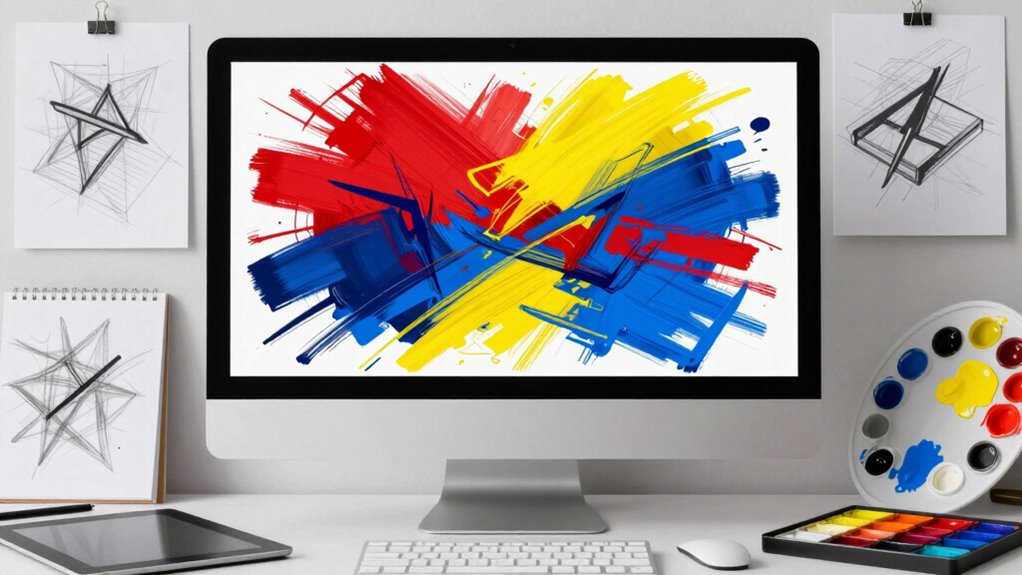

To make editorial illustration work in real projects, focus on developing a clear concept that aligns with the story’s core message. Understand what emotions you want to evoke and choose visuals that support those feelings. Keep your design simple and focused, using symbols or metaphors for added depth. Communicate early with clients or editors and be open to feedback. If you want to learn how to refine your approach further, keep exploring these strategies.
Key Takeaways
- Develop a clear concept by understanding the story, core message, and desired emotional impact.
- Keep visuals simple and focused, using symbolism and visual cues to enhance understanding.
- Consider the target audience to ensure the illustration resonates and adds value to the story.
- Collaborate early with clients or editors, incorporating feedback to align with project goals.
- Use composition, color, and style strategically to guide attention and emphasize key points.

Have you ever wondered how powerful images can shape the way we interpret news and opinions? When it comes to editorial illustration work, this power lies in your ability to craft compelling visual stories that communicate complex ideas quickly and clearly. The key to making your illustrations work in real projects is mastering the art of visual storytelling. Instead of just creating pretty pictures, you need to develop visuals that convey a message, evoke emotion, and resonate with your audience. This begins with solid concept development. Before you even pick up your pencil or brush, spend time understanding the story or opinion you’re illustrating. Ask yourself what the core message is, what tone is appropriate, and what emotions you want to evoke. This initial phase is vital because it guides your entire creative process.
Effective editorial illustrations start with understanding the core message and emotional tone before creating visuals.
Once you have a clear concept, you can focus on translating it into visual form. Effective visual storytelling hinges on clarity and simplicity; your illustration should distill complex ideas into an image that’s instantly understandable. To do this, consider symbolism, metaphors, and visual cues that reinforce your message. For example, if you’re illustrating a political issue, you might use familiar symbols or contrasting imagery to highlight different viewpoints. Your goal is to create an image that sparks curiosity and invites viewers to think deeper about the topic. Throughout your concept development, keep your audience in mind—what will resonate with them, what will challenge their perspectives, and how can your visual add value to the story? Recognizing the importance of visual communication principles can significantly enhance your effectiveness as an illustrator. Incorporating concept development techniques from various visual storytelling disciplines can help you craft more impactful images.
In real projects, collaboration is often part of the process. Communicate with editors, writers, or clients early on to guarantee your concept aligns with their vision. Be open to feedback and ready to tweak your ideas until they perfectly fit the narrative. Remember, your illustrations should support the story, not overshadow it. Use color, composition, and style intentionally to guide viewers’ attention and emphasize key points. The most effective editorial illustrations often strike a balance—being visually engaging while clearly communicating the intended message. Practicing these skills regularly will make your visual storytelling more intuitive and effective in diverse project scenarios.
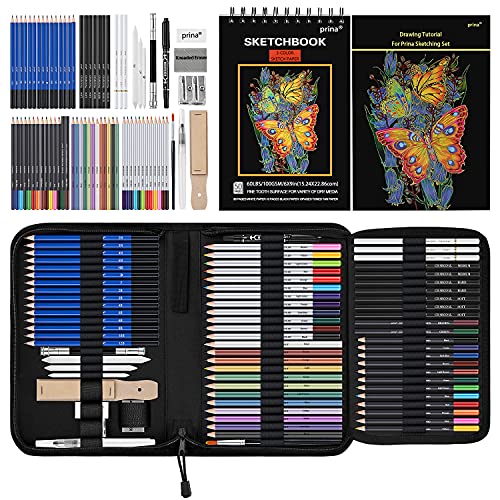
Prina 76 Pack Drawing Set Sketching Kit, Pro Art Supplies with 3-Color Sketchbook, Include Tutorial, Colored, Graphite, Charcoal, Watercolor & Metallic Pencil, for Artists Adults Teens Beginner
- Complete Art Pencil Set: 76-piece professional drawing kit
- Includes Essential Drawing Tools: Erasers, brushes, blending stumps, case
- Unique 3-Color Sketch Pad: Spiral-bound 50-page sketchbook with varied paper
As an affiliate, we earn on qualifying purchases.
As an affiliate, we earn on qualifying purchases.
Frequently Asked Questions
How Do I Price My Editorial Illustrations Professionally?
You should start by researching industry-standard pricing strategies and considering your experience level. Assess the value your illustration brings to the project, including its complexity and deadline demands. Set a clear rate that reflects your worth and aligns with client budgets. Communicate confidently about your pricing, and don’t be afraid to negotiate. Remember, professional pricing guarantees you’re compensated fairly while maintaining the integrity of your work.
What Are Common Copyright Issues in Editorial Illustration?
You should be aware of copyright concerns when creating editorial illustrations, especially regarding intellectual property rights. Always clarify licensing agreements with clients to specify usage rights, duration, and distribution. Be cautious about using copyrighted images or elements without permission, as it can lead to legal issues. Protect your work by understanding fair use policies and ensuring contracts clearly state your rights and restrictions, avoiding future copyright disputes.
How Can I Build a Strong Portfolio for Editorial Work?
Sure, building a portfolio isn’t just about showcasing your skills; it’s about telling a story—your story. Focus on visual storytelling that highlights your unique voice. Include diverse projects that demonstrate your versatility and ability to collaborate creatively. Show your process, not just the final piece, and actively seek feedback. This way, potential clients see your adaptability and teamwork, making your portfolio a compelling invitation for creative collaboration.
What Communication Strategies Work Best With Clients?
You should prioritize clear, open communication to foster effective client collaboration. Use visual storytelling to convey your ideas clearly and guarantee your clients understand your concepts. Regular updates and active listening help you adapt to their feedback, building trust and aligning your work with their vision. By maintaining transparency and encouraging dialogue, you create a collaborative environment that results in compelling editorial illustrations tailored to their needs.
How Do I Handle Rejection or Negative Feedback?
When faced with rejection or negative feedback, you build creative resilience by viewing it as a chance to grow. Instead of taking it personally, use feedback strategies to analyze constructive criticism objectively. Embrace setbacks as stepping stones, knowing they sharpen your skills. You stay open-minded, learn from every critique, and adapt your work accordingly. Remember, resilience turns rejection into motivation, helping you refine your craft and succeed in editorial illustration projects.

Graphic Storytelling and Visual Narrative (Will Eisner Instructional Books)
As an affiliate, we earn on qualifying purchases.
As an affiliate, we earn on qualifying purchases.
Conclusion
By embracing the nuances of editorial illustration, you open the door to subtle storytelling that resonates deeply. While challenges may seem like quiet obstacles, they’re often opportunities to refine your craft and deepen your connection to the project. Trust in your evolving skills and stay adaptable, allowing your work to subtly influence and inspire. Ultimately, it’s about fostering a dialogue—where your visuals gently guide viewers through a nuanced conversation without overwhelming the moment.

Drawing for the Absolute Beginner: A Clear & Easy Guide to Successful Drawing
- Easy guide for realistic drawing: Makes realistic drawing simple and fun
- Authors: Mark and Mary Willenbrink
- Manufactured in: China
As an affiliate, we earn on qualifying purchases.
As an affiliate, we earn on qualifying purchases.
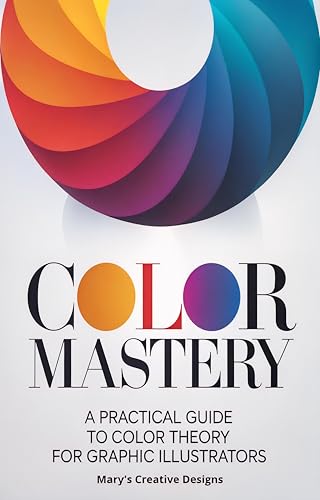
Color Mastery: A Practical Guide to Color Theory for Graphic Illustrators
As an affiliate, we earn on qualifying purchases.
As an affiliate, we earn on qualifying purchases.