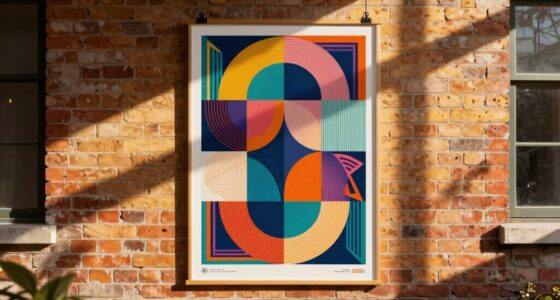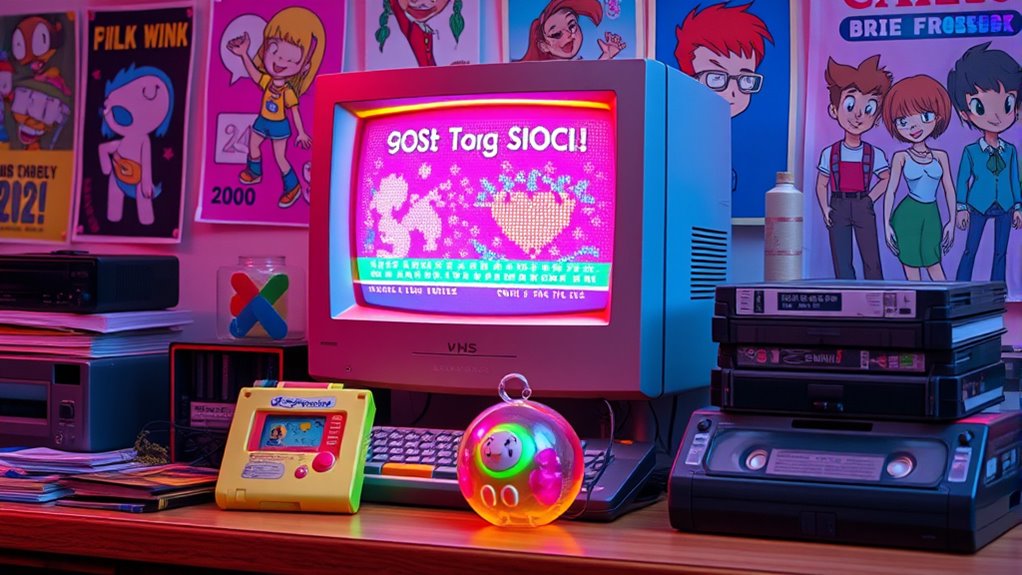

Nostalgic graphic design from the 90s and 00s often features bold pixel art and neon colors that evoke a playful, tech-forward vibe. You’ll notice blocky visuals reminiscent of early video games and web graphics, paired with glowing, vibrant hues that catch your eye. These styles reflect a time when limited technology pushed creatives to make bold, simple designs with a sense of youthful rebellion. Keep exploring to uncover how these iconic elements still influence modern art and digital culture.

Get art and craft supplies delivered free with Prime
- Fast, free delivery on millions of items
- Prime Video, Amazon Music and more included
- Member-only deals all year
Key Takeaways
- 90s and early 2000s graphic design featured pixel art and neon color schemes that evoke nostalgia and retro appeal.
- Pixel art was used to maximize clarity on limited hardware, becoming a cultural symbol of tech optimism and rebellion.
- Neon hues and glowing effects created energetic, eye-catching visuals reminiscent of arcade signs and late-night venues.
- These styles influenced modern indie games, streetwear, and digital art, maintaining their nostalgic and cultural significance.
- Retro graphic design from this era captures innocence and innovation, celebrating creative expression within technological constraints.
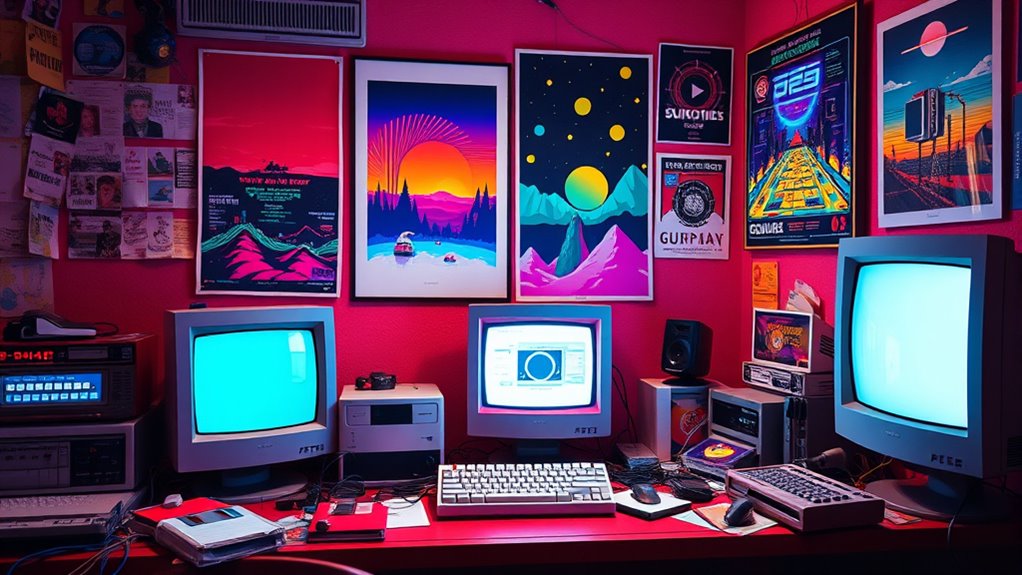
Have you ever wondered how graphic design has evolved over the decades? You might notice that the 90s and early 2000s brought a distinctive style that still influences designs today. Back then, pixel art was everywhere, especially in video games and web graphics. This style, with its blocky, pixelated look, defined the digital aesthetic of the time. It’s a nostalgic reminder of simpler technology, where graphics had to be optimized for limited hardware. Pixel art isn’t just a throwback; it’s a deliberate stylistic choice that evokes a sense of retro charm. You’ll see it in logos, icons, and animations, often paired with neon color schemes that scream 90s. Neon colors—bright, luminous, and eye-catching—dominated the visual landscape, especially in branding and UI design. Think of the glowing text, vibrant backgrounds, and electric accents that made websites and advertisements pop. These color schemes were designed to grab attention, creating a sense of energy and excitement that’s still appealing today.
As you look back, you’ll notice that graphic design in this era was all about making bold statements. The use of pixel art combined with neon hues created a futuristic yet nostalgic vibe. It’s like a digital neon sign from an arcade or a late-night club, inviting you into a world that’s both playful and edgy. This style was practical too, because limited technology meant designers had to be creative with simple graphics and bold colors. They used pixel art to maximize clarity at small sizes, while neon schemes ensured visibility and impact. These elements became cultural symbols, representing a particular era of tech optimism and youthful rebellion. Interestingly, the rise of retro-inspired styles demonstrates how these visual elements continue to influence modern digital aesthetics and pop culture.
You can still find these styles today, especially in indie video games, streetwear, and digital art. They evoke a feeling of nostalgia, reminding you of an era where digital design was just beginning to explode. Whether it’s a retro-inspired website or a throwback poster, you’ll recognize the influence of pixel art and neon colors. They serve as a visual shorthand for the 90s and early 2000s, capturing that unique blend of innocence and innovation. So, next time you spot a design featuring pixelated graphics or glowing neon text, remember it’s part of a legacy that shaped modern digital aesthetics. It’s a tribute to how creativity thrived within technological limits, leaving behind a vibrant, memorable style that still resonates today.
As an affiliate, we earn on qualifying purchases.
Frequently Asked Questions
How Did Technology Influence 90S and 00S Graphic Design Trends?
Technology revolutionized 90s and 00s graphic design by enabling digital innovation, which made creating and sharing designs easier and faster. You’d notice how cultural impact grew as desktop publishing and early web tools allowed designers to experiment with bold colors, pixel art, and unique typography. This era’s graphic style reflects how technological advancements shaped creative expression, fostering a vibrant, nostalgic aesthetic that still influences design today.
What Are the Most Iconic Fonts From the 90S and 00S?
You might think iconic fonts from the 90s and 00s are outdated, but their retro font styles and vintage design elements still influence today’s aesthetics. Think of Neutraface, Futura, or comic-inspired fonts like Comic Sans—each captures the playful, bold spirit of that era. These fonts evoke nostalgia and add a distinctive, timeless charm to your designs, proving that classic styles remain relevant and engaging.
How Can I Incorporate Nostalgic Elements Into Modern Designs?
You can incorporate nostalgic elements into modern designs by using vintage-inspired color palettes and visual motifs. Opt for bold, vibrant colors or pastel shades reminiscent of the 90s and 00s, and include patterns like geometric shapes, pixel art, or retro icons. Mix these elements with contemporary layouts to create a balanced, nostalgic yet fresh look. This approach connects past and present, making your design feel both familiar and innovative.
Were There Regional Differences in Graphic Design Styles During These Decades?
You can’t judge a book by its cover, and regional differences in graphic design styles during the 90s and 00s prove that. Regional aesthetics and cultural influences shaped unique visual identities across areas, from vibrant Japanese street art to European minimalism. These distinctions reflect local tastes, traditions, and histories, making each design style rich in meaning. Embrace these regional nuances to create authentic, culturally resonant modern designs.
What Software Tools Were Most Popular for Designers in the 90S and 00S?
In the 90s and 00s, you mainly used software like Adobe Photoshop and CorelDRAW for graphic design. You often created pixel art for retro games and used clip art to quickly add visuals to projects. These tools made designing easier, letting you craft vibrant, nostalgic visuals that defined the era. As technology advanced, these programs became essential for producing the colorful, playful style you see in throwback graphics today.
As an affiliate, we earn on qualifying purchases.
Conclusion
Just like a vintage record player spinning familiar tunes, embracing 90s and 00s graphic design reconnects you with a cherished era. These throwbacks are threads in the fabric of visual history, weaving nostalgia into your current projects. When you incorporate these styles, you’re not just creating; you’re reviving a classic symphony of colors, fonts, and shapes. Let the past inspire your future, turning every design into a timeless melody that echoes through generations.
As an affiliate, we earn on qualifying purchases.
As an affiliate, we earn on qualifying purchases.
Fall Picks
fall essentials
As an affiliate, we earn on qualifying purchases.