When designing album art, you want to blend visuals that mirror your music’s mood, genre, and message. Use color theory to evoke the right emotions and apply visual storytelling techniques that convey your theme clearly. Keep the design simple and balanced to make a strong impact without overwhelming viewers. By aligning your visuals with your music, you’ll create an engaging cover that draws listeners in—if you keep exploring, you’ll discover how to perfect this balance even further.

Get art and craft supplies delivered free with Prime
- Fast, free delivery on millions of items
- Prime Video, Amazon Music and more included
- Member-only deals all year
Key Takeaways
- Use color theory to select palettes that evoke the desired mood, aligning visuals with the music’s emotional tone.
- Incorporate visual storytelling elements like imagery and symbols that reflect the album’s themes and messages.
- Maintain design simplicity and balance to ensure the visuals enhance rather than overwhelm the core music message.
- Focus on creating a striking, memorable image that instantly communicates the genre and atmosphere of the music.
- Ensure the album art supports branding efforts by cohesively reflecting the artist’s style and the overall music presentation.
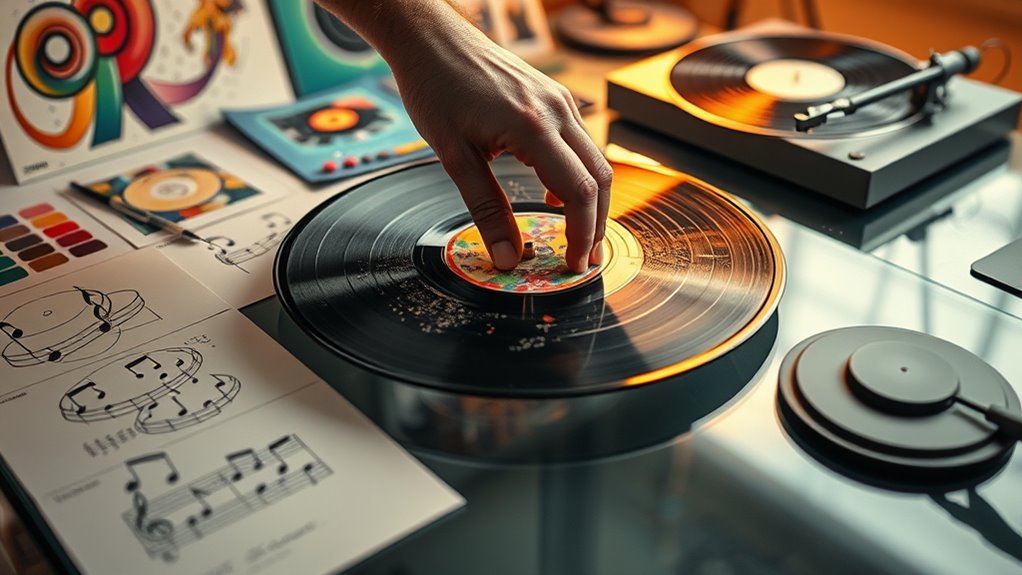
Creating compelling album art is a essential step in capturing the essence of a music project and attracting listeners. Your visuals serve as the first impression, conveying the mood, genre, and message of your music before anyone even presses play. To do this effectively, you need to master the principles of color theory and visual storytelling. Color theory helps you choose the right palette to evoke emotions and establish a mood that aligns with your sound. Warm tones like reds and oranges can evoke energy and passion, while cool hues such as blues and greens often communicate calmness or introspection. Understanding how colors interact allows you to create a cohesive and compelling visual atmosphere that complements your music’s tone.
Visual storytelling takes this a step further by ensuring your album art narrates a story or expresses an idea without words. Think of your cover as a visual language that speaks directly to your audience. Every element—images, symbols, typography—should work together to tell a story or evoke a feeling associated with your music. For example, if your album explores themes of solitude, it might feature stark, minimalist imagery that emphasizes emptiness or isolation. If it’s energetic dance music, vibrant, dynamic visuals can communicate excitement and movement. You want your artwork to create an emotional connection, prompting viewers to want to explore your music further.
Balancing these elements requires intention and clarity. Don’t overload your design with too many colors or busy details that distract from the core message. Instead, focus on a limited, harmonious color palette that aligns with your story and mood. Use composition to guide the viewer’s eye toward the most important elements, ensuring your visual story unfolds naturally. Remember, simplicity often has a more impactful effect, especially when paired with meaningful symbolism or striking visuals. Your goal is to create an album cover that not only catches the eye but also communicates the essence of your music instantly.
As an affiliate, we earn on qualifying purchases.
Frequently Asked Questions
How Do Cultural Differences Influence Album Art Design?
Cultural differences greatly influence your album art design by shaping the symbols and imagery you choose. You’ll need to understand cultural symbolism to guarantee your visuals resonate authentically with diverse audiences. Incorporate visual storytelling that respects cultural nuances, avoiding stereotypes or misinterpretations. By doing so, you make your album more relatable and meaningful, creating a powerful connection that celebrates different backgrounds while maintaining artistic integrity.
What Are the Legal Considerations in Album Art Creation?
You need to navigate copyright issues and trademark concerns carefully when creating album art. Using symbols or images without permission can lead to legal trouble, so always secure rights or licenses. Avoid infringing on existing trademarks that could confuse consumers or damage reputations. By respecting these legal boundaries, you safeguard your work and ensure your album art can resonate freely, like a clear symbol that speaks directly without legal shadows lurking behind it.
How Can Technology Enhance Album Art Design Processes?
Technology can greatly enhance your album art design process by enabling you to create digital mockups that visualize your ideas instantly. You can also incorporate augmented reality to offer interactive experiences, letting fans explore your artwork in new ways. These tools streamline revisions, improve precision, and bring your creative vision to life more efficiently, making your album cover stand out and resonate deeper with your audience.
What Are the Latest Trends in Album Cover Aesthetics?
Think of album cover trends as a modern mosaic. You’ll notice abstract minimalism, stripping visuals to their essence, creating sleek, thought-provoking designs. Vintage typography makes a comeback, adding nostalgic charm with bold, classic fonts. These trends emphasize simplicity and retro appeal, letting your music speak louder through clean lines and timeless fonts. Embracing these styles helps your album stand out while connecting emotionally with your audience, blending past and present seamlessly.
How Do Artists Incorporate Personal Stories Into Visuals?
You incorporate personal stories into visuals by using personal symbolism and narrative imagery that reflect your experiences and emotions. Think about symbols that hold deep meaning for you and embed them subtly into the artwork. Use imagery that tells a story or evokes specific memories, creating a visual narrative that resonates with your listeners. This approach makes your album art authentic and emotionally compelling, forging a stronger connection with your audience.
As an affiliate, we earn on qualifying purchases.
Conclusion
Remember, a picture is worth a thousand words. When designing your album art, strike a balance that reflects your music’s soul while catching the eye. Keep it simple yet powerful, and make sure your visuals complement your sound. Ultimately, your cover should invite listeners in and tell a story. As the saying goes, “Don’t judge a book by its cover,” but in the music world, first impressions matter—so make yours count.
visual storytelling art supplies
As an affiliate, we earn on qualifying purchases.
As an affiliate, we earn on qualifying purchases.
As an affiliate, we earn on qualifying purchases.
Fall Picks
fall essentials
As an affiliate, we earn on qualifying purchases.