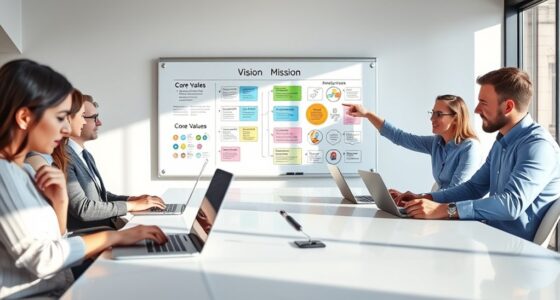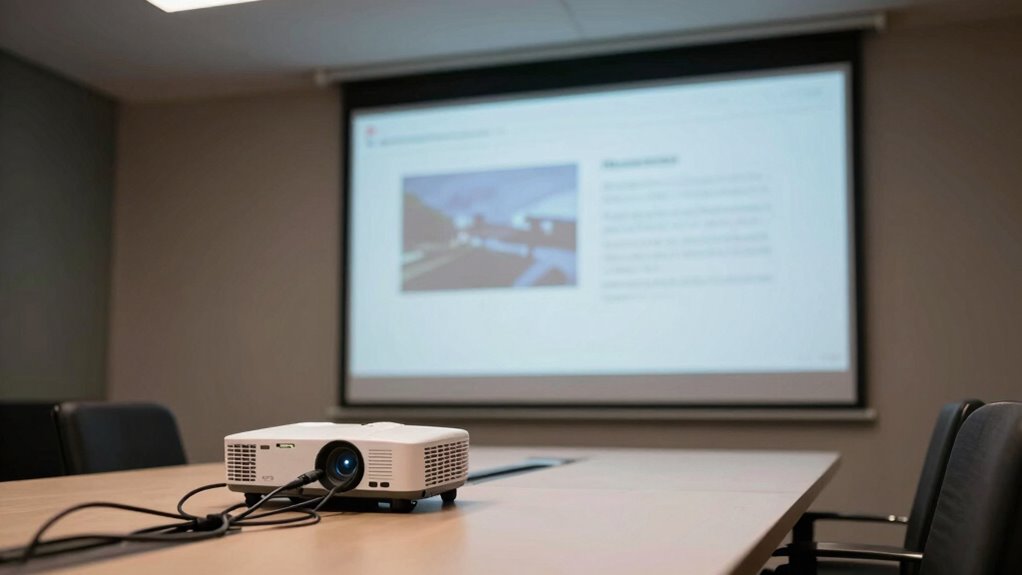

A common mistake you make when setting up a projector is ignoring key factors like room lighting, size, and calibration. Choosing a projector without considering ambient light can result in dim images, while selecting the wrong screen size or placement can cause blurriness or distortion. Proper calibration and placement are essential for sharp, clear visuals. If you want to avoid these pitfalls and make the most of your setup, there’s more useful advice ahead to help you succeed.

Get art and craft supplies delivered free with Prime
- Fast, free delivery on millions of items
- Prime Video, Amazon Music and more included
- Member-only deals all year
Key Takeaways
- Failing to assess room lighting conditions, leading to washed-out or dim images despite high lumen ratings.
- Choosing an inappropriate screen size without considering room dimensions and projector resolution.
- Ignoring throw ratio and projector placement, causing distortion or focus issues.
- Skipping calibration and focus adjustments, resulting in blurry or improperly aligned images.
- Overlooking overall setup factors like ambient light control and room layout, compromising image clarity and presentation quality.
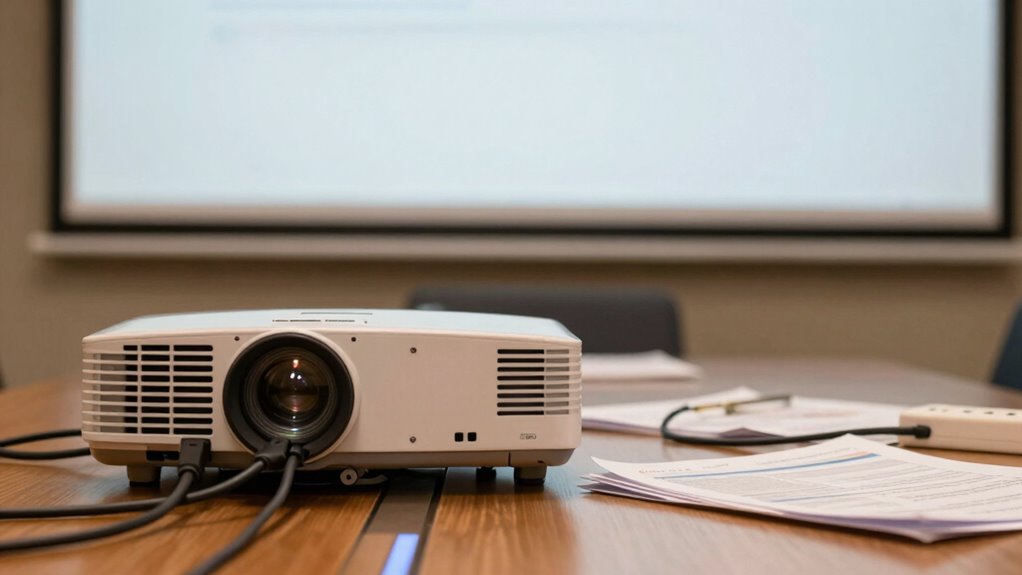
Setting up a projector can seem straightforward, but many buyers make common mistakes that can compromise their viewing experience. One of the biggest errors is neglecting the impact of lighting conditions. You might purchase a projector based solely on its brightness specs, but if you don’t consider the lighting in your room, your image quality can suffer. For example, if your space has a lot of ambient light or large windows without blackout curtains, even a high-lumen projector may produce a washed-out image. It’s vital to evaluate your room’s lighting and plan accordingly, either by choosing a projector with higher lumens or controlling the light sources. Failing to do so means you might end up with a dim, hard-to-see picture, defeating the purpose of your investment.
Another common mistake revolves around selecting the wrong screen size. Many people assume they can just pick a large display without considering the room’s dimensions or how far the projector will be from the screen. If you choose a screen that’s too big for your space, the image may become blurry or pixelated, especially if the projector’s native resolution isn’t high enough. Conversely, opting for a screen that’s too small can lessen the impact of the presentation and make it less engaging. You need to measure your room carefully and determine the ideal screen size that balances clarity, viewing comfort, and the projector’s throw distance. Ignoring these factors can lead to a setup that’s either overwhelming or underwhelming, making your presentation less effective. Additionally, understanding the throw ratio of your projector can help you select the right placement for optimal image quality.
Many buyers also overlook the importance of proper placement and calibration. Even if you pick the right projector and screen size, improper positioning can cause distorted images, keystone effects, or uneven focus. You should plan your setup carefully, considering the projector’s throw ratio and the ideal mounting or placement spot. It’s also helpful to familiarize yourself with calibration tools that can assist in fine-tuning the image for the best clarity. It’s vital to test and fine-tune the focus and alignment to get a crisp, square image. Skimping on this step can result in a shaky, distorted view that distracts your audience and diminishes the professionalism of your presentation. Additionally, understanding the importance of proper calibration can significantly improve your viewing experience. Ultimately, successful projector setup hinges on paying attention to lighting conditions and screen size. These details influence how well your image appears and how easily your audience can see it. Avoiding these common mistakes ensures you’ll maximize your projector’s capabilities and deliver clear, engaging presentations every time.
projector screen with high contrast
As an affiliate, we earn on qualifying purchases.
As an affiliate, we earn on qualifying purchases.
Frequently Asked Questions
How Do I Choose the Right Projector Brightness for My Space?
To choose the right projector brightness, consider your space and ambient light. For rooms with lots of ambient light, go for a projector with higher lumens, around 3000 or more. Proper projector placement is key—you want it positioned to avoid glare and shadows. In darker rooms, lower lumens work fine. Always test different brightness levels during setup to guarantee clear images without strain or washed-out visuals.
What Are Common Connectivity Issues With Projector Setups?
You often face connectivity issues with your projector setup, especially with wireless connectivity and cable management. Wireless signals can drop or lag, disrupting your presentation, while tangled cables can cause accidental disconnections or damage. To avoid these problems, make certain your wireless network is strong, update firmware regularly, and organize cables neatly. Proper cable management and reliable Wi-Fi connections keep your projector functioning smoothly, preventing frustrating interruptions during your presentation.
How Can I Prevent Image Distortion or Keystone Effects?
To prevent image distortion or keystone effects, you should prioritize proper screen calibration and placement accuracy. Make sure your projector is positioned directly in front of the screen at the correct height and distance, avoiding angles that cause skewed images. Use the projector’s keystone correction feature carefully, but rely more on accurate placement for the best result. Regularly calibrate your screen to maintain sharpness and proper proportions, reducing distortion.
What Maintenance Is Required for Long-Term Projector Use?
To guarantee long-term projector use, follow a regular maintenance routine that includes cleaning the air filters and lens to prevent dust buildup, which can affect image quality. Keep an eye on the bulb lifespan and replace it promptly when it nears the end of its recommended hours to avoid unexpected shutdowns. Additionally, check the projector’s cooling system and ensure proper ventilation to prevent overheating and extend its lifespan.
How Do I Select the Best Projector Screen Material?
You should choose a projector screen material with the right screen gain for your setup, balancing brightness and clarity. Don’t overlook material durability; a sturdy, long-lasting fabric guarantees fewer replacements. If you think durability means sacrificing quality, you’re mistaken—many high-gain materials are also durable. Select a fabric that fits your environment, whether it’s a matte or glossy finish, to optimize image quality and longevity.
adjustable projector calibration tools
As an affiliate, we earn on qualifying purchases.
As an affiliate, we earn on qualifying purchases.
Conclusion
Avoiding common buying mistakes can make all the difference in your projector setup. Did you know that over 60% of users regret their purchase because they didn’t consider room size or brightness needs? By choosing the right projector tailored to your space and presentation style, you *guarantee* clear, impactful visuals every time. Don’t let a simple oversight turn your presentations into blurry, forgettable moments—plan wisely, and make every slide count.
blackout curtains for room lighting control
As an affiliate, we earn on qualifying purchases.
As an affiliate, we earn on qualifying purchases.
projector mount with keystone correction
As an affiliate, we earn on qualifying purchases.
As an affiliate, we earn on qualifying purchases.
Fall Picks
fall essentials
As an affiliate, we earn on qualifying purchases.