
TL;DR

Get art and craft supplies delivered free with Prime
- Fast, free delivery on millions of items
- Prime Video, Amazon Music and more included
- Member-only deals all year
The Indian Pavilion at the 61st Venice Biennale presents Geographies of Distance: Remembering Home, an exhibition exploring home through place, memory and belonging across India. Curator Amin Jaffer describes it as a reflection on identity during rapid change, with works evoking landscapes, construction and urban loss. The source does not specify the exhibition’s run dates or provide details about all five artists.
The Indian Pavilion at the 61st Venice Biennale is presenting Geographies of Distance: Remembering Home, an exhibition by five artists that considers how people experience place, memory and belonging across India. Curated by Amin Jaffer, the show interprets the Biennale theme, “In Minor Keys,” through varied ideas of home amid a period of accelerated urbanization.
The exhibition brings together references to India’s geographic and architectural range, from the sun-baked earth of Tamil Nadu in the south to the stepped architecture of Ladakh in the north. It also invokes homes near the Himalayas and older parts of Delhi that, the report says, are being lost as bulldozers reshape the city. These settings frame home not as a single, uniform experience, but as something shaped by distance and change.
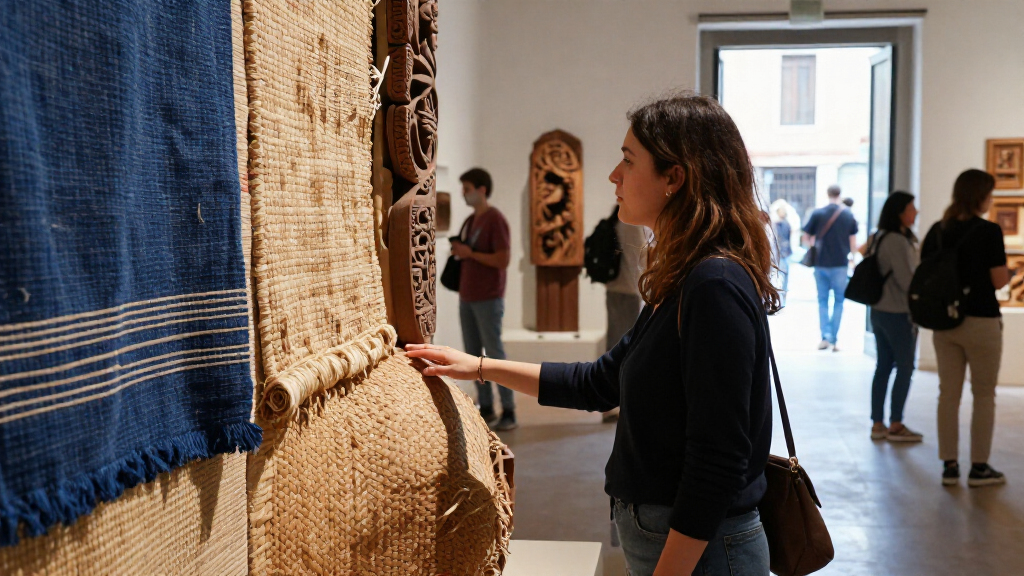
Several works draw on familiar forms and materials. Enormous flowers hang from the ceiling, recalling gardens and the importance of flowers in private, public and sacred life. A mesh of bamboo canes evokes a construction technique used in eastern India and suggests new cities rising over older urban landscapes. The report identifies works by Skarma Sonam Tashi and Sumakshi Singh, including Tashi’s Echoes of Home and Singh’s Permanent Address, both dated 2026.
The exhibition’s five artists offer different perspectives rather than a single account of home. The source describes the pavilion as an interpretation of a country’s varied experiences of place and belonging, but does not name all five artists or provide a complete list of works. The reported installations connect domestic and sacred associations with broader questions about urban growth and displacement.
Home Amid India’s Urban Change
The exhibition links an intimate subject—where and how people feel at home—to changes in the built environment. Its references to new construction and a Delhi reshaped by demolition place memory and belonging alongside urbanization, without reducing the theme to architecture alone. The range from Tamil Nadu to Ladakh also resists treating India as one landscape or one shared experience.
That approach gives the pavilion relevance beyond the works themselves: it asks viewers to consider how home can persist as memory or identity even when a particular place changes. Jaffer’s framing, as quoted in the report, describes home as something people carry with them. This is the curator’s interpretation of the exhibition, not a claim that all artists or visitors share one definition.
Popular right now

Vitamix 5200 Professional-Grade Blender, 64 oz. Container, Black

Dreame G10 Pro Wet and Dry Vacuum Mop

Samsung 75-Inch M80H Series Mini LED 4K Smart TV (2026)
As an affiliate, we earn on qualifying purchases.
A Pavilion Responds to Minor Keys
The Indian Pavilion’s exhibition is part of the 61st Venice Biennale, whose theme is “In Minor Keys.” Geographies of Distance: Remembering Home interprets that theme through the diversity encompassed by India’s name, using multiple places and experiences to consider home. The report characterizes the show as a “polysemous” reading: home carries several meanings rather than one fixed definition.
The account also places the exhibition against accelerated urbanization in India. Its references to bamboo construction, new cities and Delhi’s changing urban fabric provide the immediate setting for its questions about memory and belonging. The available source is a report on the exhibition, not a full catalogue or official schedule.
“I would characterize the pavilion and the work of the five artists as a reflection on identity and belonging in a period of accelerated change.”
— Amin Jaffer, curator of Geographies of Distance
Details the Report Leaves Open
The source does not provide the full list of five artists, a complete inventory of works, or the pavilion’s opening and closing dates. It also does not explain how each artist’s contribution relates to the exhibition’s overall framework. The descriptions of flowers as symbols and bamboo as an evocation of construction are presented in the report; fuller statements from the artists are not included.
The report refers to older parts of Delhi being lost to bulldozers, but gives no locations, dates, project details or figures on demolitions. The scale and specific causes of that change are therefore not established by the material available. The exhibition’s presentation is confirmed; broader claims about its reception or effect are not.
Exhibition Details to Watch
The next confirmed development is the exhibition’s presentation as part of the 61st Venice Biennale. The source provides no further announced programming, event schedule or future venue details. Readers seeking dates, participating-artist biographies or a complete work list will need information from the pavilion or Biennale organizers; those details are not included in the report.
Key Questions
What is the Indian Pavilion showing at the Venice Biennale?
It is presenting Geographies of Distance: Remembering Home, an exhibition by five artists exploring home, memory, place and belonging.
Who curated the exhibition?
Amin Jaffer curated the pavilion exhibition. He describes it as a reflection on identity and belonging during accelerated change.
How does the exhibition depict home?
The show draws on landscapes and architecture from across India, alongside references to flowers, bamboo construction and changing cities. Jaffer’s interpretation treats home as more than a physical address: it can also be a condition people carry with them.
Which artists and works are named in the report?
The report names Skarma Sonam Tashi, whose 2026 work is Echoes of Home, and Sumakshi Singh, whose 2026 work is Permanent Address. It says the exhibition includes five artists but does not name all of them.
When does the exhibition run?
The source confirms the exhibition is presented at the 61st Venice Biennale in 2026, but does not give opening or closing dates.
Source: hyperallergic.com