
TL;DR

Get art and craft supplies delivered free with Prime
- Fast, free delivery on millions of items
- Prime Video, Amazon Music and more included
- Member-only deals all year
A large public ofrenda titled “Twenty Petal Flower” opens October 26 in Manhattan’s Flatiron North Plaza, ahead of Día de Muertos. Created by Mestiz Studio artisans with Brooklyn’s Powerhouse Arts, the altar invites visitors to leave offerings and mementos through November 3.
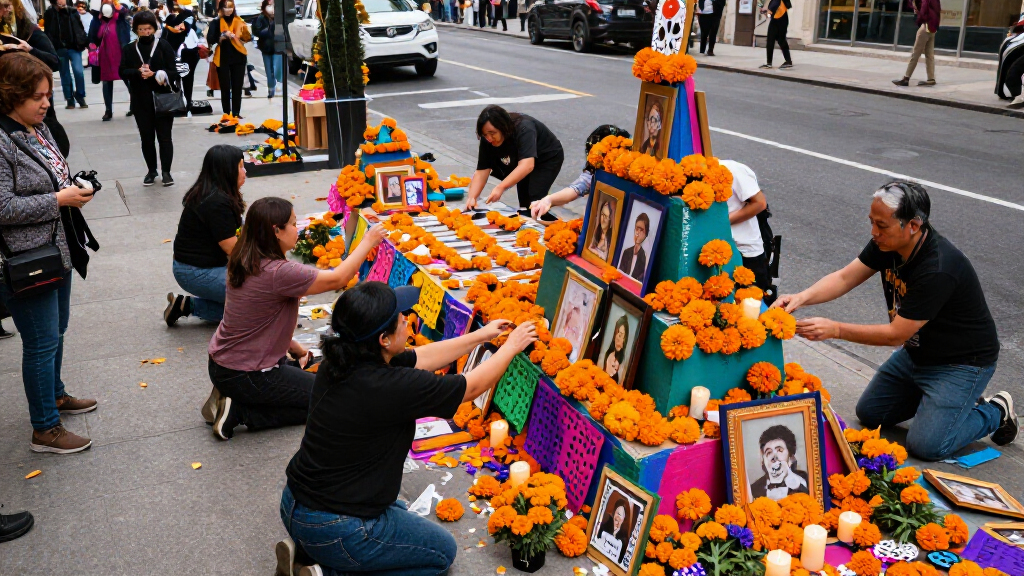
A large Día de Muertos ofrenda titled “Twenty Petal Flower” opens October 26 in Manhattan’s Flatiron North Plaza, giving visitors a public place to leave offerings for loved ones who have died. Designed by artisans from Mexico’s Mestiz Studio in partnership with Brooklyn-based Powerhouse Arts, the altar is scheduled to remain open for offerings through November 3.
The tiered structure is woven into the form of oversized marigolds, according to the report by Hyperallergic. Its title refers to terms for the Mexican marigold: cempōhualxōchitl in Nahuatl and cempasúchil in Spanish. Visitors are invited to place offerings, candles, gifts and personal mementos at the public altar.
Mestiz Studio artisans made the work in San Miguel de Allende, Mexico, with Powerhouse Arts as its Brooklyn partner. The installation brings a shared commemorative practice into a central Manhattan plaza, where passersby can take part rather than view the altar only as an artwork.
Daniel Valero, Mestiz’s founder and creative director, told Hyperallergic that the project was intended to honor people involved in the marigold’s journey, from growing the flowers to placing them on an altar. The report describes the installation as beginning to “bloom” on October 26, six days before the start of Día de Muertos.
The installation offers New Yorkers and visitors a public setting for remembrance during Día de Muertos, a period when families honor deceased loved ones. Its invitation to leave personal objects makes participation part of the work: the altar can gather individual acts of remembrance in a busy Manhattan plaza.
The project also foregrounds the marigold’s cultural role, rather than treating the flower only as a decorative motif. The report says marigolds are believed to help guide the souls of the deceased back to their living family members. The altar’s design links that belief to the people who grow and prepare the flowers, as Valero described.
For audiences encountering Día de Muertos in public space, the work provides a specific, time-limited opportunity to engage with a tradition through an offering. Its presence in Flatiron makes the observance visible beyond private homes and family altars, while leaving the meaning of each visitor’s contribution personal.
Popular right now

De'Longhi Stilosa Compact Manual Espresso Machine with Milk Frother

Dyson V8 Cordless Vacuum

Dyson V8 Cyclone Cordless Vacuum
As an affiliate, we earn on qualifying purchases.
Marigolds and Día de Muertos
Día de Muertos, translated as Day of the Dead, is a time for honoring people who have died. A traditional ofrenda is an altar dedicated to loved ones, and families may place objects there as tributes. The source report describes “Twenty Petal Flower” as a public community altar that draws on this practice.
The project takes its name from the Mexican marigold, called cempōhualxōchitl in Nahuatl and cempasúchil in Spanish. The flowers are associated with guiding the dead back to their families, according to the report. The installation’s tiered, woven form translates the flower into an oversized structure for the plaza.
The report identifies Mestiz Studio as the Mexico-based design team and Powerhouse Arts as its partner. It does not provide further details on the production schedule or the individual artisans involved.
““A Día de Muertos altar is traditionally a tribute to someone we love who is no longer with us. With Twenty Petal Flower, we wanted to honor the people behind the cempasúchil’s entire journey, from cultivation to the ofrenda.””
— Daniel Valero, founder and creative director of Mestiz Studio, speaking to Hyperallergic
Visitor Details Still Unreported
The available report says visitors may leave offerings, candles, gifts and mementos through November 3, but it does not specify any rules for what can be placed at the altar, whether items may be removed, or whether there are restrictions on candles. It also does not state the installation’s dimensions or provide an attendance estimate.
The report identifies October 26 as the opening date and November 3 as the end of the offering period. It does not confirm whether the structure will be dismantled immediately afterward, preserved, or moved to another location. Further visitor guidance and plans for the work after November 3 are not included in the source material.
Offerings Continue Through November 3
Visitors can leave offerings at the Flatiron North Plaza installation through November 3, according to the report. The next confirmed milestone is the close of that public offering period. The source does not list a separate opening ceremony, public program or scheduled event at the site.
Any updates on visitor instructions, the removal of offerings or the altar’s future after November 3 have not been provided. Until then, the installation is intended to function as an open community altar where passersby can contribute tributes to loved ones.
Key Questions
Where is the “Twenty Petal Flower” ofrenda?
It is located in Flatiron North Plaza in Manhattan.
When can visitors leave offerings?
The altar opens on October 26, and the report says offerings can be left through November 3.
Who created the altar?
Artisans from Mestiz Studio in San Miguel de Allende, Mexico, designed and wove the structure in partnership with Brooklyn’s Powerhouse Arts.
What can people leave at the ofrenda?
The report invites visitors to leave offerings, candles, gifts and mementos for loved ones. It does not provide further guidance about item restrictions or candle use.
What does the marigold design represent?
The tiered altar takes the form of oversized Mexican marigolds. The report says the flowers are believed to help guide the souls of the deceased back to their living family members.
Source: hyperallergic.com