
TL;DR

Get art and craft supplies delivered free with Prime
- Fast, free delivery on millions of items
- Prime Video, Amazon Music and more included
- Member-only deals all year
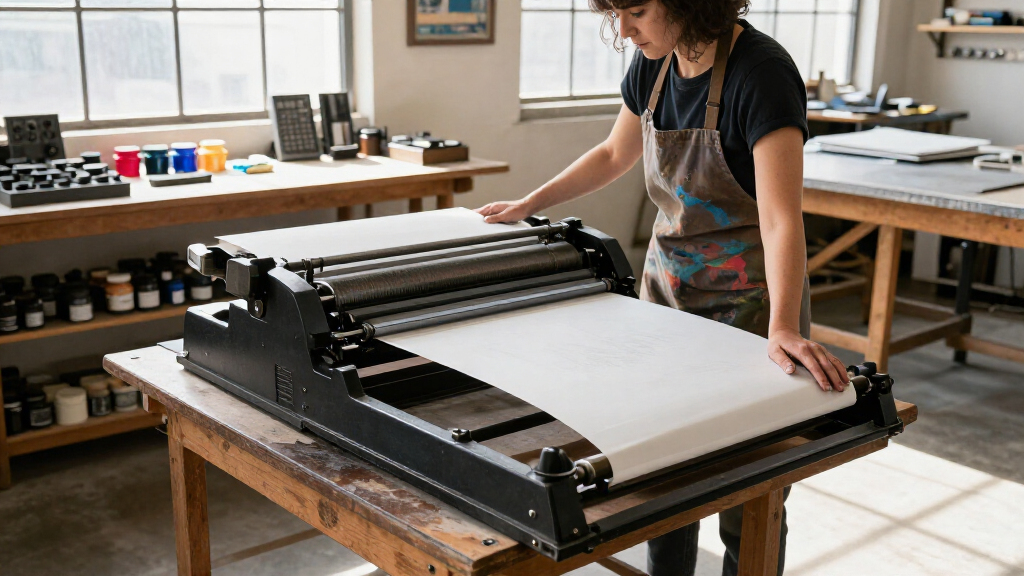
Los Angeles print workshop Gemini G.E.L. is marking its 60th anniversary with an exhibition drawn from its archives. Curated by Susan Dackerman and Helen Molesworth, the show highlights artists’ experimentation across printmaking and sculpture, from the workshop’s 1966 beginnings to recent work.
Los Angeles print workshop Gemini G.E.L. is marking its 60th anniversary with (Almost) Every Year: Sixty Years of Printmaking at Gemini G.E.L., an exhibition selected from its archives by curators Susan Dackerman and Helen Molesworth. The show traces six decades of work by artists who used the workshop not only to make prints, but also to test ideas and work beyond their familiar routines.
Gemini G.E.L. was founded in 1966 by Sydney B. Felsen and Stanley Grinstein. The exhibition follows its history through works by artists including Josef Albers, Man Ray, Robert Rauschenberg, Jasper Johns, Claes Oldenburg and Ellsworth Kelly, alongside Los Angeles artists such as David Hockney, Ed Ruscha, Ron Davis and Bruce Nauman. The title signals that the selection covers almost every year of the workshop’s history, rather than claiming a work for each one.
The exhibition groups artists through shared formal interests and contrasts. It places Frank Stella and Kelly in relation to their explorations of shape and color, and Rauschenberg and Johns alongside one another for their use of found-object imagery. Other pairings include Susan Rothenberg and Richard Serra, whose work takes black to an extreme, and Toba Khedoori, Julie Mehretu and Analia Saban, who examine linear structures.
Some works challenge the boundary between print and object. Oldenburg’s Profile Airflow (1969) combines a two-color lithograph with molded polyurethane relief. Johns printed a lightbulb image on lead, while Edward and Nancy Kienholz turned gasoline containers into sculptures resembling television sets. Allen Ruppersberg’s Great Speckled Bird (2013) extends across a 20-foot perforated piano-player roll divided into four sections.
How Gemini Expanded Printmaking
The exhibition makes the workshop’s significance visible through the range of artists and the unusual materials they brought into printmaking. Rather than treating a print as a fixed, familiar format, the works show artists using the workshop to explore relief, metal, found objects and long paper rolls. That history offers visitors a way to see how printmaking can become a site for experimentation across media.
The curators also draw attention to changes in who worked at Gemini. Women began working there in the 1980s, with Dorothea Rockburne and Vija Celmins among the early artists, followed by Susan Rothenberg and Elizabeth Murray. In a gallery talk, the curators described the workshop’s current artist list as distinguished by gender equality. That assessment is theirs; the supplied report does not provide a numerical breakdown.
Popular right now

KitchenAid Classic Series 4.5-Quart Tilt-Head Stand Mixer, Onyx Black

Ninja Foodi 10-Qt DualZone Smart XL Air Fryer, 6-in-1, DZ550

De'Longhi Stilosa Compact Manual Espresso Machine with Milk Frother
As an affiliate, we earn on qualifying purchases.
From 1966 to the Anniversary Show
Gemini opened by inviting prominent New York artists, while also engaging with the growing Los Angeles art community. The early roster included Albers, Man Ray, Rauschenberg, Johns, Oldenburg, Stella and Kelly, as well as Hockney, Ruscha, Davis and Nauman. The sequence in the exhibition presents the workshop as a meeting place for artists working in different styles and locations.
Its history also shows how artists’ interests can become visible through comparison. The curators’ juxtapositions bring out recurring questions of shape, color, imagery and line without suggesting that the artists shared a single approach. The exhibition’s focus, as described in the report, is on dialogue and experimentation at the workshop rather than a complete account of every artist or project associated with it.
“The workshop served as a place for dialogue among visiting artists and for experimentation beyond their usual routines and comfort zones.”
— Susan Dackerman and Helen Molesworth, the exhibition curators
What the Exhibition Leaves Open
The report does not specify the exhibition’s opening and closing dates, its full checklist, or whether all works discussed are displayed together. It also does not provide attendance figures or other measures of the anniversary show’s reach. The curators’ description of gender equality is not accompanied in the report by a count or a definition of how the roster was assessed.
The exhibition offers a selected archival view, not a year-by-year inventory of all work made at Gemini. Its title explicitly says “Almost Every Year,” and the available account does not identify which years are missing from the selection.
The Anniversary Exhibition’s Record
The current development is the presentation of (Almost) Every Year, which uses Gemini’s archives to mark the workshop’s 60th year. The source report does not state a closing date or announce a subsequent program. Further details about the exhibition’s schedule and full contents would need to come from Gemini G.E.L. or the venue.
Key Questions
What is Gemini G.E.L.?
Gemini G.E.L. is a Los Angeles print workshop founded in 1966 by Sydney B. Felsen and Stanley Grinstein. It has worked with artists from Los Angeles and elsewhere.
What is the 60th-anniversary exhibition called?
The exhibition is titled (Almost) Every Year: Sixty Years of Printmaking at Gemini G.E.L. It was assembled from the workshop’s archives by curators Susan Dackerman and Helen Molesworth.
Which artists are included in the exhibition?
The report names artists including Josef Albers, Robert Rauschenberg, Jasper Johns, Claes Oldenburg, David Hockney, Ed Ruscha, Vija Celmins, Julie Mehretu and Allen Ruppersberg. The full checklist is not provided.
How does the exhibition treat printmaking?
It presents printmaking as a field open to experimentation, including works that combine prints with molded relief, lead, gasoline containers and a long perforated piano-player roll.
Source: hyperallergic.com