
TL;DR

Get art and craft supplies delivered free with Prime
- Fast, free delivery on millions of items
- Prime Video, Amazon Music and more included
- Member-only deals all year
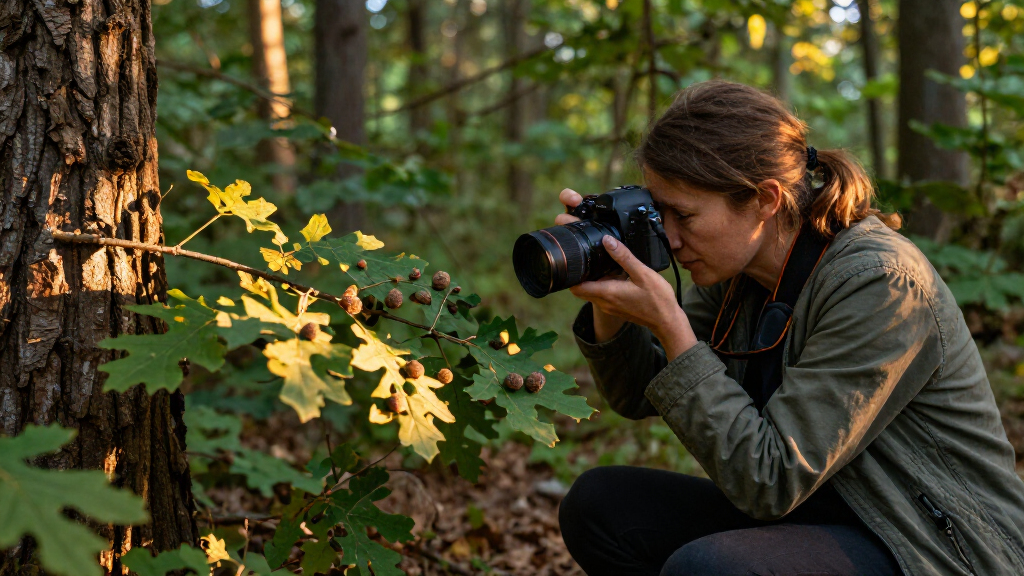
A report by Colossal spotlights California nature photographer Timothy Boomer’s close-up images of plant galls, many induced by cynipid wasps on oak trees. The photographs show the varied forms and colors of these growths, which provide food and shelter for developing larvae; Boomer says he uses focus stacking to capture their small details.
Nature photographer Timothy Boomer is documenting the small, often vividly colored growths that wasps and other organisms induce on plants, in a series of close-up images featured by Colossal in October 2026. The photographs focus largely on cynipid wasp galls, structures that serve as both food and shelter for larvae as they develop inside host plants.
Boomer’s images include an urchin gall on a blue oak near Lake Berryessa, spined turban galls on valley oak, and red cone galls on an oak leaf in Vacaville. The report also features a striped volcano gall in Solano County and a close-up of a disc gall’s surface. The subjects range from clustered, irregular growths to individual structures with ridges, spikes or rounded forms.
Galls form when an organism prompts a plant to grow unusual tissue. In the case of cynipid wasps, chemicals introduced by the larvae induce growths that draw on the plant’s resources. The resulting gall can protect a developing insect and supply food. After it matures, the adult leaves the structure, continuing the insect’s life cycle.
Boomer told Colossal that he uses focus stacking to photograph details at this scale. The technique combines many exposures—sometimes hundreds or thousands—so more of a tiny subject appears in focus. He said he makes limited edits in Photoshop and aims to show the natural scene without enhancement.
How Galls Shelter Developing Wasps
The photographs bring attention to an interaction that is easy to overlook: a wasp larva can shape part of a plant into a structure that supplies protection and nourishment. The gall is not simply a mark on a leaf or twig; it is a habitat formed through the insect’s relationship with its host.
For readers, Boomer’s images make the differences among these growths visible at a scale the unaided eye may not show clearly. The photographs also illustrate how variation in form can reflect different organisms and circumstances, while leaving scientific explanations to researchers rather than treating every unusual feature as fully understood.
Popular right now

Hisense 85 U7 Mini-LED ULED 4K UHD Smart Google TV (85U7SG, 2026)

Vitamix Propel Series 750 Professional-Grade Blender, 4 Programs, Black

Bose QuietComfort Wireless Earbuds with Active Noise Cancellation, Dewdrop Mint
As an affiliate, we earn on qualifying purchases.
California Oaks in Close-Up
The Colossal report describes galls produced by multiple cynipid species, often on particular parts of host plants. It cites an estimate of at least about 1,300 cynipid species worldwide. That is a reported estimate, not a count derived from Boomer’s photographs.
Several featured images were made in Solano and Napa counties, including around Vacaville and Lake Berryessa. Their captions identify species or scientific names where available, while one flange gall is described as induced by an undescribed cynipid wasp. The selection therefore includes both identified examples and one whose inducing species has not been formally described in the report.
“Galls can be brought about by many different organisms, but I tend to focus on the ones induced by cynipid wasps because they are the most visually stunning (at least in my opinion).”
— Timothy Boomer, speaking to Colossal
What the Odd Gall Shows
The report says an organism other than the gall inducer entered one spined turban gall early in its development, and Boomer links that event to its unusual appearance. He also says he is not a scientist and does not claim to fully understand the processes involved. The report does not identify the non-inducing organism or provide independent scientific confirmation of the explanation for that specimen.
It does not give dates for the individual photographs, a full account of how the specimens were identified, or details of any scientific study associated with the images. The gallery is a photographic feature, not a research paper, and its captions do not establish broader conclusions about gall biology.
Where to See More Images
Colossal directs readers to Boomer’s Instagram, where he shares photographs of galls alongside subjects including slime molds and flowers. The source report does not announce a new exhibition, book or research project, so no further release schedule is confirmed.
Readers can explore the published gallery for additional examples and their location captions. Any further scientific interpretation of the unusual gall, including what entered it and how that affected its growth, would require evidence beyond the information provided in the report.
Key Questions
What are insect galls?
Galls are unusual growths formed on plants after an organism induces changes in the plant tissue. In the cynipid wasp examples described by Colossal, the growth supports a developing larva.
What do cynipid wasp galls do for larvae?
The gall can provide a developing larva with food and protection. When development is complete, the adult insect leaves the gall.
How does Boomer photograph such small structures?
Boomer told Colossal he uses focus stacking, combining many images to bring more of a tiny subject into focus. He said some stacks involve hundreds or thousands of photographs.
What caused the unusual spined turban gall?
Boomer said a non-inducing organism entered the gall early and interrupted its normal development. The report does not identify that organism or independently verify the explanation.
Where were the featured galls photographed?
The captions place several subjects in Solano and Napa counties, California, including Vacaville and the Lake Berryessa area. The report also includes a striped volcano gall from Solano County.
Source: thisiscolossal.com