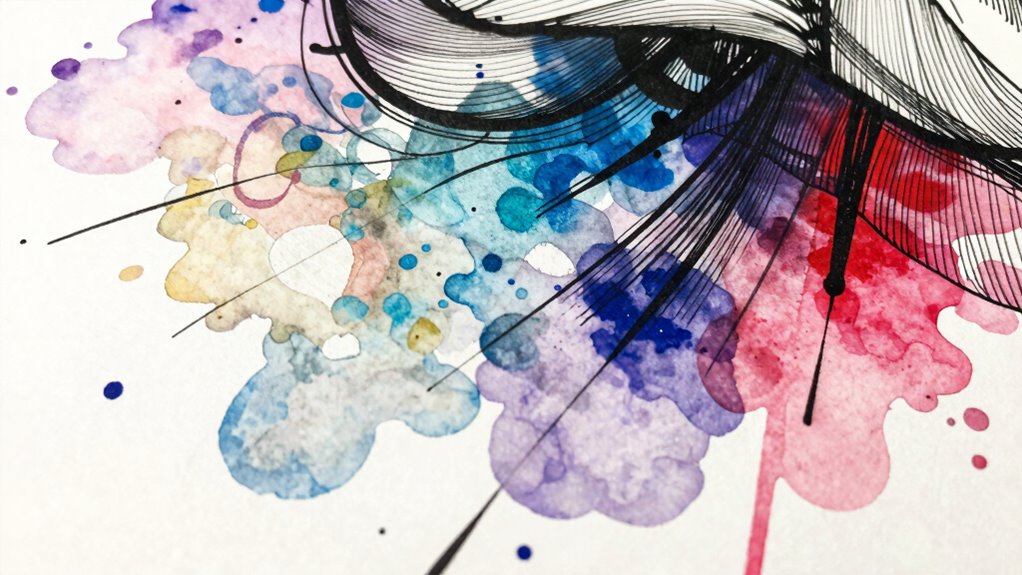

The overlooked rule behind better mixed media illustration is mastering layer blending. You can create a cohesive, dynamic piece by softening edges, adjusting opacity, and applying blending modes to make layers interact smoothly. Texture contrast also plays a vital role in adding depth and emotion. When you balance these techniques and maintain consistency, your artwork becomes more polished and visually engaging. Keep going, and you’ll discover how fine-tuning these details transforms your illustrations into compelling stories.

Get art and craft supplies delivered free — and shop member deals
- Fast, free delivery on millions of items
- Access to Prime Big Deal Days deals on October 6–7
- Prime Video, Amazon Music and more included
Key Takeaways
- Prioritize cohesive layer blending to unify diverse media elements seamlessly.
- Use texture contrast thoughtfully to enhance depth without overwhelming the composition.
- Maintain consistent blending techniques to create visual harmony across all layers.
- Balance opacity and blending modes to guide the viewer’s eye naturally through the artwork.
- Plan interactions between textures and media to reinforce storytelling and emotional impact.
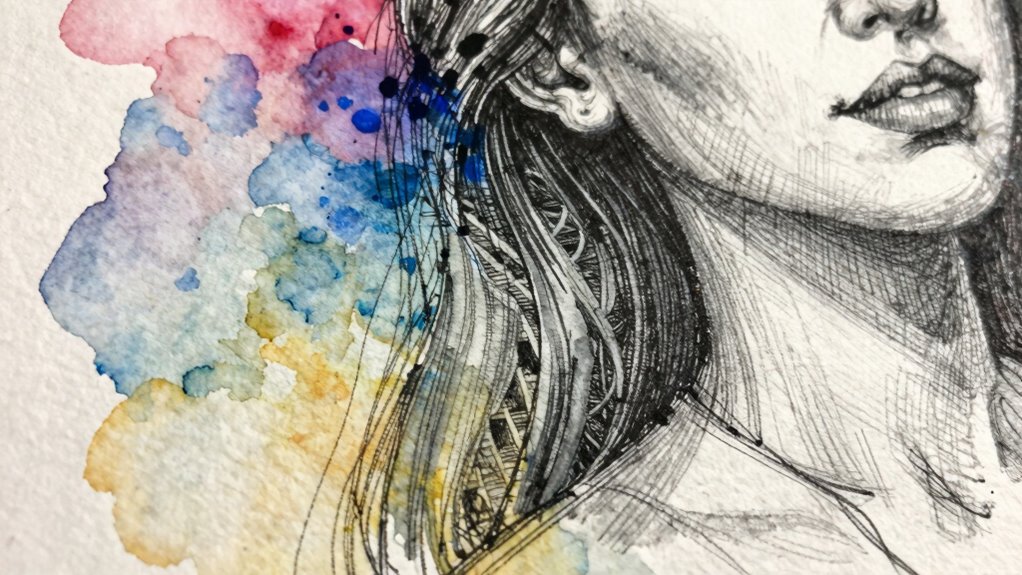
Have you ever wondered why some mixed media illustrations feel more cohesive and dynamic than others? The secret often lies in how you handle layer blending and texture contrast. When you combine different media—paint, collage, ink, digital elements—you’re creating a layered story that needs to flow seamlessly. If the layers clash or don’t integrate well, the entire piece can feel disjointed. Mastering layer blending isn’t just about putting things on top of each other; it’s about making those layers communicate visually. By softening edges, adjusting opacity, or using blending modes, you can create smooth progressions that lead the viewer’s eye naturally through your artwork. This technique helps unify diverse media, making the illustration feel intentional and polished. Paying attention to visual communication ensures your layers work together effectively. Texture contrast plays a vital role in elevating your mixed media work. When you juxtapose smooth, detailed areas with rough, tactile surfaces, you add visual interest and depth. But it’s not just about creating contrast for contrast’s sake. The key is to balance these textures thoughtfully, ensuring they complement each other rather than compete. For instance, applying a bold, textured collage element against a delicate watercolor background can highlight the focal point and provide a pleasing variety of tactile sensations. Additionally, understanding how texture contrast can influence the emotional tone of your piece allows you to evoke specific feelings or moods. Texture contrast guides the viewer’s attention and enhances the emotional impact of your piece. It also offers a sense of realism and richness that flat, monotonous surfaces can’t achieve. Incorporating consistent techniques across layers can further reinforce your intended visual rhythm and harmony, leading to a more unified final piece. Being deliberate about how you incorporate different media helps maintain a cohesive aesthetic. The overlooked rule that ties all of this together is consistency in your approach to layer blending and texture contrast. When you’re conscious about how each layer interacts—whether through transparent glazes, subtle masking, or deliberate textural variations—you establish a visual rhythm. This rhythm makes your illustration feel more cohesive and intentional. It’s easy to get carried away experimenting with different media, but without a clear strategy for how layers blend and textures contrast, your work can become chaotic. Instead, think of your layers as conversations; they should support and enhance each other. When done right, this harmony transforms your mixed media illustration from a collection of disparate elements into a unified, compelling piece.
mixed media illustration blending modes
As an affiliate, we earn on qualifying purchases.
As an affiliate, we earn on qualifying purchases.
Frequently Asked Questions
How Do I Choose the Best Materials for Mixed Media Artwork?
You should choose materials that complement each other by considering color harmony and material compatibility. Start with a clear idea of your desired effect, then select media that work well together, like watercolors with ink or collage elements with acrylics. Test how different textures and colors interact, ensuring they blend smoothly without clashing. This approach helps create balanced, cohesive artwork where each material enhances the overall composition.
What Common Mistakes Should I Avoid in Mixed Media Illustration?
You should avoid neglecting surface preparation, as it can cause issues with adhesion and durability. Be cautious with color blending—overworking it can muddy your tones or ruin the effect. Test your materials beforehand and use appropriate primers or sealants to guarantee smooth blending. Also, don’t rush the drying process, which can lead to smudging or peeling. Paying attention to surface prep and color blending helps you achieve a polished, cohesive mixed media piece.
How Can I Effectively Combine Different Textures in My Work?
To effectively combine different textures, focus on creating texture contrast, which makes each element stand out. Use medium integration thoughtfully by balancing smooth and rough surfaces, ensuring they complement rather than clash. Experiment with layering different materials and techniques, like watercolor over collage or ink over fabric, to build depth. Keep the shifts seamless by paying attention to how textures interact, guiding the viewer’s eye smoothly across your artwork.
Is There a Recommended Order for Layering Media?
Think of your layering sequence as a symphony, where the media hierarchy guides each instrument’s entry. Start with your background, like a gentle dawn, then build up with mid-tones and highlights. This order guarantees each layer enhances the previous, creating harmony. Prioritize the foundational media first, and add details later. By respecting this structure, your mixed media work will resonate with depth and balance, much like a well-composed melody.
How Do I Fix Mistakes Without Damaging the Artwork?
To fix mistakes without damaging your artwork, use gentle mistake correction techniques like erasing lightly for pencil, or applying a damp brush for watercolor errors. For preservation, consider protective layers such as fixatives or varnishes, and work carefully to avoid smudging. Always test correction methods on scrap paper first. Being patient and precise helps maintain your piece’s integrity, ensuring your mixed media work stays vibrant and intact.
layer blending tools for artists
As an affiliate, we earn on qualifying purchases.
As an affiliate, we earn on qualifying purchases.
Conclusion
As you step back, imagine your artwork as a vibrant tapestry, each mixed media element adding texture and depth. When you embrace the overlooked rule, it’s like weaving threads with intention, allowing colors to dance and surfaces to converse. Your illustration transforms into a lively scene, where every stroke and material plays its part. Keep this rule in mind, and watch your creation come alive with richness, inviting viewers into a world that feels both layered and alive.
As an affiliate, we earn on qualifying purchases.
artistic blending and texture techniques
As an affiliate, we earn on qualifying purchases.
As an affiliate, we earn on qualifying purchases.
Halloween Picks
halloween
As an affiliate, we earn on qualifying purchases.