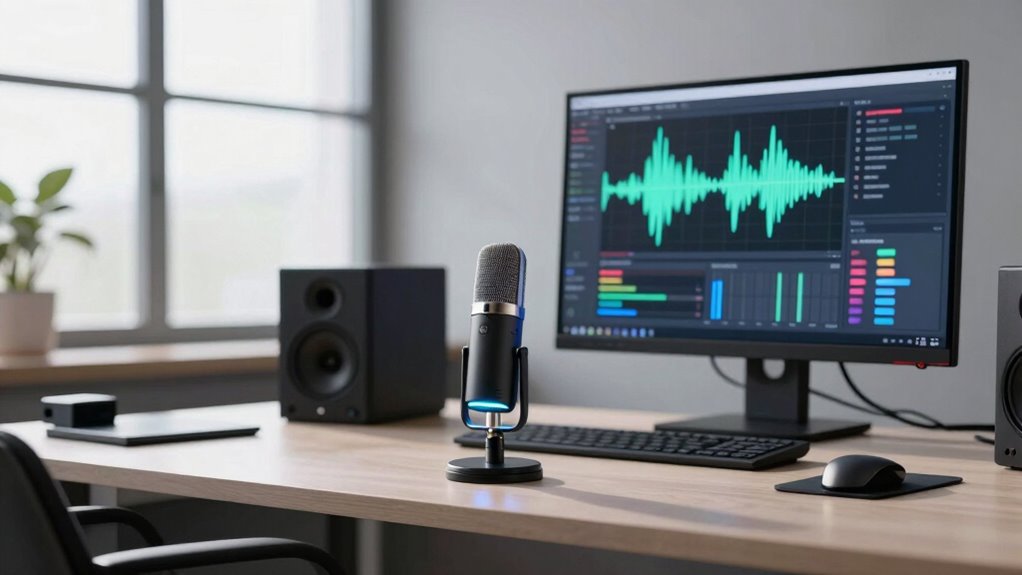

A smarter way to approach voice error recovery involves using user feedback to continually improve accuracy. Instead of relying solely on preset algorithms, adaptive systems learn from your corrections and confirmations, personalizing interactions and reducing frustrations. Interactive design fosters a better understanding of your speech habits, accents, and needs. By combining these techniques, your voice system becomes more reliable and efficient over time. Keep exploring to discover how these strategies can make voice commands smoother and more intuitive.
Key Takeaways
- Incorporate real-time user feedback to enable continuous system learning and adaptation.
- Utilize machine learning algorithms that adjust recognition based on corrections and confirmations.
- Design interactive interfaces that actively involve users in correcting and guiding system responses.
- Personalize voice interactions by analyzing individual speech patterns for improved accuracy.
- Shift from static algorithms to dynamic, feedback-driven models for more reliable voice error recovery.
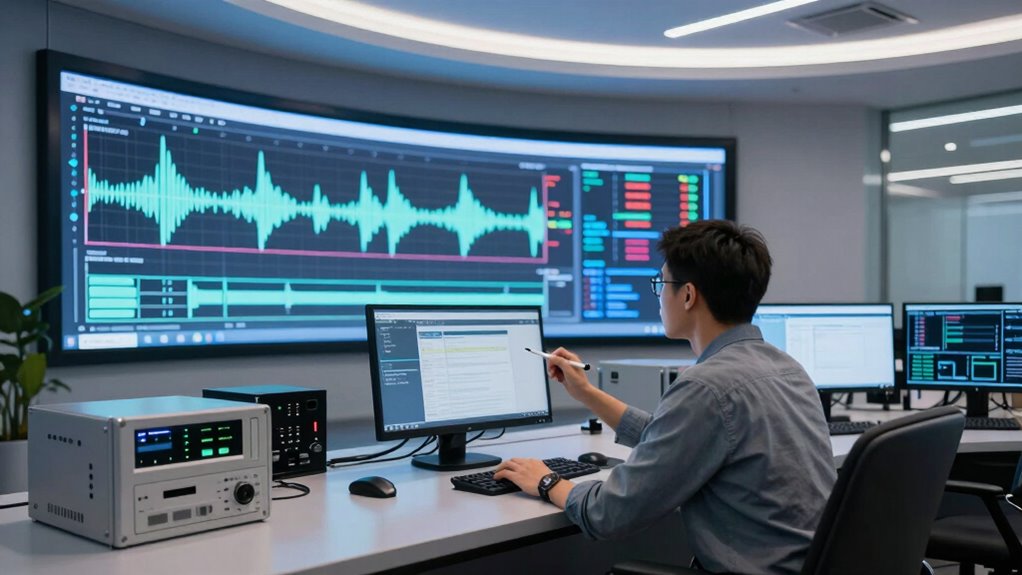
When voice recognition systems encounter errors, traditional recovery methods often fall short, leading to frustration and inefficiency. You might find yourself repeatedly correcting misinterpreted commands or restarting the system altogether. This approach not only wastes your time but also hampers your productivity. To truly improve the experience, it’s essential to adopt a smarter way that leverages speech recognition technology alongside user feedback. Instead of relying solely on predefined algorithms, integrating real-time feedback from users allows the system to learn and adapt better, reducing the likelihood of repeated errors.
In modern speech recognition, user feedback becomes a critical component. When you correct a mistake or clarify a command, that input isn’t just a one-off fix; it’s valuable data that helps the system understand your speech patterns better. This continuous feedback loop enables the voice recognition system to refine its accuracy over time, making future interactions smoother and more reliable. You’re not just correcting errors; you’re actively contributing to the system’s learning process, which benefits everyone who uses it.
A smarter approach involves implementing adaptive algorithms that listen to your corrections and adjust accordingly. When speech recognition misinterprets a word or phrase, providing immediate feedback—either through correction or confirmation—trains the system to recognize similar speech more accurately next time. This proactive strategy minimizes the need for repeated manual corrections and helps the system understand context better. Over time, it becomes more attuned to your speech habits, accents, and preferred terminology, offering a more personalized experience. Additionally, machine learning techniques play a vital role in enabling these adaptive capabilities, ensuring the system continuously improves from user interactions. Incorporating user-centered design principles further enhances the system’s ability to adapt effectively to individual needs.
Furthermore, this method encourages a more interactive relationship between you and the technology. Instead of feeling frustrated by errors, you become an active participant in improving the system’s performance. Your feedback guides the speech recognition engine, making it smarter and more responsive. This collaborative approach reduces the frustration often associated with voice errors and increases confidence in relying on voice commands for daily tasks.
Ultimately, adopting a smarter voice error recovery strategy that emphasizes user feedback transforms the way speech recognition works. It shifts from a static, error-prone system to a dynamic, learning entity that evolves with your input. This not only enhances accuracy but also creates a more seamless and efficient interaction. By making user feedback an integral part of the process, you’re helping to develop a voice recognition system that truly understands you, reducing errors and boosting your overall experience. Recognizing the importance of content formats and adaptable structures in the digital environment further supports the development of more intuitive and responsive systems.

Comidox 1Pcs VC-02-Kit Voice Control Module Intelligent Offline Speech Module for Smart Home Devices & Lighting Voice Recognition Development Board
Unleash Creativity with VC-02 Kit: Elevate your smart home and gadgets to the next level with the VC-02-Kit…
As an affiliate, we earn on qualifying purchases.
As an affiliate, we earn on qualifying purchases.
Frequently Asked Questions
How Does Voice Error Recovery Impact User Experience?
Voice error recovery considerably improves your user experience by making interactions smoother and more efficient. When errors occur, effective error correction helps you get the right results quickly, reducing frustration. Additionally, you value user privacy, so a smarter approach ensures your data stays secure during error recovery. This seamless process boosts your confidence in using voice commands and encourages you to rely more on voice technology for everyday tasks.
What Industries Benefit Most From Smarter Voice Error Recovery?
You might think industries like healthcare or finance, where precision matters, would struggle most with voice errors, but surprisingly, tech and customer service benefit greatly from smarter voice error recovery. Industry applications demand robust error handling techniques to keep users engaged and avoid frustration. These sectors gain smoother interactions, faster resolutions, and better trust, proving that even in high-stakes fields, smarter error handling makes a real difference, often with ironic efficiency.
Are There Any Privacy Concerns With Voice Error Recovery Methods?
Yes, privacy concerns and data security are valid with voice error recovery methods. You should be cautious because these systems often collect and store your voice data, which could be vulnerable to breaches or misuse. To protect yourself, verify the service uses strong encryption and clear privacy policies. Always review how your data is handled and opt for providers prioritizing user privacy, so your information stays secure and private.
How Does AI Improve Voice Error Detection Accuracy?
AI improves voice error detection accuracy by leveraging natural language processing and machine learning algorithms. You benefit from smarter systems that analyze speech patterns, context, and user intent more precisely. These technologies continuously learn from new data, refining their ability to identify errors quickly and accurately. As a result, your voice interactions become more seamless, reducing misunderstandings and enhancing overall user experience through smarter, adaptive error recovery.
What Are the Cost Implications of Implementing Smarter Recovery Systems?
Think of implementing smarter recovery systems as planting a sturdy tree amid a storm. Your cost analysis reveals initial investments in technology and training, but long-term savings emerge through reduced errors and improved user satisfaction. Implementation challenges, like integrating new systems and ensuring compatibility, demand careful planning. While upfront costs can seem high, the resilience and efficiency gained make it a worthwhile investment, strengthening your voice interface’s foundation for future growth.

Automatic Speech Recognition: A Deep Learning Approach (Signals and Communication Technology)
As an affiliate, we earn on qualifying purchases.
As an affiliate, we earn on qualifying purchases.
Conclusion
Imagine your voice assistant as a loyal guide lost in a dense forest. When it stumbles, your quick, gentle guidance helps it find the path again. With smarter error recovery, you become that guiding light—patient, understanding, and steady. Every correction is a step toward harmony, turning confusion into clarity. Together, you navigate the wilderness of words, forging a trusting bond that transforms challenges into opportunities for seamless communication.

Eccotemp SmartHome 2.5 Gallon Mini Tank Water Heater with Voice Commands
DYNAMIC SMART HOME – Compatible with Amazon Alexa and Google Assistant to use smart voice commands such as:…
As an affiliate, we earn on qualifying purchases.
As an affiliate, we earn on qualifying purchases.

AI VoiceWriter – Smart Dictation & AI Writing Assistant for Windows & Mac | USB Dongle & Mobile App for Voice Input, Proofreading, Rewriting & Multilingual Support
🎙️ Hands-Free Voice Typing for Windows & Mac – Powered by iOS & Android dictation technology, AI VoiceWriter…
As an affiliate, we earn on qualifying purchases.
As an affiliate, we earn on qualifying purchases.