To approach AI copyright smarter, you should stay informed about evolving laws and prioritize transparency about AI’s role in your work. Respect existing intellectual property rights and develop clear guidelines to avoid infringement. Balance innovation with ethical practices, considering fairness and societal impacts. By integrating legal awareness with responsible use, you protect your creative outputs and prevent disputes. Keep these principles in mind, and you’ll be better prepared to navigate the complex landscape of AI-generated content.
Open a free Amazon Business account
Business pricing, bulk buying and tax-exempt orders.
As an affiliate, we earn on qualifying purchases.
Key Takeaways
- Understand current copyright laws and how they apply to AI-generated content to navigate legal uncertainties effectively.
- Be transparent about AI’s role in content creation to maintain ethical standards and build trust.
- Respect existing intellectual property rights and avoid using copyrighted material without proper authorization.
- Stay informed about evolving legal and policy developments related to AI and copyright issues.
- Use AI as a tool to enhance human creativity responsibly, balancing innovation with ethical and legal considerations.
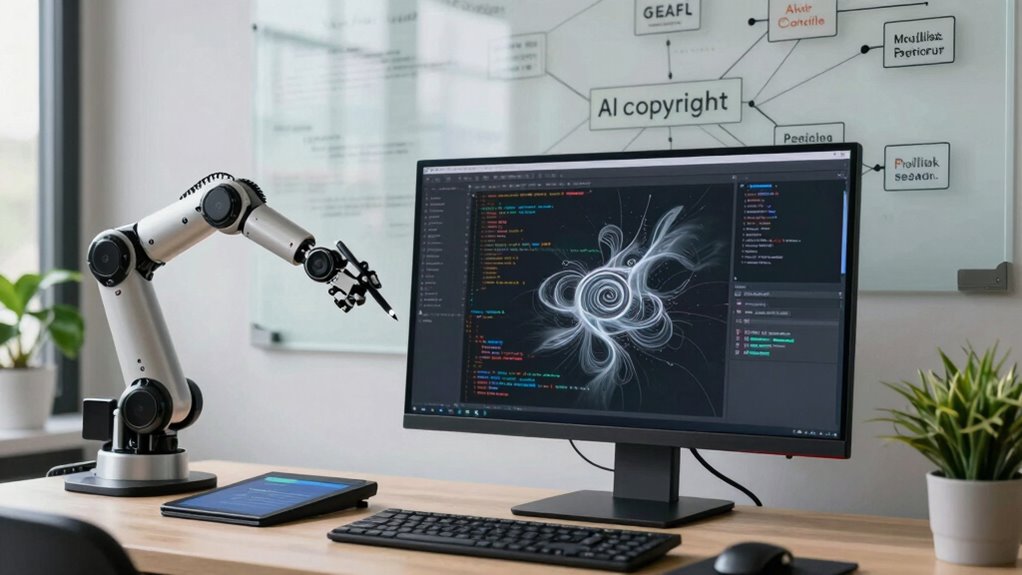
As artificial intelligence continues to revolutionize creative industries, steering through copyright laws becomes more complex and urgent. You need to understand that the legal implications surrounding AI-generated content are still evolving, often leaving creators and developers in gray areas. When you use AI to produce art, music, or written work, questions about authorship and ownership come into play. Who holds the rights—the programmer, the user, or the AI itself? Navigating this legal landscape requires careful attention to existing copyright laws, which were established long before AI’s rise. You might find yourself questioning whether AI-created works qualify for copyright protection at all, especially when the human input is minimal. This uncertainty can lead to potential legal disputes or challenges, especially as courts and lawmakers grapple with defining originality and authorship in the age of machine intelligence. Recognizing the importance of content formats can help you better understand how AI-generated work fits into current legal frameworks.
Alongside legal considerations, ethical considerations are just as vital. When you leverage AI for creative pursuits, you must think about the broader impact of your work. For example, using AI to generate content that closely mimics existing copyrighted material raises questions about originality and fairness. Are you respecting the rights of original creators, or are you unintentionally infringing on their work? Transparency becomes a key issue—are you disclosing the extent of AI involvement? Ethical use of AI also involves considering the potential for bias or misinformation embedded in the algorithms. You should be mindful of how AI influences public perception and cultural narratives, ensuring your work aligns with responsible and fair practices. Additionally, understanding the legal landscape surrounding AI and copyright can help you develop strategies to protect your creative output and avoid legal complications.
To approach AI copyright more intelligently, you need to establish clear guidelines for your projects. This includes understanding the legal framework in your jurisdiction and staying updated on policy shifts. It also means considering the ethical impact of your work—being transparent about AI involvement, respecting existing intellectual property, and avoiding harm. You should view AI as a tool that extends your creative capacity rather than replacing human insight altogether. By integrating legal awareness with ethical responsibility, you can navigate the complex terrain of AI-generated content more confidently and responsibly. Ultimately, adopting a smarter approach involves balancing innovation with respect for existing laws and ethical standards, ensuring that your use of AI benefits both your creative goals and the wider community.
AI copyright management software
As an affiliate, we earn on qualifying purchases.
As an affiliate, we earn on qualifying purchases.
Frequently Asked Questions
How Does Ai-Generated Content Differ Legally From Human-Created Work?
You should know that AI-generated content differs legally from human-created work mainly in ownership and rights. With AI, legal issues around creative collaboration and ethical considerations come into play, since AI lacks human intent and originality. You might find that copyright laws don’t fully cover AI creations, making it tricky to assign rights. Thus, understanding these differences helps you navigate the legal landscape and guarantee responsible use of AI-generated content.
What Are the Risks of Copyright Infringement With AI Tools?
You risk copyright infringement with AI tools if you don’t address ethical considerations and transparency concerns. AI might generate content that closely resembles protected works, unintentionally infringing on copyrights. Without clear disclosure of AI’s role, you could face legal and reputational issues. To mitigate these risks, guarantee transparency about AI use and respect existing copyrights, fostering responsible and ethical content creation that aligns with legal standards.
Who Owns the Rights to Ai-Created Intellectual Property?
You own the rights to AI-created intellectual property if legal frameworks and ethical considerations support it. Currently, laws vary by jurisdiction, often requiring human authorship for copyright eligibility. As AI develops, you should stay informed about evolving legal standards and ethical practices, ensuring your use of AI tools aligns with these guidelines. This proactive approach helps protect your rights and encourages responsible AI innovation.
How Can Creators Protect Their Work From Unauthorized AI Use?
Over 60% of creators worry about unauthorized AI use. To protect your work, you should explore AI licensing options that specify how your content can be used, ensuring you retain control. Additionally, consider ethical considerations by clearly marking proprietary content and using digital watermarks. These steps help prevent misuse and establish legal boundaries, empowering you to safeguard your intellectual property in an evolving AI landscape.
Are Current Copyright Laws Sufficient for AI Innovations?
Current copyright laws aren’t fully sufficient for AI innovations because they can’t keep pace with rapid technological advances. You should consider the ethical implications surrounding AI-created content and how existing regulations might not adequately protect or regulate these works. As a creator, you’re encouraged to stay informed about evolving laws and advocate for updated regulations to address these regulatory challenges, ensuring your rights and ethical standards are maintained amidst AI development.
intellectual property rights tools for AI-generated content
As an affiliate, we earn on qualifying purchases.
As an affiliate, we earn on qualifying purchases.
Conclusion
By approaching AI copyright with clarity and fairness, you’re steering through a complex maze like a seasoned navigator. Remember, respecting creators’ rights while fostering innovation is a balancing act—one that requires open dialogue and thoughtful policies. If you stay adaptable and informed, you’ll help shape an AI future that’s fair and innovative, turning the tricky waters of copyright law into a steady stream of opportunity. The key is to stay engaged and keep the conversation flowing.
As an affiliate, we earn on qualifying purchases.
copyright compliance software for AI art
As an affiliate, we earn on qualifying purchases.
As an affiliate, we earn on qualifying purchases.
Fall Picks
fall essentials
As an affiliate, we earn on qualifying purchases.