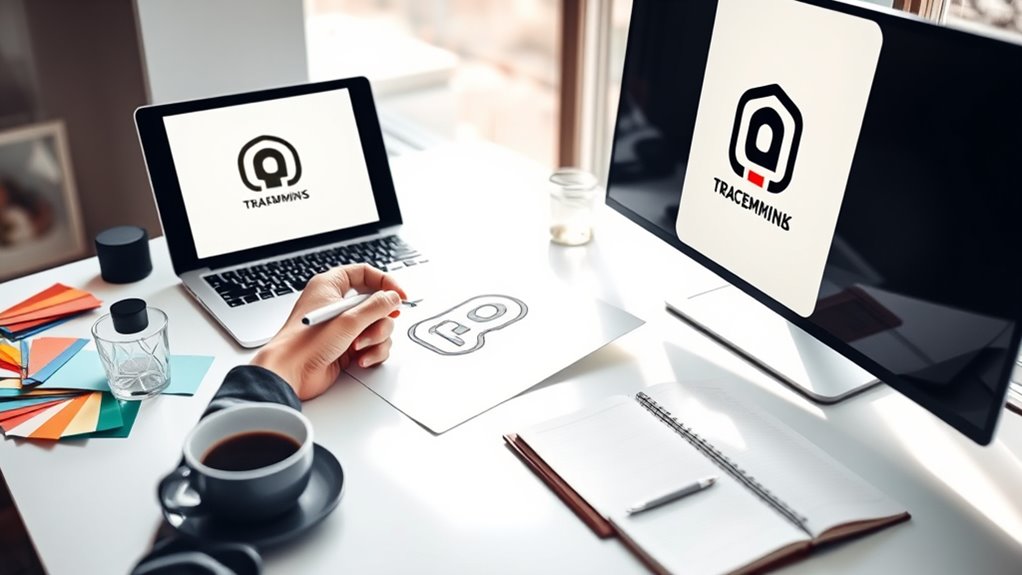

To protect your logos and brand names, you need to understand the trademarking process. Make sure your designs are unique and distinctive enough for registration. Conduct thorough searches to avoid conflicts, then file an application with the right trademark office. Securing a trademark safeguards your visual identity, prevents misuse, and adds value to your business. Being informed helps you navigate technical steps and make smart decisions. Keep exploring to discover essential tips for successful trademark protection.

Get art and craft supplies delivered free — and shop member deals
- Fast, free delivery on millions of items
- Access to Prime Big Deal Days deals on October 6–7
- Prime Video, Amazon Music and more included
Key Takeaways
- Trademarking protects your logo and brand name legally, establishing exclusive rights and preventing unauthorized use.
- Conduct a thorough trademark search to ensure your design is unique and not already in use.
- File an application with the appropriate trademark office, considering legal assistance for smooth registration.
- Ensure your logo is distinctive and meets trademark requirements to avoid registration hurdles.
- Trademark registration strengthens brand reputation, adds business value, and safeguards against infringement in competitive markets.

As a designer, protecting your creative work is essential, and trademarking your logos and brand names is a vital step in doing so. Logo protection helps ensure that your unique designs are legally recognized as yours, preventing others from copying or using similar marks that could confuse your audience. When you trademark your logos and brand names, you establish clear ownership, which strengthens your brand identity and provides legal grounds to defend it. This process is especially important in a competitive market where visual identity is key to standing out.
Understanding how trademarking works can seem intimidating at first, but it’s a worthwhile investment. Your logo isn’t just a pretty image; it’s a symbol of your brand’s integrity and reputation. By securing a trademark, you protect this symbol from unauthorized use, which could dilute your brand identity or mislead your customers. Think of your logo as the face of your brand—once registered, it becomes a legally protected asset that can’t be imitated or exploited by others. This protection not only preserves your current brand image but also adds value to your business, making it more attractive to potential partners or investors.
To start the process, you need to guarantee your logo is distinctive enough to qualify for trademark protection. Generic or overly similar logos might face hurdles during registration. Conduct a thorough trademark search to verify that your logo isn’t already in use or too similar to existing marks. This step saves you time and money by avoiding rejection or legal disputes later. Once you’ve confirmed your logo’s uniqueness, you can file an application with the appropriate trademark office, providing details about your design, its use, and your business. It’s advisable to work with a legal expert experienced in trademarks to navigate the application process smoothly and ensure all requirements are met. Additionally, understanding the importance of brand differentiation can help you create a distinctive mark that stands out in the marketplace.
Frequently Asked Questions
Can I Trademark a Logo I Haven’t Fully Developed Yet?
You can’t trademark a logo you haven’t fully developed yet because a trademark application requires a clear, specific logo design. During logo development, focus on creating a distinctive mark, then file a trademark application once it’s finalized. Rushing before completion might lead to delays or rejection. Make sure your logo is unique and well-defined before applying to protect your brand effectively.
How Long Does a Trademark Registration Typically Take?
The trademark registration process usually takes about 8 to 12 months, but it can vary based on factors like the complexity of your application and the USPTO’s workload. During this registration timeline, you’ll go through an application review, possible office actions, and final approval. Staying proactive and responsive to any inquiries helps speed up the process. Keep in mind, delays can happen, so patience is key.
What Are the Costs Involved in Trademarking a Logo or Name?
Trademarking a logo or name involves costs like government filing fees, which vary by jurisdiction, and legal fees if you hire an attorney. Expect ongoing expenses for trademark renewal to keep your registration active, typically every 10 years. These renewal fees can range from a few hundred to over a thousand dollars. Budget for legal assistance to navigate the process smoothly and guarantee your trademark remains protected and enforceable.
Can I Use My Trademark Internationally Without Additional Registration?
You can’t automatically use your trademark internationally without additional registration. To benefit from international protection, you need to pursue global registration through systems like the Madrid Protocol or register separately in each country. This way, you secure your trademark across multiple markets, ensuring your brand is protected worldwide. Without this, your rights are limited to your home country, leaving your brand vulnerable to infringement elsewhere.
What Should I Do if Someone Infringes on My Trademark?
If someone infringes on your trademark, you should act promptly to safeguard your rights. Start with trademark enforcement by sending a formal cease-and-desist letter, clearly explaining your ownership. If necessary, seek legal remedies through the courts to stop the infringement and prevent future issues. Consulting a trademark attorney can help you navigate the process smoothly and ensure your brand remains protected.
Conclusion
Remember, trademarking your logo and name is like planting a flag on your creative territory—you claim your space and protect your work. As a designer, understanding this process helps you steer clear of legal storms and build a strong brand foundation. Think of trademarks as your design’s shield, guarding it like a knight’s armor. So, take control, get protected, and watch your brand stand tall in the bustling marketplace.
Fall Picks
fall essentials
As an affiliate, we earn on qualifying purchases.