When designing ethically for the web, avoid dark patterns that manipulate user choices, like hiding opt-out options or making account deletion difficult. These tactics erode trust and damage your reputation by deceiving users into decisions they might not want. Focus instead on transparency, clarity, and respecting user autonomy. By doing so, you’ll foster genuine relationships and build trust. Want to discover practical ways to create fair, user-centered designs? Keep exploring to learn more.
Key Takeaways
- Avoid using dark patterns like hiding opt-out options or making account deletion difficult to manipulate user choices.
- Prioritize transparency by clearly explaining data collection and usage, fostering trust and honest communication.
- Respect user autonomy with accessible controls for subscription management, privacy settings, and opt-in/opt-out options.
- Design ethically by focusing on clarity, fairness, and respecting user needs rather than exploiting their decision-making.
- Continually improve your website’s design to promote positive user experiences and build long-term trust.
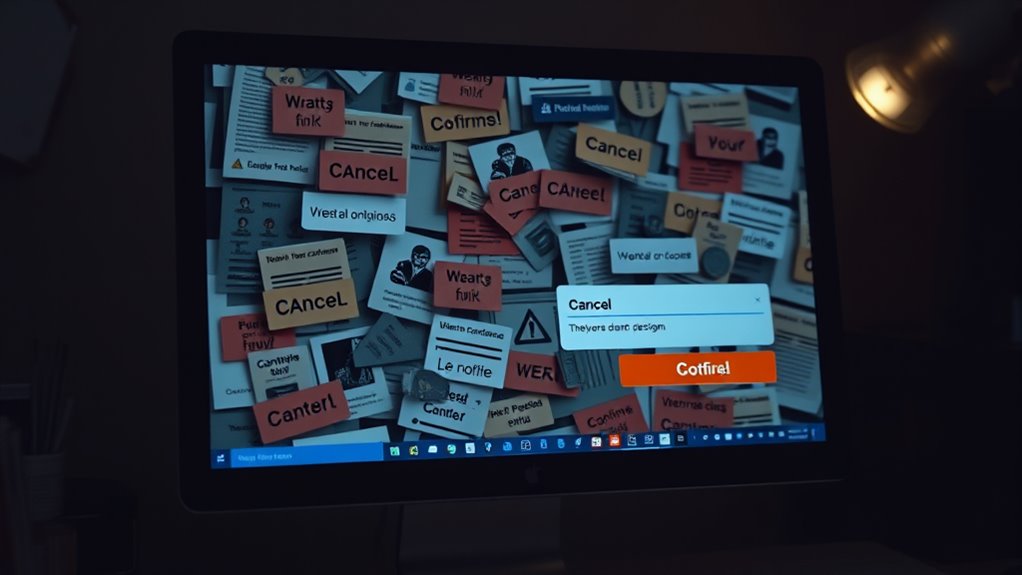
Have you ever stopped to contemplate how your website impacts users beyond just aesthetics and functionality? The truth is, your site influences how visitors perceive and interact with your brand, shaping their overall experience and trust. Ethical web design isn’t just about creating visually appealing pages; it’s about fostering a transparent, respectful environment that centers on the user’s needs. One of the most damaging pitfalls to avoid in this domain is the use of dark patterns—design tactics that manipulate users into actions they might not intend or want to take. These patterns undermine user experience and erode user trust, which are essential for building lasting relationships with your audience.
Dark patterns are subtle tricks embedded within your website’s design that nudge users toward decisions that benefit you, often at their expense. For example, hiding opt-out options for subscriptions or making it difficult to delete accounts are common manipulative tactics. Such practices can frustrate users, making them feel deceived or manipulated, which damages their perception of your brand. When users sense that your site prioritizes its own gains over their interests, their trust diminishes. This loss of trust can lead to increased bounce rates, negative reviews, and a decline in repeat visits, ultimately harming your reputation and business. Ethical web design requires you to be mindful of how your choices influence user behavior. Instead of employing manipulative tactics, aim for clarity and honesty. Clearly communicate what users can expect, provide straightforward options, and respect their autonomy.
Prioritizing transparency and fairness in your design choices makes your website more welcoming and trustworthy. For instance, if you ask users to share personal information, explain why it’s needed and how it will be used. Offer simple, accessible ways to opt in or out of features like marketing emails or data sharing. By doing so, you demonstrate respect for users’ control over their experience, which directly enhances their perception of your brand. This approach not only improves user experience but also strengthens user trust, encouraging visitors to engage more deeply with your content and services.
In short, avoiding dark patterns isn’t just about ethical responsibility; it’s a strategic move that pays off by fostering a positive relationship with your users. When your design choices are transparent, respectful, and user-centric, you create an environment where trust flourishes. Users will appreciate your integrity, feel more comfortable exploring your site, and be more likely to return. Remember, ethical web design isn’t a one-time effort—it’s a continuous commitment to putting users first and building genuine trust through every interaction. Additionally, incorporating principles from personal development can help designers stay mindful of user well-being and promote positive online experiences.
privacy-focused user consent management software
As an affiliate, we earn on qualifying purchases.
As an affiliate, we earn on qualifying purchases.
Frequently Asked Questions
How Can Users Identify Dark Patterns on Websites?
You can spot dark patterns on websites by paying attention to visual cues that seem manipulative or confusing, like deceptive buttons or misleading language. Watch for behavioral tricks, such as hidden opt-outs or overly complicated processes that pressure you into choices. If something feels off or designed to influence your decision unfairly, it’s likely a dark pattern. Stay alert to these signs to protect your online autonomy and make informed choices.
What Are the Legal Consequences of Using Dark Patterns?
Using dark patterns can lead to serious legal repercussions, including fines and lawsuits, as authorities crack down on deceptive practices. You might face compliance challenges with laws like GDPR or CCPA, which require transparent user interactions. If you’re caught using manipulative tactics, regulators can impose penalties that harm your reputation and finances. It is crucial to prioritize ethical design to avoid these legal risks and build trust with your users.
How Do Dark Patterns Impact User Trust Long-Term?
You might think dark patterns boost short-term gains, but they harm your user experience and erode consumer confidence over time. When users realize they’ve been manipulated, they’re less likely to trust your site or brand again. This loss of trust can lead to decreased engagement, negative reviews, and long-term reputation damage. Prioritizing ethical design fosters genuine relationships, ensuring users feel respected and confident in your platform.
Can Ethical Design Principles Be Monetized Effectively?
Yes, you can monetize ethically by focusing on transparent monetization strategies that build trust with your users. Prioritize ethical branding by clearly communicating your value and avoiding manipulative tactics. When you adopt honest practices, your long-term success benefits, as users appreciate your integrity. This approach creates loyal customers who are more likely to support your growth through genuine engagement, ultimately leading to sustainable monetization without compromising your principles.
What Tools Are Available to Audit for Dark Patterns?
You can uncover dark patterns with powerful tools like heuristic evaluations and user feedback tools. These methods act like a magnifying glass, revealing hidden manipulative tactics. Heuristic evaluation helps you systematically analyze your design for unethical practices, while user feedback tools gather real insights from your audience. Together, they form an unstoppable duo, ensuring your website remains transparent, ethical, and free from sneaky dark patterns.
accessible account deletion tools
As an affiliate, we earn on qualifying purchases.
As an affiliate, we earn on qualifying purchases.
Conclusion
By banning baiting dark patterns and embracing ethical design, you foster trust, transparency, and truth. Prioritize user privacy, practice patience, and promote positive interactions. Remember, responsible design respects users’ rights and rebuilds your reputation. When you willingly walk the ethical walk, you’ll witness a web that’s welcoming, trustworthy, and truly user-centric. So, stand strong against sneaky strategies, and let integrity guide your innovative ideas—because a conscious creator crafts a credible, caring, and commendable web.

Reletech 2.5 Inch External Hard Drive Enclosure, SATA to USB 3.1 Tool-Free Clear for 2.5 Inch SSD & HDD 9.5mm 7mm External Hard Drive Case SSD Max 2TB Supports UASP SATA
2.5" External Hard Drive Enclousre: Easily connects your 2.5 inch SSD & HDD to PC, laptop, PS4, Xbox…
As an affiliate, we earn on qualifying purchases.
As an affiliate, we earn on qualifying purchases.

Graphic Artist's Guild Handbook of Pricing and Ethical Guidelines
As an affiliate, we earn on qualifying purchases.
As an affiliate, we earn on qualifying purchases.