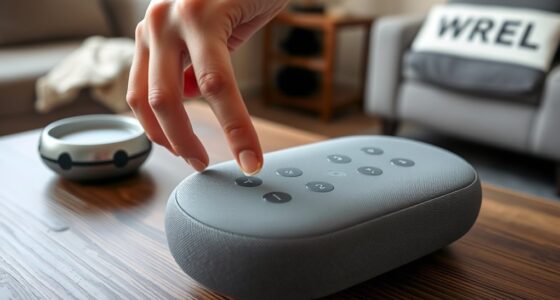
The ethics of anthropomorphism in voice assistants center on how human-like features can influence your emotions and dependences. These designs may manipulate your feelings, make you more reliant, and blur the line between genuine human connection and artificial interaction. This can impact your mental health and social skills over time. Being aware of these issues helps you stay in control. If you explore further, you’ll discover ways to navigate these ethical challenges responsibly.
Key Takeaways
- Anthropomorphism in voice assistants can manipulate user emotions and foster unhealthy dependency.
- Ethical design requires transparency about the artificial nature of voice assistants to prevent deception.
- Overly human-like features may diminish users’ critical judgment and impact mental health negatively.
- Developers should balance engaging interactions with safeguarding users from emotional exploitation.
- Users need awareness of AI limitations to maintain control and prevent over-reliance on virtual companions.

As voice assistants become more integrated into our daily lives, ethical questions about their design and use grow increasingly significant. One key concern is how these assistants are anthropomorphized, or given human-like qualities, which can influence the way users interact with them. When voice assistants are designed to seem friendly, attentive, or even empathetic, it can lead to emotional manipulation. You might find yourself sharing personal details or relying heavily on these AI companions, even when it’s not necessary. This emotional attachment can blur the lines between genuine human connection and artificial interaction, raising questions about the authenticity and potential exploitation of users’ emotions.
Anthropomorphized voice assistants can manipulate emotions and blur the line between real and artificial connection.
This anthropomorphism can foster a sense of user dependency. As you grow accustomed to talking to your voice assistant as if it’s a real person, you may start to rely on it for emotional support, decision-making, or companionship. While convenience is a benefit, overdependence can diminish your ability to function independently or seek authentic human relationships. Developers often design these assistants to be engaging and responsive, which deepens your attachment and makes it harder to disengage. The more human-like they appear, the more likely you are to treat them as emotional entities rather than tools, which can reinforce dependency and reduce your capacity for critical judgment about their role.
Ethically, this anthropomorphic design raises questions about manipulation. When voice assistants are programmed to respond with warmth and empathy, it might subtly influence your feelings and behaviors. For instance, you could be encouraged to share more personal information or accept suggestions without critical thinking, simply because the assistant seems caring and understanding. This can be especially problematic if it’s used to promote commercial interests or steer you toward specific products or services. The emotional manipulation involved in creating a friendly, human-like persona can exploit your natural tendency to anthropomorphize, making you more susceptible to influence.
Furthermore, as you become more accustomed to interacting with these human-like entities, the potential for emotional dependence increases, which can impact your mental health and social interactions. Ultimately, the ethics of anthropomorphism in voice assistants hinge on transparency and user awareness. As you interact with these devices, it’s vital to remain conscious of their artificial nature. Recognizing that these assistants are designed to simulate human traits for engagement, but without genuine emotions, helps you maintain control over your interactions. Developers need to consider the psychological impacts of anthropomorphization, ensuring that their designs do not manipulate or foster unhealthy dependency. When used responsibly, voice assistants can be helpful tools, but their human-like features must be balanced with ethical considerations to protect your emotional well-being and autonomy.
Siri, Alexa, and Other Digital Assistants: The Librarian's Quick Guide
As an affiliate, we earn on qualifying purchases.
As an affiliate, we earn on qualifying purchases.
Frequently Asked Questions
Can Anthropomorphism Influence User Dependence on Voice Assistants?
Yes, anthropomorphism can influence your dependence on voice assistants. When you perceive these devices as human-like, you’re more likely to develop dependency and rely on them for daily tasks and social interaction. This user reliance may increase over time, making it harder to function independently without the assistant. Recognizing this effect helps you stay mindful of balancing your dependency development and maintaining personal autonomy.
Do Voice Assistants With Human-Like Features Improve User Trust?
Yes, voice assistants with human-like features can improve your trust in them. Their emotional attachment, created through friendly voices and relatable responses, fosters trust enhancement. When a voice assistant seems more human, you’re more likely to feel comfortable and confident relying on it. This emotional connection encourages continued use and deeper engagement, making the experience feel more natural and trustworthy in your daily interactions.
How Does Anthropomorphism Impact Privacy Concerns?
Privacy problems proliferate when voice assistants act approachable and anthropomorphic, attracting attention and increasing privacy risks. You might unknowingly reveal sensitive secrets, as data vulnerabilities grow with personalized, human-like interactions. This convincing charm can cause complacency, making you less cautious about what you share. Ultimately, anthropomorphism amplifies privacy concerns by blurring boundaries, making it easier for data vulnerabilities to develop and for your private information to be exposed.
Are There Cultural Differences in Anthropomorphic Perceptions of Voice Assistants?
You’ll notice that cultural differences shape how you perceive voice assistants’ anthropomorphism. Cross-cultural expectations influence whether you see them as friendly or merely functional, while stereotypes may cause you to attribute human qualities differently. In some cultures, you might expect more emotional connection, whereas others see less. Understanding these variations helps you navigate interactions more thoughtfully, respecting diverse perceptions and avoiding misinterpretations grounded in cultural biases.
What Are the Long-Term Emotional Effects of Interacting With Humanized AI?
You might develop emotional attachment and a sense of social bonding with humanized AI over time. As you interact regularly, these AI can fulfill social needs, but this may lead to reliance on virtual companionship instead of real relationships. Long-term, you could experience feelings of comfort or loneliness, depending on how the AI influences your social behavior. It’s important to stay aware of these emotional effects to maintain a healthy balance.

Conversational AI Design: A guide to building human-like chatbots & voice assistants
As an affiliate, we earn on qualifying purchases.
As an affiliate, we earn on qualifying purchases.
Conclusion
As you consider the ethics of anthropomorphism in voice assistants, remember that these interactions shape our perceptions and behaviors. Should we continue to blur the lines between human and machine, risking emotional dependency and deception? It’s up to you to decide whether embracing human-like voices benefits society or leads us down a troubling path. Ultimately, the choice is yours—will you prioritize connection or caution in this rapidly evolving digital world?
Spy Associates Ultrasonic Privacy Protector – Portable Acoustic Masking Device, Voice Privacy Tool for Secure Conversations in Meetings, Offices, Cars & Travel
ULTRASONIC SPEECH PRIVACY: Uses ultrasonic acoustic output (above 25 kHz, inaudible to humans) to help protect speech privacy…
As an affiliate, we earn on qualifying purchases.
As an affiliate, we earn on qualifying purchases.

Feel Alive by Ralph Smart
As an affiliate, we earn on qualifying purchases.
As an affiliate, we earn on qualifying purchases.