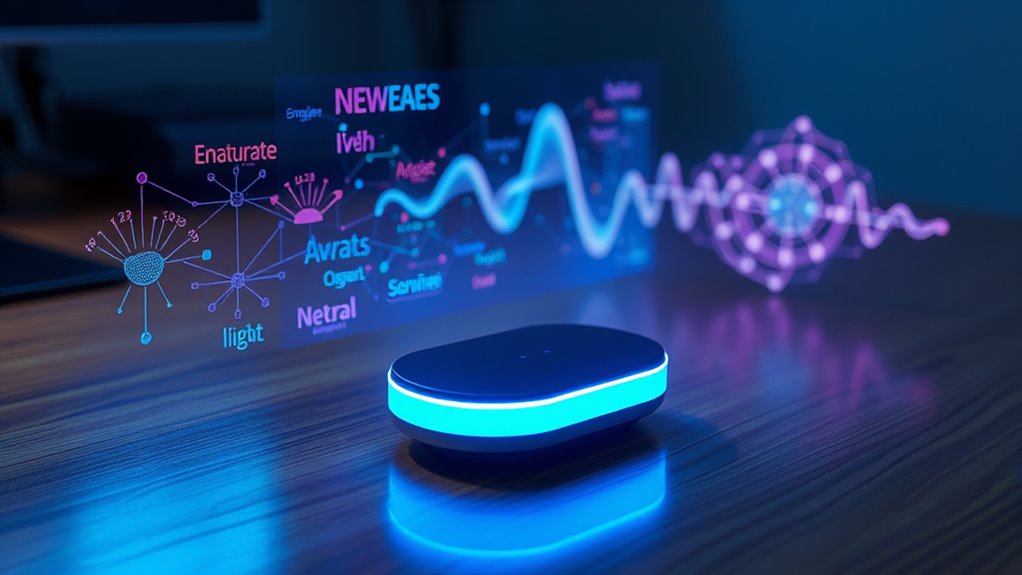

Advances in natural language processing are dramatically shaping voice user interfaces by improving their ability to understand context, slang, and complex sentences. Sentiment analysis adds emotional awareness, allowing devices to respond empathetically and personalize interactions. This makes conversations more natural, reducing misinterpretations and enhancing user satisfaction. As technology continues evolving, these improvements lead to more human-like, intuitive interactions. Keep exploring to see how these breakthroughs are transforming your experience with digital assistants and smart devices.
Key Takeaways
- Enhanced context recognition allows VUIs to understand complex, colloquial, and nuanced language more accurately.
- Sentiment analysis enables devices to interpret emotional cues and respond empathetically.
- Improved NLP fosters natural speech flow, reducing the need for carefully structured commands.
- Emotional intelligence integration makes interactions more human-like and personalized.
- Ongoing NLP research drives smarter, more emotionally aware digital assistants, transforming user experience.
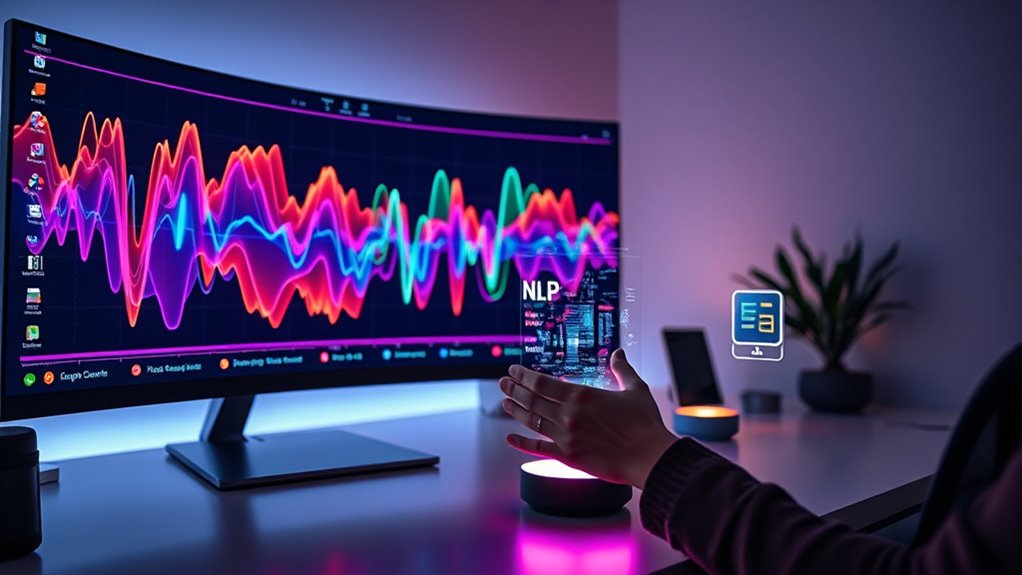
Have recent breakthroughs in Natural Language Processing (NLP) transformed the way machines understand human language? If you’re exploring Voice User Interfaces (VUIs), you’ll quickly notice how these advancements have made interactions more natural and effective. One of the key improvements is in conversational accuracy. Gone are the days when voice commands often resulted in misinterpretations or frustrating errors. Now, NLP models are better at recognizing context, deciphering slang, and understanding complex sentences, which means your device can respond more precisely to what you say. This heightened accuracy enhances user experience, making conversations with technology feel seamless and intuitive.
Sentiment analysis, another significant breakthrough, plays an essential role in shaping VUIs by allowing machines to grasp emotional nuances behind your words. When you speak, your tone, choice of words, and even pauses can convey feelings like happiness, frustration, or sarcasm. Advanced NLP algorithms analyze these cues in real time, enabling devices to respond appropriately. For example, if you express dissatisfaction, your voice assistant might offer troubleshooting tips or escalate the issue to a human agent. Conversely, if you sound pleased, it can celebrate or provide personalized recommendations. Sentiment analysis therefore makes interactions more empathetic and personalized, bridging the gap between human emotion and machine understanding.
These improvements are not just about making devices smarter—they fundamentally change how you interact with technology. You no longer have to carefully phrase commands or temper your tone to guarantee your device understands you. Instead, NLP-powered VUIs can interpret your intent accurately, regardless of colloquial language or emotional undertones. This creates a more natural flow, where you speak naturally, and the system responds appropriately. Additionally, these advances help in customizing experiences based on your mood or preferences, fostering a deeper connection with the technology.
In essence, the advancements in conversational accuracy and sentiment analysis are setting the stage for VUIs that are more human-like. They listen more carefully, interpret the emotional context behind your words, and respond with greater relevance. As these technologies continue to evolve, you’ll find yourself relying more on voice interfaces for everyday tasks—whether it’s controlling smart home devices, seeking information, or simply chatting. These breakthroughs are making human-machine communication smoother, more accurate, and emotionally intelligent, genuinely transforming the way you engage with digital assistants. Furthermore, integration of AI in Business practices helps optimize these systems for better performance and user satisfaction.
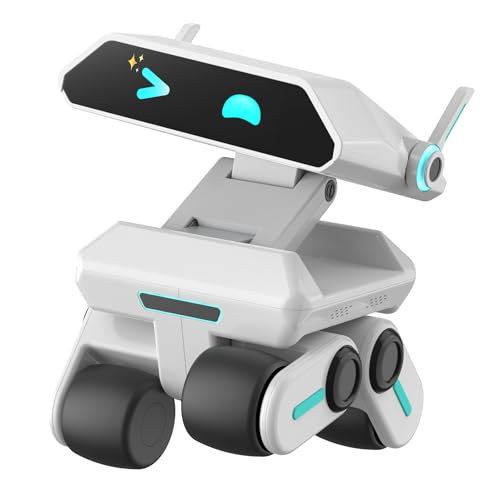
YONBO AI Robot for Kids, Programmable & Interactive AI Robot, STEAM Educational Toy ChatGPT Powered, Personalized Companion Robot w/Voice Control, Visual Recognition, Emotion-Aware, Long-Term Memory
STEAM Learning Made Fun, Building 4C Skills: Yonbo makes learning a blast, the ideal robot for kids aged…
As an affiliate, we earn on qualifying purchases.
As an affiliate, we earn on qualifying purchases.
Frequently Asked Questions
How Do NLP Advances Impact Privacy Concerns in VUI?
NLP advances impact your privacy concerns in VUI by making voice data more detailed and accurate, which can lead to better experiences. However, it also raises questions about how your voice data is stored and used. You should guarantee that your devices ask for clear user consent and that your voice data is protected. Staying informed about privacy policies helps you control your data and maintain your privacy.
What Are the Limitations of Current NLP Models?
Like a lighthouse with a flickering flame, current NLP models struggle with semantic understanding and maintaining context awareness. You might find them missing subtleties or losing track of conversations, which limits their usefulness. They often misinterpret idioms or sarcasm, making interactions less natural. While they’re powerful tools, these models still need refinement to grasp deeper meanings and keep conversations flowing seamlessly, like a steady beacon guiding your voice interface.
How Does NLP Handle Multilingual Voice Commands?
You’ll find that NLP handles multilingual voice commands through advanced multilingual processing techniques, enabling systems to understand multiple languages within a single interface. Dialect recognition is also improving, allowing the system to adapt to regional speech variations. You benefit from these advancements as they enhance accuracy and responsiveness, making voice interactions more natural. While challenges remain, ongoing developments are steadily increasing the effectiveness of multilingual processing in voice user interfaces.
What Are the Challenges in Integrating NLP With Iot Devices?
You face challenges integrating NLP with IoT devices, especially since 75% of smart home devices struggle with voice recognition issues. Ensuring seamless device compatibility is vital, as different brands often use varied protocols. You need to develop robust NLP algorithms that accurately interpret commands across diverse hardware, while maintaining security and privacy. Overcoming these hurdles enables more intuitive, reliable voice interactions, transforming user experiences in smart environments.
How Do NLP Improvements Influence User Personalization?
Improvements in NLP profoundly enhance your user personalization by better understanding your voice tone and detecting your true user intent. When NLP advances, your voice assistants can interpret subtle emotional cues and context, making interactions feel more natural and tailored. This means the system responds more accurately to your needs, adjusting its tone and suggestions accordingly. As a result, your experience becomes more intuitive, engaging, and personalized, creating a seamless connection with your devices.

Echo Dot Max User Guide for Beginners and Seniors: A Practical Manual to Set Up Alexa, Control Smart Home Devices, Use Voice Commands, Automate Tasksand Maximize Daily Convenience
As an affiliate, we earn on qualifying purchases.
As an affiliate, we earn on qualifying purchases.
Conclusion
As you witness these rapid advances in natural language processing, one thing becomes clear: the future of virtual user interfaces is more unpredictable—and more exciting—than ever. Every breakthrough hints at possibilities you haven’t yet imagined, leaving you wondering what’s next. Will these innovations bridge gaps you didn’t know existed, or reshape how you interact with technology forever? The answer remains just beyond the horizon, beckoning you toward a future full of endless potential.

PGST Wireless Home Alarm System,Smart Home Security System with Tuya App Instant Alerts,DIY Door Alarms Kits Siren Hub with Door/Motion Sensors,Remote,Work with Alexa/Google Assistant for Apartment
【Powerful Deterrence and Peace Of Mind】This Home Alarm System is your first line of defense and Once triggered,it…
As an affiliate, we earn on qualifying purchases.
As an affiliate, we earn on qualifying purchases.

FancyDove AI Assistant Device Powered by ChatGPT, No Subscription Needed, Standalone AI Chatbot Translator, AI Tutor for Learning, Writing & Homework, Portable AI Gadget for Students & Travel Black
No Subscription & Lifetime Access – Pay Once, Use AI Forever: Enjoy powerful AI chat, writing, translation, and…
As an affiliate, we earn on qualifying purchases.
As an affiliate, we earn on qualifying purchases.