
When choosing between Yoto and Toniebox in 2025, I see that Yoto offers a vast digital library, customizable content, and remote control via app, making it great for tech-savvy families. Toniebox shines with its durable design, physical figurines, and simple operation perfect for younger kids. Each has strengths, but deciding which truly fits your child’s needs can be tricky. Keep going, and you’ll get all the insights you need to pick the best one.
Key Takeaways
- Yoto offers a vast digital library with over 1,000 customizable cards, while Toniebox features a curated collection of physical figurines with preloaded content.
- Yoto devices provide intuitive tactile controls and a display for easy navigation, whereas Toniebox relies on simple tap and figurine placement for operation.
- Toniebox’s soft, durable design is ideal for active children, whereas Yoto devices focus on modern aesthetics and portability for home and travel.
- Yoto supports quick content updates via Wi-Fi and app control, while Toniebox expands through physical figurines with limited offline content.
- Both prioritize safety with ad-free, screen-free environments, but Yoto emphasizes parental controls and content filtering for added oversight.
Toniebox 2 Audio Player Starter Set for Kids 1
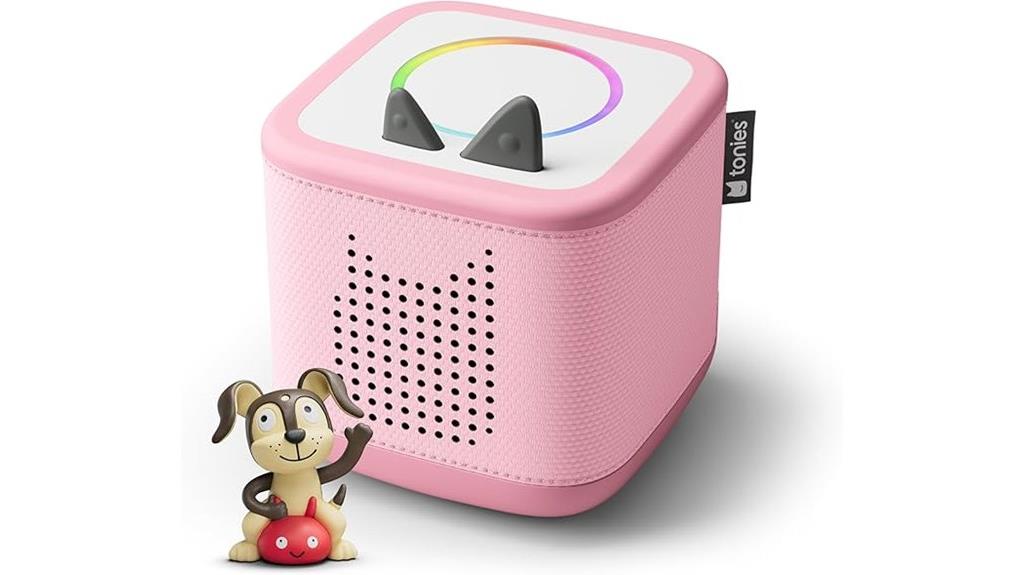
If you’re looking for a durable, easy-to-use audio player designed specifically for young children, the Toniebox 2 Starter Set is a great choice. It features intuitive controls that kids can operate independently, encouraging exploration of stories, songs, and games. The set includes a charming Playtime Puppy in Cloud Pink, making it appealing for little ones. Built to last from ages 1 to 9+, it offers hundreds of Tonies and Tonieplay games for varied interests. With smart bedtime and wake-up features like Sleep Timer and Sunrise Alarm, it also helps establish healthy routines. Overall, it combines fun, safety, and growth support in a sleek, kid-friendly design.
Best For: Parents seeking a durable, easy-to-use, and safe audio device that encourages independent play and routine establishment for children aged 1 to 9+.
Pros:
- Kid-friendly, intuitive controls designed for independent use by young children
- Supports healthy routines with bedtime and wake-up features like Sleep Timer and Sunrise Alarm
- Wide selection of hundreds of Tonies and Tonieplay games for varied interests and growth
Cons:
- Wi-Fi connectivity is required for setup, which may be challenging in low-signal areas
- Additional accessories like controllers and power adapters are sold separately
- Limited control options compared to more advanced audio devices
YOTO PAW Patrol Audio Card for Kids
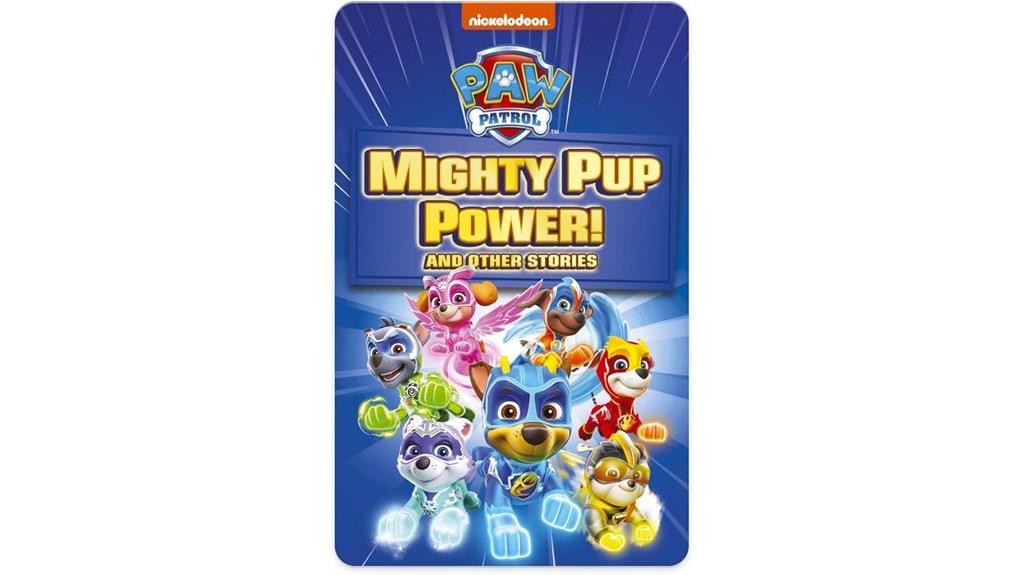
The YOTO PAW Patrol Audio Card is an excellent choice for parents seeking screen-free entertainment that sparks imagination and promotes safe storytelling. Designed for use with Yoto Player and Mini devices, it features five exciting missions of the Mighty Pups saving Adventure Bay, read by Richard Hughes in a US accent. With 50 minutes of content, it offers stories, music, activities, sleep soundscapes, and podcasts, all curated for children aged 3+. The card is easy to set up—just insert it into the device—and provides parental controls for safe listening. Its high ratings and safe, ad-free content make it a fantastic addition to any young child’s audio library.
Best For: parents seeking a safe, screen-free, engaging storytelling option for children aged 3 and up that promotes imaginative play and safe listening.
Pros:
- Curated safe content with no cameras, mics, or ads ensuring a child-friendly experience
- Easy to use with simple insert/remove functionality and volume controls via device or app
- Offers a variety of entertainment including stories, music, activities, sleep soundscapes, and podcasts
Cons:
- Limited to specific devices (Yoto Player and Mini) which may require additional purchase
- Content is fixed to the audio card, with less flexibility for customization without Make Your Own cards
- As a digital audio product, it may not be suitable for children who prefer visual or interactive play
Yoto Wicked Kids Audio Card for Player & Mini Audio Player
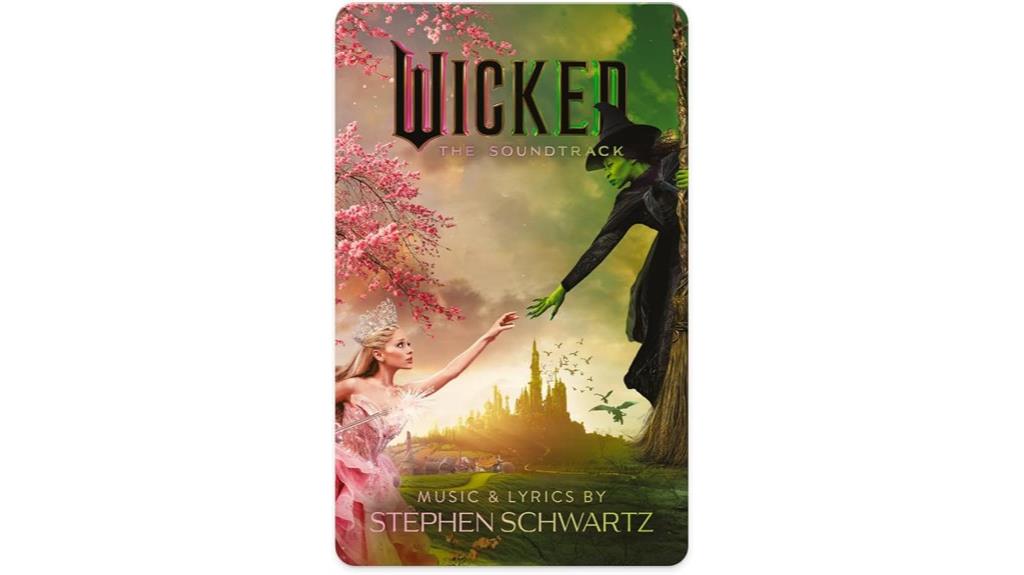
The Yoto Wicked Kids Audio Card is perfect for parents seeking safe, screen-free entertainment that sparks imagination. It features a 56-minute soundtrack that brings the magic of Wicked to life, with festive tunes ideal for playtime, travel, or holiday parties. Compatible with both Yoto Player and Mini Audio Player, it’s easy to use—just insert the card to start listening and remove to stop. The content is carefully curated, safe for children, and free of ads or inappropriate material. With access to over 1,000 cards, including stories, music, and activities, this card offers endless entertainment that grows with your child’s interests.
Best For: parents looking for safe, screen-free, and engaging entertainment options that inspire imagination and are suitable for children of all ages.
Pros:
- Easy to use with simple insertion and removal; no screens required.
- Curated content safe for children, free from ads and inappropriate material.
- Compatibility with a growing library of over 1,000 cards including stories, music, and activities.
Cons:
- Limited to the specific format of Yoto audio cards, which may require additional purchases for expansion.
- Sound quality and volume control depend on the device’s dials or app, which might not satisfy audiophiles.
- The 56-minute soundtrack may be too short for some children or events requiring longer entertainment.
Yoto Mini (2024 Edition) + Starter Pack for Little Kids
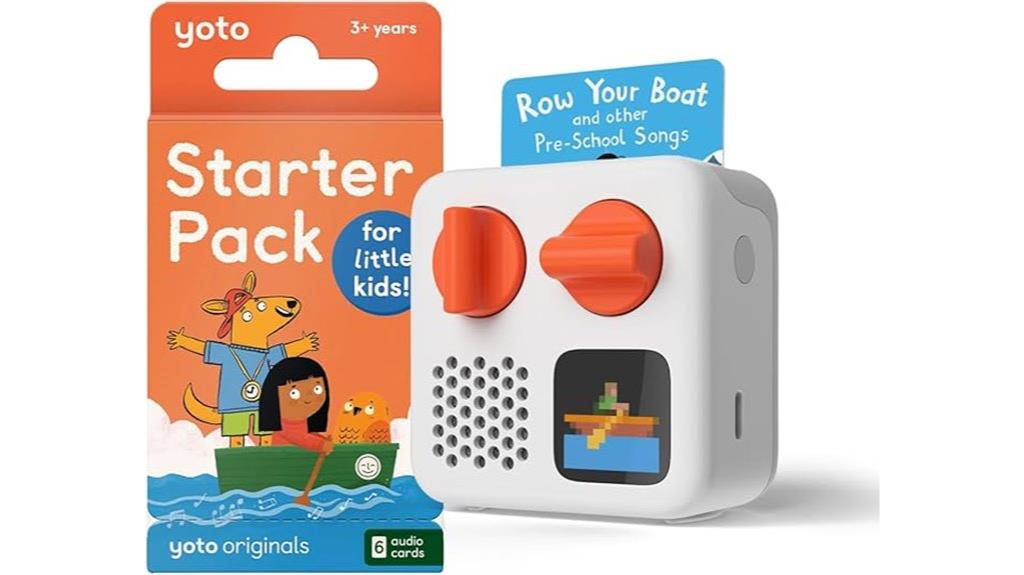
For parents seeking a versatile, screen-free audio device for young children, the Yoto Mini (2024 Edition) + Starter Pack stands out as an excellent choice. It’s a portable, easy-to-use device that plays stories, songs, and activities through simple audio cards, making setup quick and stress-free. The starter pack includes preschool songs, sleepy stories, dance activities, drawing prompts, and calming music, providing a well-rounded entertainment experience. With a pixel display and parental controls, it’s safe and engaging for kids while giving parents peace of mind. Its versatility makes it ideal for home or travel, offering up to 14 hours of safe, screen-free fun.
Best For: parents of young children seeking a safe, versatile, and screen-free audio device for entertainment, learning, and bedtime routines.
Pros:
- Easy to use with simple card insertion and app control, making setup stress-free.
- Safe design with parental controls, no cameras, microphones, or ads, ensuring age-appropriate content.
- Supports a wide library of over 1,000 cards, including stories, songs, activities, and podcasts, which grow with children’s interests.
Cons:
- Limited to audio content, so children seeking visual or interactive features may find it restrictive.
- Requires purchasing or downloading additional cards for variety beyond the starter pack.
- Battery life of up to 14 hours may require frequent charging during extended travel or busy days.
YOTO Player (3rd Gen.) + Starter Pack for Kids

If you’re looking for a screen-free device that’s perfect for young children just starting to explore audio content, the YOTO Player (3rd Gen.) + Starter Pack is an excellent choice. It’s a simple, all-in-one device designed for easy use by kids and parents alike—just insert an audio card to play, remove to stop, and control volume or tracks with large dials or the free app. The bundle includes preschool songs, sleepy stories, animal dance activities, drawing content, and mindful piano exercises. With a vivid pixel display and versatile functions like a nightlight, alarm, and Bluetooth speaker, it offers safe, engaging entertainment that grows with your child’s interests.
Best For: parents and caregivers seeking a safe, screen-free audio device that is easy for young children to operate and offers a variety of educational and entertainment content.
Pros:
- Simple, intuitive operation with large dials and a free app for easy control.
- Safe, curated content without cameras, microphones, or ads, ensuring a secure environment for kids.
- Versatile features including nightlight, alarm clock, room thermometer, Bluetooth speaker, and headphone compatibility.
Cons:
- Limited to audio content with no visual or interactive digital interfaces beyond the pixel display.
- Requires physical audio cards for content playback, which may need ongoing purchasing or management.
- The device’s features and content library may be less customizable compared to more advanced digital platforms.
Factors to Consider When Choosing Yoto Player Vs Toniebox Review

When choosing between a Yoto Player and a Toniebox, I consider factors like content selection, ease of use, and parental controls. I also look at durability and design to make sure it’s kid-friendly, along with connectivity options for versatility. These points help me decide which device best fits my child’s needs and our family’s lifestyle.
Content Selection Variety
Choosing between the Yoto Player and Toniebox largely depends on the variety of content they offer. I find Yoto’s library impressive, with over 1,000 cards spanning books, music, activities, and podcasts, giving a broad range of options. Its digital platform allows for quick access to new content and personalized selections across genres and themes, making it highly customizable. In contrast, Toniebox features hundreds of pre-loaded Tonies characters, each offering curated stories, songs, and educational content tailored for different age groups. While the Tonie collection emphasizes storytelling and music through physical figures, Yoto’s digital library provides greater variety and instant updates. If extensive, versatile content is your priority, Yoto’s library is hard to beat. However, if curated stories and music suit your child’s tastes better, Toniebox has a compelling selection.
Ease of Use
Both the Yoto Player and Toniebox are designed to be user-friendly, allowing young children to operate them independently with ease. The Yoto Player features large, tactile dials for volume and track adjustments, making navigation simple for little hands. Meanwhile, the Toniebox uses intuitive tap and ear-press controls, enabling kids to select content and control playback effortlessly. The Toniebox’s automatic playback when a character is placed on top offers a straightforward, plug-and-play experience that kids love. Additionally, the Yoto app provides parents with remote control options, giving them a way to manage content and settings without fuss. Overall, both devices prioritize ease of use, but their different control methods cater to varying preferences and comfort levels for young users.
Parental Controls
Parental controls play a key role in ensuring that kids access age-appropriate content and use their devices safely. Both Yoto Player and Toniebox offer robust parental controls, allowing me to manage what my child listens to. Yoto’s controls let me set time limits, filter content, and monitor usage through a dedicated app, giving me detailed oversight. Toniebox provides a user-friendly app to oversee content, set sleep timers, and customize playback settings. While both prioritize safe, ad-free, and screen-free entertainment, Yoto offers more granular controls over what and how long my child can access. This flexibility helps me feel confident that my kid is engaging with suitable content while using the device responsibly.
Durability and Design
When evaluating the durability and design of Yoto Player and Toniebox, it’s important to contemplate how well each device can withstand active play and accidental drops. The Yoto Player features a sturdy plastic build with a compact design, making it resistant to daily bumps and drops, especially when used with protective cases. In contrast, the Toniebox has a soft, fabric-covered exterior that provides extra cushioning, great for younger children prone to dropping or throwing devices. Both are designed with easy-to-clean surfaces—Toniebox’s fabric can be wiped down, while Yoto’s plastic resists scratches and spills. Their simple, minimalistic designs reduce the risk of breaking small parts, enhancing overall durability. Ultimately, both are built to endure active use, but their materials cater to different age groups and handling styles.
Connectivity Options
Have you ever wondered how connectivity options influence your child’s experience with a Yoto Player or Toniebox? Both devices use Wi-Fi for setup and content updates, but Yoto goes further with Bluetooth streaming, adding more flexibility. The Yoto Player relies on Wi-Fi to access its large library of digital cards, whereas the Toniebox mainly depends on physical Tonies for content. Some Yoto models can connect to external speakers via Bluetooth, offering better sound options, while Toniebox typically has built-in speakers with limited external connectivity. Additionally, Yoto’s parental controls and app integration allow remote management over Wi-Fi, giving parents more control. In contrast, Toniebox’s offline operation depends on pre-loaded content, making connectivity choices a essential factor in your decision.
Price and Accessories
Choosing between a Yoto Player and a Toniebox often comes down to budget and how you want to manage accessories. The Yoto Player usually has a lower starting price, with affordable audio cards and optional accessories sold separately, giving you flexibility to customize your spending. In contrast, the Toniebox Starter Set tends to be more expensive upfront but includes more built-in content, reducing immediate extra purchases. Both devices require separate purchases for additional accessories like power adapters, extra figurines, or controllers, which can add to the overall cost. Yoto’s wide library of cards and collectibles appeals to those seeking variety without big initial outlays, while Toniebox’s focus on physical figurines makes content expansion straightforward but potentially pricier over time.
Frequently Asked Questions
How Do the Sound Quality and Volume Levels Compare Between Yoto Player and Toniebox?
I find that the Yoto Player offers richer sound quality and more precise volume control, making it ideal for clearer listening. The Toniebox, while kid-friendly and durable, has slightly softer sound and more limited volume adjustments. If you prioritize audio clarity and adjustable levels, I’d recommend the Yoto Player. However, if simplicity and durability matter more, the Toniebox still provides good sound for younger children.
Are There Specific Age Recommendations for Each Audio Device?
If you’re wondering about age recommendations, I’d say both devices suit different stages. The Yoto Player is great for kids around 3 and up, thanks to its sturdy design and customizable content. The Toniebox also targets similar ages but is especially ideal for younger children, thanks to its simple, intuitive controls. I recommend choosing based on your child’s age and ability to handle the device safely and comfortably.
How Do Subscription Costs and Content Availability Differ Between the Two?
Subscription costs for the Yoto Player are typically lower, offering a flexible pay-as-you-go model, while Toniebox charges for its Tonies figurines, which include stories and music. Content availability differs too; Yoto provides a vast library of digital audio, often updated, whereas Toniebox’s content is tied to physical figurines, making it more collectible. I find Yoto’s variety appealing, but Toniebox’s physical appeal is charming for younger kids.
Can Both Players Be Used Offline Without Internet Access?
Absolutely, both players can be used offline, like trusted sidekicks ready whenever you need them. Yoto players let you preload content, creating a treasure chest of stories that play without Wi-Fi. Similarly, Toniebox uses physical figurines to access content offline, turning playtime into a magical adventure. So, whichever you choose, your child’s world of stories stays lively and accessible, even when the internet takes a break.
What Are the Durability and Warranty Options for Each Device?
Both devices are quite durable, with sturdy builds designed for kids. The Yoto Player offers a one-year warranty, covering manufacturing defects and repairs, while the Toniebox also provides a one-year warranty with options for extended coverage. I recommend checking each company’s specific policies, but overall, they both prioritize durability and reliable support, giving you peace of mind when investing in these popular audio players.
Conclusion
So, there you have it—your ultimate showdown of audio players in 2025. Whether you’re team Yoto or Toniebox, one thing’s clear: the battle for your kid’s ears is fierce. Will it be the quirky, customizable Yoto or the charming Toniebox? Honestly, it’s a toss-up—like choosing between a superhero and a sidekick. Either way, your little one’s about to become the coolest kid on the block, with soundtracks to match. Happy listening!