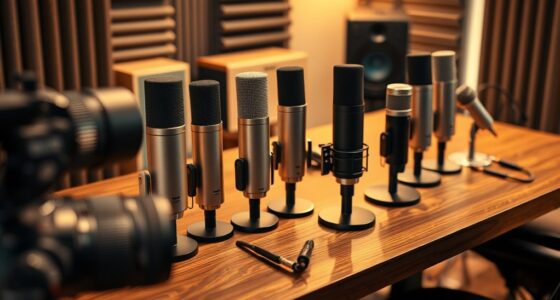
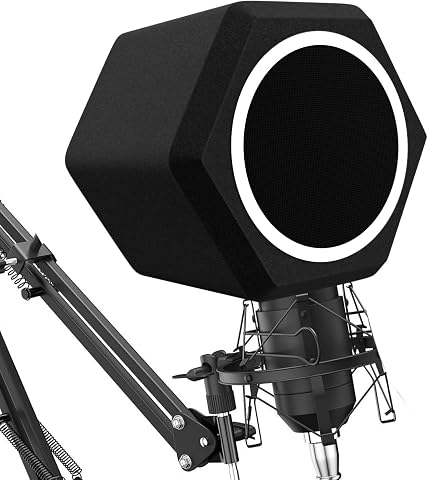
A desk microphone boom arm can free up workspace and bring a mic within reach, but the right choice depends on your microphone, desk, and preferred arm position. My best overall pick is the RØDE PSA1+ for its studio-focused spring damping, while the Elgato Wave Mic Arm MK.2 suits a polished streaming setup and the InnoGear MU-LP26 is a low-profile option for keeping the mic below eye level. The main tradeoffs are reach and adjustability versus desk clearance, stability, and how much space the clamp needs. Some arms add cable management or accessories, while others focus on a simpler mount. Read on for the full comparison and recommendations by setup.

Get art and craft supplies delivered free with Prime
- Fast, free delivery on millions of items
- Prime Video, Amazon Music and more included
- Member-only deals all year
Complete the kit


Key Takeaways
- RØDE PSA1+ leads this roundup for buyers who want a studio-oriented arm with spring damping; its premium focus may be more than a basic desk setup needs.
- Low-profile models, including the InnoGear MU-LP26, FIFINE BM88, and AA Audio Accessory arm, suit users who want the mic to approach from below rather than hover at face height.
- The Elgato Wave Mic Arm MK.2 and cable-managed InnoGear model stand out for tidier setups, while added routing features matter less if the mic cable is already secured elsewhere.
- The InnoGear arm with shock mount and pop filter bundles useful recording accessories, but buyers should check whether those parts fit their microphone and recording habits.
- This lineup spans standard, low-profile, overhead, and accessory-bundled designs; checking desk clearance, mic weight, and thread compatibility narrows the field faster than choosing by brand alone.


| desk microphone boom arm | Material |
|---|---|
| SUNMON Microphone Boom Arm wit | — |
| InnoGear Boom Arm Microphone S | Steel |
| RØDE PSA1+ Professional Studio | — |
| Adjustable Height Overhead Mic | Heavy-duty steel |
| TODI Low Profile Microphone Bo | All metal |
| InnoGear MU-LP26 Low Profile M | Alloy steel |
| AA Audio Accessory Heavy-Duty | — |
| CACENCAN M05 Pro Boom Arm | Aluminum alloy |
| InnoGear LP98 Low-Profile Micr | Alloy steel |
| InnoGear Microphone Boom Arm S | — |
| Elgato Wave Mic Arm MK.2 Studi | — |
| InnoGear Adjustable Microphone | Thickened steel |
| Aokeo AK-55 Desk Microphone Ar | Steel |
| FIFINE BM88 Low Profile Microp | All metal |
| Aokeo AK-58i Desk Low Profile | High-quality steel |
More Details on Our Top Picks
SUNMON Microphone Boom Arm with Desk Clamp and 3/8″ to 5/8″ Adapter
The SUNMON boom arm is a practical fit for buyers who want a straightforward desk mount for one of several common microphones, including the Blue Yeti, HyperX QuadCast, and Shure MV7. Its dual springs and reinforced knobs are intended to steady the mic as you position it, while the padded clamp helps protect the desk surface. Compared with the InnoGear Boom Arm, SUNMON has a slightly tighter desk-thickness limit and the listed specs do not give a load capacity, so buyers with a heavier setup have less guidance before choosing it. Its clamp fits desks up to 1.89 inches thick, which can rule it out for thicker desktops. Choose it for a familiar mic and a conventional setup; skip it if your desk exceeds that limit or you need a stated weight rating. The microphone itself is not included.
Pros:- Works with a broad range of listed microphones, including Blue Yeti and Shure MV7
- Dual springs and reinforced knobs help hold the chosen position
- Padded clamp helps protect the desk surface
- Includes a 3/8-inch to 5/8-inch adapter
Cons:- Clamp fits desks only up to 1.89 inches thick
- No microphone load capacity is provided in the supplied specs
- Microphone is not included
Best for: Streamers and home podcasters with a listed compatible microphone and a desk no thicker than 1.89 inches
Not ideal for: Owners of thick desktops or heavier microphone setups who need a stated load capacity
- Suspension:Dual springs
- Desk clamp limit:1.89 in (4.8 cm)
- Adapter:3/8 in to 5/8 in
- Clamp padding:Padded
- Compatible microphones:HyperX QuadCast, Blue Yeti, Blue Snowball, HyperX SoloCast, Shure MV7, Shure SM7B, Fifine K688, Fifine AM8, Rode, and Razer Mini
- Included:Boom arm, desk clamp, screw adapter
Our verdict“Pick the SUNMON if you need a basic mount for a compatible mic and your desk fits its narrower clamp limit.”
InnoGear Boom Arm Microphone Stand for Blue Yeti, Fifine, HyperX, Black
The InnoGear Boom Arm suits a desk setup where the microphone needs to move between recording and being out of the way. Its 360-degree base, 180-degree arm movement, and 270-degree adapter offer several ways to aim the mic, and the steel construction has a stated 3.3-pound capacity. Compared with the SUNMON, its clamp accommodates desks up to 2 inches thick and its weight limit is explicit, giving buyers more setup guidance. The tradeoff is that the clamp requires a flat, squared desk edge, so shaped or rounded edges may not work. It folds for storage, though a shock mount is not included. This is a more adjustable choice than the SUNMON, while the RØDE PSA1+ is better suited to buyers prioritizing spring damping and integrated cable management.
Pros:- Multiple rotation and movement points allow flexible mic placement
- Steel construction supports up to 3.3 lb
- Folds away for compact storage
- Includes a 5/8-inch to 3/8-inch adapter
Cons:- Clamp requires a flat, squared desk edge
- Desk clamp fits surfaces up to 2 inches thick
- Shock mount is not included
Best for: Podcasters and streamers who reposition a microphone often and have a flat, squared desk edge
Not ideal for: Users with rounded desk edges or a setup that requires an included shock mount
- Material:Steel
- Load capacity:3.3 lb (1.5 kg)
- Base rotation:360 degrees
- Arm shaft movement:180 degrees
- Adapter rotation:270 degrees
- Extension range:135 degrees back and forth
- Desk clamp:Flat, squared edges up to 2 in thick
- Included adapter:5/8 in to 3/8 in
- Foldable:Yes
Our verdict“Choose the InnoGear if flexible positioning and a clear weight rating matter more than an included shock mount.”
RØDE PSA1+ Professional Studio Boom Arm with Spring Damping, Black
The RØDE PSA1+ is the studio-focused pick for recording setups where moving the boom during a session should be smooth and quiet. Its internal spring damping is designed to reduce creaks and handling noise, while integrated cable management keeps the lead routed along the arm. It supports microphones and shock mounts from 0.25 to 1.2 kg, a useful range for many standard recording rigs. Compared with the InnoGear Boom Arm, it offers spring damping and built-in cable routing, while InnoGear has a higher stated maximum load. The PSA1+ also costs flexibility in another way: setups below its 0.25 kg minimum or above its 1.2 kg maximum fall outside the stated range. Its clamp fits desks up to 70 mm thick, so check the desktop before committing.
Pros:- Internal spring damping supports smoother, quieter repositioning
- Supports microphone setups from 0.25 kg to 1.2 kg, including shock mounts
- Integrated cable management keeps the cable routed along the arm
- 360-degree rotation and 3/8-inch and 5/8-inch thread compatibility
Cons:- Load range excludes setups below 0.25 kg or above 1.2 kg
- Clamp compatibility is limited to desks up to 70 mm thick
- May not support unusually heavy microphone setups
Best for: Podcasters and voice-recording creators with a compatible mic and shock mount who want quieter arm adjustments and routed cabling
Not ideal for: Users with very light or unusually heavy microphones, or desks outside the clamp’s thickness fit
- Model:PSA1+
- Load range:0.25 kg to 1.2 kg
- Desk clamp limit:70 mm
- Rotation:360 degrees
- Cable management:Integrated
- Thread compatibility:3/8 in and 5/8 in mic mounts
- Special feature:Internal spring damping
- Included components:Arm, desk clamp, thread adapters
Our verdict“Pick the PSA1+ for a compatible studio mic when quiet movement and tidy cable routing matter more than maximum load.”
Adjustable Height Overhead Microphone Boom Arm Stand with Extension Riser
When a standard side-mounted arm would cross the screen, this overhead boom arm offers a different route: its 31.5-inch riser places the microphone above the monitor area. The tall reach is its defining advantage over the TODI Low Profile Boom Arm, which is designed to keep a lightweight mic behind the monitor rather than suspend it high overhead. Tool-less clip joints make height and angle changes convenient, and the clamp accommodates desktops up to 4.2 inches thick. That broad clamp fit and included adapters add setup flexibility, but the tall steel structure takes up more space and may be awkward on compact desks. The supplied data also gives no load capacity, so buyers should verify compatibility with their microphone before relying on it for a heavier studio rig.
Pros:- 31.5-inch riser can position the microphone above monitor screens
- Clamp fits desktops up to 4.2 inches thick
- Tool-less joints allow height and angle adjustment
- Includes 3/8-inch to 5/8-inch and 1/4-inch to 3/8-inch adapters
Cons:- Large structure can occupy valuable desk space
- No microphone load capacity is provided in the supplied specs
- The tall overhead design may not suit every desk layout
Best for: Streamers and presenters with tall monitors who need to place a microphone overhead and have room for a larger mount
Not ideal for: Compact desk users or owners of heavier microphones who need a published load rating
- Riser height:31.5 in (80 cm)
- Maximum desk clamp thickness:4.2 in (106 mm)
- Material:Heavy-duty steel
- Mounting:Desk edge clamp
- Adjustment:Tool-less clip joints
- Included adapters:3/8 in to 5/8 in; 1/4 in to 3/8 in
- Listed microphone compatibility:Shure SM7B, Blue Yeti, HyperX QuadCast S
Our verdict“Choose this riser arm if monitor clearance is your main constraint and your microphone is confirmed compatible.”
TODI Low Profile Microphone Boom Arm for Lightweight Mics with Desk Clamp
The TODI low-profile arm is aimed at buyers who want a microphone to sit behind the monitor and fold away when the desk is needed for something else. Its 29-inch reach and 360-degree hinge give it useful placement range, while cable channels help keep the setup tidy. The all-metal build has a stated 3-pound limit, making the supported mic weight clearer than the overhead riser arm’s supplied specs. But that limit narrows its audience: the TODI is explicitly unsuitable for heavy-duty studio mics and several specific models, including the Blue Yeti X and Shure MV7i. Compared with the RØDE PSA1+, it favors a low-profile position and fold-away storage over internal spring damping. Check both the microphone’s weight and thread before choosing it.
Pros:- Low-profile reach keeps the microphone behind the monitor
- Supports lightweight microphones up to 3 lb
- Folds away to save desk space
- Cable channels and 3/8-inch and 5/8-inch threads support a tidy setup
Cons:- 3 lb maximum excludes heavier microphone setups
- Not compatible with some popular models, including Blue Yeti X and Shure MV7i
- Does not support microphones with 1/4-inch threads
Best for: Desk streamers with a lightweight, 3/8-inch or 5/8-inch mic who want clear monitor sightlines and fold-away storage
Not ideal for: Owners of heavy studio microphones or incompatible models such as the Blue Yeti X, Blue Yeti ORB, and Shure MV7i
- Maximum load:3 lb
- Maximum extension:29 in
- Material:All metal
- Base rotation:360-degree hinge
- Threads:3/8 in and 5/8 in
- Mounting:Desk clamp
- Cable management:Built-in channels
- Included accessory:Hex wrench
Our verdict“Choose the TODI for a lightweight compatible mic when low placement and fold-away storage are priorities.”
InnoGear MU-LP26 Low Profile Microphone Boom Arm Stand, Black
The MU-LP26 suits desks where a standard raised arm would block the monitor or crowd the workspace. Its 25.6-inch reach and 360° horizontal rotation give it more room to position a mic than the CACENCAN M05 Pro, whose supplied extension rod is 9.8 inches. It also supports up to 3.3 lb, enough for many common desktop microphones, while keeping its arm low and out of the main sightline. The tradeoff is a clamp limit of 2.75 inches, so thicker desks are out, and the included universal mic clip may not fit every shock mount. Choose this over the InnoGear LP98 if clamp clearance matters more than magnetic cable routing; the LP98 specifies a thinner desk limit.
Pros:- Low-profile design keeps the arm below much of the monitor sightline.
- 25.6-inch reach and 360° rotation allow flexible mic placement.
- Supports microphones up to 3.3 lb.
- Padded clamp also provides a place to hang headphones.
Cons:- Clamp does not fit desks thicker than 2.75 inches.
- Universal mic clip may not fit every shock mount.
- 12-month warranty is specified.
Best for: Streamers and remote workers who want a low arm with enough reach to place a microphone beside or in front of a monitor.
Not ideal for: Owners of desks thicker than 2.75 inches or mic setups that rely on a shock mount incompatible with the universal clip.
- Material:Alloy steel
- Maximum reach:25.6 inches
- Vertical adjustment:250°
- Horizontal rotation:360°
- Weight capacity:3.3 lb (1.5 kg)
- Maximum desk thickness:2.75 inches
- Included adapters:3/8-inch to 5/8-inch; 3/8-inch to 1/4-inch
- Warranty:12 months
Our verdict“Choose the MU-LP26 if you want a low-sitting arm with long reach and your desk fits its clamp.”
AA Audio Accessory Heavy-Duty Low-Profile Microphone Boom Arm Desk Mount, 6.6 lb Load Capacity
The AA Audio Accessory arm is the lineup’s pick for a heavier microphone setup. Its 6.6 lb capacity is twice the stated limit of the InnoGear MU-LP26 and LP98, while the gear-lock design is intended to hold position without sagging. That added support makes sense for users pairing a substantial mic with accessories; for a light USB mic, it may be more arm than the job calls for. The 780 mm reach, 360° horizontal rotation, and deep cable channels cover practical desk placement and wire routing. Tool-free knobs simplify adjustments compared with a setup that requires repeated tightening with tools, but the clamp still depends on a compatible desk edge. Its broad compatibility and extension rod add flexibility, though the heavier-duty build is not the most compact choice here.
Pros:- 6.6 lb capacity accommodates heavier microphone setups.
- Gear-lock design helps resist arm sag.
- Tool-free knobs make position changes straightforward.
- Includes extension rod, adapters, and deep cable channels.
Cons:- May be more arm than needed for a lightweight USB microphone.
- Clamp-style mounting may not suit every desk edge or surface.
Best for: Podcast hosts and recording creators using heavier studio microphones who want a low-profile arm with a stated 6.6 lb capacity.
Not ideal for: Users with lightweight microphones seeking a compact, simple arm, or owners whose desk edge cannot accept a clamp mount.
- Materials:Aluminum alloy and glass-fiber nylon composite
- Arm dimensions:40 × 25 mm reinforced arms
- Maximum load:6.6 lb (3 kg)
- Reach:780 mm
- Rotation:360° horizontal; 120° vertical
- Locking mechanism:Gear-lock design
- Cable management:Deep cable channels
- Included hardware:Desk clamp, extension rod, 3/8-inch to 5/8-inch adapter, and 3/8-inch to 1/4-inch adapter
Our verdict“Pick this arm for heavier studio mics and position-holding support; lighter setups can use a simpler, lower-capacity option.”
CACENCAN M05 Pro Boom Arm – 360° Rotatable Microphone Stand with Desk Mount and 3/8” to 5/8” Screw Adapter
The CACENCAN M05 Pro is a practical fit for a desk microphone that needs some extra reach without the heavy-duty hardware of the AA Audio Accessory arm. It supports up to 4 lb, between that arm’s 6.6 lb capacity and the 3.3 lb limits on the InnoGear low-profile models. The foldable aluminum arm and 9.8-inch extension rod help position a mic across a desk, while the silicone-padded clamp protects the desktop surface. Its clamp only fits desks up to 2 inches thick, narrower than the MU-LP26’s 2.75-inch allowance. The listed adapters cover common microphone threads, but HyperX QuadCast users need an adapter that is not included. Setup instructions may also take extra effort, so this is a better match for buyers comfortable working through assembly.
Pros:- Supports microphones up to 4 lb.
- Foldable aluminum arm includes a 9.8-inch extension rod.
- Silicone pad helps protect the desk under the clamp.
- Includes 3/8-inch and 5/8-inch thread adapters.
Cons:- Clamp fits desks only up to 2 inches thick.
- HyperX QuadCast requires an adapter that is not included.
- Installation instructions may be unclear.
Best for: Creators with a midweight microphone who want an aluminum arm, a desk-protecting clamp pad, and an included extension rod.
Not ideal for: Owners of desks thicker than 2 inches or HyperX QuadCast users who need all required adapters in the box.
- Material:Aluminum alloy
- Maximum load:4 lb (1.8 kg)
- Maximum desk thickness:2 inches
- Extension rod:9.8 inches (25 cm)
- Rotation:360°
- Thread adapters:3/8-inch and 5/8-inch
- Warranty:1 year
Our verdict“Choose the M05 Pro for a midweight mic and padded clamp if your desk fits and you are prepared to handle setup carefully.”
InnoGear LP98 Low-Profile Microphone Boom Arm Desk Mount, Black
The InnoGear LP98 makes cable tidiness part of the arm design: its magnetic cable channel keeps a mic lead routed along the mount instead of hanging across the desk. Its low-profile height of 3.35 inches and 360° base rotation suit compact streaming or work setups, while swivel and tilt adjustments help fine-tune placement. Compared with the MU-LP26, it offers more specified angle adjustments and magnetic routing, but accepts a thinner desktop: its clamp is limited to 2.36 inches and flat edges. The 3.3 lb payload suits common microphones, though heavier builds are better matched to the AA Audio Accessory arm. A shock mount is not included, so buyers with a suspension mount should check fit before choosing this arm.
Pros:- Magnetic cable channel helps keep wires organized along the arm.
- Low-profile height keeps the mount close to the desk.
- Base, shaft, swivel, and tilt adjustments offer flexible positioning.
- Includes 3/8-inch to 5/8-inch and 3/8-inch to 1/4-inch adapters.
Cons:- Clamp fits flat-edge desktops only, up to 2.36 inches thick.
- 3.3 lb payload is less suited to heavier microphone rigs.
- Shock mount is not included.
Best for: Streamers and desk-based creators who prioritize hidden cable routing and a low-profile mount for a microphone up to 3.3 lb.
Not ideal for: Owners of thick or rounded-edge desks, heavier microphone rigs, or buyers who need a shock mount included.
- Material:Alloy steel
- Maximum payload:3.3 lb (1.5 kg)
- Low-profile height:3.35 inches above desk
- Base rotation:360°
- Swivel and tilt:180° swivel; 170° tilt
- Maximum desk thickness:2.36 inches; flat edges only
- Cable management:Magnetic cable channel
- Included adapters:3/8-inch to 5/8-inch; 3/8-inch to 1/4-inch
- Warranty:12 months
Our verdict“Pick the LP98 for a compact setup where magnetic cable routing matters and the desk has a flat edge within its clamp limit.”
InnoGear Microphone Boom Arm Stand with Shock Mount and Pop Filter
This InnoGear stand is the most ready-to-record package in this group: it includes a 52 mm shock mount, double-screen pop filter, cable ties, and desk clamp. That makes it a more complete starter setup than the MU-LP26 or LP98, which focus on low-profile positioning and do not include a pop filter or shock mount in the supplied details. The reinforced spring is intended to steady the microphone and reduce sudden movement, while the clamp fits desks up to 2 inches thick. Its main catch is fit: despite the listed broad compatibility, the shock mount does not fit the Blue Yeti. Buyers with that microphone should look at an arm such as the CACENCAN M05 Pro, which lists Blue Yeti compatibility. This bundle makes the most sense when the mic fits the mount and the included accessories are useful.
Pros:- Includes a double-screen pop filter and shock mount.
- Reinforced spring helps steady the microphone.
- Comes with five cable ties and a 3/8-inch to 5/8-inch adapter.
- Lists compatibility with several common standard-sized microphones.
Cons:- Included shock mount does not fit the Blue Yeti.
- Clamp supports desks only up to 2 inches thick.
- 52 mm opening may limit compatibility with some microphones.
Best for: First-time recording or streaming creators with a compatible standard-sized mic who want a stand, shock mount, and pop filter together.
Not ideal for: Blue Yeti owners, or anyone with a desk thicker than 2 inches or a microphone that will not fit the 52 mm shock mount.
- Model:MU059
- Shock mount opening:52 mm
- Maximum desk thickness:2 inches
- Included adapter:3/8-inch to 5/8-inch
- Pop filter:Double-screen
- Cable ties:5
- Listed compatible microphones:Blue Snowball, HyperX QuadCast, HyperX SoloCast, Fifine AM8, and other standard-sized microphones
Our verdict“Choose this bundle for a compatible standard-sized mic when you want a pop filter and shock mount included from the start.”
Elgato Wave Mic Arm MK.2 Studio Boom Arm for Microphones
The Elgato Wave Mic Arm MK.2 is the clearest fit for desks where a tall monitor makes ordinary arm placement awkward. Its all-metal arms move quietly and adjust in multiple directions, giving you room to bring a microphone over the screen or lower it below shoulder level. Compared with the FIFINE BM88, which emphasizes a low-profile path beneath the monitor, this Elgato focuses on flexible positioning around tall displays. The padded clamp is also described as fitting tight desk spaces, and its slim, logo-free look keeps the setup visually restrained. The tradeoff is that the supplied details give no load limit, reach measurement, or thread compatibility, so buyers with a heavier microphone or an exact mounting requirement have less to confirm before choosing.
Pros:- Multiple adjustment directions help route the mic around tall monitors
- Quiet, smooth arm movement supports repositioning during recording
- Padded clamp is designed to fit tight desk spaces
- Slim design without distracting logos
Cons:- No maximum microphone load is provided in the supplied specs
- No reach measurement or thread compatibility is specified
Best for: Streamers and remote workers positioning a microphone around a tall monitor on a desk with limited clamp space
Not ideal for: Buyers who need a stated weight capacity, measured reach, or confirmed adapter compatibility before mounting their microphone
- Arm material:All metal
- Adjustment:Angles and rotates in multiple directions
- Clamp:Padded desk clamp
- Clamp fit:Designed for most desk edges, including tight spaces
- Movement:Quiet, smooth adjustment
- Design:Slim profile without distracting logos
Our verdict“Choose this Elgato when quiet, flexible positioning around a tall monitor matters more than having a published load rating and reach measurement.”
InnoGear Adjustable Microphone Boom Arm with Cable Management
Among these picks, the InnoGear MU-PSA28 gives the most concrete reach and capacity information: its stated maximum reach is 32.3 inches horizontally, with a 3.5 lb load limit. That makes it a practical choice for a desk where the mic needs to travel around a monitor or toward a seated speaker. Built-in cable channels and a 360-degree rotating base help keep that movement organized. By comparison, the FIFINE BM88 is built around a low-profile position beneath the monitor and specifies a shorter 29-inch extension, while InnoGear offers an extension riser for added vertical reach. The MU-PSA28 takes more space than a low-profile arm and does not include a shock mount, so buyers wanting a minimal setup or a ready-made mic assembly may prefer another option.
Pros:- Built-in channels and rubber cable covers help manage mic wiring
- Maximum horizontal reach of 32.3 inches and vertical reach of 37.4 inches
- Supports microphones up to 3.5 lb
- Rotating base and included extension riser provide flexible placement
Cons:- Shock mount is not included
- Its longer articulated arm takes more desk and monitor-side clearance than low-profile picks
Best for: Podcasters and streamers who need long reach, cable routing, and support for microphones up to 3.5 lb
Not ideal for: Desk users seeking a low-profile arm beneath the monitor or a package that includes a shock mount
- Model:MU-PSA28
- Material:Thickened steel
- Arm movement:135° back and forth; 180° up and down
- Base rotation:360°
- Arm length:14 inches
- Extension riser:6.3 inches
- Maximum reach:32.3 inches horizontal; 37.4 inches vertical
- Maximum load:3.5 lb
- Desk clamp and connector:Fits desks up to 2 inches thick; 5/8-inch metal connector
Our verdict“Pick the MU-PSA28 if you need long, adjustable reach and built-in cable routing for a mic weighing up to 3.5 lb.”
Aokeo AK-55 Desk Microphone Arm Stand, Low Profile Adjustable Boom for Blue Yeti, Snowball iCE, HyperX QuadCast, SoloCast, Elgato Wave
The Aokeo AK-55 suits buyers who want the microphone arm to stay visually quiet and keep the desk feeling open. Its low-profile design, steel construction, and 360-degree rotation with a 180-degree swing give it the basics for positioning a mic without a tall arm crossing the screen. The stated 2 kg load limit covers many common desktop microphone setups, though it leaves less headroom than the InnoGear MU-PSA28’s 3.5 lb rating. The AK-55 fits tables under 7 cm thick and lists adapters for common thread sizes, which broadens mounting options. Its shorter spec sheet, however, does not state reach or include cable management details; the FIFINE BM88 is a more specified low-profile alternative if reach and hidden cable routing are priorities.
Pros:- Low-profile design keeps the arm less prominent on the desk
- 360° rotation and 180° swing allow flexible placement
- Steel construction supports stable positioning
- Included thread adapters fit several common microphone mounts
Cons:- 2 kg load limit may rule out heavier microphone and mount combinations
- Requires a table less than 7 cm thick
- No reach measurement or cable-management system is listed
Best for: Gamers and streamers with a desk under 7 cm thick who want a low-profile steel arm for a microphone up to 2 kg
Not ideal for: Owners of heavier microphones or buyers who need a stated reach measurement and built-in cable routing
- Material:Steel
- Design:Low profile
- Maximum load:2 kg
- Rotation:360°
- Swing:180°
- Table thickness:Less than 7 cm
- Adapters:3/8-inch to 1/4-inch; 3/8-inch to 5/8-inch
Our verdict“Choose the AK-55 for a straightforward low-profile mount on a compatible desk, provided your mic setup stays within 2 kg.”
FIFINE BM88 Low Profile Microphone Boom Arm Stand for Gaming & Streaming
The FIFINE BM88 is designed for a specific desk problem: keeping the mic below the monitor so it does not intrude on the screen or take over the desktop. Its all-metal build and hidden cable management make that tidy, low-profile placement easier to maintain, while 29 inches of extension gives room to bring the mic toward the speaker. Against the Aokeo AK-55, the BM88 provides a measured extension and concealed cable routing; the AK-55 instead states a 2 kg load limit, which the BM88 specs here do not provide. The three thread sizes and adapters suit a range of microphone mounts. One limitation is the fixed section near the C-clamp, which cannot move up and down, so fine-tuning placement close to the base is less flexible.
Pros:- Low-profile placement helps keep the monitor view clear
- Hidden cable management reduces visible wire clutter
- All-metal construction is designed to stay stable when extended
- Includes 1/4-inch, 3/8-inch, and 5/8-inch thread compatibility
Cons:- Arm section near the C-clamp cannot be adjusted up and down
- Maximum microphone load is not stated in the supplied specs
- Microphone is not included
Best for: Streamers with a monitor-centered setup who want a tidy arm that extends below the screen
Not ideal for: Buyers who need vertical adjustment at the clamp end or a published maximum load rating
- Model:BM88
- Material:All metal
- Maximum extension:29 inches
- Vertical adjustment:220°
- Horizontal adjustment:360°
- Thread sizes:1/4-inch, 3/8-inch, and 5/8-inch
- Desk thickness compatibility:0.8 to 2.4 inches
- Included components:Boom arm stand, desk clamp, rotatable ball-head, Allen wrench, manual, and thread adapters
- Warranty:One year
Our verdict“Pick the BM88 for a tidy, low-profile monitor setup if its fixed clamp-side section suits your desk layout.”
Aokeo AK-58i Desk Low Profile Microphone Boom Arm Stand for Blue Yeti, Snowball iCE, HyperX QuadCast, SoloCast, Elgato Wave
The Aokeo AK-58i is a compact low-profile arm for buyers who want a restrained microphone setup and straightforward angle changes. Like the AK-55, it uses steel, rotates 360 degrees, swings 180 degrees, and supports up to 2 kg; both also require a desk less than 7 cm thick. The AK-58i’s supplied details add adapters for 1/4-inch and 5/8-inch mounts through a 3/8-inch connection, making it a sensible match for a range of common microphones and shock mounts. Since the listed specs closely overlap with the AK-55, there is little evidence here to distinguish their load handling or reach. Compared with the FIFINE BM88, this Aokeo provides no stated extension length or hidden cable routing, so it fits buyers who value a simple compact arm over documented reach and wire concealment.
Pros:- Low-profile design keeps the arm visually unobtrusive
- 360° rotation and 180° swing support flexible mic placement
- Steel construction and 2 kg load rating suit many desktop microphones
- Included adapters support common mount thread sizes
Cons:- Maximum load of 2 kg may not support heavier mic and shock mount combinations
- Desk must be less than 7 cm thick
- No extension measurement or cable-management feature is specified
Best for: Gamers and home recordists with a compatible thin desk who want a compact low-profile mount for a microphone up to 2 kg
Not ideal for: People with thick desks, heavier microphone setups, or a need for stated reach and built-in cable management
- Material:High-quality steel
- Design:Low profile
- Maximum load:2 kg
- Rotation:360°
- Swing:180°
- Table thickness:Less than 7 cm
- Adapters:3/8-inch to 1/4-inch; 3/8-inch to 5/8-inch
Our verdict“Choose the AK-58i for a compact, understated setup on a compatible desk when your microphone assembly stays below 2 kg.”

How We Picked
I compared each arm on the factors that shape everyday desk use: mounting and reach, how readily its design can place a microphone where a speaker needs it, stated compatibility details, and features such as cable routing or spring damping. I also looked at the differences between standard and low-profile layouts, plus whether a product adds accessories or a riser that may suit a particular workflow. Those details affect how an arm fits a desk and how much setup work it may take.
The ranking favors versatility and practical design at the top, with the RØDE PSA1+ as the studio-oriented pick and the Elgato Wave Mic Arm MK.2 as a strong choice for a refined streaming desk. The remaining arms earn their places through more specific needs, such as low-profile positioning, a simpler entry point, or bundled recording accessories. Product names and listed specifications alone do not establish comparative durability or performance, so buyers should confirm load limits, thread size, clamp clearance, and included hardware for their own setup.
Factors to Consider When Choosing Desk Microphone Boom Arm
Before choosing an arm, I would work through the physical constraints of the desk and microphone first. These factors help distinguish a useful fit from a feature list that may not match your recording position.
Match the Arm Layout to Your Speaking Position
Standard arms usually approach the mic from above or the side, while low-profile designs keep more of the arm below the user’s sightline. Neither layout is automatically better: the right one depends on where your monitor, keyboard, and face sit during calls or recording. Sketch the path from clamp to mic before buying, including space needed to fold the arm away. A common mistake is choosing a low-profile arm for its tidy appearance without checking whether its joints can reach the desired speaking position. Overhead designs with a riser can help when the microphone needs to come from above a crowded desk, but they may occupy more visual space. Prioritize the mic’s final position over the arm’s maximum advertised reach.
Check Desk Thickness, Edges, and Clamp Clearance
Clamp fit is a physical compatibility question, separate from microphone compatibility. Measure desk thickness and check whether the underside has a lip, drawer, crossbar, or cable tray where the clamp needs to sit. Leave room to tighten the clamp and to swing the arm without hitting a wall or monitor stand. Desks with glass, hollow construction, or fragile finishes may call for a different mounting approach or added protection, depending on the maker’s guidance. Buyers often focus on the arm’s reach and discover too late that the clamp cannot seat securely. Confirm the product’s stated clamp range and contact surface before ordering.
Treat Mic Weight and Thread Size as Separate Checks
An arm may list compatibility with popular microphone models, yet the actual fit still depends on the mic’s weight, mount, and connection thread. Include the weight of a shock mount or adapter when checking a stated load limit. Thread adapters can bridge common 3/8-inch and 5/8-inch connections, but they do not solve every mounting mismatch. A mic that is near an arm’s limit may be harder to position securely, even if it is technically within the stated capacity. Check the microphone maker’s mount specifications and the arm’s included hardware before relying on a compatibility list. If the setup may change later, a clearly stated load range and adaptable thread support can be more useful than a product name that mentions one mic family.
Decide How Much Cable Management You Need
Built-in cable routing can keep a moving mic cable from crossing the workspace, though its value depends on how often the arm moves and how visible the cable is. Internal or covered channels may make a desk look cleaner, but they can take longer to thread and may fit some cable shapes better than others. External clips are easier to access when swapping microphones or cables. Before choosing, check whether the cable has enough slack to follow the arm through its full movement without pulling at the mic connector. A common setup problem is routing the cable neatly in one position and then restricting the arm’s range. If you rarely reposition the mic, simple clips may be all you need.
Pay for Motion Control That Matches Your Routine
Spring damping and controlled joints matter most when the microphone moves often or needs to stay in a precise place during recording. For a mic that remains parked for video calls, a simpler arm may serve just as well. Think about whether you will swing the arm away between sessions, adjust it while seated, or share the desk with another person. More joints can increase positioning options, but they also create more points to adjust and take up space when folded. Bundled shock mounts and pop filters may reduce separate purchases, yet they add little value if they do not match your mic or recording style. Pay for smooth movement and accessories only when they solve a recurring desk problem.
Plan for Desk Sharing and Storage
A boom arm changes how a desk is used even when the microphone is silent. If the workspace doubles for writing, gaming, or a laptop, check where the arm rests when pushed aside and whether it blocks a drawer, screen, or shelf. Low-profile models can help keep a mic below the monitor, while a taller riser may make it easier to clear other equipment. Consider whether the clamp will remain installed or needs to be removed regularly; repeated installation can be inconvenient and may affect delicate desk finishes. People sharing a desk should agree on a preferred parked position and make sure the arm can reach both users without moving the clamp. This planning can matter more than small differences in listed features.
Frequently Asked Questions
Will these boom arms fit any USB microphone?
No single compatibility claim covers every USB mic, because the arm connects to the mic’s mount rather than its USB port. Check whether the microphone has a compatible threaded mount or needs a shock mount or adapter. Compare thread sizes and include the weight of any extra mount when checking the arm’s capacity. Product listings that name popular microphones are a useful starting point, not a guarantee for every model. If your mic has a proprietary stand connection, confirm the exact adapter needed before choosing an arm.
Is a low-profile arm better for a streaming desk?
A low-profile arm can keep the microphone and arm below the monitor’s sightline, which may suit camera framing and a tidy desk. It is not automatically the better choice if your desk has little clearance or you need the mic to approach from above. Check the arm’s reach and joint movement against your seated position, not just its low silhouette. If you often change between standing and sitting, a more adjustable layout may be easier to reposition. The low-profile options in this roundup differ in their stated design and capacity, so compare those details against your mic.
How do I know whether my desk clamp will fit?
Measure the thickness of the desk edge and inspect the underside where the clamp will tighten. A lip, frame, drawer, or cable tray can prevent the clamp from seating even when the desktop itself is within range. Compare your measurements with the listed clamp range and check whether the arm needs clearance behind or below the desk. Do not assume a sturdy-looking edge can support the clamp without checking the desk material and the maker’s instructions. If the desk surface is delicate, consider how the clamp contacts it and whether protective padding is suitable.
Should I choose a premium arm if I only use my mic for calls?
For a mic that stays in one place during calls, reliable mounting and a suitable reach may matter more than studio-oriented motion control. A premium arm makes more sense if you reposition the mic frequently, want controlled movement, or need a more polished setup. Compare the RØDE PSA1+ and Elgato Wave Mic Arm MK.2 with simpler arms by asking which feature you will use every week. Also account for your desk layout and microphone mount, since a premium design cannot fix a clamp or thread mismatch. A straightforward arm can be a sensible fit when the mic rarely moves.
Are bundled shock mounts and pop filters worth choosing?
They can be useful if the included parts fit your microphone and address a recording issue you actually have. A shock mount helps isolate some desk and arm vibrations, while a pop filter can reduce bursts of air on speech; neither replaces careful mic placement. Check the bundle’s stated compatibility and how it attaches before treating the extras as a benefit. If you already own suitable accessories, a simpler arm may be easier to set up and adjust. For a first recording setup, a bundle can reduce separate compatibility decisions, provided its parts match your mic.
Conclusion
For the best overall, I would start with the RØDE PSA1+ if studio-style positioning and spring damping suit your routine. The best premium desk fit is the Elgato Wave Mic Arm MK.2 for buyers who want a refined arm-centered setup, while the InnoGear MU-LP26 is my low-profile pick for keeping the mic below the main sightline. Beginners can compare the standard InnoGear arms and SUNMON model for a simpler starting point, checking mount and thread compatibility first. For accessory-led setups, look at the InnoGear arm with shock mount and pop filter; for an overhead position, consider the riser-equipped stand. Choose by desk fit, microphone weight, and speaking position before settling on a particular model.
Halloween Picks

10-Foot Halloween Inflatable Double-Headed Dragon Archway

DomKom 6 ft Halloween Inflatable Ghosts Roasting Marshmallows

Spirit Halloween 54-Inch Sitting Scarecrow Animatronic
As an affiliate, we earn on qualifying purchases.