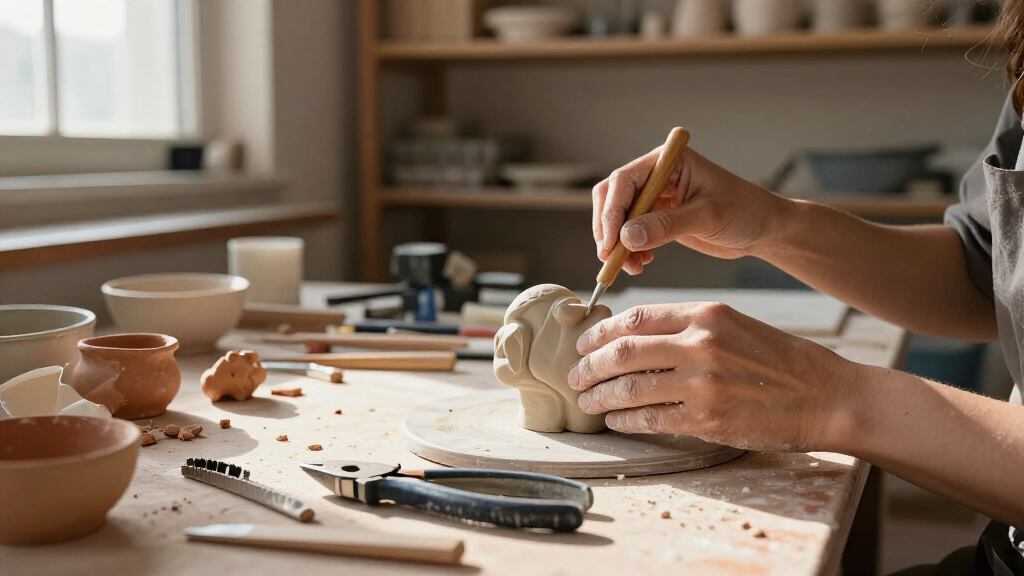

Finding the right clay sculpting tools comes down to one big tradeoff: big multi-piece kits give you versatility but often fill the box with redundant tools, while smaller sets deliver better-performing implements at the cost of range. After comparing thirteen popular options, the Leyclub 29-Piece Kit earns the top spot for balancing stainless steel and wood construction with a genuinely usable tool spread. If detail work is your priority, the DePes 11-Tool Set offers 22 working shapes with noticeably better metal quality than most budget sets, while the Clatoon Silicone Set is the pick for smoothing and texture without marring soft clay. Polymer clay hobbyists should look at the Luney and Amrules kits, which include accessories geared specifically toward miniature work. Read on for the full breakdown, including who each set suits and which ones to skip.

Get art and craft supplies delivered free with Prime
- Fast, free delivery on millions of items
- Prime Video, Amazon Music and more included
- Member-only deals all year
Key Takeaways
- Piece count was a poor predictor of quality: the 48-piece kit buries its few good tools among many redundant plastic implements, while the 4-piece GtohHavea carving set outperformed kits ten times its size on metal sharpness and control.
- Stainless steel tools with wooden handles (DePes, GtohHavea, Leyclub) held edges and resisted bending far better than fully plastic sets, which matters most for carving hard or leather-hard clay.
- Silicone-tipped tools (Clatoon) solved a specific problem the metal and wood sets could not: smoothing and blending soft clay without leaving scratches or drag marks.
- Polymer clay kits (Luney, Amrules) differentiated themselves through accessories like ball styluses and needle tools sized for miniature and jewelry-scale detail rather than pottery-scale work.
- Kids’ and beginner sets (LINPHCEY, 14-piece plastic set) sacrificed durability for safety and low cost — a sensible tradeoff for learners, but something anyone past the basics will outgrow quickly.
| Leyclub 29-Piece Clay Sculpting Tools Kit |  | Best Overall | Piece count: 29 | Included tools: Double-sided tools, 9 shaping blades, 5 ball styluses, 5 rubber-tip tools, 1 sponge, additional tools | Materials: Stainless steel tools with wooden handles | VIEW LATEST PRICE | See Our Full Breakdown |
| 6-Piece Pottery and Clay Sculpting Tool Set |  | Best Value | Pieces: 6 | Tool ends: 12 shapes | Length: 6.3–7.9 inches | VIEW LATEST PRICE | See Our Full Breakdown |
| 48-Piece Pottery and Clay Sculpting Tool Kit |  | Best for Expanding Skills | Piece count: 48 | Materials: Stainless steel, hardwood, and plastic | Storage: Brown zippered canvas case | VIEW LATEST PRICE | See Our Full Breakdown |
| 14-Piece Plastic Clay Modeling Tool Set |  | Best Lightweight Set | Pieces: 14 | Material: Plastic | Uses: Carving, molding, modeling, styling, and embossing | VIEW LATEST PRICE | See Our Full Breakdown |
| Luney 25-Piece Polymer Clay Sculpting Tools Kit |  | Best for Polymer Clay Detail Work | Tool count: 25 | Included tools: 5 wooden carving/shaping tools, 5 wooden-handle ball styluses, 5 silicone sculpting tools, 4 rubber-handle ball styluses, 4 plastic styluses, 1 pottery sponge | Materials: Metal, wood, silicone, rubber, and plastic | VIEW LATEST PRICE | See Our Full Breakdown |
| Dotting Tools for Rock Painting, Clay Modeling, and Mandala Art, 10 Pieces |  | Best for Dot Work and Surface Texture | Pieces: 10 tools | Ball ends: 20 | Ball-end diameters: 14 sizes: 0.8 to 18 mm | VIEW LATEST PRICE | See Our Full Breakdown |
| Clatoon 10-Piece Silicone Clay Sculpting and Dotting Tool Set |  | Best for Soft Clay Detailing | Quantity: 10 tools | Materials: Silicone, aluminum, wood, acrylic | Tip shapes: Cone point, angle chisel, flat chisel, cup chisel, cup round | VIEW LATEST PRICE | See Our Full Breakdown |
| LINPHCEY Clay Sculpting Tool Set for Kids and Beginners |  | Best for Young Beginners | Age recommendation: 8 years and up | Material: Plastic | Product dimensions: 5.91 x 3.94 x 1.97 inches | VIEW LATEST PRICE | See Our Full Breakdown |
| GtohHavea 4-Piece Pottery Carving Tool Set |  | Best for Ceramic Surface Carving | Brand: GtohHavea | Set size: 4 pieces | Handle material: Pear wood | VIEW LATEST PRICE | See Our Full Breakdown |
| DePes Stainless Steel Clay Sculpting Tool Set, 11 Tools with 22 Shapes |  | Best for Figure Makers and Model Builders | Material: Stainless steel | Set contents: 11 spatulas with 22 shapes | Compatible materials: Plaster, Sculpey, stone clay, oil clay, paper clay, silver clay, polymer clay | VIEW LATEST PRICE | See Our Full Breakdown |
| Amrules 27-Piece Polymer Clay Sculpting Tools Kit |  | Best for Mixed-Media Crafters | Piece count: 27 | Materials: Wood, stainless steel, plastic, and rubber | Included tools: 5 wooden clay tools, 5 wooden-handle ball styluses, 5 rubber pens, 4 rubber-handle ball styluses, 4 plastic styluses, 1 metal needle tool, 1 metal rib, 1 pottery sponge | VIEW LATEST PRICE | See Our Full Breakdown |
| 18-Piece Clay Sculpting and Pottery Tool Kit |  | Best for Durable Fundamentals | Pieces: 18 | Materials: Stainless steel and wood | Tool design: Assorted shapes and sizes, including double-ended tools | VIEW LATEST PRICE | See Our Full Breakdown |
| Langqun 31-Piece Clay Tools Kit | 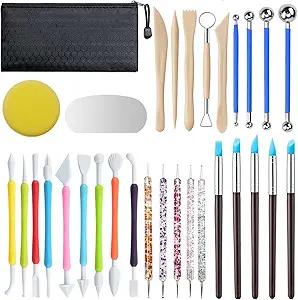 | Best for Dedicated Detail Work | Piece count: 31 | Contents: 5 double-sided tools, 6 rubber nibs, 4 ball pens, 9 shaping and sculpting tools, 5 carving tools, 1 stainless steel scraper, 1 sponge | Storage: Zippered storage bag with sewn tool slots | VIEW LATEST PRICE | See Our Full Breakdown |
| clay sculpting tool | Materials | Storage |
|---|---|---|
| Leyclub 29-Piece Clay Sculptin | Stainless steel tools with wooden handles | Zipper bag |
| 6-Piece Pottery and Clay Sculp | — | — |
| 48-Piece Pottery and Clay Scul | Stainless steel, hardwood, and plastic | Brown zippered canvas case |
| 14-Piece Plastic Clay Modeling | — | — |
| Luney 25-Piece Polymer Clay Sc | Metal, wood, silicone, rubber, and plastic | Black storage bag |
| Dotting Tools for Rock Paintin | — | — |
| Clatoon 10-Piece Silicone Clay | Silicone, aluminum, wood, acrylic | — |
| LINPHCEY Clay Sculpting Tool S | — | — |
| GtohHavea 4-Piece Pottery Carv | — | Included case |
| DePes Stainless Steel Clay Scu | — | — |
| Amrules 27-Piece Polymer Clay | Wood, stainless steel, plastic, and rubber | Zipper storage bag |
| 18-Piece Clay Sculpting and Po | Stainless steel and wood | Zippered tool pouch |
| Langqun 31-Piece Clay Tools Ki | Wood handles, rubber tips, stainless steel scraper | Zippered storage bag with sewn tool slots |
More Details on Our Top Picks
Leyclub 29-Piece Clay Sculpting Tools Kit
This set earns the top spot because it balances breadth and usability without overwhelming the buyer. The 9 shaping blades and 5 rubber-tip tools cover the two tasks sculptors do most — carving and blending seams — while the wooden handles give better control than the all-plastic 14-Piece Plastic Clay Modeling Tool Set. Compared with the 48-Piece Pottery and Clay Sculpting Tool Kit, this option trims the lineup to tools a typical sculptor will actually reach for, which means less clutter and fewer duplicates. The zipper bag is a genuine plus for anyone transporting tools to a class or studio. The tradeoff: it skips some of the specialty texture and trimming tools larger kits include, and the wooden handles need basic care to avoid drying or cracking over time.
Pros:- Balanced selection of carving, shaping, smoothing, and detailing tools
- Stainless steel tips with comfortable wooden handles
- Works with polymer, air-dry, modeling, and pottery clay
- Zipper bag keeps tools organized and travel-ready
Cons:- Missing specialty trimming tools that dedicated pottery sets include
- Wooden handles require care to prevent long-term wear
Best for: Intermediate hobbyists and art students who want a well-rounded, portable kit for polymer, air-dry, or pottery clay
Not ideal for: Advanced ceramicists who need specialized trimming and rib tools — this kit leans general-purpose
- Piece count:29
- Included tools:Double-sided tools, 9 shaping blades, 5 ball styluses, 5 rubber-tip tools, 1 sponge, additional tools
- Materials:Stainless steel tools with wooden handles
- Storage:Zipper bag
- Compatible materials:Polymer, air-dry, modeling, and pottery clay
- Product dimensions:9 x 1 x 1 inches
- Model number:LeyClub01
Our verdict“If you want one kit that handles nearly every clay project without excess bulk, this is the one to buy.”
6-Piece Pottery and Clay Sculpting Tool Set
Sometimes less is more, and this six-tool set proves it. Each double-sided wooden tool delivers two working ends, giving you 12 shapes in a package light enough to toss in any bag. Where the Leyclub 29-piece kit spreads its budget across many tool types, this set concentrates everything into smooth, comfortable wood tools that handle smoothing, cleaning, carving, and shaping — the fundamentals. At just over two ounces total, it is the easiest kit here to carry to a pottery class. The honest tradeoff: there are no metal blades, ball styluses, or rubber tips, so fine detailing and texture work will require add-ons later. For a first set or a spare travel kit, that simplicity is a feature; for detailed figurine work, it is a limitation.
Pros:- 12 working shapes across only six tools
- Lightweight with smooth, comfortable wooden handles
- Covers the core tasks of smoothing, carving, and shaping
- Easy to store and transport at just over 2 ounces
Cons:- No metal or rubber tips for fine detailing
- Wooden ends can wear down faster than steel with heavy use
Best for: Budget-conscious beginners and pottery students who need dependable basic shaping tools without a big spend
Not ideal for: Detail sculptors and miniature artists — the lack of styluses and metal tips limits fine work
- Pieces:6
- Tool ends:12 shapes
- Length:6.3–7.9 inches
- Handle material:Wood
- Item weight:2.11 ounces
- Package dimensions:8.07 x 5.04 x 0.55 inches
- Model number:1063-6
Our verdict“A smart, no-frills starter set for anyone whose priority is core clay-shaping skills at a low cost.”
48-Piece Pottery and Clay Sculpting Tool Kit
This is the kit for the sculptor who has outgrown basics and wants to experiment across techniques. With 48 pieces spanning shaping, carving, trimming, texturing, scraping, and smoothing, it covers jobs the Leyclub 29-piece kit and the 6-piece wooden set simply don’t address — particularly trimming and scraping, which matter for wheel-thrown pottery. The zippered canvas case is sturdier than the fabric bags in smaller sets, which matters when you’re hauling this many tools. The mix of stainless steel, hardwood, and plastic keeps the overall kit affordable, but that mix is also the tradeoff: not every piece will feel professional-grade, and some artists will find themselves gravitating to a handful of favorites while the rest sit unused. Buy this to discover your preferences, not as a curated selection.
Pros:- Widest technique coverage in this lineup, including trimming and scraping
- Handles polymer, air-dry, pottery, ceramic, and foam clay
- Sturdy zippered canvas case for organization
- Suits both beginners and experienced artists
Cons:- Mixed materials mean inconsistent quality across pieces
- Many tools will go unused for casual hobbyists
Best for: Developing artists and mixed-media creators who want to explore many clay techniques before investing in premium single tools
Not ideal for: Minimalists or travelers — the sheer piece count and full case take up real space
- Piece count:48
- Materials:Stainless steel, hardwood, and plastic
- Storage:Brown zippered canvas case
- Suitable for:Polymer clay, air-dry clay, pottery, ceramics, and foam clay
- Uses:Shaping, carving, trimming, texturing, scraping, and smoothing
Our verdict“The right pick if you’re ready to experiment broadly and figure out which tools deserve a permanent place in your kit.”
14-Piece Plastic Clay Modeling Tool Set
Plastic tools get dismissed by serious sculptors, but this set has a clear purpose: comfortable, affordable, worry-free sculpting. The lightweight plastic bodies are easy on the hands during long sessions and won’t rust or mark up work surfaces the way steel tips can — a real advantage when working with soft polymer clay. Compared with the wooden 6-piece set, you get more shape variety for embossing and styling, though neither matches the Leyclub kit’s steel blades for aggressive carving. The plastic construction means less precision on hard or dense clay, and edges will soften over time. Note the 12-and-under age restriction, which rules it out for elementary school classrooms despite its beginner-friendly feel. For teens and adults running casual craft sessions, it’s a sensible low-commitment choice.
Pros:- 14 tools covering carving, molding, styling, and embossing
- Very lightweight and comfortable for extended use
- No rust risk and gentle on work surfaces
- Works with polymer and ceramic clay
Cons:- Plastic tips lack precision and durability for dense clay
- Not suitable for children aged 12 and under
- Edges wear down faster than steel or wood equivalents
Best for: Teens and casual crafters who want many tool shapes for polymer clay without maintenance worries
Not ideal for: Children 12 and under, plus artists working dense clay — plastic tips lack the rigidity for heavy carving
- Pieces:14
- Material:Plastic
- Uses:Carving, molding, modeling, styling, and embossing
- Suitable for:Polymer clay, ceramic clay, and sculpting
- Age guidance:Not suitable for children aged 12 and under
Our verdict“A low-maintenance starter set for light polymer clay work — just not for kids or heavy-duty carving.”
Luney 25-Piece Polymer Clay Sculpting Tools Kit
Polymer clay figurines and charm-making live or die on detail, and this kit is built around that reality. The standout is the inclusion of 5 silicone sculpting tools — flexible tips that blend seams and smooth surfaces in ways the rigid wooden and steel tools in the Leyclub or 6-piece sets simply cannot. Add ball styluses in three handle styles (wooden, rubber, plastic) and you have real options for dotting, indenting, and signature work. The bundled pottery sponge rounds out surface finishing. The tradeoff versus the 48-piece kit is breadth: fewer trimming and scraping tools here. Also, the product listing omits dimensions, so buyers planning very fine miniature work are taking something on faith regarding tip sizes. Still, for soft-clay detail artists, this is the most purpose-built lineup of the five.
Pros:- Silicone tips blend and smooth soft clay far better than rigid tools
- Ball styluses in three handle materials for varied grip and pressure
- Works with polymer, air-dry, modeling, and pottery clay
- Includes storage bag and pottery sponge
Cons:- Fewer trimming and scraping tools than larger pottery-focused kits
- No listed dimensions, making tip sizes uncertain before purchase
Best for: Polymer clay artists focused on figurines, charms, and detailed miniatures who need blending and stylus variety
Not ideal for: Wheel-throwing potters — the kit favors hand-building detail over trimming and throwing tasks
- Tool count:25
- Included tools:5 wooden carving/shaping tools, 5 wooden-handle ball styluses, 5 silicone sculpting tools, 4 rubber-handle ball styluses, 4 plastic styluses, 1 pottery sponge
- Materials:Metal, wood, silicone, rubber, and plastic
- Storage:Black storage bag
- Suitable for:Polymer clay, air-dry clay, modeling clay, pottery clay, molding clay, and ceramics
Our verdict“The clear choice for detail-driven polymer clay work, as long as you don’t need pottery trimming tools.”
Dotting Tools for Rock Painting, Clay Modeling, and Mandala Art, 10 Pieces
This set earns its spot as the go-to pick for precision dot patterns and embossed texture rather than general shaping. With 20 stainless steel ball ends across 14 diameters, it offers a size range that no generalist kit in this roundup can match — perfect for mandala work, clay surface decoration, or adding uniform scale and pore details to a sculpture. Compared with the DePes 11-tool spatula set, which focuses on broad shaping profiles, this set is all about controlled, repeated marks. The tradeoff is specialization: these tools do one thing extremely well and almost nothing else. Buyers expecting carving, slicing, or trimming capability should look at the GtohHavea carving set instead. The lightweight build suits long sessions, though handle material details are unspecified.
Pros:- 20 ball ends across 14 precise diameters from 0.8 to 18 mm
- Stainless steel ends resist rust and staining from wet clay
- Extremely lightweight for long, detailed work sessions
- Works across clay, rock painting, canvas, and shell crafts
Cons:- Purely a dotting and embossing tool with no carving or slicing capability
- Handle material and durability details are not specified
Best for: Mandala artists and miniature sculptors who need perfectly uniform dots and embossed texture on clay or painted surfaces
Not ideal for: Anyone wanting an all-purpose sculpting starter kit — these tools only create dots and embossed marks
- Pieces:10 tools
- Ball ends:20
- Ball-end diameters:14 sizes: 0.8 to 18 mm
- Ball material:Stainless steel
- Uses:Rock painting, clay modeling, embossing, mandala dot art
- Build:Stain-resistant and rust-resistant
Our verdict“Buy this as a supplement to a general sculpting kit if precise dot and texture work is central to your craft.”
Clatoon 10-Piece Silicone Clay Sculpting and Dotting Tool Set
The Clatoon set stands out for silicone tips paired with aluminum, wood, and acrylic components, a combination that shines when working soft clays where metal tools leave marks. The silicone tips smooth and blend without dragging, which makes this a smarter choice than the LINPHCEY kids’ plastic set for anyone past the beginner stage who still wants gentle, forgiving tools. Cone points, angle chisels, and cup rounds in two sizes cover both tight detail work and broader surface blending. The multi-craft reach — pottery, nail art, fondant — adds value for makers who cross mediums. The main drawback is measurement vagueness: exact tool dimensions aren’t listed, so buyers can’t verify tip sizes before ordering, and the silicone tips are less suited to firm or cured clay than the stainless steel DePes set.
Pros:- Silicone tips blend and smooth soft clay without leaving drag marks
- Mixed material build combines flexibility with sturdy handles
- Five distinct tip shapes in two sizes cover detail and broad work
- Versatile enough for pottery, nail art, and food crafts
Cons:- Exact tool dimensions are not disclosed, making size fit a gamble
- Silicone tips too soft for firm or cured clay compared with steel alternatives
Best for: Polymer and soft clay artists, fondant decorators, and nail artists who need gentle smoothing and blending tools
Not ideal for: Sculptors working hard or cured clays — silicone tips lack the rigidity for aggressive shaping
- Quantity:10 tools
- Materials:Silicone, aluminum, wood, acrylic
- Tip shapes:Cone point, angle chisel, flat chisel, cup chisel, cup round
- Tip sizes:Two sizes
- Uses:Clay sculpting, pottery, nail art, crafts, fondant
- Strength:Soft-clay smoothing and detailing
Our verdict“A strong mid-range pick for soft-clay detailing, provided you don’t need firm pressure or precise sizing information up front.”
LINPHCEY Clay Sculpting Tool Set for Kids and Beginners
For younger hands, the LINPHCEY set does what the bigger kits like the Luney 25-piece or Leyclub 29-piece sets don’t: it keeps things simple. At 2.11 ounces with easy-grip plastic handles, the assorted spheres, combs, and shovels let kids shape, trim, and carve air-dry or polymer clay without wrestling with adult-sized tools. The age 8 and up rating and blunt plastic construction also mean far less worry about cuts compared with steel-tipped sets like the DePes spatulas. The tradeoff is longevity — plastic tips will wear, bend, and lose edge definition long before metal would, and clay isn’t included, so factor that into the gift-buying math. Adults and teens past the beginner stage will outgrow this set quickly, but for a first introduction to clay it hits the right balance of safety and function.
Pros:- Easy-grip handles sized for young users
- Blunt plastic construction is far safer than steel-tipped kits
- Assorted shapes cover sculpting, shaping, trimming, and carving
- Doubles for cake decorating crafts
Cons:- Plastic construction wears and loses precision faster than metal tools
- Clay is not included despite the child-oriented packaging
Best for: Parents buying a safe first clay tool set for children ages 8 and up working with air-dry or polymer clay
Not ideal for: Teen or adult hobbyists — plastic tips lack durability and precision for serious sculpting work
- Age recommendation:8 years and up
- Material:Plastic
- Product dimensions:5.91 x 3.94 x 1.97 inches
- Item weight:2.11 ounces
- Included tools:Assorted shapes including spheres, combs, shovels
- Compatible clay:Air-dry and polymer clay
Our verdict“A sensible, safe starter set for kids that will be outgrown rather than kept for life.”
GtohHavea 4-Piece Pottery Carving Tool Set
Where most sets in this roundup serve polymer and air-dry clay, the GtohHavea set is built for the wheel-thrower’s bench. Its four distinct cutting profiles handle sgraffito, Mishima inlay, trimming, and surface decoration on leather-hard clay — work that dotting tools and silicone-tip sets like the Clatoon simply can’t do. The pear wood handles with soft sponge grips make extended carving sessions comfortable, and at 172 grams the whole set feels like a deliberate, curated kit rather than a bulk assortment. Compared with the DePes 11-tool set, you get far fewer tools, but each one is purpose-built rather than general-purpose, and the included case plus a two-year warranty signal confidence in build quality. The tradeoff is narrow scope: four pieces means limited redundancy, and this set won’t help with soft clay or miniature figure work.
Pros:- Four distinct cutting profiles cover fine lines, grooves, and surface detail
- Pear wood handles with sponge grips stay comfortable in long sessions
- Purpose-built for leather-hard clay carving techniques like sgraffito
- Includes a storage case and a two-year warranty
Cons:- Only four tools — limited coverage if one profile doesn’t suit your style
- Narrowly specialized for ceramics, offering little value for soft clay work
Best for: Potters and ceramic artists doing sgraffito, Mishima, and trimming work on leather-hard clay
Not ideal for: Polymer clay and miniature sculptors — the cutting profiles are designed for ceramic surfaces, not soft detail work
- Brand:GtohHavea
- Set size:4 pieces
- Handle material:Pear wood
- Grip:Soft sponge
- Item weight:172 g
- Dimensions:6 in L x 0.47 in W
- Uses:Sgraffito, Mishima, ceramic trimming, surface decoration
- Warranty:2 years
- Storage:Included case
Our verdict“A focused, well-made choice for ceramic surface decoration that trades quantity for genuine specialization.”
DePes Stainless Steel Clay Sculpting Tool Set, 11 Tools with 22 Shapes
The DePes set distinguishes itself through material breadth and learning support. Eleven stainless steel spatulas with 22 working shapes handle everything from polymer and oil clay to silver clay and plaster — plus putty application for figure making and plastic model construction, a niche the pottery-focused GtohHavea set and the dotting tools don’t touch. Unlike most kits here, it ships with a guidebook and instructional videos, backed by 24/7 email support, which makes a real difference for self-taught sculptors. The steel construction also outlasts the LINPHCEY plastic set by years. Two gaps hold it back from a higher rank: the PU case is not included, so storage is on you, and the individual tool shapes aren’t listed, leaving buyers to discover the profiles on arrival. Still, for serious figure work across multiple materials, the versatility is hard to beat.
Pros:- 22 working shapes from just 11 double-ended spatulas
- Stainless steel build suited to heavy, repeated use
- Handles an unusually wide range of clays plus putty application
- Guidebook, videos, and 24/7 email support help beginners learn technique
Cons:- PU case not included, leaving tools loose in a drawer
- Individual tool shapes are not listed in the product description
Best for: Figure sculptors and scale model builders who work across multiple clay types and want instructional guidance included
Not ideal for: Buyers who want a complete out-of-box package — no case is included and tool shapes aren’t itemized before purchase
- Material:Stainless steel
- Set contents:11 spatulas with 22 shapes
- Compatible materials:Plaster, Sculpey, stone clay, oil clay, paper clay, silver clay, polymer clay
- Additional uses:Putty application for figure making and model building
- Included:Guidebook and instructional videos
- Support:24/7 email support
- Case:PU case not included
Our verdict“The most versatile metal set in this lineup, best for multi-material sculptors who value included instruction over tidy packaging.”
Amrules 27-Piece Polymer Clay Sculpting Tools Kit
This set stands out for its mix of four different materials — wood, stainless steel, plastic, and rubber — which gives it a wider working range than more focused kits like the 18-Piece Clay Sculpting and Pottery Tool Kit. The rubber pens and ball styluses make this option better suited to dot painting and soft detailing, while the metal needle and rib handle the traditional pottery work. Compared with the Langqun 31-piece kit, this one trades a few tools for a more balanced spread across materials, which matters if your projects jump between clay, ceramics, and mandala-style crafts. The zipper bag keeps everything portable. The tradeoff is real, though: mixed materials wear at different rates, and the rubber tips will likely degrade long before the steel tools do.
Pros:- Four different tool materials cover shaping, texturing, engraving, and detailing
- Rubber pens and ball styluses suit dot painting and soft detail work beyond clay
- Zipper storage bag keeps 27 tools organized and portable
- Includes a pottery sponge and metal rib for traditional ceramic techniques
- Good spread of tool types without overwhelming beginners with redundant pieces
Cons:- Mixed materials will wear unevenly, with rubber and plastic tips degrading first
- No tool dimensions or material durability details provided by the manufacturer
- Light yellow color shows clay residue and grime quickly
Best for: Multi-craft hobbyists who bounce between polymer clay, ceramics, and dot painting and want one bag that covers all of it
Not ideal for: Buyers who want a durable all-steel setup — the plastic and rubber components won’t hold up to heavy daily use the way the stainless tools in the 18-piece kit will
- Piece count:27
- Materials:Wood, stainless steel, plastic, and rubber
- Included tools:5 wooden clay tools, 5 wooden-handle ball styluses, 5 rubber pens, 4 rubber-handle ball styluses, 4 plastic styluses, 1 metal needle tool, 1 metal rib, 1 pottery sponge
- Storage:Zipper storage bag
- Color:Light yellow
- Suitable materials:Clay, ceramics, dot painting, and other crafts
Our verdict“Pick this if you want one affordable bag that spans clay, ceramics, and dot-painting crafts — skip it if you need a single-material set built for years of heavy use.”
18-Piece Clay Sculpting and Pottery Tool Kit
Where the Amrules 27-piece kit spreads itself across four materials, this set keeps things simple with just stainless steel and wood — and that restraint pays off in durability. The double-ended tools effectively double the working surface, giving you more shaping options per piece than single-tip alternatives. This pick makes the most sense for someone who primarily works with clay and pottery rather than dabbling in dot painting or mandala art. It also handles fondant, wax, and soap, though the sharp metal ends demand care. Compared with the Langqun 31-piece kit, you give up the rubber nibs and sheer variety, but you gain a tighter, tougher set that won’t need replacing when tips wear down. The maintenance requirement — drying promptly and avoiding long soaks — is the main ongoing commitment.
Pros:- Stainless steel and wood construction is more durable than mixed-material kits
- Double-ended tools provide more working shapes than the piece count suggests
- Handles an unusually wide range of materials: polymer clay, ceramic, fondant, wax, and soap
- Zippered pouch keeps the sharp ends safely contained
Cons:- Sharp metal parts can scratch skin during handling or cleaning
- Tools must be dried promptly after washing and never soaked long, adding maintenance effort
- 18 pieces may feel limiting next to the Langqun 31-piece kit’s broader assortment
Best for: Clay and pottery hobbyists who want a compact, long-lasting steel-and-wood set over a sprawling mixed-material kit
Not ideal for: Anyone doing delicate soft-tip work like dot painting or fine silicone detailing — the Clatoon silicone set or Amrules rubber pens serve that better
- Pieces:18
- Materials:Stainless steel and wood
- Tool design:Assorted shapes and sizes, including double-ended tools
- Storage:Zippered tool pouch
- Suitable materials:Polymer clay, ceramic clay, fondant, cake, dough, wax, and soap
- Care instructions:Do not soak more than 1.5 hours; dry before storing
Our verdict“This is the pick for sculptors who value a tough, focused steel toolkit over variety — just be ready to dry the tools after every cleaning session.”
Langqun 31-Piece Clay Tools Kit
This is the largest and most specialized set of the three, with 31 pieces organized into distinct families: carving tools, rubber nibs, ball pens, and double-sided shapers. Compared with the Amrules 27-piece kit, the Langqun leans harder into carving and detailing — its five dedicated carving tools and nine shaping tools give serious sculptors more graining control for facial features, textures, and fine lines. The sewn tool slots in the zippered bag are a small touch that genuinely matters: unlike loose bags where tips rub together and dull, every tool here stays separated and protected. The stainless steel scraper is a step up in quality over plastic alternatives. The tradeoff is scope — like the 48-piece kits in this roundup, this is more assortment than a beginner will ever touch, and the lack of listed dimensions makes it hard to gauge tip sizes before it arrives.
Pros:- 31 pieces organized into dedicated carving, shaping, and detailing families
- Storage bag has sewn tool slots that protect tips from rubbing and dulling
- Stainless steel scraper is sturdier than plastic alternatives in smaller kits
- Handles polymer clay, air-dry clay, pottery, and fondant
Cons:- The large assortment is overkill for beginners and casual crafters
- No tool dimensions or individual material details specified
- Rubber nibs will wear out faster than the wood and steel components
Best for: Intermediate sculptors working on detailed figurines or pottery who need a full range of carving, shaping, and texturing tools in one organized kit
Not ideal for: Casual or first-time crafters — a simpler set like the 18-piece kit covers the basics without paying for 15 tools you’ll rarely pick up
- Piece count:31
- Contents:5 double-sided tools, 6 rubber nibs, 4 ball pens, 9 shaping and sculpting tools, 5 carving tools, 1 stainless steel scraper, 1 sponge
- Storage:Zippered storage bag with sewn tool slots
- Materials:Wood handles, rubber tips, stainless steel scraper
- Suitable materials:Polymer clay, air-dry clay, pottery, and fondant
Our verdict“Serious detail-oriented sculptors get the most from this kit’s depth; newcomers should start smaller and upgrade later.”
How We Picked
My evaluation started with build quality, because nothing frustrates a sculptor faster than a tool that bends, snaps, or loses its tip mid-project. I compared handle materials, tip attachment methods, and whether metal implements were solid stainless steel or merely plated. Versatility came next: a good kit should cover shaping, carving, detailing, and smoothing without forcing you to buy add-ons, but redundant tools counted against a set rather than for it.
From there, I weighed fit for purpose — a kit aimed at polymer clay miniatures faces different demands than one for wheel pottery or kids’ classrooms — and finally value, which I judged by usable tools per dollar, not total piece count. The ranking favors sets that do a few things well over sets that do many things adequately. Where two kits were close on quality, the tiebreaker was how well the tool selection matched the sculpting work most buyers actually do.
Factors to Consider When Choosing Clay Sculpting Tools
Choosing clay sculpting tools is less about buying the biggest kit and more about matching tools to your clay type, project scale, and skill trajectory. These are the factors that actually changed the ranking.Match the Tool Material to Your Clay Type
The single most common buying mistake is treating all clay as the same material. Polymer clay stays soft and slightly tacky, which means metal tips can drag and leave marks — silicone and well-polished steel tools perform best here. Earmenware and stoneware clays move from soft to leather-hard to bone-dry, and each stage wants a different tool: ribs and shapers early, carving and trimming tools later. If you carve hard or dry clay, flimsy aluminum or plastic tips will flex and skip across the surface instead of biting cleanly, so solid stainless steel pays for itself quickly. Buyers who work across multiple clay types get the most mileage from hybrid kits that mix wood, metal, and silicone, which is partly why the Leyclub set leads this roundup. Choosing a single-material kit because it looks tidy on a desk is a false economy when your projects span materials.
Piece Count Is a Marketing Number — Usable Tools Matter
Manufacturers know shoppers compare piece counts, so many kits pad the box with duplicate shapes and gimmick accessories. When I compared these thirteen sets, the usable-tool ratio varied wildly: some 40-plus-piece kits contained only a dozen implements a sculptor would actually reach for. Worse, padded kits often cost more per quality tool than a lean set like the DePes, where all eleven tools have distinct working ends on both sides. Before buying, look at the tool listing and ask whether each item serves a function your projects require — a second ribbon tool is fine, a third identical loop tool is filler. A 20-to-30 piece kit with distinct shapes is the sweet spot for most hobbyists; professionals often need only six to eight specific tools. Beginners benefit from range because they haven’t yet discovered their personal preferences, but even then, redundancy beyond two or three duplicates adds no value.
Scale: Miniature Work and Pottery Need Different Tools
Tool size should match the size of your work, and this is where many kits quietly fail buyers. Miniature sculptors, jewelry makers, and figure modelers need fine needle tools, micro ball styluses, and small silicone shapers — a pottery-scale loop tool is useless on a 2-inch figurine. Conversely, wheel throwers and large-form sculptors want full-length tools with leverage; tiny detail sticks feel toy-like in that context. The Luney and Amrules kits lean miniature, while the 6-piece and 48-piece pottery sets lean large-form. If you do both, plan on two smaller purpose-built sets rather than one compromised kit — the combined cost is usually similar to a large do-everything box, and every tool gets used. Also check tool length in the specs, since listings rarely show scale photos and returns for ‘too small’ are common with imported kits.
Handle Comfort and Control for Long Sessions
Features that look cosmetic in a listing become decisive after an hour of detailing. Wooden handles offer warmth, grip, and slight texture that reduces hand slippage; polished metal handles look sleek but can get slippery with wet clay on your fingers. Handle thickness matters too — thin handles cramp larger hands, while overly thick handles rob you of the fine control detail work demands. Kids’ kits like the LINPHCEY set use chunkier, rounded handles intentionally, trading precision for grip security. If you sculpt in long sessions, also consider weight distribution: tools balanced slightly back toward the handle reduce wrist fatigue. No kit in this range offers premium ergonomic shaping, but the wood-handled sets consistently felt better in hand than their plastic counterparts.
Durability and How the Set Ages
Cheap sculpting tools fail in predictable ways: tips separate from handles, plastic snaps at stress points, and plated metal chips to reveal corroding metal underneath. Solid stainless steel through the working end is the gold standard at this price level, which is why the GtohHavea and DePes sets punch above their piece counts. Wood handles need basic care — drying them properly and not soaking them — but they can last for years. Plastic sets are honest about their limits: they’re affordable, safe for children, and fine for soft clay, but plan on replacing them if you work often. Check whether replacement or individual tools are available from the same brand, because losing one tool from a proprietary kit sometimes means rebuying the whole set. Storage cases matter here too: a canvas roll protects edges better than a loose plastic box that lets tools clang together and dull.
Who Should Buy a Kit vs. Individual Tools
Kits dominate this roundup because they make sense for beginners and generalists, but they’re not the only path. Buy a kit if you’re starting out, exploring techniques, or discovering which tools suit your style — the cost per tool is far lower than buying individually. Buy individual tools once you know your workflow, because serious sculptors typically rely on five to eight favorites and resent paying for the other twenty. A sensible hybrid strategy: start with a mid-size kit like the Leyclub or Langqun, identify the tools you reach for constantly, then upgrade those specific implements to professional-grade versions from dedicated pottery suppliers. The sets in this guide are hobby-to-enthusiast quality, which is the right tier for learning — but intermediate sculptors working in polymer clay miniatures will eventually want finer needles and firmer silicone shapers than any budget kit includes.
Frequently Asked Questions
How many clay sculpting tools does a beginner actually need?
Fewer than most kits suggest. A beginner can handle the vast majority of early projects with a needle tool for cutting and scoring, a loop or ribbon tool for hollowing and shaping, a couple of shapers or silicone tips for smoothing, and one wire-end tool for detail. That’s roughly five tools, yet the market pushes 30-plus-piece kits because piece count sells. A mid-size kit still makes sense as a starter purchase because it lets you experiment and discover your preferences cheaply — just don’t assume you’re getting a bad deal if you only ever use a third of the box. The 6-piece pottery set in this roundup exists precisely for buyers who want the essentials without filler. Once you know your style, invest in quality versions of the specific tools you reach for daily.
Can I use the same tools for polymer clay and pottery clay?
Partially, and knowing where the overlap ends saves money and frustration. Stainless steel and wood tools generally work across both, but pottery-scale loop and ribbon tools are often too large and aggressive for soft polymer clay, where they gouge instead of shape. Polymer clay also picks up residue easily, so tools used on gritty earthenware can scratch or contaminate detailed polymer work — many miniaturists keep a separate clean set for that reason. Silicone-tipped tools, like those in the Clatoon set, are the closest thing to a true crossover tool because they smooth both soft polymer and damp earthenware without marring. If budget forces one kit, choose a wood-and-steel general set and add a few silicone tips separately rather than buying two full kits.
Are plastic sculpting tools a waste of money?
No, but only within their limits, and that distinction shaped this roundup’s lower rankings rather than eliminating plastic sets entirely. Plastic tools excel with soft polymer and air-dry clays, they’re safe for children, and they never rust — the LINPHCEY kids’ set and 14-piece plastic set are legitimately good choices for those buyers. Where plastic fails is on firm, leather-hard, or dry clay, where it flexes, skips, and snaps under the pressure needed to carve. Plastic edges also dull faster and can’t be re-sharpened the way steel can. The practical rule: if you sculpt weekly or work with earthenware at any stage beyond soft, spend a little more on wood-handled steel tools. If you’re a casual hobbyist, a classroom, or buying for a child, plastic is the smarter spend.
What’s the difference between dotting tools and sculpting tools, and do I need both?
Dotting tools are metal balls on sticks, originally for mandala painting, and they’ve migrated into clay kits because the ball ends are excellent for making indentations, eyeballs, sockets, and smooth dimples in soft clay. Sculpting tools are a broader category covering cutting, carving, shaping, and texturing. You don’t need to buy dotting tools separately if your kit includes ball styluses — the Luney, Amrules, and Clatoon sets all do — but the standalone 10-piece dotting set here makes sense if you also paint rocks or do nail art, since it doubles across crafts. The subtle quality difference is tip polish: purpose-made dotting tools tend to have smoother balls that release cleanly from clay, while some budget kit styluses leave a slight ring. For pure sculpting, though, a kit with built-in styluses covers this function adequately.
How do I maintain clay tools so they last?
Most tool damage comes from storage and cleaning habits, not from use. Never soak wooden-handled tools for long periods — water wicks into the wood, swells it, and loosens the ferrule holding the tip; instead, wipe them with a damp cloth and dry immediately. Solid stainless steel tools can be washed freely and even sanitized, which is one reason they rank higher here than plated alternatives that chip and corrode at worn spots. Silicone tips should be cleaned before clay dries on them, since cured polymer clay is stubborn to remove without solvents that can degrade the silicone over time. Store tools in a roll or a slotted case rather than loose in a drawer, because metal edges knocking against each other dull quickly. A minute of care after each session easily doubles the working life of a budget kit.
Conclusion
The right pick here depends less on which kit is objectively best and more on what you sculpt and how often. For most buyers, the Leyclub 29-Piece Kit is the best overall choice — it covers shaping, detailing, and smoothing with solid construction and minimal filler. Best value goes to the 6-Piece Pottery Set, which delivers the core pottery toolkit at a fraction of what larger sets cost per usable tool. On the premium side, the DePes Stainless Steel Set offers the finest metal quality in this lineup, with 22 working shapes that suit detail-focused sculptors who’ve outgrown budget kits.
Beginners and kids are best served by the LINPHCEY set, whose simpler, safer tools match a learner’s needs without overwhelming them. For specific needs: polymer clay and miniature artists should choose the Luney or Amrules kits, the Clatoon silicone set is the answer for smoothing and texture work, and the GtohHavea 4-piece carving set suits anyone who needs a few excellent carving tools rather than a crowded box. Whatever you choose, let your clay type and project scale — not piece count — make the final call.
Halloween Picks
halloween
As an affiliate, we earn on qualifying purchases.