Connecting frontstage and backstage in service design guarantees a seamless user journey by aligning internal processes with customer interactions. When your internal systems support employee engagement and streamline workflows, they can deliver consistent, personalized experiences that boost satisfaction. Digital tools enable real-time communication and data sharing, creating a unified service ecosystem. If you want to discover how to optimize these connections for better customer and staff experiences, keep exploring further insights.
Key Takeaways
- Align frontstage interactions with backstage processes to create seamless, personalized user experiences.
- Integrate internal systems and workflows to support consistent service delivery across touchpoints.
- Engage employees through digital tools that enhance their ability to deliver quality, timely service.
- Use real-time data and feedback to continuously optimize the connection between service elements.
- Design service journeys that connect all touchpoints, ensuring smooth transitions and fostering user satisfaction.
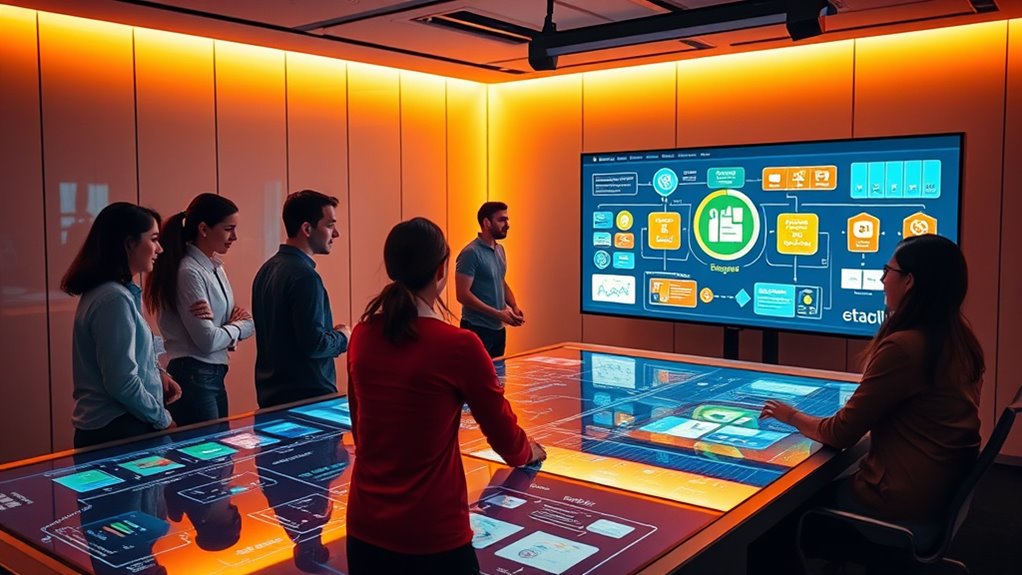
Have you ever wondered how a seamless experience keeps users engaged and satisfied? It all begins with designing service journeys that connect every touchpoint smoothly, guaranteeing that users feel valued and understood. Central to this process is understanding that behind every great customer experience lies a well-integrated system where frontstage and backstage operations work harmoniously. When you focus on service design and user journeys, you’re essentially creating a blueprint that guides how employees interact with customers and how internal processes support those interactions.
Seamless service journeys connect touchpoints, ensuring users feel valued through integrated frontstage and backstage operations.
One key aspect often overlooked is employee engagement. When staff members are genuinely invested in their roles, they’re more likely to deliver consistent, high-quality service. Engaged employees act as brand ambassadors, embodying the values and promises of your service. But to foster this level of commitment, digital integration plays a vital role. Seamless digital tools and platforms streamline workflows, reduce frustration, and empower employees to perform at their best. When staff have access to the right information at the right time through integrated systems, they can respond faster and more accurately, which directly enhances the user journey.
Think about how digital integration improves communication and coordination among teams. Instead of sifting through multiple systems or waiting for manual updates, employees can access real-time data, collaborate effortlessly, and resolve issues quickly. This not only boosts employee engagement by making their work more efficient and less stressful but also translates into smoother interactions for users. As you design the service, you need to consider how backstage processes support frontstage actions. When internal systems are well-connected and optimized, employees are better equipped to deliver personalized, timely service that keeps users engaged and satisfied.
Additionally, digital integration allows for continuous improvement. You can gather data on user interactions and employee performance, identify bottlenecks, and refine your service journey accordingly. This proactive approach ensures that both employees and users feel heard and valued. When staff see that their feedback leads to tangible improvements, their engagement deepens, creating a positive cycle of service excellence.
Another important factor is the role of effective system integration in enhancing overall service quality. It ensures that all components work in harmony, reducing errors and increasing efficiency. When systems are properly integrated, the entire service ecosystem becomes more resilient and adaptable to change.
In essence, creating a seamless experience isn’t just about the visible customer interactions; it’s about aligning behind-the-scenes operations through thoughtful service design. By prioritizing employee engagement and leveraging digital integration, you build a resilient foundation where every part of the journey works in sync. The result is a satisfying, engaging experience for users that keeps them coming back. When frontstage and backstage operate as one, you don’t just meet expectations—you elevate the entire service experience.
Top picks for "service design user"
Open Amazon search results for this keyword.
As an affiliate, we earn on qualifying purchases.
Frequently Asked Questions
How Do I Measure the Effectiveness of Service Design Improvements?
You measure the effectiveness of service design improvements by gathering customer feedback and analyzing performance metrics. Pay attention to customer satisfaction scores, Net Promoter Score (NPS), and qualitative comments to gauge experience changes. Additionally, track key performance indicators like response times, resolution rates, and service uptime. By comparing these data points before and after improvements, you can determine if your service enhancements successfully enhance user experience and operational efficiency.
What Tools Are Best for Mapping Complex User Journeys?
When tackling complex user journeys, you need tools that hit the nail on the head. Journey mapping tools like Smaply, Miro, and Lucidchart are your best bet, helping you visualize intricate paths. Start with detailed customer personas to understand key touchpoints and emotions. These tools allow you to see the whole picture clearly, making it easier to identify pain points and opportunities for improvement—don’t put all your eggs in one basket.
How Can I Involve Users in the Service Design Process?
You can involve users in the service design process by gathering valuable user feedback through surveys, interviews, and observations. Additionally, organize participatory workshops where users actively share their experiences and ideas. This collaborative approach helps you understand their needs better, fosters a sense of ownership, and guarantees the service truly meets user expectations. Engaging users directly makes your design more effective and user-centered.
What Are Common Challenges When Aligning Frontstage and Backstage Teams?
Aligning frontstage and backstage teams often feels like balancing a tightrope—team collaboration and communication barriers challenge your stability. You face issues like inconsistent goals, differing language, and siloed workflows that hinder seamless service delivery. To overcome this, you need clear channels for dialogue, shared understanding, and unified objectives. When you foster open communication and collaborative mindset, you bridge gaps, creating harmony between teams that enhances overall service quality.
How Does Technology Influence Service Design and User Experiences?
Technology drives digital innovation and shapes user experiences by enabling more personalized, seamless interactions. You can leverage user-centric approaches to design services that respond to customer needs intuitively. When you incorporate advanced tools and data analysis, you improve service delivery, making it more efficient and engaging. Ultimately, technology helps you bridge the gap between frontstage and backstage, creating cohesive, satisfying experiences that keep users loyal and satisfied.
Conclusion
So, next time you think you’ve nailed the perfect user journey, remember—it’s all just a delicate dance between frontstage charm and backstage chaos. You might plan every touchpoint perfectly, but the real magic (or disaster) happens behind the scenes. Ironically, it’s often the backstage mess that determines whether your service succeeds or fails. So, keep an eye on both sides—you never know which part will surprise you more. After all, perfection is just a carefully hidden illusion.