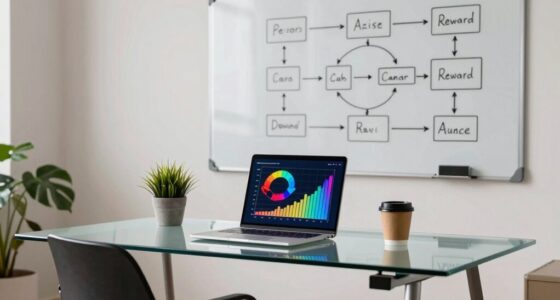
To create immersive user experiences that foster a flow state, focus on minimizing distractions with clean, simple interfaces and encouraging deep concentration. Design environments that match users’ skill levels with appropriate challenges, providing clear goals and immediate feedback. Incorporate mindfulness techniques such as calming visuals or prompts to heighten awareness. Personalize controls and content to increase user agency, making interactions seamless and meaningful. Stay with us to discover more ways to harness flow for better engagement.

Get art and craft supplies delivered free with Prime
- Fast, free delivery on millions of items
- Prime Video, Amazon Music and more included
- Member-only deals all year
Key Takeaways
- Design minimalistic interfaces to reduce distractions and promote deep focus during user interactions.
- Match task difficulty with user skill to maintain optimal engagement and prevent boredom or frustration.
- Incorporate mindfulness prompts and reflective features to enhance present-moment awareness.
- Provide clear goals, immediate feedback, and control options to foster a sense of agency and purpose.
- Create seamless, personalized experiences that sustain immersion and encourage long-term user engagement.

Have you ever experienced a moment when time seemed to fade away and you were completely immersed in what you were doing? That’s the essence of achieving a flow state, where your focus sharpens, and your actions feel effortless. Creating immersive user experiences hinges on guiding users into this state, and understanding how to leverage mindfulness techniques and engagement strategies is key. When designing digital platforms or interactive content, consider how you can foster an environment that encourages users to lose themselves in the activity. This involves reducing distractions and encouraging deep concentration, which can be achieved through thoughtful layout choices and minimalistic interfaces.
Mindfulness techniques play a pivotal role here. By helping users become aware of their present moment, you enable them to tune out external noise and center their attention on the task at hand. Simple prompts like focusing on breathing or encouraging users to notice sensations during interactions can heighten their awareness. Incorporating features that promote mindfulness, such as guided reflections or calming visuals, enhances engagement strategies. These strategies ensure that users are not just passively scrolling but actively participating, which markedly increases the chances of reaching a flow state. Additionally, reducing external variables like distractions can help users maintain their focus for longer periods.
To cultivate this level of immersion, you need to design experiences that match users’ skill levels with the challenge presented. When the task is too easy, boredom sets in; too difficult, frustration emerges. Striking this balance keeps users in a zone of ideal engagement. Clear goals and immediate feedback further sustain this focus, giving users a sense of progress and mastery. For example, gamification elements like badges or real-time progress bars serve as engagement strategies that motivate continued participation.
Creating an environment where users feel a sense of control and purpose also encourages flow. Personalization options, intuitive controls, and meaningful content give users agency over their experience. As they navigate through these tailored interactions, they naturally enter a state of deep involvement. Remember, the key is to maintain a seamless experience that minimizes disruptions and maximizes focus. When users are fully engaged, they’re more likely to experience flow, leading to heightened satisfaction and a lasting positive impression of your platform. By thoughtfully integrating mindfulness techniques and engagement strategies, you can design digital experiences that not only captivate but also enable users to reach that elusive, rewarding flow state. Ensuring that content remains engaging over time involves understanding content spoilage, which can undermine user immersion if not managed well.
Frequently Asked Questions
How Can Designers Measure Flow State Effectiveness?
You can measure flow state effectiveness by tracking engagement metrics like session duration, interaction frequency, and user feedback. Use analytics tools to observe how users interact with your design, noting when they become deeply immersed. Conduct surveys or real-time prompts to gather subjective insights. By analyzing this data, you can optimize immersion, ensuring users remain engaged and experience a true flow state, enhancing overall user satisfaction and retention.
What Tools Facilitate Immersive User Experiences?
You can use tools like A/B testing platforms and heatmaps to evaluate immersive experiences. Incorporate gamification strategies within your designs to boost engagement, and apply immersive design techniques like interactive storytelling and seamless progression. These tools help you analyze user interactions, ensuring your designs foster flow states. By iterating based on real data, you create compelling experiences that keep users engaged and immersed for longer periods.
How Does Flow State Vary Across Different User Demographics?
Think of flow state as a chameleon, shifting colors across different user demographics. You’ll find that demographic engagement varies because diverse backgrounds bring unique motivations and barriers. User diversity influences how easily people enter flow; some may need more tailored experiences, while others adapt quickly. Recognizing these differences helps you craft immersive experiences that resonate universally, ensuring everyone can seamlessly slip into their own flow and stay engaged longer.
Can Flow State Be Sustained Long-Term in Digital Products?
Yes, you can sustain flow state long-term in digital products by integrating mindfulness techniques and personalization strategies. By designing experiences that adapt to your preferences and encourage mindful engagement, you stay immersed and motivated. Regularly updating content and offering meaningful challenges help maintain this state. When you feel connected and in control, it’s easier to stay engaged over time, turning digital interactions into truly immersive and rewarding experiences.
What Are Common Challenges in Achieving Flow for Users?
You might struggle with achieving flow when a game’s gamification strategies feel disconnected or overly complex, causing emotional engagement to drop. For example, if a fitness app floods you with too many notifications, it interrupts focus and breaks immersion. Common challenges include balancing difficulty, maintaining motivation, and fostering emotional engagement. To overcome these, design seamless experiences that adapt to user skills, keeping them engaged without frustration.
Conclusion
As you harness the power of flow, you become a master painter, effortlessly blending every stroke into a vivid masterpiece. When you immerse yourself fully, you craft experiences that captivate and resonate, turning users’ journeys into seamless dances of engagement. Remember, achieving flow isn’t just about skill—it’s about opening the door to pure immersion. So, step into that state, and watch your creations transform into an enchanting symphony of connection and wonder.
Halloween Picks
halloween
As an affiliate, we earn on qualifying purchases.