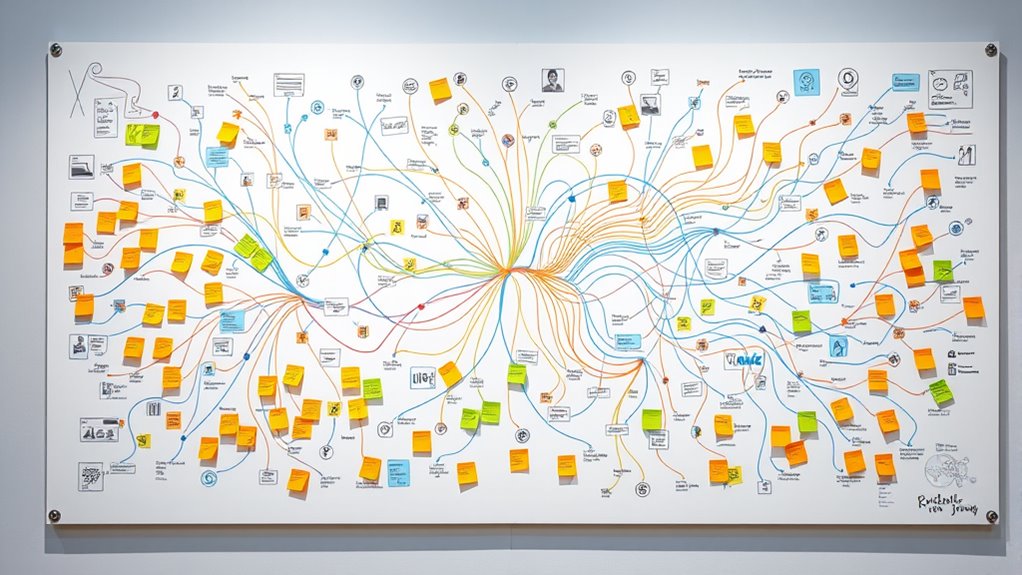

Journey mapping is a valuable visual tool that helps you see every step of your users’ experience, from their interactions to their emotional responses. By identifying touchpoints, frustrations, and motivations, you gain insights to improve and personalize the experience. It’s an ongoing process that guarantees your brand evolves with customer expectations. Keep exploring, and you’ll discover how this approach can transform your understanding and enhance customer satisfaction at every touchpoint.
Key Takeaways
- Journey mapping visually depicts the entire user experience, highlighting interactions and emotional responses for better understanding.
- It identifies pain points and patterns in touchpoints to optimize each customer interaction effectively.
- Emotional insights help tailor experiences, addressing customer feelings like frustration or satisfaction.
- Continuous updates ensure the journey map aligns with evolving customer needs and expectations.
- Effective journey mapping fosters trust, loyalty, and seamless, emotionally engaging user experiences.
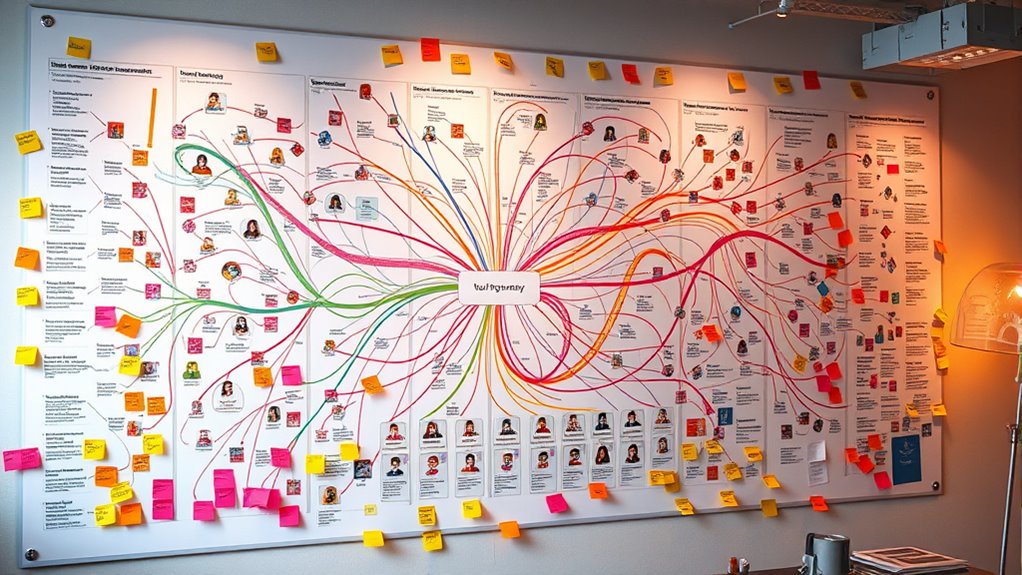
Have you ever wondered how your customers experience your brand from start to finish? Understanding this journey is vital for creating meaningful connections and improving overall satisfaction. That’s where journey mapping comes into play. It’s a visual tool that helps you see the entire user experience, highlighting every interaction your customers have with your brand. By mapping out these touchpoints, you gain a clearer picture of how your audience perceives you at each stage. More importantly, it allows you to gather emotional insights—those feelings, motivations, and frustrations that drive customer behavior. When you analyze these emotional responses, you can identify areas where the experience excels or falls flat, guiding you to make targeted improvements. Incorporating performance metrics can help you measure the success of your journey map and identify areas for ongoing enhancement.
Understanding your customer journey reveals emotional insights that drive meaningful improvements and stronger brand loyalty.
Touchpoint analysis is at the core of effective journey mapping. Think of each point of contact—whether it’s visiting your website, speaking with customer service, or receiving a follow-up email—as a vital moment in the customer’s story. By examining these interactions closely, you reveal patterns and pain points that might otherwise go unnoticed. For example, a confusing checkout process might cause frustration, or a friendly customer service call might foster loyalty. When you map these touchpoints, you can see the entire flow from the customer’s perspective, making it easier to optimize each interaction for a better experience.
As you build your journey map, focus on capturing not just what happens but how your customers feel throughout. Emotional insights give you a deeper understanding of their mindset—are they excited, anxious, confused, or satisfied? Recognizing these emotions helps you tailor your approach, whether that’s simplifying a complex process or adding personalized touches that make customers feel valued. It’s about creating a seamless experience that resonates emotionally, turning casual buyers into loyal advocates.
Effective journey mapping isn’t a one-time task. It requires ongoing touchpoint analysis and emotional insights gathering, especially as customer expectations evolve. By continually updating your map, you stay aligned with your audience’s needs, identifying new opportunities to enhance their experience. Remember, your goal is to see your business through your customer’s eyes, understanding what they feel and think at every step. This empathetic approach transforms your understanding of user experiences from a static diagram into a dynamic tool for meaningful improvement. In the end, journey mapping empowers you to deliver consistent, emotionally engaging experiences that build trust and foster long-term loyalty.
Frequently Asked Questions
How Does Journey Mapping Improve Product Development?
Journey mapping improves product development by helping you understand customer empathy and identify pain points through user research. It highlights the user’s experience step-by-step, allowing you to see where improvements are needed. With this insight, you can design features that better meet user needs, prioritize efforts, and create a seamless experience. Ultimately, it guarantees your product aligns with real customer expectations, boosting satisfaction and loyalty.
What Tools Are Best for Creating Journey Maps?
You can use tools like Miro, Lucidchart, or Smaply to create effective journey maps. These tools help you incorporate customer personas and enable data visualization, making it easier to understand user experiences. They offer collaborative features, templates, and easy drag-and-drop interfaces, streamlining the process. By choosing the right tool, you guarantee your journey maps are clear, insightful, and actionable, ultimately improving your product development process.
How Often Should a Journey Map Be Updated?
Think of your journey map as a living tree, growing with each season. You should update it regularly, at least quarterly, to keep it fresh. Customer feedback and data analysis are your pruning shears, helping you trim outdated insights and nurture new growth. By doing this, you guarantee your map remains vibrant and accurate, reflecting evolving user experiences and guiding your improvements effectively.
Can Journey Mapping Be Used for Internal Team Alignment?
Yes, you can use journey mapping for internal team alignment. It fosters team collaboration by providing a clear visual of user experiences, helping everyone understand customer pain points and goals. Engaging stakeholders in the mapping process boosts stakeholder engagement, ensuring all departments are aligned on user needs and priorities. This shared understanding encourages better communication, streamlines workflows, and drives a unified approach to improving customer journeys.
What Are Common Mistakes to Avoid in Journey Mapping?
Imagine walking a tightrope without checking for stakeholder bias or overcomplexity—that’s a common mistake in journey mapping. You often overlook biases, leading to skewed insights, or create overly complex maps that confuse your team. To avoid this, keep your map simple, focus on key touchpoints, and challenge assumptions. Regularly review with diverse team members to identify bias and simplify processes, ensuring your journey map stays clear and actionable.
Conclusion
As you trace each step on the journey map, you can almost feel the pulse of your users’ experiences. Every touchpoint becomes a window into their hopes and frustrations, guiding you to create smoother, more meaningful interactions. By visualizing these moments, you’re not just designing a process—you’re shaping a story that resonates deeply. Embrace this perspective, and watch your user’s journey transform into a seamless, heartfelt experience that leaves lasting impressions.