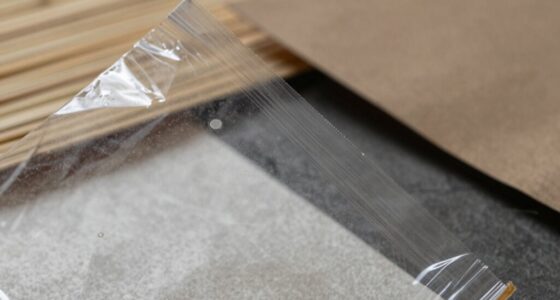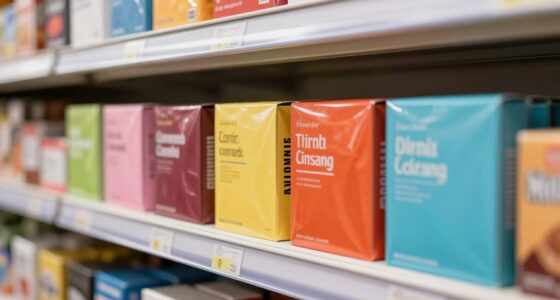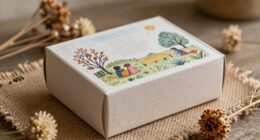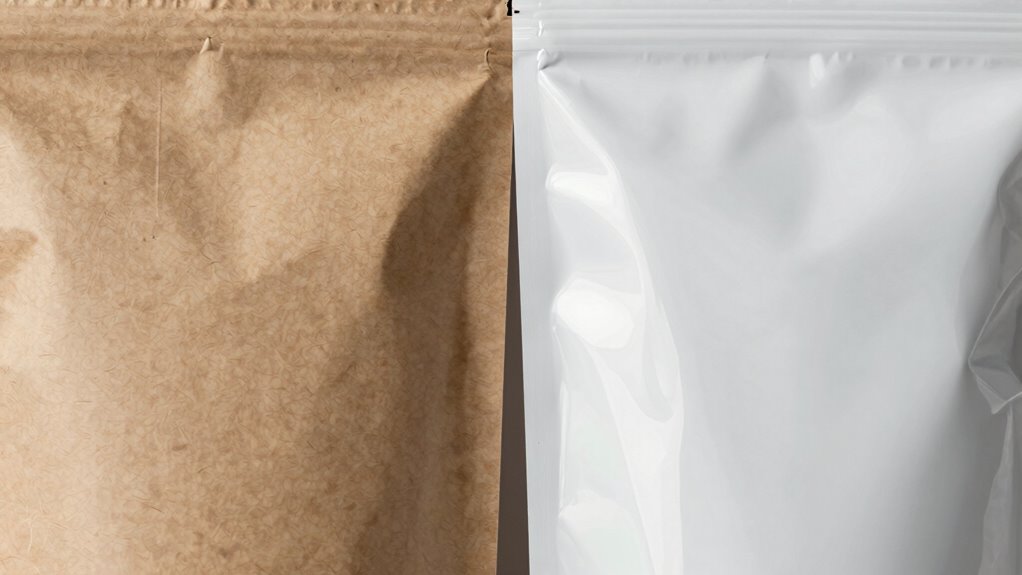
The difference between average and excellent packaging textures is how well they engage your senses and convey quality. Excellent textures surprise and delight with embossed patterns, soft-touch coatings, or matte finishes that feel premium and inviting. They enhance handling and evoke emotion, making your product memorable. Average textures feel flat and uninspiring, offering minimal experience. If you keep exploring, you’ll discover how strategic textures elevate your packaging to stand out and truly connect with your audience.
Key Takeaways
- Excellent textures create a compelling sensory experience that engages touch and evokes emotional responses, unlike flat, uninspiring surfaces.
- Innovative finishes, such as embossing or soft-touch coatings, enhance tactile appeal and signal premium quality.
- Well-designed textures align with brand identity, reinforcing the product’s story and perceived value.
- Outstanding packaging balances visual appeal with tactile stimulation, making the experience memorable and distinctive.
- Thoughtful integration of sensory elements influences consumer perception, elevating the overall packaging from average to exceptional.

Have you ever wondered how packaging texture influences your perception of a product? It’s more than just what it looks like—your sense of touch plays a crucial role in shaping your impression. When packaging features innovative finishes, it immediately signals quality and thoughtfulness. These finishes aren’t just decorative; they’re crafted to create a tactile experience that resonates with you. An excellent packaging design doesn’t rely solely on visuals but engages your senses to deepen your connection with the product inside.
Packaging textures engage your senses, signaling quality and creating memorable, tactile experiences that deepen your connection with the product inside.
The difference between average and outstanding packaging often hinges on the texture’s ability to elevate the overall experience. Average packaging might feel flat or uninspired, offering little more than a basic surface. It’s functional but fails to evoke curiosity or excitement. On the other hand, excellent packaging uses textures that surprise and delight. Think of embossed patterns, soft-touch coatings, or matte finishes that invite your fingers to explore. These innovative finishes aren’t just aesthetic choices—they’re strategic tools that enhance the tactile experience, making the packaging memorable. Incorporating landscaping techniques into packaging design can further enhance the visual and tactile appeal, creating a more immersive experience.
You’ll notice that excellent packaging doesn’t just look good; it feels good too. When you run your fingers over a surface with a carefully designed texture, it creates a subconscious perception of quality and care. This sensory engagement can influence your emotional response, making you more likely to associate the product with premium value. Average packaging often misses this opportunity, opting for plain or generic surfaces that don’t stimulate your senses or leave a lasting impression. Incorporating creative finishes can significantly impact how consumers perceive a product’s value and appeal. Additionally, understanding the role of sensory elements in packaging can help brands craft more compelling experiences that resonate on a deeper level.
The key to creating excellent packaging textures lies in understanding how different finishes interact with your senses. For example, a textured surface with a subtle grip can make handling easier while adding an element of sophistication. Similarly, matte or gloss coatings can evoke different feelings—luxury or simplicity—depending on how they’re applied. These choices are deliberate, aimed at creating a cohesive experience that aligns with the brand’s identity. When done well, the tactile experience becomes an integral part of the product’s story, transforming a simple package into an extension of the brand itself. Additionally, understanding the role of ventilation in packaging can help maintain the integrity of certain textures and finishes, especially for perishable or sensitive products.
In essence, what separates average from excellent packaging is the thoughtful integration of innovative finishes that engage your senses. It’s about designing surfaces that invite touch, evoke emotion, and reinforce the product’s quality—all through texture. When packaging goes beyond visual appeal to craft a memorable tactile experience, it elevates the entire brand, making the product not just seen but felt. Understanding how sensory elements like packaging texture influence perception is a crucial aspect of creating outstanding packaging.
ecoducer 12”x200’ Honeycomb Packing Paper for Moving plus Fragile Stickers and Jute Twine. Eco Friendly Packing Materials Alternative to Bubble Plastic Packing Wrap. Kraft Paper Packaging Roll
More Fun For The Planet: Bubble cushioning wrap sheets are fun for popping bubbles. But honeycomb packing is…
As an affiliate, we earn on qualifying purchases.
As an affiliate, we earn on qualifying purchases.
Frequently Asked Questions
How Does Packaging Texture Influence Consumer Perception?
Your packaging texture considerably influences consumer perception by enhancing sensory appeal and creating a memorable experience. A unique or high-quality texture can make your product stand out on shelves, fostering brand differentiation. When customers feel a premium or innovative texture, they associate it with quality and trust, increasing their likelihood of choosing your brand over competitors. Essentially, thoughtful packaging texture helps you connect emotionally and set your product apart in a crowded marketplace.
Can Texture Improvements Reduce Product Damage During Transit?
Texture improvements can markedly reduce product damage during transit by enhancing durability and shock absorption. You should conduct durability testing to identify weak points and optimize the packaging material. Incorporating tactile branding not only improves customer experience but also adds an extra layer of protection. By focusing on these aspects, you can create a packaging texture that withstands transit stresses better, ultimately reducing damages and ensuring your product arrives intact.
What Materials Contribute Most to High-Quality Packaging Texture?
Think of packaging texture as the heartbeat of quality—your choice of materials sets its rhythm. High-quality packaging relies on materials with superior durability, like rigid plastics or reinforced fibers, ensuring it withstands handling. A smooth, well-crafted surface finish, whether matte or glossy, adds a refined touch that enhances tactile appeal. These elements work together, transforming ordinary packaging into a durable, attractive shield that elevates your product’s presence and trustworthiness.
How Does Texture Affect Packaging Sustainability and Recyclability?
Texture influences packaging sustainability and recyclability by enabling innovative surface finishes and eco-friendly texture options. When you choose sustainable textures, you reduce material waste and facilitate easier recycling processes. Incorporating innovative finishes can also enhance durability without adding harmful chemicals. By prioritizing eco-conscious textures, you support environmentally friendly practices, making your packaging both functional and eco-friendly, ultimately contributing to a more sustainable packaging industry.
Are There Industry Standards for Packaging Texture Quality?
Think of industry standards for packaging texture quality as a compass guiding your creative ship. While no universal benchmarks exist, companies pursue texture innovation to enhance sensory appeal and stand out. You can set your own high standards by focusing on tactile experience and material consistency. Aiming for excellence means aligning with evolving industry trends and consumer expectations, turning your packaging into a memorable touchpoint that elevates your brand beyond average.
![Ringke Paper Touch [Soft] Film for Pad Air 11 Inch Screen Protector (M4 2026 & M3 2025 & M2 2024) Prevents Oily Smudges Reflection Resistant Paperfeel Protector for Writing & Drawing - 2 Pack](https://m.media-amazon.com/images/I/41xNdGZtu3L._SL500_.jpg)
Ringke Paper Touch [Soft] Film for Pad Air 11 Inch Screen Protector (M4 2026 & M3 2025 & M2 2024) Prevents Oily Smudges Reflection Resistant Paperfeel Protector for Writing & Drawing – 2 Pack
Compatible with iPad Air 11 Inch M4 2026 & M3 2025 & M2 2024
As an affiliate, we earn on qualifying purchases.
As an affiliate, we earn on qualifying purchases.
Conclusion
Ultimately, the difference between average and excellent packaging texture is like the contrast between a whisper and a shout—you feel it instantly. When you choose exceptional textures, you elevate your product’s allure, making it stand out in a crowded market. It’s not just about feel; it’s about creating an experience that sticks with your customer long after they’ve touched it. So, aim for textures that speak volumes, and watch your packaging transform from ordinary to unforgettable.

Superior Graphic Supplies White Matte/Matte Rigid Vinyl Sheet – .020 inches (20mil) Thickness x 28 inches Wide x 40 inches Long for DIY, Display, Projects, Prints and Crafts, Pack of 4
𝐏𝐑𝐎𝐃𝐔𝐂𝐓 𝐃𝐈𝐌𝐄𝐍𝐒𝐈𝐎𝐍𝐒: Our Rigid Vinyl is in White color with a Matte finish. The vinyl sheet has .020…
As an affiliate, we earn on qualifying purchases.
As an affiliate, we earn on qualifying purchases.

ANZKA 50 Pcs Empty Lip Gloss Box 4.72×0.78×0.78 inch Mascara Tube Packaging Matte Texture Black Lipgloss Kraft Paper Case Glaze Balm Organizer Storage DIY Make-up Sample Luxury Holder Wrapping
⭐STURDY AND FIRM MATERIAL – A perfect packaging can increase the price of your goods by at least…
As an affiliate, we earn on qualifying purchases.
As an affiliate, we earn on qualifying purchases.