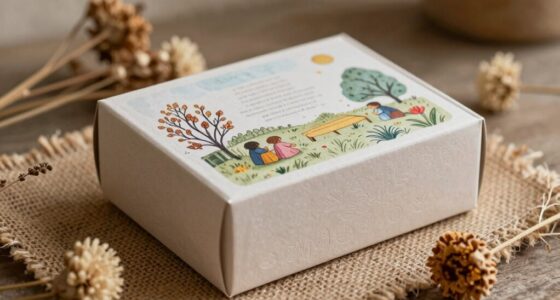
The overlooked rule behind better DTC packaging is seamlessly combining storytelling with sustainability. When you craft packaging that not only shares your brand’s values and origin story but also uses eco-friendly materials, you create a stronger emotional connection. Customers appreciate authenticity and responsibility, making them more loyal. This approach sets your brand apart and builds trust. If you keep going, you’ll discover how to master this powerful combination for unforgettable packaging.

Get art and craft supplies delivered free with Prime
- Fast, free delivery on millions of items
- Prime Video, Amazon Music and more included
- Member-only deals all year
Key Takeaways
- Prioritize storytelling on packaging to emotionally connect and foster customer loyalty.
- Use sustainable materials to align with consumer values and demonstrate brand responsibility.
- Integrate authentic narratives that reinforce brand identity and build trust.
- Innovate with eco-friendly packaging solutions to enhance customer experience and brand perception.
- Clearly communicate sustainability efforts to differentiate your brand and meet consumer expectations.

Ever wondered what truly makes direct-to-consumer (DTC) packaging stand out? It’s not just about eye-catching designs or clever unboxing experiences. The real secret lies in how well your packaging tells your brand story and aligns with modern values like material sustainability. When you focus on these elements, your packaging becomes more than just a container; it transforms into a powerful communication tool that builds trust and loyalty.
Your packaging should serve as an extension of your brand. Think about how brand storytelling weaves your values, mission, and personality into every detail. When your packaging reflects your brand’s story—perhaps through unique graphics, compelling messaging, or thoughtful design—you create an emotional connection with your customers. They don’t just see a box; they see a narrative they want to be part of. This connection encourages repeat business and transforms casual buyers into brand advocates. For example, incorporating storytelling elements like origin stories or customer testimonials on your packaging can make a tangible difference in how your brand is perceived. Additionally, understanding consumer expectations related to sustainability can guide your packaging choices to meet evolving demands. Incorporating innovative packaging solutions can also enhance both sustainability and customer experience. Considering options like sustainable materials such as biodegradable plastics, recycled paper, or compostable fillers can further demonstrate your commitment to the environment. Being aware of material innovations can help you stay ahead of trends and appeal to eco-conscious consumers.
Your packaging tells a story that builds emotional connections and turns customers into loyal advocates.
At the same time, material sustainability isn’t just a buzzword; it’s a necessity. Consumers today are more conscious than ever about the environmental impact of their purchases. They want brands that prioritize eco-friendly materials and responsible manufacturing practices. When you choose sustainable materials—such as biodegradable plastics, recycled paper, or compostable fillers—you demonstrate your commitment to the planet. This alignment with sustainability can enhance your brand image, attract eco-minded customers, and reduce waste. It’s important to communicate these efforts clearly on your packaging, so customers understand your brand’s dedication to making a positive impact.
Integrating brand storytelling with material sustainability creates a cohesive message that resonates. It shows that your brand isn’t just about selling products; it’s about values and responsibility. When your packaging narrates your brand story while being eco-conscious, you reinforce your authenticity and differentiate yourself in a crowded market. Moreover, understanding the importance of material sustainability can help you stay ahead of industry trends and meet evolving consumer expectations. Customers appreciate transparency and are more likely to support brands that reflect their own values.
In the end, the overlooked rule behind better DTC packaging isn’t just about aesthetics or functionality. It’s about crafting packaging that tells a compelling story and shows genuine care for the environment. When you do this, you don’t just deliver a product—you deliver an experience that builds loyalty and elevates your brand’s reputation.
Popular right now

KitchenAid 5.5-Qt Bowl-Lift Stand Mixer, Porcelain White (KSM55SXXX)

TCL 43-Inch 4K UHD Smart LED Roku TV (43S435, 2021 Model)

Apple AirPods Pro 3 Wireless Earbuds with Active Noise Cancellation
As an affiliate, we earn on qualifying purchases.
Frequently Asked Questions
How Does Packaging Influence Customer Loyalty?
Packaging greatly influences your customer loyalty by creating memorable experiences. Personalization trends make customers feel valued, encouraging repeat purchases. Additionally, a sensory experience—from tactile textures to appealing visuals—enhances emotional connection with your brand. When your packaging stands out and resonates emotionally, customers are more likely to develop trust and loyalty, turning one-time buyers into brand advocates who appreciate the thoughtful, engaging presentation you provide.
What Materials Are Best for Eco-Friendly DTC Packaging?
You should choose eco-friendly DTC packaging made from biodegradable materials and recycled content. Biodegradable options, like plant-based plastics or compostable materials, break down naturally, reducing landfill waste. Incorporate recycled content—such as recycled paper or cardboard—to lower your environmental impact further. These materials not only appeal to eco-conscious customers but also align with sustainable practices, helping your brand stand out while supporting a healthier planet.
How Can Packaging Reduce Product Damage During Shipping?
Did you know that nearly 30% of shipments arrive damaged? To prevent this, you should focus on protective cushioning that absorbs shocks and impacts during transit. Additionally, secure sealing keeps the package tightly shut, preventing movement and accidental openings. By combining these strategies, you profoundly reduce product damage, ensuring your customers receive their orders in perfect condition. This thoughtful approach boosts satisfaction and builds trust in your brand.
What Are Cost-Effective Strategies for Premium Packaging?
You can adopt innovative design ideas like lightweight materials and modular packaging to achieve premium packaging that’s cost-effective. Using sustainable yet durable materials reduces both costs and environmental impact, while designing custom-fit inserts minimizes waste and damage risks. Additionally, streamlining your packaging process with efficient workflows cuts labor costs. These strategies help you deliver a high-end feel without overspending, ultimately boosting customer satisfaction and brand loyalty.
How Does Packaging Impact Brand Perception?
Think of your packaging as a window into your brand’s soul. When it’s visually striking, it instantly builds consumer trust and shapes perception. Strong visual branding on your packaging communicates quality and professionalism, making customers feel confident in their purchase. Every detail, from color to design, influences how they view your brand, turning a simple box into a symbol of reliability and prestige that resonates long after the unboxing.
Conclusion
Remember, great DTC packaging isn’t just about looks; it’s about creating an experience that stands out like a lighthouse in a storm. When you focus on the overlooked rule—simplicity and purpose—you craft packaging that speaks directly to your customers’ needs. Keep it clear, keep it meaningful, and watch your brand shine brighter than ever. Like a beacon guiding ships home, your packaging can draw customers in and keep them coming back for more.