You’ll notice 3D illustration trends shifting towards bold palettes, dynamic animations, and innovative perspectives like isometric design that blend simplicity with detail. Artists are experimenting with vibrant colors, smooth motion, and hybrid styles to create immersive, emotional stories. Emerging tech such as real-time rendering and AR are pushing creative boundaries even further. If you continue exploring, you’ll discover how these trends are shaping the future of visual storytelling and design.
Key Takeaways
- Isometric illustrations remain popular for their clarity, with blending organic elements for modern, detailed scenes.
- Bold color palettes and subtle gradients enhance emotional impact and visual appeal in 3D art.
- Advanced animation techniques like motion blur and parallax add realism and interactivity to static visuals.
- Emerging trends include integrating augmented reality and real-time rendering for immersive storytelling.
- Hybrid styles combining isometric with organic, lush, or fantastical elements are expanding creative possibilities.
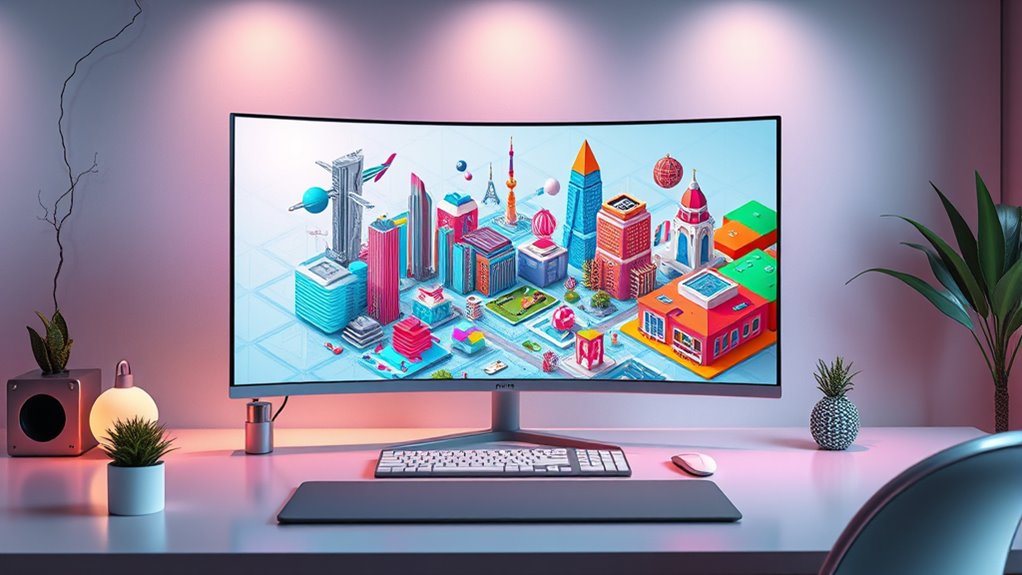
Have you noticed how 3D illustrations are transforming visual storytelling today? This vibrant shift isn’t just about adding depth; it’s about creating immersive experiences that captivate audiences and communicate messages more effectively. One of the key elements driving this evolution is the innovative use of color palettes. Artists now experiment with bold, vibrant hues alongside subtle gradients, crafting visuals that pop and evoke emotion. These carefully chosen color schemes help set the tone, guide viewers’ focus, and enhance the overall aesthetic appeal. Whether it’s pastel shades that evoke calmness or high-contrast combinations that demand attention, mastering color palettes allows you to tell stories more vividly in 3D space.
Mastering bold color palettes enhances storytelling and creates immersive, emotionally engaging 3D visuals.
Alongside color, animation techniques have become pivotal in elevating 3D illustrations. The integration of dynamic movements, transitions, and effects breathes life into static images, transforming them into interactive experiences. You might notice how smooth, fluid animations help emphasize particular elements or guide your eye through a visual narrative. Techniques like keyframe animation, motion blur, and parallax effects add depth and realism, making scenes feel more tangible. These methods aren’t just for entertainment; they’re instrumental in marketing, product visualization, and storytelling, helping you communicate complex ideas effortlessly. Additionally, understanding retail hours can be crucial when planning in-person presentations or client meetings to ensure timely access to resources or services.
When exploring isometric illustrations, you step into a world where perspective and spatial relationships are meticulously crafted. Isometric art offers a unique blend of simplicity and complexity, allowing you to create detailed scenes without the distortion of traditional perspective. It’s a style that’s become popular for infographics, UI design, and game development because it provides a clear view of objects and environments while maintaining a modern, sleek look. But the trend doesn’t end there—artists are pushing beyond traditional isometric styles, blending them with more organic forms, lush environments, and fantastical elements. This expansion into more dynamic and imaginative domains lets you craft visuals that are both structured and expressive.
As you embrace these trends, consider how the combination of bold color palettes, cutting-edge animation techniques, and innovative perspectives can set your work apart. These elements aren’t just aesthetic choices—they’re tools that enable you to tell more compelling stories, evoke emotions, and engage your audience more deeply. Moving beyond simple isometric designs, you’re encouraged to experiment with hybrid styles and new technologies, such as real-time rendering and augmented reality, to push the boundaries of what’s possible in 3D illustration. The future of 3D storytelling is vibrant and full of potential, waiting for creators like you to explore its endless possibilities.
Top picks for "illustration trend isometric"
Open Amazon search results for this keyword.
As an affiliate, we earn on qualifying purchases.
Frequently Asked Questions
How Do I Choose the Right 3D Illustration Style for My Project?
To choose the right 3D illustration style, start with your project’s branding considerations—think about your target audience and the message you want to send. Your visual style selection should align with your brand identity, whether it’s modern, playful, or professional. Consider the complexity and mood you aim for, and select a style that enhances your content without overwhelming it. Always aim for consistency to create a cohesive visual experience.
What Software Tools Are Best for Creating Isometric Illustrations?
Creating isometric illustrations is like building a detailed cityscape, and you’ll want tools that make this easy. Adobe Illustrator is perfect for vector editing, giving you precise control over your designs. For rendering complex scenes, try software like Blender or Autodesk Maya—they offer powerful features to bring your illustrations to life. These tools help you craft sharp, professional isometric visuals efficiently and creatively.
How Can I Incorporate 3D Trends Into Minimalist Designs?
You can incorporate 3D trends into minimalist designs by using subtle shading and depth to create a sense of dimension without clutter. Focus on color harmony to maintain simplicity, choosing a limited palette that enhances the visual hierarchy. Use layered elements and soft shadows to add depth, guiding the viewer’s eye strategically. This approach keeps your design sleek, modern, and aligned with current 3D trends, while preserving minimalist elegance.
What Are Emerging Techniques in 3D Animation for Illustrations?
Imagine your illustrations coming alive with explosive vibrancy—today’s emerging techniques include procedural generation and augmented reality. You can create intricate, dynamic scenes effortlessly with procedural algorithms that automate complex details. Plus, integrating augmented reality lets your audience step into your art, blending digital and real worlds seamlessly. These techniques revolutionize 3D animation, making your illustrations more immersive, interactive, and visually stunning—transforming static images into mesmerizing, experiential masterpieces.
How Does 3D Illustration Impact User Engagement on Digital Platforms?
You find that 3D illustration boosts user engagement on digital platforms by enhancing visual storytelling and making content more immersive. When you use dynamic 3D visuals, you grab attention quickly, encouraging users to stay longer and interact more. Additionally, 3D illustrations strengthen brand recognition by creating memorable, distinctive visuals that resonate with your audience, fostering loyalty and increasing overall engagement.
Conclusion
As you explore the latest 3D illustration trends, remember it’s not just about mastering isometric designs but pushing beyond them. While clean, geometric forms offer clarity, adding organic elements brings warmth and complexity. So, don’t settle for just one style—embrace the contrast. It’s this blend of the structured and the spontaneous that will truly set your work apart, making your visuals both eye-catching and meaningful in a rapidly evolving digital landscape.