A strong visual identity system helps you stay consistent and recognizable across all media channels, from digital to print. By unifying your logo, colors, fonts, and imagery, you create a cohesive look that builds trust and boosts brand awareness. This consistency makes your brand easier to identify and remember, no matter where your audience encounters it. Keep exploring to discover how developing a disciplined visual identity can elevate your brand presence further.
Key Takeaways
- Applying consistent design elements like colors, fonts, and imagery ensures a unified visual language across all media.
- Using branding guidelines maintains uniformity and prevents message dilution in different formats.
- Designing a versatile logo that adapts seamlessly across various platforms preserves brand recognition.
- Consistent visual identity reinforces brand trust and loyalty among consumers.
- A cohesive system creates instant recognition, making the brand memorable and distinguishable across channels.
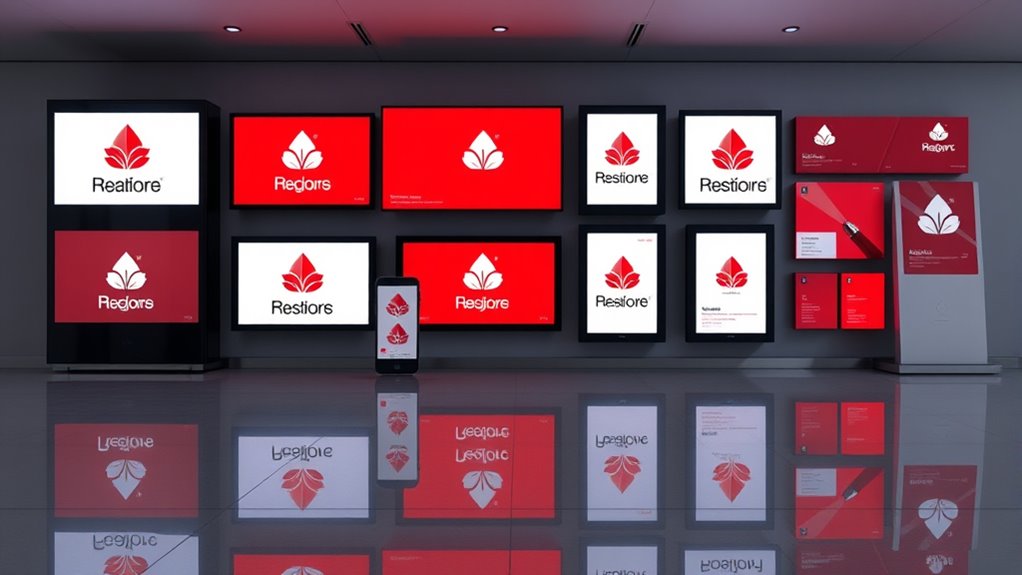
Have you ever wondered how brands become instantly recognizable? It’s often thanks to a well-crafted visual identity system that creates a cohesive and memorable presence across all media. At the heart of this system lies the logo, which plays a vital role in establishing brand recognition. When a logo demonstrates versatility, it adapts seamlessly to various formats and platforms, ensuring your brand remains consistent whether it’s on a billboard, social media profile, or a product label. Logo versatility isn’t just about making it look good everywhere; it’s about maintaining its integrity, clarity, and impact regardless of size, background, or medium. This flexibility helps your brand stay familiar and trustworthy, reinforcing recognition every time someone encounters it. Consistency across media isn’t just about having a logo that looks the same; it’s about applying design elements—colors, fonts, imagery—in ways that align with your brand’s personality and values, no matter where they appear. When your visual identity system is cohesive, your audience can quickly associate the visuals with your brand, building trust and loyalty over time. This consistency also prevents confusion, ensuring that your message remains clear and focused, whether it’s on a digital ad or a printed brochure. It’s essential that your branding guidelines specify how to use each element correctly, so no matter who creates the content, the visual language stays uniform. Think of it like a language your brand speaks; if everyone follows the same grammar and vocabulary, the message becomes stronger and more recognizable. Your visual identity system should be flexible enough to adapt to different contexts but disciplined enough to keep the core elements intact. This balance is what sustains brand recognition in a crowded marketplace. When your visual identity is managed properly, it acts as a visual shortcut for consumers—allowing them to instantly identify your brand among competitors. This immediate recognition can influence purchasing decisions and foster emotional connections. Incorporating consistent logo application across various media enhances brand visibility and trustworthiness. Remember, the goal isn’t just to look good but to communicate your brand’s essence clearly and consistently across all touchpoints. When done right, your visual identity system becomes a powerful tool that unifies your brand’s presence, making it memorable, trustworthy, and instantly recognizable—no matter where or how your audience encounters it.
logo design templates
As an affiliate, we earn on qualifying purchases.
As an affiliate, we earn on qualifying purchases.
Frequently Asked Questions
How Often Should a Visual Identity Be Updated?
You should update your visual identity every 3 to 5 years to stay current and support brand evolution. Regular design refreshes help keep your brand fresh, relevant, and aligned with market trends. Pay attention to how your audience responds and consider a rebrand if your visuals feel outdated or no longer reflect your values. Staying proactive guarantees your visual identity remains compelling and consistent across all media channels.
What Tools Are Best for Managing Brand Consistency?
Did you know 75% of consumers judge a brand’s credibility by its visual consistency? To manage brand consistency effectively, use tools like brand guidelines to set clear standards and digital asset management systems to organize and distribute assets seamlessly. These tools help guarantee your visuals stay unified across all platforms, making brand recognition stronger and maintaining a professional appearance. They’re essential for keeping your brand cohesive and impactful.
How Do I Measure the Effectiveness of a Visual Identity?
You measure the effectiveness of your visual identity by tracking brand recognition and audience perception. Use surveys and feedback to see how well your branding resonates, and analyze metrics like social media engagement and website traffic to gauge recognition. Comparing these data points over time helps you determine if your visual identity strengthens brand awareness and positively influences how your audience perceives your brand.
Can a Visual Identity Adapt to Different Cultural Contexts?
Yes, your visual identity can adapt to different cultural contexts through effective cultural adaptation and localization strategies. You should tailor colors, symbols, and messaging to resonate with local audiences while maintaining core brand elements. This approach guarantees your visual identity remains authentic and relevant across diverse markets. By actively researching cultural nuances and implementing thoughtful modifications, you strengthen brand recognition and foster trust globally.
What Are Common Pitfalls in Maintaining Visual Consistency?
Like a ship steering off course, inconsistent visual identity can drift without proper guidance. You might overlook key elements like your color palette or typography hierarchy, leading to mismatched visuals across platforms. Common pitfalls include neglecting to update assets uniformly, failing to establish clear guidelines, or ignoring cultural nuances. Stay vigilant by regularly reviewing your designs, ensuring your color choices and typography stay aligned, and keep your brand voice steady across all media.
brand style guide templates
As an affiliate, we earn on qualifying purchases.
As an affiliate, we earn on qualifying purchases.
Conclusion
By maintaining consistency across all media, your visual identity creates a strong, recognizable brand. Imagine a coffee shop chain that uses the same logo, colors, and font everywhere—from storefronts to social media—building trust and loyalty. When your brand looks unified, customers remember you and feel more connected. Keep your visual elements aligned, and watch your brand stand out effortlessly in a crowded market. Consistency truly makes your brand memorable and impactful.
color palette for branding
As an affiliate, we earn on qualifying purchases.
As an affiliate, we earn on qualifying purchases.

Custom DTF Transfers Ready to Press Personalized Iron on Photo Design Text Transfers for Tshirts Iron on Logo Decals for Clothing Make Your Own Heat Transfers Patches
CREATE CUSTOM APPAREL WITH YOUR OWN DESIGN- Turn your artwork into custom Tshirts, sweatshirts, aprons, bodysuits, tank tops,…
As an affiliate, we earn on qualifying purchases.
As an affiliate, we earn on qualifying purchases.