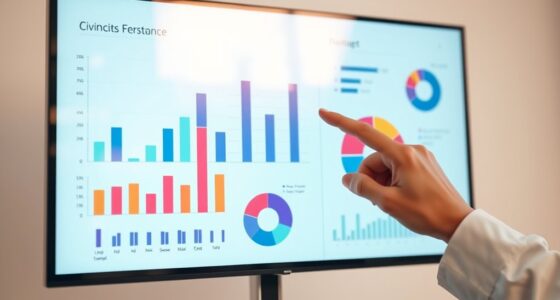

AI-powered data storytelling automates the process of analyzing and visualizing complex data, turning raw numbers into engaging narratives that help you make faster, better decisions. It combines advanced analytics and visualization tools while human oversight guarantees insights stay accurate and relevant to your context. This approach enhances clarity and actionability, allowing you to present compelling stories that inspire confidence and drive strategy. Keep exploring to discover how this innovative technology can transform your data insights even further.
Key Takeaways
- AI automates data analysis, visualization, and predictive modeling to generate insights efficiently.
- Human oversight ensures insights are accurate, contextually relevant, and ethically sound.
- AI-driven storytelling simplifies complex data into engaging visual narratives for better decision-making.
- Combining AI with human validation enhances the quality and strategic value of data insights.
- Automated insights support faster, data-backed decisions and more persuasive communication.

Have you ever wondered how complex data can be transformed into compelling stories that drive decisions? That’s the power of ai-powered data storytelling. By leveraging advanced tools like data visualization and predictive analytics, you can turn raw numbers into clear, engaging narratives that highlight key insights. Data visualization allows you to present intricate information visually, making patterns and trends instantly recognizable. Instead of sifting through endless spreadsheets, you can see the story the data wants to tell through graphs, charts, and interactive dashboards. This makes it easier for stakeholders to grasp critical points quickly and act confidently.
Transform complex data into engaging visuals that reveal patterns and insights instantly.
Predictive analytics takes this a step further by forecasting future outcomes based on historical data. Imagine being able to anticipate customer behaviors, market shifts, or operational bottlenecks before they happen. When integrated into data storytelling, predictive analytics provides a forward-looking perspective that adds depth to your narrative. It transforms static reports into dynamic insights, making your storytelling not just descriptive but also prescriptive. This means you’re not just showing what has happened; you’re guiding decision-makers toward what could happen next and how to prepare for it.
Automating these processes with AI means you’re not stuck manually creating complex visualizations or running predictive models from scratch. Instead, AI tools can analyze vast datasets rapidly, identify the most relevant patterns, and generate visual stories that are easy to understand. This automation reduces time and human error, allowing you to focus on refining your message and making strategic decisions. Additionally, integrating camping resources and guides can help you visualize data related to outdoor activities, locations, and user preferences for a more engaging storytelling experience. However, while AI can handle the heavy lifting, human oversight remains essential. Your expertise ensures that the insights align with business context, that visualizations accurately represent the data, and that the narrative remains meaningful and ethical.
Using AI-powered data storytelling, you can craft compelling presentations that resonate with your audience. Whether it’s a board meeting or a client pitch, the combination of data visualization and predictive analytics creates a persuasive story backed by data. It simplifies complex insights, making them accessible and actionable. As you harness these tools, remember that the goal isn’t just to inform but to inspire action. With human oversight guiding the process, AI becomes a powerful partner that enhances your ability to communicate data-driven stories effectively. Ultimately, this synergy transforms raw data into strategic advantage, helping your organization move confidently into the future.
Top picks for "power data storytell"
Open Amazon search results for this keyword.
As an affiliate, we earn on qualifying purchases.
Frequently Asked Questions
How Does AI Ensure Data Privacy During Storytelling?
You can trust AI to safeguard your data privacy by implementing data encryption, which secures information during transmission and storage. Access control measures ensure only authorized individuals can view sensitive data. AI systems monitor and enforce these protections continuously, preventing unauthorized access and leaks. This way, your data remains private while still allowing insightful storytelling, giving you peace of mind in sharing valuable insights without compromising security.
Can AI Detect Biases in Data Narratives Automatically?
Yes, AI can detect biases in data narratives automatically, but it’s not foolproof. With advanced bias detection algorithms, it scans for inconsistencies and unfair patterns, ensuring narrative fairness. Yet, the real challenge lies in nuance—some biases hide deep within data, requiring human insight for confirmation. So, while AI acts as a vigilant first line, your oversight remains essential to catch what algorithms might miss.
What Skills Are Needed to Oversee AI Data Storytelling Tools?
You need strong skills in data visualization and narrative interpretation to effectively oversee AI data storytelling tools. You should understand how to translate complex data into clear visuals and compelling stories, ensuring insights are accurate and meaningful. Familiarity with AI capabilities and limitations helps you spot biases or errors. Critical thinking and attention to detail are essential for guiding the AI, verifying outputs, and ensuring the storytelling aligns with your data’s true story.
How Customizable Are Ai-Generated Data Stories for Different Industries?
You can customize AI-generated data stories extensively for different industries, ensuring industry-specific customization and storytelling flexibility. You choose the level of detail, the tone, and the focus areas to match your industry’s needs. You adapt visuals, language, and insights to resonate with your audience, making each story relevant and impactful. This adaptability helps you communicate complex data clearly, engage stakeholders effectively, and drive informed decision-making across diverse sectors.
What Are the Limitations of Current AI in Understanding Complex Data?
Current AI struggles with understanding complex data because it relies heavily on natural language processing, which can miss nuances and context. When data complexity increases, AI might oversimplify or misinterpret patterns, leading to inaccurate insights. You need to be aware that AI tools may lack deep contextual understanding, so human oversight is vital to guarantee accurate interpretation, especially when dealing with intricate or multifaceted data sets.
Conclusion
As you embrace AI-powered data storytelling, you open doors to insights that might have once remained out of reach. While automation offers remarkable efficiency, human oversight gently guides the narrative, ensuring clarity and authenticity. Together, these elements create a harmonious balance, allowing you to share stories that resonate deeply. In this evolving landscape, trusting both technology and your judgment will help you craft compelling, meaningful insights that inspire confidence and curiosity.