
TL;DR

Get art and craft supplies delivered free with Prime
- Fast, free delivery on millions of items
- Prime Video, Amazon Music and more included
- Member-only deals all year
Hyperallergic published an interview with sculptor, photographer and video artist Paul Pfeiffer about his art and the influence of mass culture. The report highlights his woodcarved portraits of Justin Bieber in the likeness of Christ on the cross, his imagined million-seat stadiums and his interest in collective rituals. It does not identify a new exhibition or provide dates for the works discussed.
Hyperallergic has published an interview with sculptor, photographer and video artist Paul Pfeiffer, focusing on how his work draws on celebrity, spectacle and the shared rituals of mass culture. The report discusses his woodcarved portraits of pop star Justin Bieber in the likeness of Christ on the cross and his imagined million-seat stadiums, but does not announce a new exhibition or specify when the works were made.
The interview presents Pfeiffer’s work through the collision of religious imagery and contemporary celebrity. Its opening describes Bieber as “no saint” before adding that, in Pfeiffer’s art, he “kind of is”: the artist has made woodcarved portraits of the singer in the likeness of Christ on the cross. The framing points to the tension between devotional images and the fame surrounding a global pop star, rather than treating the sculptures as straightforward portraits.
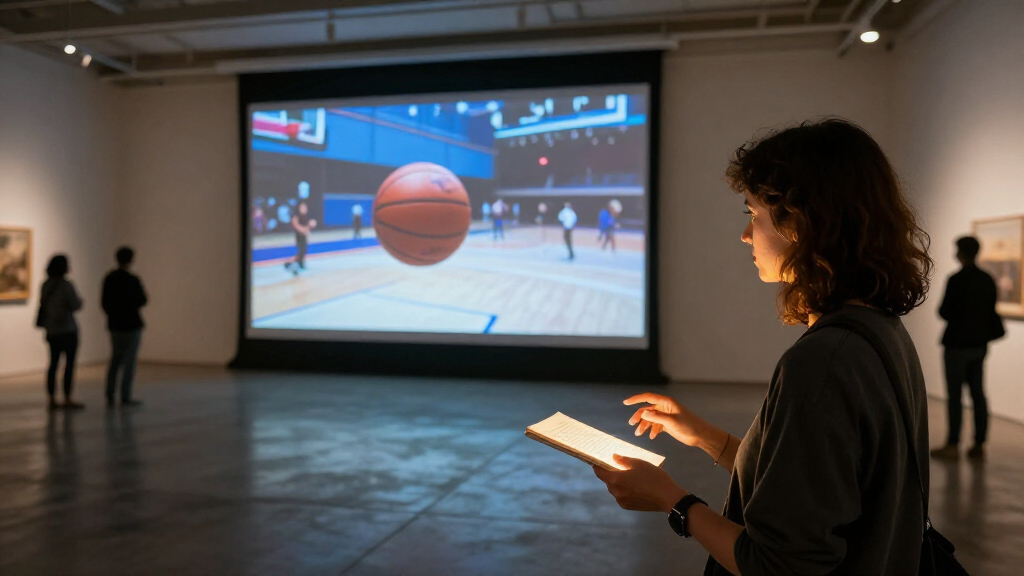
The discussion also turns to Pfeiffer’s imagined million-seat stadiums and to the rituals of mass culture. The report characterizes him as an artist whose subjects include the collective experiences built around celebrity and spectacle. It does not give further details about the stadium works, including their dates, materials or whether they depict specific real venues.
In the interview, Pfeiffer says, “Emotion itself becomes the architecture of soft power.” The remark offers a concise account of the report’s focus: how feeling and attention can be organized through popular imagery and shared cultural events. The source supplies no additional explanation from Pfeiffer about the phrase, so its application to individual works should be read as an interpretation of the discussion, not a separate claim about their effects.
The interview matters because it connects popular entertainment and religious visual language through a specific example: Bieber portrayed in a Christ-like form. That juxtaposition gives readers a way to understand Pfeiffer’s interest in how fame can acquire symbolic weight and how audiences gather around public figures. The article raises those questions without claiming that celebrity and religious devotion are equivalent.
The stadiums extend the discussion from an individual star to mass audiences. A million-seat arena, as described in the report, suggests a scale at which a performance becomes a collective event. Pfeiffer’s comment about emotion and “soft power” frames feeling as part of that cultural structure. The source does not quantify an audience or establish a measurable effect; its importance lies in the ideas and images the interview brings together.
Popular right now

Bose QuietComfort True Wireless Earbuds with Active Noise Cancellation, Black

Apple AirPods Pro 3 Wireless Earbuds with Active Noise Cancellation

KitchenAid Artisan Series 5-Quart Tilt-Head Stand Mixer, Dried Rose (KSM150PS)
As an affiliate, we earn on qualifying purchases.
The Interview’s Art-World Setting
The material appears in a Hyperallergic daily newsletter under the title “The Gospel According to Paul Pfeiffer.” The newsletter’s introduction identifies Pfeiffer as a sculptor and video artist; the interview description also names photography among his fields. The excerpt situates his comments alongside other coverage, including an essay by associate editor Rebecca Schiffman on Nathan Fielder and the documentary You Can See Everything.
That adjacent item is separate from Pfeiffer’s interview. Schiffman asks whether Fielder is a documentarian or “a performance artist playing one,” after describing an extended moment of eye contact between Fielder and Elizabeth Holmes. The newsletter also lists exhibition news and other cultural links. None of those items is presented as a development about Pfeiffer, and the supplied excerpt gives no broader biography, exhibition history or timeline for his works.
““Emotion itself becomes the architecture of soft power.””
— Paul Pfeiffer, in the interview described by Hyperallergic
Details the Report Leaves Open
The supplied report does not state when the interview was published, when Pfeiffer made the Bieber portraits, or whether they belong to a current or forthcoming exhibition. It also offers no titles, dimensions, locations or further descriptions for the sculptures and imagined stadiums. The source establishes that these subjects are discussed, but not the full scope of Pfeiffer’s comments or the intended interpretation of each work.
The excerpt does not report a new commission, museum acquisition, opening date or other concrete announcement. It is therefore unclear whether readers should expect a related exhibition or follow-up event. Pfeiffer’s “soft power” remark is quoted, but the material does not define the term or provide evidence for a particular social or political impact.
No Further Event Announced
The immediate development is the publication of the Hyperallergic interview. The source material does not name a next milestone for Pfeiffer, such as an exhibition opening, public program or new release. Readers seeking details about the works, their dates or where they can be seen would need further information from the full interview, the artist or a presenting institution.
For now, the report’s next step for readers is interpretive rather than event-driven: it invites attention to how Pfeiffer links celebrity imagery, religious form and mass participation. No future schedule or additional statement is confirmed in the supplied material.
Key Questions
What is the news about Paul Pfeiffer?
Hyperallergic published an interview in which Pfeiffer discusses his art, celebrity and mass culture, including Bieber portraits and imagined stadiums.
How does Justin Bieber appear in Pfeiffer’s work?
The report describes Pfeiffer’s woodcarved portraits of Bieber in the likeness of Christ on the cross. It does not provide the works’ titles, dates or exhibition details.
What does Pfeiffer say about emotion?
He is quoted as saying, “Emotion itself becomes the architecture of soft power.” The supplied excerpt does not include a longer explanation of the phrase.
Are the works part of a newly announced exhibition?
No exhibition is announced in the supplied report. It does not say when or where the works can be seen.
What remains unknown about the interview?
The excerpt does not provide a publication date, the dates or locations of the works, or details about any future Pfeiffer events. Those points remain unconfirmed in the source material.
Source: hyperallergic.com