
TL;DR

Get art and craft supplies delivered free with Prime
- Fast, free delivery on millions of items
- Prime Video, Amazon Music and more included
- Member-only deals all year
Hyperallergic published “Diaries of a Primitive Man,” an essay by editor-in-chief Hakim Bishara recounting an October day in Manhattan through encounters with museums, Indigenous history and political commentary. The source does not give a publication date or establish that the events described occurred on the same day as publication; the piece is personal reflection, not a report announcing a new policy or museum decision.
Hyperallergic has published “Diaries of a Primitive Man,” a first-person essay by editor-in-chief Hakim Bishara about a day in Manhattan shaped by encounters with Indigenous history, museum displays and debates over privilege. The piece records Bishara’s reactions to events and objects he describes; it does not announce a new museum policy or independently resolve questions about the provenance of the Indigenous items he saw.
Bishara opens with a scene outside the Metropolitan Museum of Art on an October afternoon, describing visitors on the museum steps, street vendors and traffic along Fifth Avenue. He connects the setting to Indigenous Peoples’ Day, writing that the Lenape were absent from the public scene even though, in his account, the land had been taken from them. That framing is his reflection, not a statement from the museum.
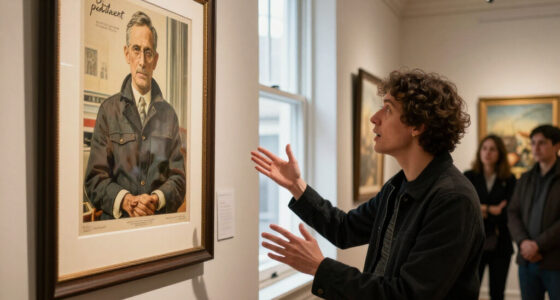
Inside the Met, Bishara says he visited a crowded exhibition about Lee Krasner and Jackson Pollock, which he characterizes as being about both their artistic influence on one another and their marriage. He also recounts an exchange with a woman who accused him of cutting in line. According to his account, she first referred to “White privilege” and then changed her description to “male privilege” after he turned around. The essay provides no further information about the woman or the circumstances of the encounter.
Other moments include Bishara listening to a Democracy Now discussion of settler colonialism and seeing a Jeep with a “primitive man” sticker. He writes that he initially recoiled, then admired the driver’s apparent candor. Later, at the Brooklyn Museum, he paused at a display of Indigenous Kachina dolls. Bishara says their maker and route into the collection were not clear to him, and notes that the display was in the museum’s Center for Feminist Art. He closes by describing himself as mentally exhausted and wishing to be free of ideas and opinions.
A Personal Lens on Museum Displays
The essay matters as a record of how one editor interprets public space and museum collections alongside contemporary debates about Indigenous presence and colonial history. Rather than making a formal allegation about a particular institution, Bishara uses a sequence of observations to show how those issues informed his experience of a day in New York.
Its most concrete museum-related question concerns the Kachina dolls at the Brooklyn Museum: Bishara says he did not know who made them or how they arrived there. That uncertainty points to a subject readers may want clarified, but the excerpt does not provide collection records, a museum response or evidence about the objects’ acquisition. The distinction matters: the essay raises a question without supplying enough information to settle it.
The title’s reference to “primitive man” also reflects the essay’s tension between a label on a vehicle and Bishara’s own wish to escape the burdens of interpretation. Readers should understand the piece as personal commentary, not a reported investigation establishing new facts about the museums or their holdings.
Popular right now

Ninja CREAMi Scoop & Swirl 13-in-1 Ice Cream and Soft Serve Maker, NC701

Vitamix VX1 Professional-Grade Blender, 64 oz, Black

KitchenAid Artisan 5-Quart Tilt-Head Stand Mixer, Blue Velvet
As an affiliate, we earn on qualifying purchases.
The Column’s Other Art Coverage
The supplied Hyperallergic page places Bishara’s essay alongside other arts coverage, including commentary on Roy Lichtenstein and reviews of books about John Berger and Vermeer. It also lists institutional news and arts announcements. Those adjacent items are separate from “Diaries of a Primitive Man” and do not establish a broader news event connected to the essay.
Within the essay, the relevant sequence is a visit to the Met’s Krasner-Pollock exhibition followed by a stop at the Brooklyn Museum. Bishara situates both experiences against Indigenous Peoples’ Day and a conversation about settler colonialism. The excerpt names the museums and describes what Bishara says he saw, but it supplies no exhibition dates, curatorial statements or collection documentation.
The piece is written in the first person and depends on the author’s reported impressions and recollections. Its descriptions of the line exchange, the Jeep sticker and his response to the dolls are attributed to Bishara’s account; they are not independently corroborated in the provided material.
““What White privilege? Look at me.””
— Hakim Bishara, in “Diaries of a Primitive Man”
What the Essay Does Not Establish
The supplied source does not specify when the essay was published, beyond describing an October day. It also does not identify the year of the events or confirm whether the visits and encounters occurred on one actual date, rather than being presented as a literary account of a day.
For the Brooklyn Museum display, the essay says Bishara did not know who made the Kachina dolls or how they reached the museum. The excerpt offers no provenance records, acquisition history, tribal consultation details or comment from the museum. It therefore cannot establish that the museum lacks this information or that the objects were acquired improperly.
The line exchange and the Jeep sticker are likewise reported through Bishara’s narration alone. The source provides no response from the other person or the vehicle’s driver. The political references in the essay are part of its framing; the supplied material does not provide additional details to verify or expand on them.
Further Records and Publication Details
The supplied material does not announce a follow-up, response from either museum or a planned investigation. Readers seeking more information about the dolls would need to consult Brooklyn Museum collection records or ask the museum about the objects’ makers, acquisition history and current interpretation. The source excerpt does not indicate whether such records or responses have been published.
For the essay’s publication date and any editorial framing, the original Hyperallergic page is the relevant source; the provided text does not include a date. Until further documentation is available, the account should be read as Bishara’s personal reflection, with the provenance question and the details of the encounters remaining unverified in the supplied material.
Key Questions
What is “Diaries of a Primitive Man”?
It is a first-person essay by Hyperallergic editor-in-chief Hakim Bishara recounting a day in Manhattan and reflecting on Indigenous history, museums and privilege.
Which museums does Bishara describe visiting?
Bishara writes about visiting the Metropolitan Museum of Art, where he describes a Lee Krasner and Jackson Pollock exhibition, and the Brooklyn Museum, where he saw a display of Indigenous Kachina dolls.
Does the source explain who made the Kachina dolls or how the museum acquired them?
No. Bishara says he did not know who made the dolls or how they got to the museum. The supplied excerpt includes no provenance documentation or museum response.
When was the essay published?
The supplied source does not give a publication date. It describes the events as taking place on an October afternoon but does not specify the year.
Is the piece an investigation into the museums?
No. The text is presented as personal reflection, not a reported investigation. Its observations and the unresolved question about the dolls are not independently verified in the supplied material.
Source: rss