
TL;DR
Photographer Cy Kuckenbaker’s short film “Everything Twice” connects his discovery that he was born with a rare disease to a slow, handmade analog photography practice. The project uses West Coast landscapes and homemade cameras to reflect on disability, disconnection and self-discovery, according to Colossal’s report.
Photographer Cy Kuckenbaker’s short film “Everything Twice” pairs his account of learning he was born with a rare disease with a slow, handmade analog photography process. Reported by Colossal in October 2026, the work connects a personal medical discovery to images of West Coast landscapes, reflecting on disability, disconnection and how people orient themselves in the world.

Get art and craft supplies delivered free with Prime
- Fast, free delivery on millions of items
- Prime Video, Amazon Music and more included
- Member-only deals all year
Kuckenbaker said he had noticed since childhood that one of his eyes drooped. He initially connected the feature to a snowboarding accident, but doctors dismissed that explanation, according to Colossal. After many tests and years of uncertainty, he learned he had been born with a rare disease. The source does not name the condition or provide further medical details.
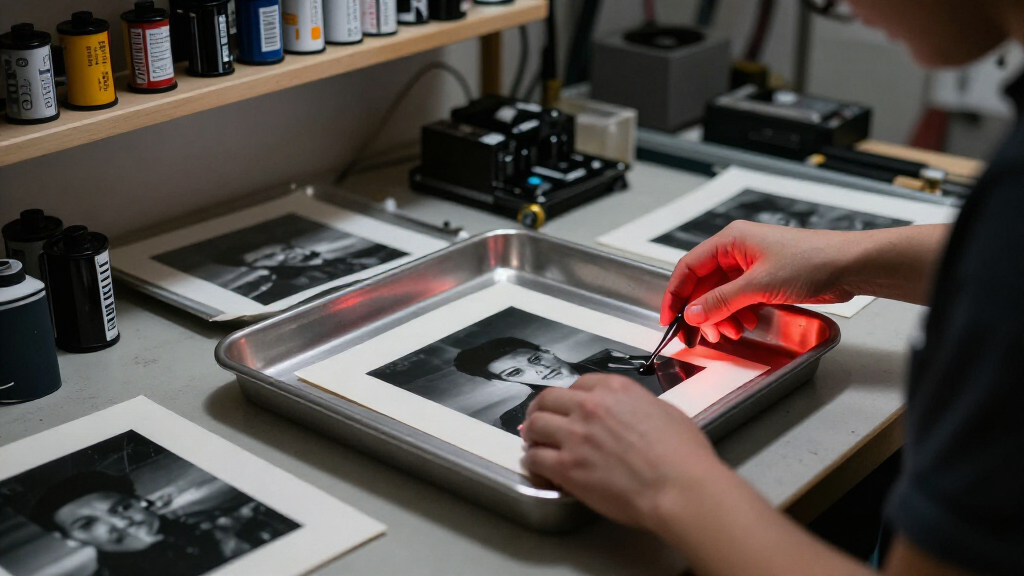
The film sets this history alongside a photographic practice Kuckenbaker began while trying to address burnout. He made cameras from cardboard boxes and drugstore magnifying glasses, then used them to photograph a range of West Coast landscapes and sights. The project’s handmade equipment and labor-intensive process give the film a material counterpart to the extended process of trying to understand his condition.
Colossal describes “Everything Twice” as a quiet meditation on disability and on the ways people orient themselves. The report characterizes it as both self-discovery and contemplation on disconnection and loss. Those descriptions are the publication’s account of the film; the source material does not include a longer statement from Kuckenbaker explaining each image or the film’s intended audience.
A Personal Story Through Handmade Images
The film links two processes that unfold over time: making photographs with homemade analog cameras and piecing together an explanation for a physical difference that Kuckenbaker had noticed since childhood. That pairing gives the project a way to approach disability through lived experience rather than presenting the diagnosis as an isolated medical fact.
For viewers, the account also shows how an artistic method can shape the telling of a personal story. The slow, labor-intensive photography was connected to Kuckenbaker’s effort to address burnout, while the images and diagnosis together form a reflection on perception and connection. The available report does not establish a broader medical or social claim; its significance lies in this specific combination of autobiography and visual process.
Popular right now

Vitamix 5200 Professional-Grade Blender, 64 oz. Container, Black

Vitamix VX1 Professional-Grade Blender, 64 oz, Black

KitchenAid Classic Series 4.5-Quart Tilt-Head Stand Mixer, Onyx Black
As an affiliate, we earn on qualifying purchases.
From Childhood Observation to Diagnosis
Kuckenbaker’s account, as reported by Colossal, begins with an observation he had made since childhood: one eye drooped. He thought a snowboarding accident might explain it, but doctors rejected that theory. The report says it took many tests and many years before he learned he was born with a rare disease.
Separately, Kuckenbaker developed the slow photographic process as a response to burnout. Colossal says he built cameras using cardboard boxes and drugstore magnifying glasses and photographed West Coast locations. The source does not give dates for the diagnosis, the photography, or the film’s production, so their precise timeline and how the projects developed alongside one another remain unspecified.
“He noticed since childhood that one of his eyes drooped.”
— Cy Kuckenbaker, as described in Colossal’s report
Medical and Release Details Missing
The available report does not name the rare disease, describe its symptoms beyond the eye difference, or explain what tests Kuckenbaker underwent. It also does not say when he received the diagnosis or provide medical documentation, so those details cannot be independently assessed from the supplied material.
The source does not specify when “Everything Twice” was released, where it can be watched, or whether the film is part of a larger body of work. It offers a brief description rather than a full account from Kuckenbaker, leaving his own detailed explanation of the project’s imagery and themes unavailable.
Further Film Details Await
The source provides no announced screenings, distribution plans, follow-up projects or additional reporting dates. Readers seeking to view the film or learn more about Kuckenbaker’s account will need to look for updates from the photographer or the publication. Any further medical information should be attributed to Kuckenbaker or an appropriate medical source rather than inferred from the film description.
Key Questions
What is “Everything Twice” about?
It is a short film by Cy Kuckenbaker that pairs his experience learning he was born with a rare disease with an analog photography practice, according to Colossal.
What disease does Kuckenbaker have?
The supplied report does not name the rare disease or give further medical details.
How did Kuckenbaker make the photographs?
Colossal reports that he made cameras from cardboard boxes and drugstore magnifying glasses and photographed West Coast landscapes and sights.
Why did he begin using this photographic process?
The report says Kuckenbaker began the slow, labor-intensive process to combat burnout. It does not give a more detailed account of how he developed the method.
Where can viewers watch the film?
The supplied source does not state the film’s viewing or distribution details.
Source: thisiscolossal.com