TL;DR

Get art and craft supplies delivered free with Prime
- Fast, free delivery on millions of items
- Prime Video, Amazon Music and more included
- Member-only deals all year
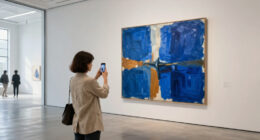
The Getty Center in Los Angeles is presenting Instante/revelación: Moments in Mexican Photography, an exhibition of work by 13 photographers spanning the late 1920s to the mid-2010s. The show traces how modernist photography engaged with Mexico’s post-Revolution identity and later everyday life, using portraits, landscapes and scenes of artists and intellectuals.
The Getty Center in Los Angeles is presenting Instante/revelación: Moments in Mexican Photography, an exhibition featuring work by 13 Mexican photographers from the late 1920s to the mid-2010s. The show traces how modernist approaches to photography helped shape Mexico’s visual culture, from images associated with post-Revolution nation-building to scenes of contemporary life.
The exhibition brings together photographs that place people, landscapes and daily life within a changing national story. Among its featured works are Lola Álvarez Bravo’s Tríptico de los martirios (1950), which uses a tree’s shadow and the anonymous subject’s exposed chest to build a carefully timed image, and Graciela Iturbide’s Mujer ángel (1979), showing a veiled woman with a portable stereo crossing a flowered field toward desert terrain. The Hyperallergic review describes both photographs as attentive to light, form and the emotional presence of their subjects.
The show also includes work by Manuel Álvarez Bravo and groups photographs around subjects that connect visual art with public life. Images of Frida Kahlo, Diego Rivera and David Alfaro Siqueiros appear alongside landscapes, botanical subjects and everyday scenes. Rather than treating photography as a record of isolated moments, the exhibition uses these varied subjects to follow shifts in how Mexico represented itself.
Its title refers to Instante y revelación (1982), a book by the late Mexican writer Octavio Paz that paired his poetry with photographs by Manuel Álvarez Bravo. Paz had encountered Álvarez Bravo’s work in the literary magazine Contemporáneos, according to the source report. That connection between writing and photography informs the exhibition’s poetic groupings.
Photography and Mexico’s Public Image
The exhibition makes a case for photography as more than a supporting record of Mexico’s political and cultural history. Its breadth—from the late 1920s through the mid-2010s—lets viewers see how photographers used framing, light and subject matter to participate in the making of a national visual culture. The show links images of well-known artists and intellectuals with anonymous subjects, natural environments and ordinary settings.
That approach matters because nation-building is not conveyed only through official symbols or political events. Photographs can shape how a country’s people and places are seen, while the choices behind an image can preserve complexity rather than reduce a subject to an emblem. The two works highlighted in the review illustrate this range: Álvarez Bravo’s image turns on a subtle movement of shadow, while Iturbide’s photograph places a woman and a portable stereo against a landscape that shifts from flowers to desert.
The exhibition’s pairing of photography with Paz’s poetry also points to the connections among visual art, literature and public memory. It gives visitors a way to consider how images move between artistic experimentation and wider accounts of Mexican identity, without claiming that a single exhibition or photographer can represent the country in full.
Popular right now

De’Longhi Classic Matte Black Espresso Machine with Milk Frother

Dyson Ball Animal Total Clean Upright Vacuum

Ninja Luxe Café Mini Plus Espresso and Drip Coffee Machine with AutoFroth, Stainless Steel, ES351
As an affiliate, we earn on qualifying purchases.
From Post-Revolution Images to Today
The Getty exhibition is organized across a long period of Mexican photography, beginning in the late 1920s and extending to the mid-2010s. Its central historical frame is the development from post-Revolution nation-building toward contemporary life. The source report does not specify the exact dates or number of galleries, so the exhibition’s chronology is best understood through that broad span and its selected works.
Manuel Álvarez Bravo provides a link between photography and Mexican literary culture in the exhibition’s framing. Paz’s 1982 book paired poems with Álvarez Bravo photographs, building on the writer’s earlier encounter with the photographer’s work in Contemporáneos. The Getty show takes that relationship as a cue for arranging images in poetic groupings rather than limiting the display to a straightforward chronology.
Works by Lola Álvarez Bravo and Graciela Iturbide offer two points within that history: 1950 and 1979. Their photographs differ in setting and subject, but the review emphasizes their shared command of light and composition. The exhibition uses such works to connect modernist visual choices with the changing subjects and concerns represented in Mexican photography.
““A keen attention to light and form, as well as emotional sensitivity toward their subjects.””
— Hyperallergic review
Exhibition Dates and Scope
The source report does not give the exhibition’s opening or closing dates, ticket information, or the full list of 13 photographers. It also does not set out the curatorial criteria for selecting the works, beyond the broad chronological span and thematic framework described in the review. Readers should not infer from the account that the show covers every major period or perspective in Mexican photography.
The claim that modernist approaches transformed Mexico’s visual culture is the exhibition’s interpretive argument as presented in the review, not a quantified finding. The material provided does not establish how the show measures that influence or how visitors and scholars have responded to it.
Visiting and Further Coverage
The source material provides no announced future milestone or follow-up event. Readers seeking practical details should check the Getty Center’s current exhibition listings for dates, admission guidance and any related programs. Further reporting could clarify the complete artist list, the exhibition’s run and the curators’ account of how its selection represents the broader history of photography in Mexico.
Key Questions
What is Instante/revelación: Moments in Mexican Photography?
It is an exhibition at the Getty Center in Los Angeles featuring work by 13 Mexican photographers from the late 1920s to the mid-2010s.
What period of Mexican photography does the exhibition cover?
The show spans from the late 1920s to the mid-2010s, tracing a broad arc from post-Revolution nation-building to contemporary life.
Which photographs are highlighted in the review?
The review discusses Lola Álvarez Bravo’s Tríptico de los martirios (1950) and Graciela Iturbide’s Mujer ángel (1979), noting their attention to light, form and their subjects.
Why is Octavio Paz connected to the exhibition?
The exhibition takes its title from Paz’s Instante y revelación (1982), which paired his poetry with photographs by Manuel Álvarez Bravo. That relationship informs the show’s poetic groupings.
When can visitors see the exhibition?
The source report does not provide the show’s opening or closing dates. Check the Getty Center’s current listings for availability and visitor information.
Source: hyperallergic.com