TL;DR

Get art and craft supplies delivered free with Prime
- Fast, free delivery on millions of items
- Prime Video, Amazon Music and more included
- Member-only deals all year
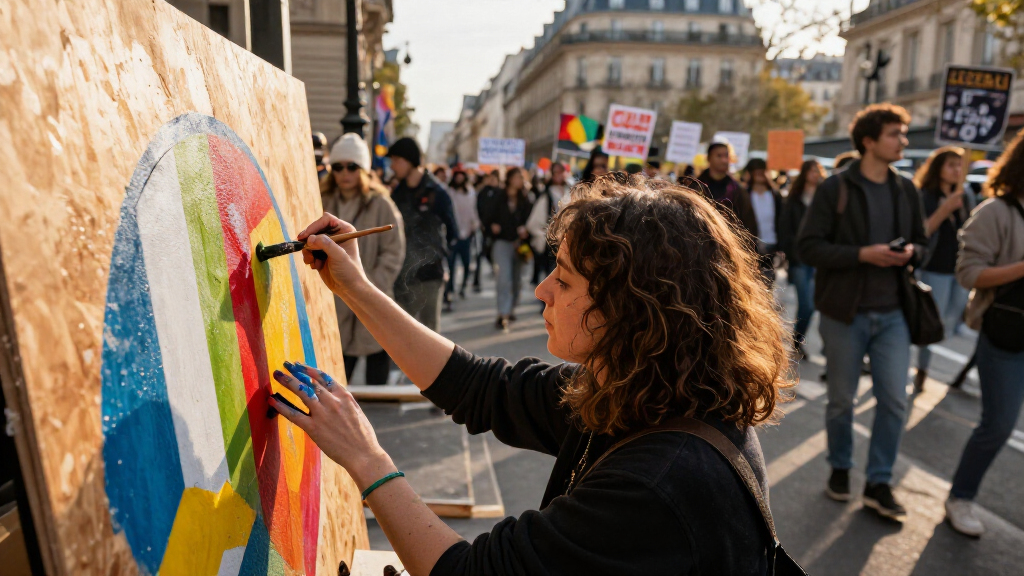
Artists, art students and cultural workers joined a large protest march at Porte d’Italie in Paris on October 24, 2026, alongside demonstrations elsewhere in France. Culture-sector groups called for a better life for artists, while the report says police arrested about 1,000 protesters that day; crowd totals and further details remain estimates or unreported.
Artists, art students and cultural workers joined France’s nationwide protests on October 24, 2026, with tens of thousands gathering at Porte d’Italie in Paris for a march supported by culture-sector groups. The demonstrations brought demands over artists’ livelihoods into a wider protest movement, while a Hyperallergic report said police arrested about 1,000 protesters that day.
The Paris march was called in part by Cultures en Lutte, a network of culture-sector coalitions, and the National Union of Visual Artists (SNAP-CGT). The groups have mobilized alongside labor confederations and student unions since the movement began in mid-September. Their stated aim, according to Hyperallergic, was to demand a better life for artists.
Hyperallergic reported that artists, cultural workers and students joined hundreds of thousands of people marching across France. It described the national turnout as estimates, reporting more than 250,000 protesters in Paris and several hundred thousand more around the country. The report gave no independent accounting method for those figures.
The demonstrations took place after a protest the previous Saturday and amid heightened security. The report said the government had announced a “massive” deployment after destruction during the October 17 protests, including Sentinelle soldiers taking over some guard duties from police and support for special units from helicopters, armored vehicles and water cannons. It also reported approximately 1,000 arrests on October 24; it did not provide details about charges or injuries.
Culture Workers Join a Wider Mobilization
The participation of artists and cultural workers connects demands about livelihoods in the arts with a broader national protest movement. The Paris march was not presented as a separate arts event: culture-sector coalitions organized alongside labor and student groups, bringing workers from cultural institutions and creative fields into the same street demonstrations.
The timing also put the protests in view during Paris art week. Hyperallergic reported that Art Basel Paris and museums including the Louvre had closed preemptively. The report does not specify the closures’ duration or explain each institution’s decision, but the combination of closures and street protests underlines how the unrest affected both public cultural activity and the people who work in the sector.
Popular right now

Ninja Foodi DZ201 8-Quart DualZone 6-in-1 Air Fryer

eufy E25 Robot Vacuum and Mop Combo with HydroJet Roller Mop

KitchenAid Classic Series 4.5-Quart Tilt-Head Stand Mixer, Onyx Black
As an affiliate, we earn on qualifying purchases.
Protests and Security Since Mid-September
The protest movement began in mid-September, according to Hyperallergic, with culture-sector coalitions, labor confederations and student unions mobilizing in parallel. Artists and students had joined earlier marches, including a large demonstration the previous Saturday. The October 24 actions therefore extended an existing movement rather than marking a standalone protest by the arts community.
The report linked the government’s security announcement to destruction during the October 17 protests. It described plans to deploy Sentinelle soldiers to relieve police of guard duties and to support special units with helicopters, armored vehicles and water cannons. These are details reported by Hyperallergic; the article did not provide a government statement or specify how those resources were deployed at each protest site on October 24.
““a better life for artists””
— Hyperallergic, describing the culture-sector groups’ demands
Crowd Counts and Arrest Details
The available report does not give a detailed breakdown of who was arrested, what charges they face, or whether anyone was injured. It also does not establish how the authorities calculated protest attendance. The reported totals — including more than 250,000 in Paris and several hundred thousand elsewhere — are estimates, not a confirmed official count.
It remains unclear whether the reported preemptive closures of Art Basel Paris and museums such as the Louvre continued beyond the protest period, or how long they affected visitors and workers. The report also does not detail the specific employment or income policies sought by the artists’ groups, beyond their call for a better life for artists.
Organizers’ Next Demands and Actions
The October 24 march adds artists and cultural workers to a movement already involving labor confederations and student unions. The report does not announce a next protest date or identify a planned government response to the culture-sector groups’ demands. Further developments to watch include organizer announcements, any official accounting of arrests, and whether cultural institutions resume normal operations.
For now, the reported march confirms continued participation across several sectors, but the movement’s next steps and the authorities’ response remain unconfirmed.
Key Questions
What happened in Paris on October 24?
Tens of thousands gathered at Porte d’Italie for a protest march. Artists, art students and cultural workers joined demonstrators as part of wider protests across France.
Which groups called for the Paris march?
The march was called in part by Cultures en Lutte, a network of culture-sector coalitions, and the National Union of Visual Artists (SNAP-CGT).
How many people protested?
Hyperallergic reported estimates of more than 250,000 protesters in Paris and several hundred thousand more around France. The report did not provide a counting method, so these should be treated as estimates.
Were there arrests?
Yes. Hyperallergic reported that police arrested approximately 1,000 protesters on October 24. The report did not say what charges they faced or provide further arrest details.
What remains unknown about the protests?
The report does not provide confirmed attendance totals, detailed arrest information, a specific policy response to artists’ demands, or the next planned protest date.
Source: rss