
TL;DR

Get art and craft supplies delivered free with Prime
- Fast, free delivery on millions of items
- Prime Video, Amazon Music and more included
- Member-only deals all year
A Hyperallergic art review considers Deana Lawson’s ongoing series Edge Control, which draws on surveillance photographs displayed in beauty supply stores. The reviewer connects Lawson’s ban on gallery photography with questions about who controls images of people accused of theft and whether making art from those images repeats their exploitation.
A Hyperallergic review of Deana Lawson’s ongoing series Edge Control raises questions about who controls images of people shown in beauty-supply-store surveillance photographs, which are often displayed to deter theft. The review also describes a no-photography rule at Lawson’s latest exhibition, connecting restrictions on visitors’ cameras with the work’s concerns about surveillance, access and the power to represent others.
According to the review, Edge Control began in 2023 and takes up the familiar practice of posting surveillance images behind beauty-supply-store counters. Such images are used to discourage theft; the reviewer describes their display as a ritual of public humiliation. Lawson’s work turns attention to the people depicted, whose identities may remain unknown to viewers even as their images circulate as accusations.
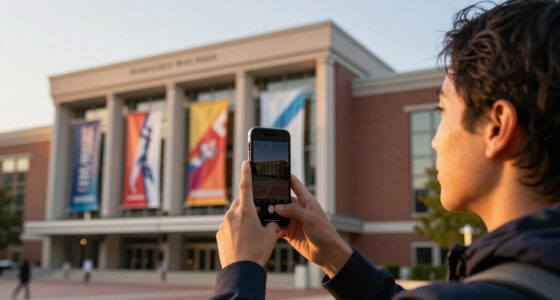
The reviewer reports that visitors to Lawson’s latest show were told not to photograph the work. An attendant distributed Gagosian-branded stickers for covering phone cameras. The critic describes noticing visitors’ reactions and reflecting on how the absence of a phone camera changed their own attention and memory. That experience is the reviewer’s account, not a stated explanation from Lawson for the gallery policy.
In an interview cited by Hyperallergic, Lawson said she feels a connection to the people pictured in the surveillance images and acknowledged the ethical tension in making photographs of them. The review’s central question is not simply who committed theft, but who has the authority to capture, display, sell or withhold images of people presented as suspects.
Who Controls the Images
The series puts the power imbalance around surveillance images in view. People depicted in store photographs may have little control over how their images are displayed, while businesses use those images to police customers and deter suspected theft. Turning such material into art can draw attention to that practice, but it also raises the possibility of reproducing the same exposure the work examines.
The gallery restriction adds a second layer: visitors are asked not to make their own copies of the photographs. The review treats that rule as part of its encounter with the show, but does not establish that Lawson intended it as a direct response to the surveillance images. Together, the subject matter and the viewing conditions prompt a question with wider relevance to photography: who gets to decide when an image can be seen, shared or withheld?
As an affiliate, we earn on qualifying purchases.
From Store Cameras to Gallery Walls
In the review’s account, the images behind Edge Control come from a recognizable retail practice: stores post surveillance photographs near counters as a warning against theft. The people shown can be presented to other customers as suspected wrongdoers, while their identities and circumstances are not necessarily known to those who see the images.
Lawson’s series, which the source describes as ongoing since 2023, brings that visual practice into an art setting. The review considers the shift in audience and control: a photograph used as a store warning becomes material for an artist’s work and is then viewed in a gallery where photography is prohibited. The source identifies a work titled Edge Control_edvc (2023–ongoing), a silver halide print.
As an affiliate, we earn on qualifying purchases.
Questions the Review Leaves Open
The source does not identify the people shown in the surveillance photographs or establish whether those depicted consented to the images being used in Lawson’s work. It also does not provide details about the images’ origins, how they were selected, or what arrangements govern their display and sale. These gaps leave the subjects’ perspectives unknown in the material provided.
The review describes the no-photography rule and its effect on the critic, but does not say whether the restriction applies to every presentation of the series or explain the gallery’s rationale. Nor does the source report a response from the people pictured, the gallery or businesses whose surveillance images may inform the work.
art gallery security camera covers
As an affiliate, we earn on qualifying purchases.
As an affiliate, we earn on qualifying purchases.
The Series and Its Reception
Edge Control is described as ongoing, but the source gives no schedule for new works or further exhibitions. It also does not report a public response from the people depicted or outline any changes to the gallery’s photography policy. The next developments, if any, will depend on future presentations of the series and what Lawson or the exhibiting gallery says about its image sources and restrictions.
For now, the review leaves readers with an ethical problem rather than a settled answer: bringing surveillance imagery into an art space can expose how such pictures are used, while also raising questions about whether the people in them have meaningful control over their own representation.
surveillance camera privacy sticker
As an affiliate, we earn on qualifying purchases.
As an affiliate, we earn on qualifying purchases.
Key Questions
What is Deana Lawson’s Edge Control?
Edge Control is an ongoing series that began in 2023. The Hyperallergic review says it addresses surveillance photographs displayed in beauty-supply stores to deter theft.
Why were visitors asked not to take photographs?
The reviewer reports that photography was prohibited at Lawson’s latest show and that an attendant handed out stickers to cover phone cameras. The source does not explain the gallery’s reason for the rule.
What ethical issue does the review raise?
The review asks who has authority over images of people shown as suspected thieves, and whether using those images in art can challenge their public exposure while also repeating it.
Are the people shown in the photographs identified?
The source does not identify them or say whether they consented to the images’ use. Their identities and perspectives remain unknown in the material provided.
Source: rss
Fall Picks
fall essentials
As an affiliate, we earn on qualifying purchases.