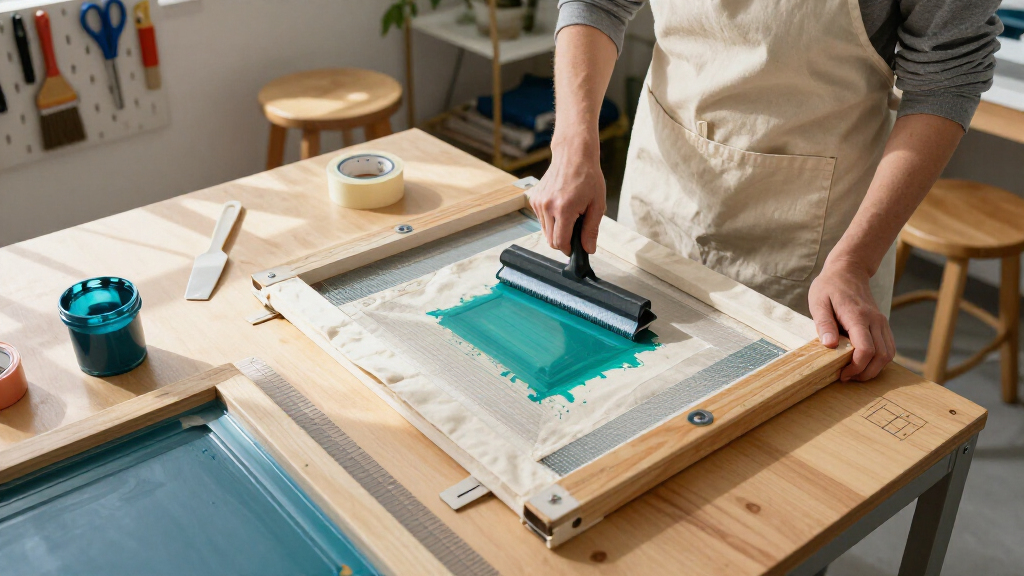

Screen printing starter kits range from simple craft bundles to complete shops-in-a-box, and the difference usually comes down to one thing: how you burn your design onto the screen. The Speedball All-in-One Screen Printing Kit with LED Exposure Lamp stands out as my best overall pick because it pairs professional-grade screen prep with Speedball’s proven inks and instructions. For tighter budgets, the Ecoofor 47-Piece Kit with 50W UV Exposure Lamp delivers a real exposure setup at a fraction of the cost, while the Caydo 66-Piece All-in-One Kit offers the most hardware for hobbyists printing at volume. The main tradeoff you’ll face is between guided simplicity (Speedball’s instructions and dialed-in chemistry) and raw piece count (Caydo and Ecoofor bundles with more frames but thinner documentation). Read on for the full breakdown of all 13 kits.

Get art and craft supplies delivered free — and shop member deals
- Fast, free delivery on millions of items
- Access to Prime Big Deal Days deals on October 6–7
- Prime Video, Amazon Music and more included
Key Takeaways
- An included exposure lamp is the single biggest quality-of-life upgrade in this category — kits with a 50W or 100W UV light (Ecoofor, Caydo, Speedball LED) let you burn detailed designs at home, while lamp-less kits like the base Speedball Craft Vinyl Kit rely on hand-cut vinyl stencils only.
- Piece count is misleading: the Caydo 66-piece and Ecoofor 63-piece kits sound far more capable than the 31-piece option, but the extras are mostly squeegees and small accessories — frame count and frame size variety matter more for real printing throughput.
- Speedball‘s two kits are the only ones with genuinely beginner-proof instructions and chemistry matched to the supplies included, which is why they rank above cheaper bundles despite lower hardware counts.
- A 100W UV lamp (Caydo 54-piece with 100W light) roughly halves exposure time versus 50W lamps, but requires steadier technique — beginners often get better results with slower 50W exposure because timing errors are less punishing.
- Every kit here prints on paper and fabric, but only kits with multiple frame sizes (Caydo 46-piece, the 31-piece with 4 frame sizes) let you move between small logos and large poster-style prints without buying extra screens.
| Speedball Beginner Screen Printing Craft Vinyl Kit |  | Easiest Entry Point for Crafters | Screen Frame Size: 10 x 14 inches | Ink Color: Black (4 oz fabric ink) | Stencils: 3 craft vinyl sheets + 3 transfer tape sheets | VIEW LATEST PRICE | See Our Full Breakdown |
| Speedball Intermediate Screen Printing Kit |  | Best for Learning Traditional Technique | Screen Size: 10 x 14 inches | Fabric Inks: 2 x 4 oz (black, red) | Emulsion: 3.3 oz Diazo photo emulsion + 1.07 g sensitizer | VIEW LATEST PRICE | See Our Full Breakdown |
| Ecoofor 47-Piece Screen Printing Kit with 50W UV Exposure Lamp |  | Best Value for Emulsion Printing | Kit Size: 47 pieces | UV Lamp: 50W | Frames: 2 screen printing frames | VIEW LATEST PRICE | See Our Full Breakdown |
| Speedball All-in-One Screen Printing Kit with LED Exposure Lamp |  | Best Overall | Screen Frame Size: 10 x 14 inches (with base) | Inks: 4 x 4 oz: black, red, white, blue | Emulsion: 3.3 oz Diazo photo emulsion + sensitizer | VIEW LATEST PRICE | See Our Full Breakdown |
| Caydo 38-Piece Screen Printing Kit |  | Best for Print Size Flexibility | Frame Sizes: 10 x 14 in, 8.2 x 12.2 in, 6.7 x 10.6 in, 5.1 x 9 in | Squeegees: 4 | Fabric Ink: 6 x 100 ml jars | VIEW LATEST PRICE | See Our Full Breakdown |
| Ecoofor 53-Piece All-in-One Screen Printing Kit |  | Best for a First Photo-Emulsion Setup | Piece count: 53 | UV lamp power: 50W | Frames: 3 wooden frames in different sizes | VIEW LATEST PRICE | See Our Full Breakdown |
| Caydo 54-Piece Screen Printing Kit with 50W LED UV Exposure Light |  | Best for Buyers Who Want Specified Ink Volumes | Piece count: 54 | Exposure light: 50W | Frame sizes: 14 × 10 in, 12 × 8 in, 10 × 6 in | VIEW LATEST PRICE | See Our Full Breakdown |
| Caydo 66 PCS All-in-One Screen Printing Kit with 50W UV Exposure Light |  | Best for Flexible Lamp Positioning | Piece count: 66 | Exposure light: 50W LED UV | Listed curing time: 3–5 minutes | VIEW LATEST PRICE | See Our Full Breakdown |
| Ecoofor 63-Piece Screen Printing Kit with 50W UV Exposure Light |  | Best for Screen Reuse and Cleanup | Piece count: 63 | UV lamp power: 50W | Frames: 3 screen-printing frames in various sizes | VIEW LATEST PRICE | See Our Full Breakdown |
| Caydo 54 PCS All-In-One Screen Printing Kit with 100W LED UV Exposure Light |  | Best for Faster, Larger-Area Exposure | Piece count: 54 | Exposure lamp: 100W LED UV | Maximum exposure size: 20 × 24 in | VIEW LATEST PRICE | See Our Full Breakdown |
| Caydo 46-Piece Screen Printing Kit with 4-Color Ink, 2 Frame Sizes, and Squeegees |  | Best for Getting Started with Exposure | Total pieces: 46 | Frame sizes: 10 × 14 in and 8 × 12 in | Ink colors: Black, white, red, and blue | VIEW LATEST PRICE | See Our Full Breakdown |
| 31-Piece Screen Printing Starter Kit with 4 Frame Sizes |  | Best for Frame Size Variety | Total pieces: 31 | Frame sizes: 10 × 14, 8.2 × 12.2, 6.7 × 10.6, and 5.1 × 9 in | Squeegee sizes: 9.4 in and 5.9 in | VIEW LATEST PRICE | See Our Full Breakdown |
| Caydo 23 Pieces Screen Printing Starter Kit with 3 Wood Frames and Mesh |  | Best for Buyers Who Already Have Ink | Total pieces: 23 | Frame material: Wood | Frame sizes: 10 × 14, 8 × 12, and 6 × 10 in | VIEW LATEST PRICE | See Our Full Breakdown |
More Details on Our Top Picks
Speedball Beginner Screen Printing Craft Vinyl Kit
This option stands out for how little it asks of a newcomer: no emulsion, no chemicals, no screen filler. Instead, you cut a stencil from vinyl using a home cutting machine and press it onto the included screen — a workflow that trades detail for simplicity. Compared with the Speedball Intermediate Kit, which walks you through emulsion and drawing fluid, this one skips the learning curve entirely and lets you print within an hour of opening the box. The 10 x 14 inch frame keeps projects small, and the single black ink means multi-color designs require repeat passes. The real catch: if you don’t already own a vinyl cutter, this kit is mostly useless, which makes it better suited to established crafters than true print beginners.
Pros:- No chemicals, emulsion, or screen fillers required
- Works with any home vinyl cutting machine
- Vinyl peels off the screen so you can reuse it for new designs
- All essential hand tools included for a first print session
Cons:- Requires a separate vinyl cutting machine that isn’t included
- Single black ink limits multi-color projects out of the box
Best for: Crafters who already own a vinyl cutting machine and want the fastest possible route to printing T-shirts and home decor
Not ideal for: Anyone without a vinyl cutter, and detail-focused printers who want photographic-quality emulsion work
- Screen Frame Size:10 x 14 inches
- Ink Color:Black (4 oz fabric ink)
- Stencils:3 craft vinyl sheets + 3 transfer tape sheets
- Tools:Red Baron squeegee, craft stick, parchment paper
- Chemicals Needed:None
- Country of Origin:USA
Our verdict“A low-commitment on-ramp for vinyl crafters who want to try screen printing without touching chemistry.”
Speedball Intermediate Screen Printing Kit
Where the Speedball Craft Vinyl Kit avoids chemistry altogether, this kit leans into it — and that’s its whole value. You get Diazo photo emulsion, screen filler, drawing fluid, and remover, which teaches the hand-drawn stencil method and the emulsion method in one package. The tri-lingual instruction booklet with troubleshooting tips does more teaching than most kits in this roundup; the Ecoofor 47-Piece Kit includes a guide but assumes more background knowledge. The tradeoff is scope: two 4 oz ink jars and a 10 x 14 inch frame mean small prints in limited colors. Compared with kits that include UV lamps, exposure here requires sourcing your own light source, so the emulsion process demands patience and some improvisation.
Pros:- Teaches both drawing-fluid and photo emulsion methods
- Detailed tri-lingual instructions with stencils and troubleshooting
- Made in the USA with established Speedball consumables
- Complete chemical workflow including emulsion remover
Cons:- Only two ink colors included
- No exposure lamp — you must supply your own light source
- Small 10 x 14 inch screen limits print size
Best for: Beginners who want to properly learn emulsion-based screen printing technique, not just make a few prints
Not ideal for: Printers who want a bundled exposure lamp and multiple ink colors from day one
- Screen Size:10 x 14 inches
- Fabric Inks:2 x 4 oz (black, red)
- Emulsion:3.3 oz Diazo photo emulsion + 1.07 g sensitizer
- Chemicals:4 oz screen filler, 4 oz drawing fluid, 4 oz remover, 4 oz Speed-Clean
- Tools:Red Baron squeegee, round brush, craft sticks
- Instructions:Tri-lingual booklet (English, Spanish, French)
- Country of Origin:USA
Our verdict“The strongest choice if your goal is learning real screen printing fundamentals rather than skipping past them.”
Ecoofor 47-Piece Screen Printing Kit with 50W UV Exposure Lamp
This pick makes the most sense for buyers who want the full emulsion workflow without buying pieces separately. The bundled 50W UV exposure lamp is the differentiator: the Speedball Intermediate Kit teaches the same technique but leaves you to source a light source, while this kit includes the lamp, transparency films, scoop coater, and emulsion together. Four blendable ink colors (black, white, red, blue) also beat Speedball’s two, giving room for color mixing on first projects. The compromises are typical of budget bundles: build quality of the two frames and squeegee is more serviceable than durable, and 47 pieces includes plenty of small consumables like cups and sticks that pad the count. Instructions exist but are thinner than Speedball’s troubleshooting depth.
Pros:- 50W UV lamp included for exposing emulsion screens at home
- Four blendable ink colors vs. the two most kits offer
- Scoop coater, transparency films, and full emulsion supplies bundled
- Step-by-step guide aimed at genuine beginners
Cons:- Component build quality is basic and may need upgrading later
- Piece count includes filler consumables like cups and mixing sticks
Best for: First-time printers who want a complete emulsion setup — lamp included — at a budget-friendly bundle price
Not ideal for: Printers who expect professional-grade frames and squeegees, or who need detailed printed documentation
- Kit Size:47 pieces
- UV Lamp:50W
- Frames:2 screen printing frames
- Ink Colors:4: black, white, red, blue
- Transparency Films:10 A4 sheets
- Emulsion:Emulsion kit and sensitizer included
- Suitable Materials:T-shirts, canvas bags, tablecloths, fabric
Our verdict“The most complete low-cost path into photo emulsion printing, as long as you accept entry-level hardware.”
Speedball All-in-One Screen Printing Kit with LED Exposure Lamp
This is the kit I’d point most beginners toward, because it combines the two things that usually get split across cheaper bundles: a complete photo emulsion workflow and a trusted brand’s component quality. The included LED exposure lamp handles screen exposure at home, and the four 4 oz fabric inks (black, red, white, blue) match the Ecoofor 47-Piece Kit‘s color range while coming from Speedball’s established ink line. Compared with the Speedball Intermediate Kit, you lose the drawing-fluid method and some instructional depth but gain the lamp and a screen base that holds the frame steady during pulls. The honest drawbacks: only two transparencies are included, so you’ll print through your own film stock quickly, and the 10 x 14 inch frame still caps print size.
Pros:- LED exposure lamp and clamp included for home screen exposure
- Four Speedball fabric ink colors with generous 4 oz jars
- Screen frame and base combo stabilizes prints for cleaner pulls
- Supports detailed photographic images via transparency exposure
Cons:- Only two transparency sheets included — extras needed almost immediately
- 10 x 14 inch screen limits larger designs
- Requires preparing artwork on transparencies before printing
Best for: Beginners who want a proven, all-in-one emulsion kit with a reliable exposure lamp and no guesswork about component compatibility
Not ideal for: Printers chasing large-format designs or multi-color registration work on their first setup
- Screen Frame Size:10 x 14 inches (with base)
- Inks:4 x 4 oz: black, red, white, blue
- Emulsion:3.3 oz Diazo photo emulsion + sensitizer
- Remover:4 oz photo emulsion remover
- Light Source:LED exposure lamp with clamp
- Transparencies:2 sheets
- Tools:Textile squeegee, craft sticks, black paper, instruction guide
Our verdict“The best-balanced starter kit for a beginner who wants quality consumables, an exposure lamp, and room to grow in one box.”
Caydo 38-Piece Screen Printing Kit
The reason to choose this kit over the others is simple: four frames in four different sizes, from a small 5.1 x 9 inch screen up to the standard 10 x 14. Every other kit here gives you one or two frames, which means committing to one print scale. With the Caydo set, a tote bag print and a small logo tag can happen in the same session. Six ink colors also outpace both Speedball kits and the Ecoofor 47-Piece Kit, though each jar holds just 100 ml — noticeably less than Speedball’s 4 oz jars, so heavy printers will run dry faster. What’s missing matters too: no exposure lamp, so this is a stencil-and-emulsion-by-your-own-means setup, and mesh counts aren’t specified, which makes outcomes less predictable for fine-detail work.
Pros:- Four frame sizes plus four squeegees for varied print scales
- Six ink colors including yellow and green for wider palettes
- Ink adheres to fabric, paper, and cardboard for mixed projects
- A4 waterproof transparency film included
Cons:- 100 ml ink jars run out quickly on larger or repeated prints
- No UV exposure lamp included
- Mesh counts and frame materials unspecified, making detail results unpredictable
Best for: Beginners and hobby crafters who want to print at multiple sizes — shirts, totes, paper, and cardboard — from one affordable kit
Not ideal for: Anyone who wants a bundled UV lamp and predictable mesh specifications for detailed designs
- Frame Sizes:10 x 14 in, 8.2 x 12.2 in, 6.7 x 10.6 in, 5.1 x 9 in
- Squeegees:4
- Fabric Ink:6 x 100 ml jars
- Ink Colors:Black, white, yellow, red, blue, blackish green
- Transparency Film:A4 waterproof inkjet film
- Accessories:Ink knife, masking tape
- Suitable Materials:Cotton, polyester, blends, linen, rayon, synthetics, paper, cardboard
Our verdict“The most flexible frame lineup in the roundup for small budgets, as long as you source your own exposure light and don’t mind small ink jars.”
Ecoofor 53-Piece All-in-One Screen Printing Kit
For a first try at photo-emulsion printing, this Ecoofor kit bundles the main steps: coat a screen, expose the design, and print with fabric ink. Its 50W UV lamp, three frame sizes, and six blendable colors give a beginner room to learn on different projects, from shirts to canvas bags. Compared with the Caydo 54-Piece Screen Printing Kit, the Ecoofor listing specifies 15 A4 transparency films, while the Caydo lists ink capacity and frame dimensions. That makes Ecoofor’s film supply clearer, but its ink quantities are unspecified, so larger batches may call for refills. The wooden frames also suit home craft work better than heavy repeat production, where more durable frames would be preferable.
Pros:- Includes a 50W UV lamp and photo-emulsion kit for learning the exposure process
- Three frame sizes accommodate different design dimensions
- Six blendable ink colors support custom fabric shades
- Includes 15 A4 inkjet transparency films
Cons:- Ink quantities are not specified, making project coverage hard to estimate
- Wooden frames may be less durable than aluminum frames with frequent use
Best for: First-time home printers who want the exposure lamp, emulsion tools, and several frame sizes in one set.
Not ideal for: Makers planning large production runs who need known ink volumes or frames suited to frequent heavy use.
- Piece count:53
- UV lamp power:50W
- Frames:3 wooden frames in different sizes
- Ink colors:6: black, white, red, blue, yellow, green
- Transparency films:15 A4-size inkjet films
- Photo emulsion:1 kit with sensitizer
- Squeegees:1
- Gloves:8
Our verdict“Choose this Ecoofor set to learn photo-emulsion printing with a broad starter assortment, provided you can manage uncertain ink supply.”
Caydo 54-Piece Screen Printing Kit with 50W LED UV Exposure Light
The Caydo 54-piece kit is a practical pick for beginners who want to know what the ink supply looks like before starting: it lists six 100ml ink containers alongside three measured frame sizes and a 140ml emulsion supply. That detail makes planning easier than with the Ecoofor 53-Piece All-in-One Screen Printing Kit, whose ink quantities are unspecified. Its 50W UV light and assorted tools cover the core photo-emulsion workflow, and the listed inks work across several fabrics as well as paper and cardboard. The tradeoff is that 100ml per color can run short on repeated or large prints, and the kit weighs nearly 11 pounds. Photo emulsion also brings more setup steps than a vinyl-based starter approach.
Pros:- Lists six 100ml ink containers and 140ml of photo emulsion
- Three frames have stated dimensions for planning design sizes
- 50W UV exposure light is included for photo-emulsion printing
- Inks are listed for fabric, paper, and cardboard use
Cons:- The 100ml ink containers may not stretch to large or repeated projects
- At 10.89 pounds, it is relatively heavy to move or store
- Photo-emulsion setup has a learning curve for beginners
Best for: New home printers who want three known frame sizes and clearly stated ink and emulsion volumes for small projects.
Not ideal for: Anyone seeking a lightweight kit for large batches or a particularly simple first experience without photo emulsion.
- Piece count:54
- Exposure light:50W
- Frame sizes:14 × 10 in, 12 × 8 in, 10 × 6 in
- Ink:6 colors, 100ml each
- Photo emulsion:140ml
- Product dimensions:16.54 × 12.6 × 4.53 in
- Item weight:10.89 lb
- Model number:S-053E
Our verdict“Pick the Caydo 54-piece kit if specified ink volumes and frame dimensions matter more than light weight or large-run capacity.”
Caydo 66 PCS All-in-One Screen Printing Kit with 50W UV Exposure Light
This Caydo kit distinguishes itself with an adjustable 50W UV light, so beginners can change its angle and height to suit their screen setup. The listing gives a 3–5 minute curing estimate, which helps set expectations, though actual exposure depends on the emulsion and coating. It also includes two squeegees and three frames, a more tool-rich combination than the Caydo 54-piece kit, which lists one 50W light but does not specify adjustable positioning here. Those additions make this a useful home-learning set, not a guarantee of effortless results: beginners still need to dial in exposure, and curing time can vary with emulsion thickness. Six ink colors and fabric compatibility cover common garment projects, while the 10 transparency sheets are a finite supply.
Pros:- Adjustable lamp angle and height suit different screen setups
- Includes two squeegees for workflow flexibility
- Three frames and six ink colors support varied starter projects
- Lists compatibility with cotton, polyester, blends, linen, and rayon
Cons:- The stated 3–5 minute curing time varies with emulsion thickness
- Ten transparency sheets may need replenishing for continued use
- The photo-emulsion exposure process still requires practice
Best for: Home crafters who want to adjust the exposure lamp position and have a spare squeegee while learning.
Not ideal for: Printers who need a precisely predictable exposure workflow or expect to make many screens without replenishing films and supplies.
- Piece count:66
- Exposure light:50W LED UV
- Listed curing time:3–5 minutes
- Frames:3 screen-printing frames
- Squeegees:2
- Ink colors:6: black, white, red, blue, yellow, green
- Photo emulsion:140ml
- Transparency films:10 A4-size inkjet sheets
Our verdict“Choose this Caydo set if adjustable lamp positioning and two squeegees are more useful to you than a specified ink volume.”
Ecoofor 63-Piece Screen Printing Kit with 50W UV Exposure Light
The Ecoofor 63-piece set earns its place for the emulsion stripper and cleaning tools in its included assortment. Those supplies matter once a design is finished: they help make reclaiming a screen part of the workflow, rather than leaving the buyer to source cleanup materials separately. The kit otherwise covers the familiar beginner setup with a 50W lamp, three wooden frames, six inks, and 15 A4 films. Compared with the Ecoofor 53-Piece All-in-One Screen Printing Kit, this version adds a clearer emphasis on reclaiming screens, though neither listing states ink volume. That makes both less straightforward to plan for extended printing than the Caydo 54-Piece Screen Printing Kit, which specifies 100ml per color. Ink may need replenishing for larger projects.
Pros:- Includes emulsion stripper and cleaning tools for screen reclaiming
- 50W UV lamp supports photo-emulsion exposure
- Three frames and six inks cover a range of beginner projects
- Includes 15 A4 inkjet transparency films and an instruction guide
Cons:- Ink quantities are not specified and may limit larger projects
- Wooden frames may be less durable than aluminum with repeated use
- The listing does not give frame dimensions
Best for: Craft printers who expect to reuse screens across designs and want reclaiming and cleanup supplies in the starter set.
Not ideal for: Buyers who need known ink quantities or prefer a setup with detailed frame dimensions and ink volumes.
- Piece count:63
- UV lamp power:50W
- Frames:3 screen-printing frames in various sizes
- Fabric inks:6
- Transparency films:15 A4-size inkjet films
- Emulsion stripper:Included
- Model number:EC0080
- Age range:Adult
Our verdict“Choose this Ecoofor kit if reclaiming and reusing screens is central to your home-printing plans.”
Caydo 54 PCS All-In-One Screen Printing Kit with 100W LED UV Exposure Light
The 100W lamp is the defining reason to choose this Caydo: its listed 20 × 24 inch maximum exposure area and roughly 90-second exposure target make it the most exposure-focused option in this group. That gives it a different role from the 50W Caydo 66 PCS kit, which lists an adjustable lamp and a 3–5 minute cure estimate but no comparable maximum area. The three wooden frames and six colors make this a full starter set for clothing, bags, and other crafts. Still, the quick exposure claim does not remove the learning curve: emulsion and setup affect results. It includes just five A4 transparency films, fewer than the 10 in the Caydo 66 PCS kit, and the wooden frames may not suit frequent, demanding reuse.
Pros:- 100W LED UV lamp is listed with an approximately 90-second exposure time
- Maximum stated exposure size is 20 × 24 inches
- Three frame sizes support different project dimensions
- Six ink colors and 100ml per color are specified
Cons:- Only five A4 transparency films are included
- Wooden frames may be less durable than aluminum alternatives
- Photo-emulsion exposure still takes practice despite the faster lamp
Best for: Beginners with a suitable workspace who want a higher-power exposure lamp and may work with larger designs.
Not ideal for: Small-space crafters who do not need the listed exposure area, or frequent users seeking more durable frames and a larger film supply.
- Piece count:54
- Exposure lamp:100W LED UV
- Maximum exposure size:20 × 24 in
- Approximate exposure time:90 seconds
- Frame sizes:14 × 10 in, 12 × 8 in, 10 × 6 in
- Frame material:Wood
- Ink:6 colors, 100ml each
- Transparency films:5 A4-size inkjet films
Our verdict“Pick this Caydo if faster exposure and a larger listed exposure area outweigh the small transparency-film supply.”
Caydo 46-Piece Screen Printing Kit with 4-Color Ink, 2 Frame Sizes, and Squeegees
The 50W LED UV exposure lamp gives this Caydo kit a more complete path into screen printing than the 31-Piece Starter Kit, which lists frames and transfer supplies but does not specify ink or emulsion. Here, four small cans of fabric ink and two frame sizes let beginners try different designs on shirts, bags, paper, and cardboard without sourcing every basic supply first. The tradeoff is that 100ml per color suits test prints and small batches better than sustained production. Its PVC lamp stand may also be less sturdy than a more substantial setup. Compared with the Caydo 23 Pieces kit, this is the more ready-to-print choice; choose the 23-piece option if you already have ink and emulsion and want more frame sizes.
Pros:- Includes four fabric ink colors for initial projects
- 50W LED UV lamp provides an exposure setup
- Two frame sizes accommodate different design areas
- Listed for use on several fabrics, paper, and cardboard
Cons:- 100ml of each ink color may run short on larger batches
- PVC lamp stand may be less durable than a sturdier support
- Two frame sizes offer less sizing variety than the 31-Piece Starter Kit
Best for: Beginners who want ink, two frame sizes, and an exposure lamp for trying small fabric and paper projects
Not ideal for: Makers planning large or frequent print runs, since each ink color comes in a 100ml can
- Total pieces:46
- Frame sizes:10 × 14 in and 8 × 12 in
- Ink colors:Black, white, red, and blue
- Ink volume:4 cans × 100ml (3.4 fl oz)
- Exposure lamp:50W LED UV
- Lamp stand:PVC
- Transparency film:5 A4 sheets
- Listed materials:Cotton, polyester, blends, linen, rayon, paper, and cardboard
Our verdict“Choose this kit if you want an exposure lamp and starter inks in one package for small projects.”
31-Piece Screen Printing Starter Kit with 4 Frame Sizes
Four frames make this kit the lineup’s strongest pick for people who want to vary print scale: its sizes run from 5.1 × 9 inches to 10 × 14 inches, more options than the two frames in the Caydo 46-Piece Kit. That range can help when switching between compact graphics and larger designs on shirts or tote bags. The kit also supplies two squeegee sizes and A4 water-resistant transparency film. Its main limitation is the missing detail about ink and emulsion: buyers may need to source key materials separately, while the Caydo 46-Piece kit specifies four inks and an exposure lamp. I’d pick this for flexibility in frame size, but skip it if you want a clearly specified, ready-to-print bundle.
Pros:- Four frame sizes span compact and larger designs
- Two squeegee widths support different print areas
- Includes A4 water-resistant transparency film
- Supplies ink-mixing tools and masking tape
Cons:- Included ink is not specified
- Emulsion is not specified
- No exposure lamp is listed
Best for: Crafters who want several frame sizes for switching between small graphics and larger fabric prints
Not ideal for: First-time buyers seeking a specified ink, emulsion, and exposure setup in the same kit
- Total pieces:31
- Frame sizes:10 × 14, 8.2 × 12.2, 6.7 × 10.6, and 5.1 × 9 in
- Squeegee sizes:9.4 in and 5.9 in
- Transparency film:A4, water-resistant
- Wood sticks:10
- Other accessories:Ink knife and masking tape
- Listed surfaces:T-shirts, canvas tote bags, and tank tops
Our verdict“Choose this kit for varied frame sizes if you are prepared to confirm or source ink and emulsion separately.”
Caydo 23 Pieces Screen Printing Starter Kit with 3 Wood Frames and Mesh
With three wooden frames and two squeegee widths, this Caydo kit gives a hands-on beginner room to try different print sizes. It includes practical transfer and setup supplies such as A4 inkjet transparency film, masking tape, and an ink knife. But it does not include ink or emulsion, so it is a better fit for someone who already owns those materials or wants to choose them separately. That makes it less self-contained than the Caydo 46-Piece kit, which lists four ink colors and a UV exposure lamp. Compared with the 31-Piece Starter Kit, it has one fewer frame and no stated water-resistant film, though the listed wood construction is explicit. Mesh count is not specified, which leaves less guidance for buyers with particular print-detail needs.
Pros:- Three frame sizes cover a range of print areas
- Wood frame construction is specified
- Two squeegee sizes support different design widths
- Includes inkjet transparency film, masking tape, and mixing accessories
Cons:- Ink and emulsion must be purchased separately
- Mesh count is not specified
- Includes fewer frame sizes than the 31-Piece Starter Kit
Best for: DIY printers who already have ink and emulsion and want several wood frames for small fabric projects
Not ideal for: First-time buyers who need ink, emulsion, or mesh-count details to choose a complete setup
- Total pieces:23
- Frame material:Wood
- Frame sizes:10 × 14, 8 × 12, and 6 × 10 in
- Squeegee sizes:9.4 in and 5.9 in
- Transparency film:A4 inkjet film
- Wood sticks:10
- Other accessories:Ink knife and masking tape
- Listed uses:T-shirts, tote bags, and tank tops
Our verdict“Pick this kit if you have ink and emulsion already and want a modest set of wooden frames and accessories.”
How We Picked
I evaluated each kit on four factors that actually determine whether a first-time screen printer sticks with the hobby or quits in frustration. Screen prep capability came first: kits with a UV exposure lamp and photo emulsion let you burn photographic detail, while stencil-only kits cap your design complexity. Frame quality and variety came second, because warped or unevenly tensioned mesh ruins prints no matter how good the ink is. Third, I weighed ink chemistry and completeness — whether the included inks cure properly on fabric, how many colors you get, and whether the kit includes everything needed for a first successful print.
Finally, I judged guidance and workflow, which is where brand-name kits separate from generic bundles. Speedball’s instructions and matched chemistry justify higher placement despite fewer pieces, while Caydo and Ecoofor kits rank on hardware value and are ordered within those brands by exposure lamp power and frame variety. The ranking favors kits that let a beginner finish a complete project in one session over kits that simply include more stuff.
Factors to Consider When Choosing Screen Printing Starter Kits
Beyond the specific kits reviewed above, there are broader questions that shape whether any starter kit will actually work for you. These are the factors I’d weigh before clicking buy.Stencil Method vs. Photo Emulsion
The most common mistake new screen printers make is buying a kit without understanding its design-transfer method. Stencil and vinyl-based kits (like the base Speedball Craft Vinyl Kit) work like sophisticated tracing — you cut or punch a design and adhere it to the screen. They’re fast to learn but limited to bold, simple shapes with no halftones or fine lines. Emulsion-based kits with a UV lamp coat the screen with light-sensitive chemicals, expose your design from a printed transparency, and wash out the unexposed areas. This unlocks photographic detail but adds a curing-and-timing learning curve. If you plan to print original artwork, band logos, or detailed illustrations, emulsion isn’t optional — budget for a kit with an exposure lamp from day one, because upgrading later often costs more than buying the bigger kit upfront.
Frame Size and Mesh Count
Frame size dictates the maximum print area, and it’s the spec most buyers regret getting wrong. A 10×14 inch frame handles tote bags and left-chest prints, but a full front graphic on an adult shirt needs closer to 16×20 inches. Kits with multiple frame sizes give you room to grow without a second purchase. Mesh count matters just as much, though it’s rarely printed prominently: lower mesh (around 110) passes thick textile ink easily and suits bold designs, while higher mesh (156–230) holds finer detail and works better on paper with thinner inks. Most starter kits ship with a middle-ground mesh that handles both adequately — but if a listing doesn’t state mesh count at all, treat that as a yellow flag.
Ink Type and Curing Requirements
Nearly all starter kits include water-based or acrylic inks because they’re low-odor and clean up with water, but curing expectations differ by brand. Speedball’s fabric inks want to be heat-set with an iron after air-drying; skipping that step means your design washes out in the laundry — a mistake that accounts for a huge share of negative first experiences. Generic bundles sometimes include inks with vague or absent cure instructions, which is why I weight branded ink chemistry heavily in the rankings. If you plan to sell shirts rather than gift them, also know that water-based inks sit differently on fabric than the plastisol inks commercial shops use; a starter kit teaches you the process, not the exact industrial workflow.
Exposure Lamp Power and Consistency
Among kits that include UV lamps, there’s a real difference between 50W and 100W units — and stronger isn’t automatically better for a beginner. A 50W lamp exposes a coated screen over several minutes, which gives you forgiveness: being off by thirty seconds matters less. A 100W lamp cuts exposure time roughly in half, which is genuinely better once you know your emulsion, but early timing mistakes become over- or under-exposed screens that wash out badly. Also check how the lamp is mounted. A lamp you can position at a fixed height above the screen produces more consistent results than one you hold by hand, and consistency is what turns a frustrating first burn into a repeatable process.
Piece Count vs. Actual Capability
The 47-piece versus 63-piece versus 66-piece arms race in this category is mostly marketing. Count what actually appears in those tallies: often it’s a handful of useful items (frames, squeegees, ink, emulsion) padded with dozens of small accessories like stir sticks, gloves, and tape. A kit with three quality frames beats one with twelve squeegees for any practical purpose. The better question is whether the kit includes the consumables you’ll actually run out of — emulsion, ink, and transparency film — and whether replacements are easy to find. Speedball consumables are sold everywhere; generic kits may lock you into hunting down matching supplies.
Who You’re Printing For
Match the kit to your first real project, not your imagined future shop. Printing a few tote bags for a school event? A stencil kit handles it. Making merch for your band where consistent multi-color prints matter? You need emulsion, multiple screens, and ideally a hinge-clamp setup to hold frames steady between colors. Testing whether you like the hobby at all? A smaller bundle with strong instructions beats a giant kit with a steep learning curve. And if you’re teaching kids or running a classroom workshop, prioritize low-toxicity, water-cleanable supplies — which is exactly the niche Speedball’s beginner kit fills better than any generic alternative.
Frequently Asked Questions
Do I need a UV exposure lamp, or can I start without one?
You can absolutely start without one — the Speedball Craft Vinyl Kit proves that — but the lamp determines what kind of designs you can print. Without emulsion exposure, you’re limited to hand-cut stencils and vinyl, which work well for bold text and simple shapes but fail on fine lines, gradients, or photographic detail. A UV lamp plus photo emulsion lets you burn any design you can print on a transparency. My advice: if you already have specific artwork in mind, buy a kit with a lamp. If you’re testing the hobby with simple graphics, skip the lamp and save money until you know you’ll stick with it.
Is a bigger piece count worth paying more for?
Usually not, and this roundup made that pattern obvious. The difference between a 47-piece and a 66-piece kit is rarely more frames or better components — it’s mostly extra squeegees, ink colors, and small tools. What actually improves your printing is frame count, frame size variety, and a proper exposure setup. Compare the Caydo 38-piece and 66-piece kits side by side and you’ll see the core printing hardware is similar; the larger kit just throws in more accessories. Spend your budget on capability, not tally size.
Can I print on T-shirts and tote bags with any of these kits?
Yes, all 13 kits can print on fabric, but the results depend on the ink and the frame size more than the kit brand. Water-based textile inks (standard in these bundles) work on cotton and cotton-blend shirts and totes, and they need heat-setting with an iron to survive washing. Where kits differ is print area: small frames cap you at pocket-size or narrow chest prints, while kits with 16×20 inch frames handle full-front graphics. If garments are your main goal, check frame dimensions before anything else — that’s the spec that limits you first.
What’s the difference between 50W and 100W UV exposure lamps in these kits?
Power translates directly to exposure speed and to how forgiving the process is. A 50W lamp exposes an emulsion-coated screen over several minutes, so small timing errors have modest consequences — this is why I recommend 50W kits for first-timers. A 100W lamp, like the one in the Caydo 54-piece kit, halves that time, which speeds up your workflow once you’ve dialed in your emulsion thickness and distance. The catch is that faster exposure magnifies mistakes: a 100W setup punishes guesswork with washed-out or locked-up screens. Choose 100W if you’ll print often and want speed; choose 50W if you’re still learning the burn-and-wash rhythm.
Why do Speedball kits cost more when generic bundles include more pieces?
You’re paying for matched chemistry and documentation, not hardware count. Speedball kits include inks, emulsion, and cleaners formulated to work together, with instructions written for someone who has never seen a screen before — and their consumables are refillable at almost any art store. Generic Caydo and Ecoofor bundles give you more frames and accessories for the money, but instructions are thinner and ink formulations less documented, which means more trial and error on your first few prints. If you value a guided first success, Speedball justifies the premium. If you learn well from video tutorials and want maximum hardware per dollar, the generic bundles are the smarter buy.
Conclusion
For most first-time screen printers, the Speedball All-in-One Screen Printing Kit with LED Exposure Lamp is the best overall choice — it’s the only kit here that combines photographic-quality exposure with genuinely beginner-proof instructions and refillable branded supplies. The Ecoofor 47-Piece Kit takes best value, delivering a complete emulsion workflow at the lowest realistic entry point. Best premium goes to the Caydo 54-Piece Kit with 100W LED Exposure Light, whose faster lamp and fuller hardware set suit someone committing to regular printing.
For absolute beginners and younger creators, the Speedball Beginner Craft Vinyl Kit removes emulsion from the equation entirely — the gentlest possible on-ramp. For specific needs: the Caydo 46-Piece Kit with 4-Color Ink and 2 Frame Sizes is the pick for mixed garment and paper projects, the 31-Piece Kit with 4 Frame Sizes covers the widest print-area range on a budget, and the Speedball Intermediate Kit is the natural upgrade path once you’ve outgrown your first bundle. Whichever direction you take, prioritize the exposure method and frame sizes over piece count — those two factors decide whether your first print is a keeper or a restart.
Fall Picks
fall essentials
As an affiliate, we earn on qualifying purchases.